BoredomBusted — Find Your Next Favorite Thing To Do
Discover hobbies, activities, places, and ideas that spark joy. Whether you're looking for something creative, active, social, or relaxing, BoredomBusted helps you find your next favorite thing to do.
Browse our hobby guides, things-to-do collections, and place ideas to never be bored again.
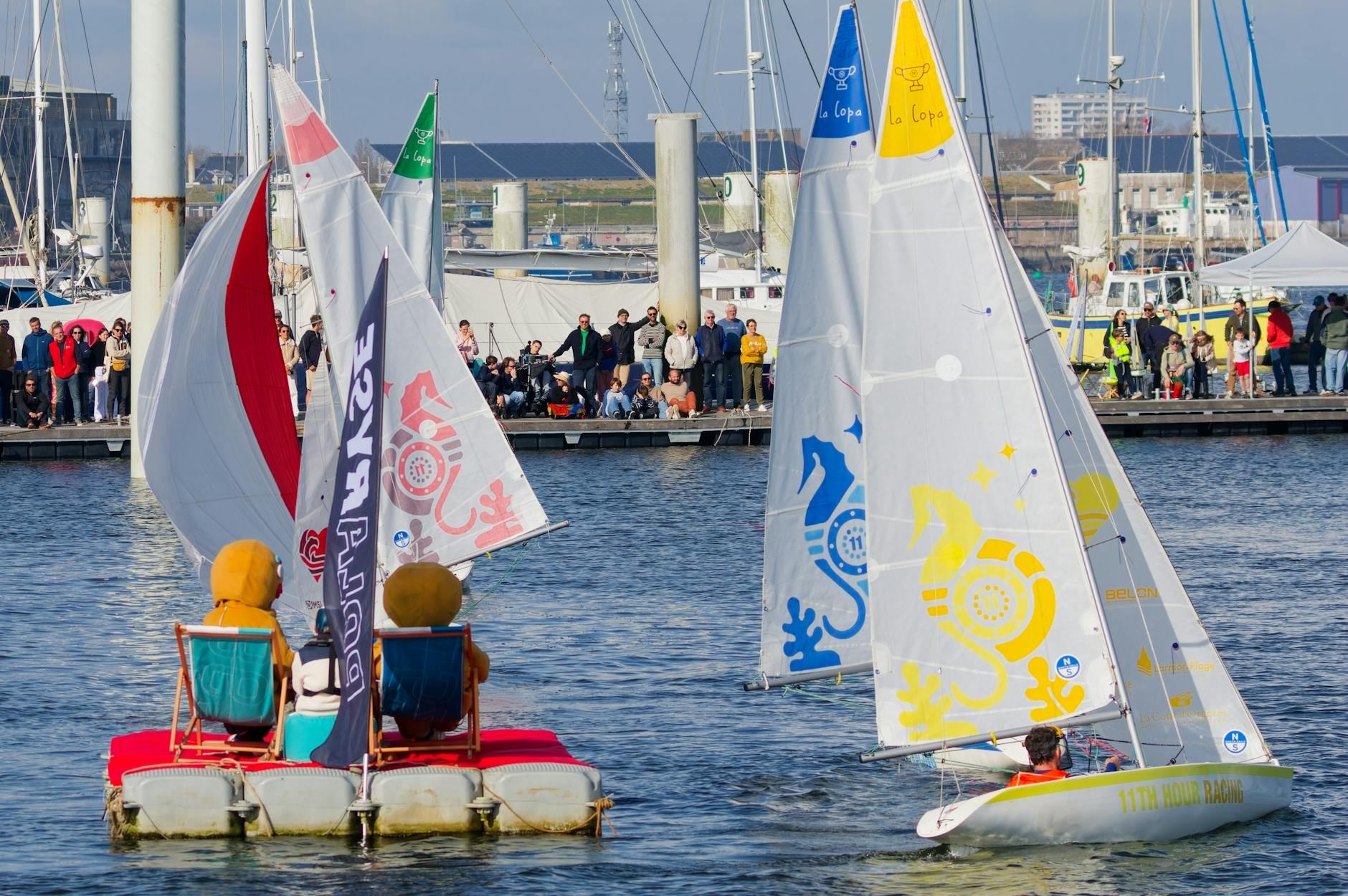
Paddlesports racing isn't a speed contest but a battle of strategy—composure and tactical control outlast hastiness in chaotic conditions.
Getting started with paddlesports racing as a beginner means launching from the shore and digging your paddle into the water. Explosive force propels you forward. It's a chase across a marked course—sprinting 200 meters on a lake or enduring a multi-mile river marathon.
Paddlesports racing is about power and precision. Tactical moves and maintaining a punishing pace in kayaks, canoes, or outrigger canoes are key.
Racers tackle everything from Olympic sprint distances to ultramarathons. Success depends on pure speed, fitness, and a mastery of paddle technique.
Paddlesports Racing involves engaging in repetitive paddling sessions on water to build endurance, speed, and technique, with activities like long-distance paddles of 16-50 miles on weekends and high-intensity interval workouts during the week, often incorporating cross-training and logistics practice for race preparation.
This hobby fosters a flow state and provides progressive skill feedback through measurable pace improvements, creating intrinsic motivation and a sense of accomplishment from mastering both personal bests and logistical challenges during training and racing.
Paddlesports racing rewards the athlete who controls what they can control, not the fastest paddler on flat water. Wind, current, and water state shift constantly. Raw speed becomes meaningless. Success comes from tactical positioning, reading competitors' lines, and executing consistent technique under fatigue.
The athlete who panics and overexerts loses. The one who stays composed and makes incremental gains on each stroke wins.
Your first race briefing feels like a blur. Details flash by, and you're too distracted by everyone else's equipment to absorb it all.
Within minutes of launching, your arms will feel surprisingly heavy. The pace is nothing like recreational paddling, and your body will notice immediately.
You'll get passed by someone who somehow makes it look effortless. It stings more than you expected.
Around the halfway point, something changes. Your lungs adjust and your strokes find a rhythm. The chaos clarifies into something almost meditative. That's when the appeal starts to make sense.
When to start: Early morning
Duration: 1.5 hours
Cost to try: $10
Success criteria: if you finished without capsizing, do session 2.
Most beginners in SUP, kayak, and canoe racing don't lose time from a lack of fitness. They lose it from five fixable habits — and most don't realize any of them are problems.
This one catches nearly everyone at first. The blade has a curve — called the rake — and it looks like it should face toward you, like a scoop. But that's backwards.
Point the curved face away from you. That orientation lets the blade exit cleanly instead of dragging water with every stroke.
Standing too far forward or back throws off both stability and steering. On a SUP, the center handle is your landmark. On a kayak or canoe, the marked balance point is there for a reason.
Center your weight over that balance point before you start paddling hard. Small adjustments in stance have an outsized effect on how the craft tracks.
A fall on a SUP in moving water or wind means your board is gone in seconds. A leash — coiled or straight, attached to your ankle or calf and clipped to the board's front D-ring — is the only thing that changes that.
This isn't just a racing tip. Racing without a leash is how beginners turn a bad fall into an emergency.
Two common errors kill power at the same time: dipping only the tip of the blade, and pulling the stroke too far past your hips. Both waste energy on every single stroke.
Reach fully forward and bury the entire blade vertically before you pull. Exit the water at your feet — not behind them. Clean entry, early exit.
Beginners almost always paddle with the wind first — it feels easier and more encouraging. But that puts the headwind return at the end of the session, when your arms are cooked.
Check the wind forecast and paddle into it first. The downwind leg becomes your recovery. You'll finish stronger and cover more distance overall.
Blackburn Challenge in Gloucester, MA is your go-to on July 11, 2026, as it doubles as the USA Canoe Ocean Racing/Surfski National Championships.
Mystic River Herring Run and Paddle in Somerville, MA, caters to all levels with 3, 9, and 12-mile distances on May 17, 2026.
Check out the Rivanna River Kayak and Canoe Race through cvillepaddlers.com.
Discover Midwest Action
Mid-American Canoe & Kayak Race runs the Fox River in IL, offering thrills on June 6, 2026.
On July 11, 2026, head to Montana for the Flathead River Rumble in Polson.
Southeast Paddling Highlights
The Navarre Paddle Classic offers SUP races on Navarre Beach, FL, on May 17, 2026.
Find Wider Connections
Test your endurance at the 8-mile and 2-mile races of The R10 Paddleboard Race
PaddlersConnection on groups.io is buzzing with active paddlesport discussions.
**Join the conversation on Reddit through r/paddling, r/kayaking, or r/canoeing.** They'll keep you updated on all things 2026.
Sprint Racing is all about head-to-head races on flatwater. Distances and boat types vary, accommodating crews of all sizes. Perfect for beginners, there's room for everyone to compete.
Slalom Racing involves navigating through gates on flowing water without losing speed. Mastery requires boat control and river-reading. For those beyond the basics, it merges skill, fitness, and precision.
Marathon Racing often stretches over multiple days, covering long distances. Races like the 125-mile Devizes to Westminster present extreme challenges. Not for the faint-hearted, it calls for both endurance and mental grit.
Wildwater Racing is racing against time on rapids. Paddling without stops through turbulent waters suits advanced paddlers who are comfortable with both speed and obstacles.
SUP Racing uses stand-up paddleboards in diverse water conditions. From lakes to ocean challenges, varied board styles amplify competitiveness. Great initial sport, it balances accessibility with skill progression.
Field Hockey is a sibling pursuit and often surfaces the same kind of curiosity.
If this resonates, Street Basketball explores a similar direction.
For something adjacent, see Cyclocross.
The secret is in those first 3-5 strokes. Generate maximum power, transferring your body weight through the paddle into the water.
Explosive acceleration is what truly sets you apart. Most paddlers waste energy fighting momentum from a dead stop.
But those who excel at bursting off the line gain a significant lead. The psychological edge and superior position compound throughout the race.
Having a powerful start makes everything easier—line selection, pacing, even sprint technique. It's much simpler when you're not playing catch-up.
Try it out for four sessions in about 30 days. Once a week at consistent times is ideal to see if it fits your routine.
If you find yourself eager to check your rankings after every outing, it's a sign you've caught the bug. Dive deeper by monitoring your progress with a detailed log and consider upgrading to a premium GPS watch for better accuracy.
If it felt like just another morning workout, that's valuable feedback. Before moving on, make a change to a higher-end paddle and try at least one race event for a different perspective. Sometimes a new experience is all it takes.
If you hated dragging yourself out in the early hours and your mood soured looking at gear prices, trust that instinct. Competitive paddling isn't about the scenery; it's about the pursuit of time.
Can't ignore the urge to upgrade gear at midnight? You're truly hooked.
When you're ready to compare options, the hobbies list lays out every direction we cover.
Still looking for something to do? Browse things to do when bored for more ideas.
You'll need a racing paddle board or kayak, a paddle, a personal flotation device (PFD), and appropriate water clothing. Many beginners rent equipment from local clubs or shops before investing in their own gear, which can range from a few hundred to several thousand dollars depending on the type and quality.
Most people develop basic paddling skills within 4–6 weeks of regular practice, but racing-specific techniques require 2–3 months of focused training to be race-ready. Your progress depends on your fitness level, prior water experience, and training frequency.
The basics are accessible to beginners of any fitness level, though racing does demand balance, endurance, and technique. You don't need to be an athlete to start—many racing communities offer beginner-friendly classes and entry-level races designed for newcomers.
Common formats include sprint racing (short, intense bursts on flat water), distance racing (longer courses covering 10+ kilometers), and marathon racing (endurance-focused events). Some clubs also offer recreational and competitive divisions so you can race at your own level.
Initial costs range from $200–$500 for basic used equipment, or $800–$2,500+ for new gear. Race entry fees typically run $20–$75 per event, and annual club memberships average $50–$200, though many clubs offer discounts for newcomers.
You can train and race independently, but joining a club provides access to coaching, training partners, racing events, and community support. Many clubs welcome casual racers alongside competitive athletes, making it easy to find your own pace.