BoredomBusted — Find Your Next Favorite Thing To Do
Discover hobbies, activities, places, and ideas that spark joy. Whether you're looking for something creative, active, social, or relaxing, BoredomBusted helps you find your next favorite thing to do.
Browse our hobby guides, things-to-do collections, and place ideas to never be bored again.
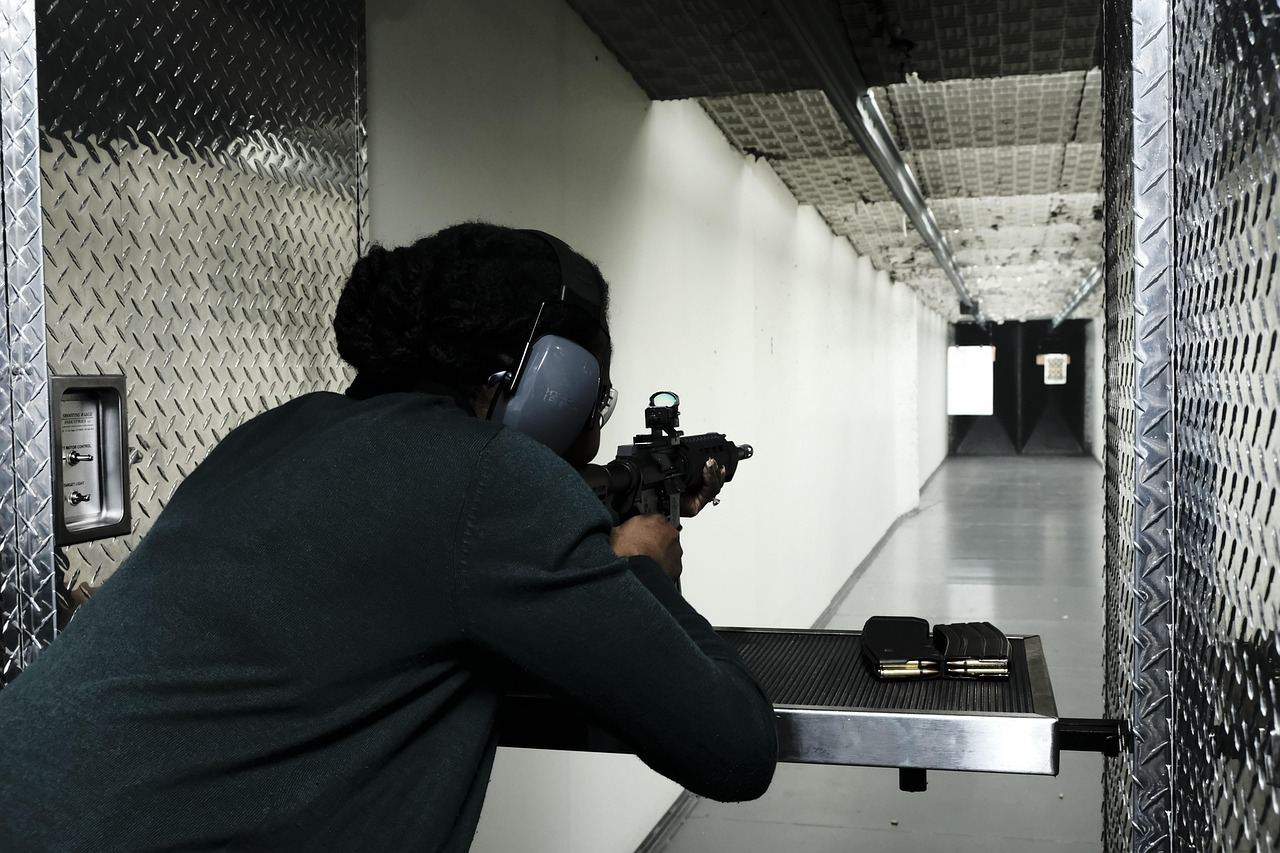
Pistol shooting isn’t just for experts — with proper training and safety protocols, even beginners can safely enjoy the thrill of the sport.
Getting started with pistol shooting as a beginner focuses on developing your aim and understanding the fundamentals of firearm safety. Mastering the basics takes practice, patience, and the right mindset. Whether you're aiming for competitive shooting or simply enjoying the sport, the journey begins with the basics.
Focus and discipline are crucial. Knowing safety protocols is non-negotiable.
This hobby can be recreational or competitive. The thrill of shooting is real, and it's a chance to perfect your marksmanship.
In pistol shooting, participants engage in precise handling of handguns, focusing on loading and unloading, adopting stances, aligning sights, and pulling triggers to fire at targets. They practice structured drills that emphasize control and accuracy, using timers to measure performance and making adjustments based on immediate feedback from each shot.
Pistol shooting combats boredom through immediate feedback loops that foster a sense of accomplishment, promote flow state by balancing challenge and skill, and enhance social belonging through community engagement and shared experiences.
You think pistol shooting is risky and just for seasoned pros. That's a common assumption, but it's not the full picture. Pistol shooting has strict safety standards.
Even newcomers find accessible options at friendly ranges. With the right guidance, anyone can get involved safely.
Imagine a nurse, unfamiliar with firearms, taking a beginner's course at a local range.
First-timers can feel intimidated. Expert instructors help build comfort. Participating responsibly transforms the experience from daunting to rewarding.
Understanding the real entry points makes all the difference—it's about enjoying the hobby safely.
Your first time on the range is louder than you expect. The concussive crack of shots from neighboring lanes cuts through your ear protection, and your grip on the pistol feels stiff and unnatural. You're hyper-aware of everything — the weight of the gun, where the muzzle is pointing, your breathing. Most beginners spend so much mental energy on safety that accuracy becomes almost irrelevant in session one. That's completely normal, and it's exactly how it should go.
The part that catches most newcomers off guard is the trigger. You expect to squeeze it smoothly and the shot lands where you aimed. Instead, you flinch before the round fires, yanking the muzzle low and left. Your shots cluster nowhere near center. Flinching is an involuntary anticipation reflex, and almost every beginner has it — the ones who improve fastest are the ones who stop being embarrassed by it. Your instructor will spot it immediately, and that's actually useful information.
After a few sessions, the safety fundamentals start feeling automatic rather than effortful. That mental bandwidth frees up, and you begin actually noticing your sight alignment and trigger press. The feedback loop kicks in fast — you fire a shot, you see where it lands, and you understand exactly what went wrong or right. That immediate read on your own performance is what makes this hobby genuinely absorbing. There's no waiting to find out if you're improving.
Progress in the first few weeks is uneven. A great group of shots followed by a frustrating scatter across the target is the standard pattern. Your grip pressure changes session to session, your stance shifts, and some days nothing clicks. The shooters who stick with it treat each bad grouping as data, not failure. That mindset shift is the real hurdle — and knowing the most common technical mistakes early on makes clearing it a lot faster.
When to start: 8:00 AM
Duration: 1.5 hours
Cost to try: $20
Success criteria: If you fire 10 rounds with all shots on the paper target and no range-safety corrections, do session 2.
Most beginners white-knuckle the grip because tighter feels more controlled. It doesn't. Excess tension travels up your arm and causes the muzzle to dip right before the trigger breaks — which pulls every shot low.
The fix is counterintuitive: grip firmly with your support hand, not your strong hand. Think 70% pressure from the support side. Your strong hand guides; your support hand stabilizes. Ask a range instructor to watch your grip before you develop a habit that's hard to undo.
Timers make beginners rush. You hear the beep and suddenly accuracy goes out the window. The problem is that speed without a foundation just engraves bad habits faster.
Shoot without a timer until you can hit your target consistently ten times in a row. Only then introduce time pressure. Slow is smooth, smooth is fast — and in pistol shooting, that cliché is completely accurate.
New shooters want to get to the trigger. Stance feels like a formality. But your body is the platform everything else is built on — a shaky platform produces scattered shots regardless of technique.
There are two stances worth learning as a beginner: the Isosceles and the Weaver. The Isosceles — feet shoulder-width apart, arms extended equally — is the easiest to reproduce under pressure and the one most instructors start with. Get comfortable in it before experimenting.
Your eyes want to watch where the bullet is going. That instinct works fine in most of life. In pistol shooting, it wrecks your aim. If your focus is on the target, your sights are a blur — and a blurry sight picture means inconsistent shots.
Train your eye to focus sharply on the front sight, letting the target go slightly soft. The target will still be visible enough to align. This single shift produces noticeable improvement on your very next range session.
Most beginners show up, shoot a box of ammo at a target, pack up, and wonder why they aren't improving. Random shooting produces random results. Without a specific focus, you're just confirming existing habits — good or bad.
Pick one thing per session. It might be trigger control, sight alignment, or reload speed. Deliberate, narrow practice — even for 30 minutes — outperforms an hour of unfocused shooting every time. That immediate feedback loop is what makes this hobby genuinely satisfying to progress in.
Start with the USPSA (United States Practical Shooting Association) or IDPA (International Defensive Pistol Association) club locators — both have searchable directories that show affiliated clubs running regular matches near you.
Reddit has two active communities worth knowing: r/pistols and r/competitionshooting. Both fields beginner questions without the judgment. For local range recommendations and gear talk, r/guns is high-traffic and surprisingly useful.
Walk into a local indoor or outdoor shooting range and ask whether they run league nights or club matches. Most do. These are structured events where regulars show up on the same night every week — that's your in.
Meetup.com lists shooting groups in many mid-to-large cities. Search "pistol" or "shooting range" alongside your city name. The Facebook Groups search works the same way — look for "[your city] pistol shooting" or "[your state] IDPA."
Recreational target shooting is the most common starting point. You show up to a range, rent a pistol, and work on hitting a stationary paper target.
This is the version for people who want the experience with zero commitment to competition. Progress is measured shot by shot, on your own terms.
Practical shooting adds a timer to the equation. Formats like USPSA and IPSC score you on both accuracy and speed. You move through courses of fire, engaging multiple targets in sequence.
It suits people who get bored with static drills. The timer turns every run into a personal competition you can actually measure and beat.
Olympic-style precision shooting strips everything back. No movement, no speed element — just a shooter, a highly specialized pistol, and a distant target. Tiny grip adjustments and breath control decide whether you win or lose.
This is the most technically demanding variant, and it rewards obsessive attention to fundamentals. Think chess, not action movie.
Club-level league shooting puts you on a team or in a local bracket. Weekly matches at your home range, familiar faces, and a running scoreboard. The competition is real, but so is the camaraderie.
It works well for people who need a standing appointment to stay consistent. Showing up matters as much as your score.
Defensive pistol training focuses on practical scenarios — drawing from a holster, shooting under stress, working at close range. It's structured around real situations rather than sport formats.
People drawn to this track usually care about self-reliance as much as the shooting itself. The skill-building feels purposeful in a way that paper targets alone don't always deliver.
A close neighbor worth considering: Airsoft.
Readers who enjoy this often gravitate toward Trap Shooting next.
For something adjacent, see Slingshot Shooting.
The skill that separates improving shooters from stuck ones is trigger control — specifically, the ability to press the trigger without disturbing the sight picture.
Most beginners focus on aiming. They spend time getting the sights lined up perfectly, then jerk the trigger and send the shot wide. The aim was fine. The problem is that pulling the trigger is a movement, and any uncontrolled movement shifts where the muzzle is pointing at the exact moment the gun fires.
Think of it this way: the trigger finger has to move independently of everything else in your hand. Your grip stays firm and still. Your other fingers don't tighten. Only the trigger finger moves — straight back, with steady pressure, until the shot breaks. It sounds simple. It takes real repetition to make it automatic.
Once this clicks, the feedback loop from every shot becomes useful. You stop blaming the gun and start reading your misses accurately. That's when improvement compounds fast — and it's exactly what the drills in the next section are built around.
Book four range sessions over about a month — roughly once a week. That's enough time to get past the nerves and start actually feeling the feedback from each shot.
That mental replay — standing at the kitchen counter, mentally correcting your trigger pull — is the signal. When the problem-solving follows you home, you've found something worth pursuing. Start looking into a consistent home range, explore the USPSA or IDPA competitive circuits, and consider booking a session with a dedicated pistol coach.
You weren't bored, but you weren't hooked either. Before walking away, try one thing: switch from static target practice to a timed drill or a beginner competition. The feedback loop changes completely when a clock is running. Some shooters don't connect with the hobby until that pressure element enters the picture.
That's useful information. Pistol shooting demands sustained, quiet concentration — and not everyone finds that absorbing. If you wanted more movement or variety, sports like 3-gun shooting, archery, or even tactical paintball scratch a similar competitive itch with a different pace.
If you've pulled up a gear review at midnight — or found yourself watching slow-motion trigger footage on your phone — that's not casual curiosity. That's your brain already invested. Keep going.
You typically need a license for owning a pistol, but not for renting at a range.
Wear comfortable clothing, closed-toe shoes, and avoid loose garments for safety.
Practice regularly and consider seeking guidance from experienced shooters or instructors.
Yes, when following all safety protocols and guidelines, pistol shooting is a safe sport.
Yes, many shooting glasses are designed to fit over prescription eyewear.