BoredomBusted — Find Your Next Favorite Thing To Do
Discover hobbies, activities, places, and ideas that spark joy. Whether you're looking for something creative, active, social, or relaxing, BoredomBusted helps you find your next favorite thing to do.
Browse our hobby guides, things-to-do collections, and place ideas to never be bored again.
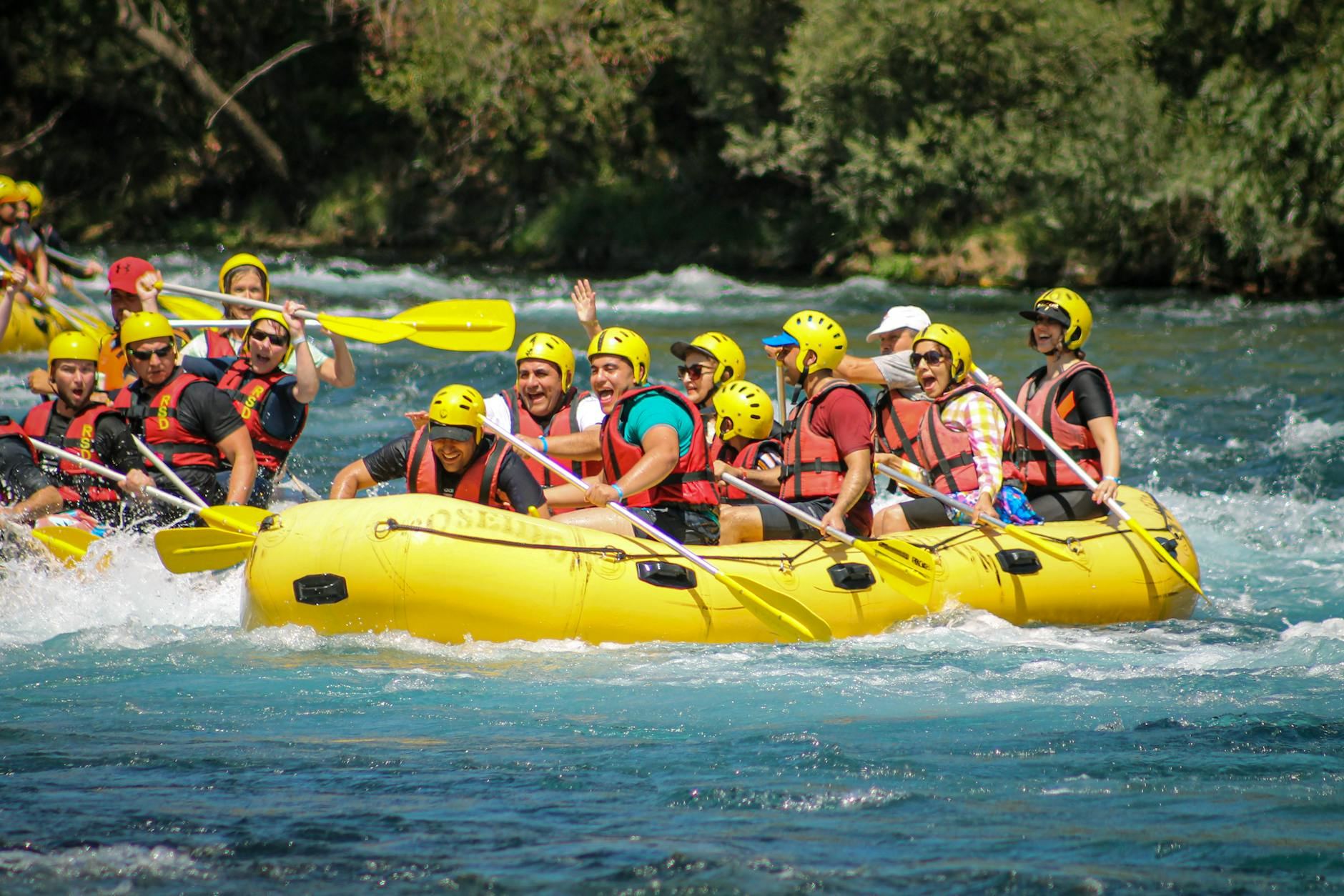
Rafting isn't just for adrenaline junkies — many calm rivers cater to families, turning it into a scenic teamwork experience instead.
Getting started with rafting as a beginner can be an exhilarating adventure that connects you with nature and waterways. Rafting is an outdoor activity that involves navigating through rivers and rapids. It can be both a thrilling and peaceful experience, depending on the water conditions. Many people enjoy rafting as a way to bond with friends and family while enjoying the great outdoors.
an exhilarating way to navigate rivers using an inflatable raft. It combines teamwork with thrilling rapids for a totally unique adventure.
In rafting, participants navigate inflatable rafts through river rapids, using synchronized paddle strokes to steer and maneuver around obstacles while maintaining balance against turbulent water, requiring explosive physical effort and mental focus to respond to commands and environmental challenges.
Rafting induces a flow state as it combines high physical demands with unpredictable river challenges, providing immediate skill feedback through successful navigation, fostering social belonging through teamwork, and offering a sense of accomplishment from mastering varied rapids.
You picture rafting and your brain goes straight to helmet cams and Class V whitewater. Someone flipping a raft off a ten-foot drop. Definitely not you.
That picture is real — but it's one end of a very long spectrum. The Colorado River through the Grand Canyon, for example, runs everything from flat, scenic floats through Marble Canyon to the legendary Class X Lava Falls rapid. The same river. Guides like those at Arizona Raft Adventures have been running mixed-group trips for decades, putting first-timers and experienced paddlers on the water together by simply routing them to different sections.
Flat water.
Gentle current.
No experience required.
The whitewater classification system runs from Class I to Class VI, and most beginner and family trips never leave Class II — moving water with easy waves, no real obstacles. The thrill-seeker version of this hobby exists, but it's opt-in.
What that means practically is that gear, fitness level, and tour cost all shift dramatically depending on which end of the spectrum you're targeting.
The first thing you notice is the cold. River water hits your hands and forearms the moment you dip your paddle, and on most rivers that's a genuine shock — not unpleasant, but insistent. Your body is upright, braced, already working against a raft that moves differently than anything on land. It shifts, dips, and bucks in ways you can't fully anticipate. Your instinct is to grip the paddle harder — but control on the water actually comes from posture and timing, not force.
The part most beginners don't expect is how loud it gets near moving water. Your guide is shouting commands — forward, back, stop — and the river is competing with every word. You'll mis-hear a call, paddle the wrong direction, and feel the raft crab sideways into a rock or eddy. That's not failure. Every crew does it on the first run, including the ones who show up overconfident. The synchronization your guide is asking for takes a few stretches of calm water before it starts to click.
Physically, it catches people off guard too. The core work is constant — you're bracing against movement even when you're not actively paddling. Arms fatigue faster than expected, especially if you're muscling the strokes instead of using your whole torso. By the second half of a two-hour float, your shoulders will know they did something. That soreness is useful information — it tells you exactly what to build before your next trip.
What does carry you through those early rough patches is the feedback loop. When your crew hits a synchronized stroke through a rapid and the raft lines up exactly where the guide called for, you feel it immediately — the clean run, the momentum, the collective exhale. That moment is what makes beginners book a second trip before the first one is over. Before you can string those moments together consistently, though, there are a handful of specific mistakes that slow almost every new paddler down — and most of them are easy to fix once you know to look for them.
When to start: Morning
Duration: 2 hours
Cost to try: $20
Success criteria: if you finished without capsizing, do session 2.
Rafting is a team sport. Every paddle stroke either helps or fights the boat. Beginners often focus entirely on their own effort — paddling hard, staying on the raft — and tune out the guide's commands. That's when you drift sideways into a rock nobody wanted to hit.
Listen to the guide more than you paddle. Their calls — forward, back, stop — are what keep the boat on line. Syncing with your crew matters more than raw effort.
The classification system exists for a reason. Beginners who skip Class I–II trips because they sound boring often end up overwhelmed on bigger water. Rough rapids don't teach you fundamentals — they just punish the gaps in them.
Start on Class I or II water, even if it feels easy. That's where you learn to read current, hold position, and move the boat deliberately. Once those feel automatic, bigger rapids are actually fun instead of just scary.
Air temperature and water temperature are two different things. A warm summer day on a mountain river can still mean 50°F snowmelt. Going in with board shorts because it's sunny outside is how a fun swim turns into a cold shock problem.
Check the water temperature before you pick what to wear, not the weather forecast. Below 60°F, a wetsuit isn't optional — it's the difference between a recoverable swim and a dangerous one.
Beginners white-knuckle the paddle out of nervousness. It feels safer. It isn't — and it burns through your forearms fast. By the time you hit the section that actually needs effort, your grip is already shot.
A relaxed grip with engaged core is what moves a raft efficiently. The power comes from your torso rotating, not your hands squeezing. Guides will tell you this during the pre-launch briefing — believe them.
Every outfitter runs a pre-trip briefing. It covers swim position, how to re-enter the raft, what to do if you go overboard. It feels routine. Most people half-listen. Then someone falls in and can't remember a single word of it.
Treat the briefing like the most important ten minutes of the trip. Knowing the defensive swim position — feet downstream, toes up, arms out — before you need it is the difference between a story you tell later and one someone else tells about you.
Start with r/whitewater on Reddit. It's the most active English-language rafting community online. Paddlers post trip reports, gear questions, and river conditions there constantly. You'll find locals willing to answer very specific questions about rivers in your region.
For in-person connections, outfitters are your fastest path. Most commercial rafting outfitters — the companies running guided trips on rivers like the Gauley, the Arkansas, or the Rogue — know every paddling club within driving distance. Ask the guides directly. They'll point you to club put-in days, open paddle events, and beginner clinics faster than any search engine will.
American Whitewater maintains a searchable database of river access points and affiliated paddling clubs across the US. Their site also tracks river conditions and conservation issues — useful once you're beyond the guided trip stage. Outside the US, paddle sports federations like Paddle Canada and British Canoeing both run club directories organized by region.
Meetup.com consistently has active rafting and kayaking groups in cities near major river corridors — search "rafting" plus your nearest river or city name. These groups run regular beginner floats and are specifically built for people who don't know anyone else in the sport yet.
Flatwater and Class I rafting is slow-moving, scenic, and genuinely low-stress. You're drifting more than paddling, with easy currents and no rapids to worry about.
This is the version for families, first-timers, or anyone who wants nature without an adrenaline spike. Most guided half-day tours on gentle rivers fall into this category.
Class II and III whitewater introduces real current, waves, and the need for coordinated paddle commands. You'll work for it — but nothing here is beyond a reasonably fit beginner.
This is where most people find the sweet spot between challenge and accessibility. Guided trips at this level are widely available and don't require prior experience.
Class IV and V rapids are technical, fast, and physically demanding. Guides at this level are highly experienced, and guests are expected to follow commands instantly under pressure.
It's built for people who want maximum intensity and are comfortable handing full control to an expert guide. Spots like the Gauley River in West Virginia or the Futaleufú in Chile sit in this tier.
Multi-day trips string together consecutive days on the river, camping on sandbars or riverbanks each night. The rapids can range from easy to challenging — the defining feature is total immersion in the river environment.
These trips suit people who want the rafting to be a full trip rather than a day activity. The Grand Canyon is the iconic example, with trips running anywhere from four to eighteen days.
Self-guided rafting means renting gear, planning your route, and running the river without a professional guide in the boat. It requires navigation knowledge, river-reading skills, and confidence in your group.
This version rewards people who've already done guided trips and want full ownership of the experience. It's lower cost per trip but demands real preparation upfront.
For something adjacent, see Spearfishing.
If this resonates, Hiking explores a similar direction.
The skill that separates improving paddlers from stuck ones is reading water before the raft reaches it.
Most beginners react to what the river is already doing to them. The raft hits a wave, they brace. It spins toward a rock, they panic-paddle. That reactive mode keeps you functional on easy water, but it falls apart fast once current gets complex. By the time you feel the pull of a hydraulic or a lateral wave, you're already inside it. The window to respond has closed.
Reading water means scanning 20 to 30 feet ahead and identifying what the surface is telling you. A smooth V-shape pointing downstream is a tongue — clean current, paddle through it. A V pointing upstream means a submerged obstacle is deflecting flow around it. Pillow water, that glassy bubble piling up against a rock, tells you exactly where the pressure is pushing. Once you can decode those shapes, you stop chasing the river and start choosing your line through it.
This is also what makes rafting a team sport at a deeper level than just paddling in sync. When the person calling strokes is reading water well, every command makes sense — the timing, the angle, the sudden switch from forward to back-paddle. When nobody is reading ahead, the commands feel random and the crew fights the river instead of working with it. The next section covers how guided trips actually teach this without you having to figure it out alone on day one.
Run three to four guided trips over the course of a single season — roughly once every two to three weeks. That's enough time on the water to get past the pure novelty and feel what the hobby actually is.
That pull toward the next classification up is the signal. Rafter who want more difficulty after every run are on the right track — the hobby has years of progression built in. Start looking at multi-day river trips, get your swift water rescue certification, and ask your outfitter about paddler clinics where you learn to read water rather than just react to it.
If three trips felt fine but forgettable, the problem might be the format, not the water. Guided group tours remove a lot of the decision-making that makes rafting genuinely engaging. Try a smaller, self-guided float or a paddling clinic before writing it off — having real responsibility in the boat changes the experience completely.
Counting down to the takeout on multiple trips is a clear answer. Rafting demands physical output and group coordination — if neither of those things engages you, no amount of scenery fixes it. If you liked being near the water but not in the chaos, look at kayak touring or stand-up paddleboarding, which trade the team dynamic for a slower, more solitary relationship with moving water.
If you find yourself pulling up river gauge apps the night before a trip to check water levels, this hobby has already claimed you. That's not casual interest — that's someone who has started thinking like a rafter.
Looking for something lighter? Our boredom-busters guide is built for exactly that.
Most recreational rafting trips range from $50–$150 per person for a half-day excursion, depending on location, guide quality, and river difficulty. Full-day trips and guided wilderness expeditions can cost $150–$300+, but many outfitters offer discounts for groups, families, and repeat customers.
Most rivers are classified from Class I (calm, flat water) to Class V (extremely dangerous rapids), with beginner-friendly trips typically on Class I–II water. You don't need prior experience or special skills—professional guides handle navigation and safety while you paddle and enjoy the ride.
Half-day rafting trips usually last 2–4 hours on the water, while full-day trips run 6–8 hours including breaks and lunch. Plan for additional time before and after for check-in, gear fitting, and safety briefings.
Wear quick-dry clothing, secure footwear (water shoes or sandals with straps), and bring a swimsuit—avoid cotton and heavy fabrics. Most outfitters provide life jackets and helmets; bring sunscreen, a waterproof bag for valuables, and a change of dry clothes for after the trip.
Yes, rafting is very safe when done with licensed outfitters and appropriate river classes—most require kids as young as 5–10 depending on the river. Your guide provides all safety equipment and instruction, making it an excellent family bonding activity.
Rafting requires moderate fitness—you'll paddle for extended periods and need basic upper body and core strength to stay balanced. Most ability levels can enjoy beginner-friendly rivers, though more challenging rapids demand better conditioning and stamina.