BoredomBusted — Find Your Next Favorite Thing To Do
Discover hobbies, activities, places, and ideas that spark joy. Whether you're looking for something creative, active, social, or relaxing, BoredomBusted helps you find your next favorite thing to do.
Browse our hobby guides, things-to-do collections, and place ideas to never be bored again.
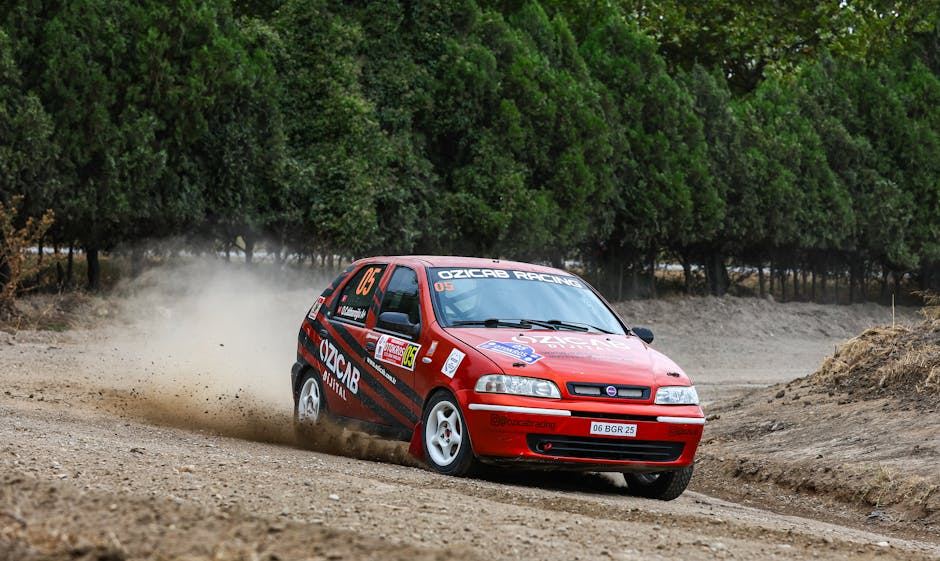
Rallycross seems like a solitary thrill but it's the strong community and immediate feedback that keeps drivers honing their skills and pushing boundaries.
Getting started with rallycross as a beginner involves navigating short mixed-surface circuits that combine both tarmac and dirt, allowing you to race wheel-to-wheel with other drivers.
Unlike track days (solo laps) or rally driving (point-to-point on closed roads), every run is a direct, door-to-door battle.
The chaos is the point.
In Rallycross, participants drive their modified street-legal cars through temporary courses marked by cones, navigating tight turns and surface changes on grass, dirt, or asphalt at speeds between 40-60 mph, while simultaneously managing traction and executing controlled slides through a combination of mental planning and physical skill.
Rallycross induces a flow state through its high physical and mental demands, providing immediate feedback via lap times that allows drivers to refine their techniques, while fostering social belonging through camaraderie with fellow racers and offering a sense of accomplishment from beating personal bests.
Rallycross isn't just racing with mud. People think it's Formula 1 for those who can't afford the real thing.
That assumption keeps you from the most thrilling motorsport format you've never actually watched.
Take the 2023 World RX round in Hell, Norway. Timmy Hansen expertly kept his joker lap until the final lap.
Using it to surge ahead of a rival who'd already used theirs. You didn't need a commentator. You saw someone win with timing, not speed.
That's the essence of the format, not just a quirk.
Now ask yourself if you could do this too. It's possible with more ease than you realize.
Watching Rallycross is like seeing chaos barely controlled. Driving it, everything feels completely uncontrolled. Somewhere around week three, the chaos starts to take shape.
Your heart races before you even leave the grid. You brake too late every time, and the car goes wide. You don't yet understand how each moment connects.
The first week is survival, not driving. You hardly remember each lap. By week two, you find yourself braking at the wrong spot consistently. Oddly, – that's progress. In week three, one corner clicks, and you keep more speed. Suddenly, you're eager to understand every other corner.
By week four, mistakes are normal, and you're already planning the next event. It's still not a skill problem; it's absorbing the new information. Four weeks is a lot to take in – course, car, and personal reactions.
Loose surfaces change everything. The braking marker you rely on will shift. Gravel moves, ruts form. Choose a fixed physical object as your reference, not a spot on the ground.
When to start: Morning
Duration: 2 hours
Cost to try: $50
Success criteria: if you finished without any major incidents, do session 2.
Tarmac driving instincts don't work on gravel. Chasing the apex on loose surfaces widens your path and kills exit speed.
Enter wider and point earlier. Let the loose surface assist rather than resist.
Instinct tells you to lift when sliding, but in Rallycross, lifting causes weight transfer leading to spins.
Maintain steady throttle during slides. Use steering corrections instead.
Beginners often take the joker lap out of convenience, losing strategic advantage to competitors.
A stiffer suspension or aggressive diff seems helpful, but complicates learning. Feedback becomes harder to interpret.
Stick to the factory setup for your first season. Modify slowly, one change at a time.
Circuit braking markers don't work here. Loose surfaces scrub speed quickly, making late braking risky.
Brake two car lengths earlier. You'll accelerate sooner and cut your lap times.
Rallycross venues include dedicated off-road circuits, autocross venues, and any place with a mix of tarmac and dirt, like speedway complexes.
Start at Rally America or American Rally Association (ARA) online. They sanction U.S. events and have an event finder on their websites.
Search "rallycross + [your state]" on Motorsportreg.com. Clubs post registrations there, not on social media.
Check out NASA regional chapters. The National Auto Sport Association often runs rallycross programs.
Find local events by searching "rallycross club [your region]" on the SCCA site. The Sports Car Club of America has regional event calendars.
For first-timers, ask about entering a "novice class" or "stock class" when talking to the event organizer.
Most events offer beginner-friendly groups with lenient car requirements. Expect someone to guide you through the course before your first run.
RX2 is your track. Firmly part of the world rallycross path, it uses spec Renault Clios to keep performance and costs consistent. Ideal for drivers easing up from karting who seek a structured progression. While cheaper than open-class, expect serious financial commitment.
Club rallycross is the entry point. Loose regulations and casual vibes make it appealing. Beginners eager for real racing without massive expense will love this. You can race a basic hatchback in Group N trim on a modest budget.
Crosskarts are your ride. These open-wheel, tube-frame karts outperform expectation, delivering thrilling corners. Great for those chasing performance feedback minus a full rally car's complexity. Running costs less but does involve more mechanical care and a trailer.
Welcome to the Supercar class. With 600bhp and blistering speed, this tier demands the big bucks. It suits only professional drivers or well-funded semi-pros. Even watching can feel like a hobby.
Simulation rallycross delivers. Platforms like Dirt Rally 2.0 emulate the real circuits and even track degradation. It's perfect for learning tracks and car dynamics before committing to a real race.
Most beginners spend their first season chasing corner speed – faster through the turn, faster everywhere. The car control is there. The results aren't. That's the tell.
Feeling the track through the throttle actually moves the needle. This skill means sensing grip shifts with your foot and adjusting before the rear steps out. It's not about steering. It's about reacting in those 0.2 seconds that count.
Rallycross surfaces are a moving target. Rubber builds, gravel migrates, wet spots dry unevenly. Drivers who read these changes through throttle feedback stay a corner ahead. Without it, you're just surviving.
Other skills like rotation and weight transfer build on this. They sharpen when throttle timing is on point. Skip it and, unknowingly, you're putting a ceiling on your potential.
Four sessions in 30 days. That's the test.
Weekend rallycross events, once or twice a month, build a rhythm. You'll move past the chaos, through the awkward middle, and to that moment of clarity.
If you're watching run footage mid-week and replaying corner entries in your head, this isn't casual. You're hooked. Focus on improving your skills and look into volunteer opportunities to get even more involved.
Feeling neutral and not thinking about the sessions afterward suggests this might not be the perfect fit. But that's okay. Consider trying autocross or karting to see if they resonate more.
Miserable or stressed during sessions? That's a strong signal. Rallycross comes with its own culture and demands. If it doesn't suit you, that's a clear answer—explore racing worlds that align better with your interests and comfort.
The sign you've found your fit: watching grainy local club footage late at night without anyone prompting you. When the unpolished reality intrigues you, you're into the real deal, not just the glamor.
If rallycross feels like too much to commit to right now, browse what to do when you're bored for lower-stakes ideas.
Rallycross combines elements of rally racing and circuit racing on mixed surfaces—typically a combination of asphalt, dirt, and gravel tracks. Unlike traditional circuit racing that stays on asphalt, rallycross features shorter, more intense courses where drivers compete on varied terrain, making it more dynamic and unpredictable than standard road racing.
Entry-level rallycross participation can range from $500–$2,000 per event depending on your region and vehicle class, with car modifications and maintenance adding to costs throughout the season. Many clubs offer beginner-friendly classes with lower entry fees, and some venues provide rental cars for newcomers to try the sport before investing in their own vehicle.
While most serious competitors use their own prepared vehicles, many rallycross events and clubs offer rental cars or loaner programs for beginners and casual participants. This allows you to experience the sport without the immediate investment of purchasing and modifying a car.
Individual rallycross heats usually last 5–10 minutes, with a full event day typically featuring multiple heats, semifinals, and a final that span 6–8 hours total. Drivers compete in several timed runs throughout the day, and cumulative results determine final standings.
Rallycross has a moderate learning curve—the mixed surfaces and tight courses require good car control and quick decision-making, but most beginners can pick up basics within a few events. Many clubs offer instruction and run beginner-friendly classes specifically designed to help newcomers develop skills safely.
You'll need a certified racing helmet, racing suit (fire-resistant), gloves, and racing shoes at minimum, with most events requiring FIA or equivalent safety certification. Some venues mandate additional protection like neck braces or body armor depending on the competitive level.