BoredomBusted — Find Your Next Favorite Thing To Do
Discover hobbies, activities, places, and ideas that spark joy. Whether you're looking for something creative, active, social, or relaxing, BoredomBusted helps you find your next favorite thing to do.
Browse our hobby guides, things-to-do collections, and place ideas to never be bored again.
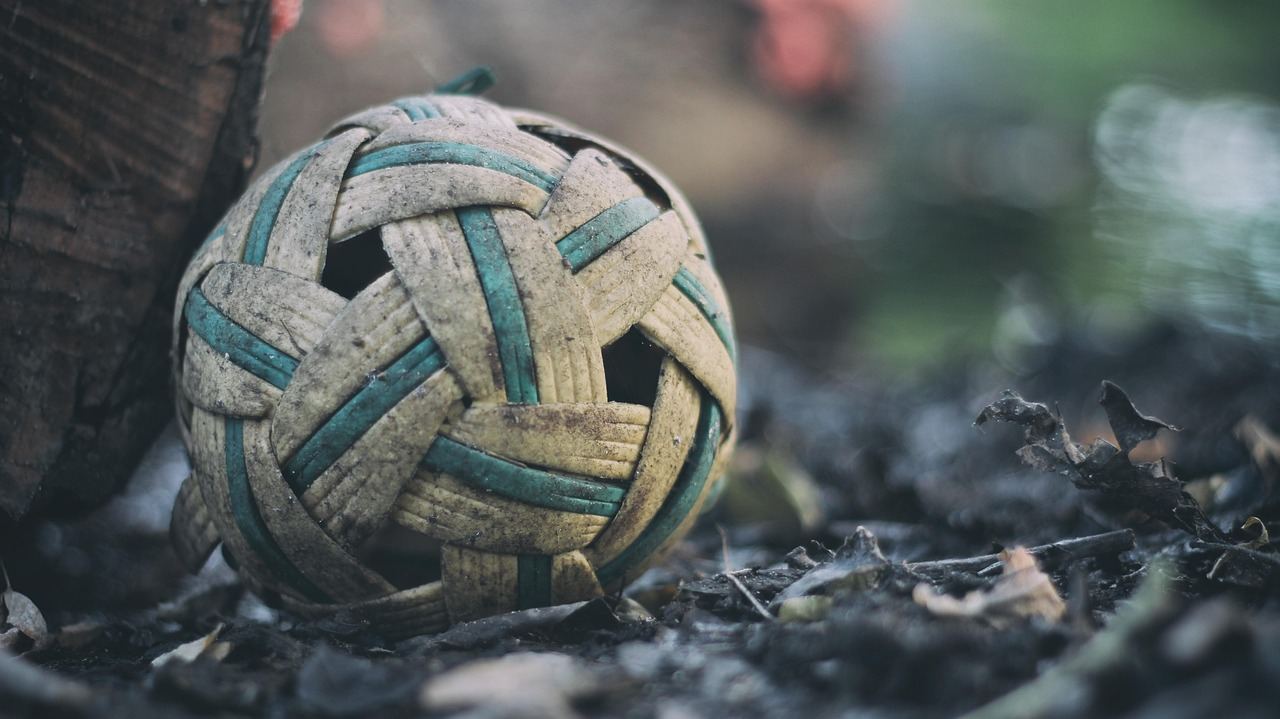
Sepak Takraw isn't just about flashy kicks — it's the rapid feedback that cultivates flow states and teamwork skills through escalating challenges.
Getting started with sepak takraw as a beginner is an exciting way to engage in a high-energy sport that combines agility and teamwork. where players use feet, knees, chest, and head to volley a rattan ball over a net.
No hands allowed lets sepak takraw feel like volleyball flipped upside-down.
Dazzling acrobatics set this sport apart.
These moves are standard fare, not showboating.
In Sepak Takraw, players engage in drills focused on foot-eye coordination, agility, and ball control using a rattan ball, practicing stretching, agility weaves, and core ball work like inside-foot kicks, culminating in spike variations and friendly 3-player matches.
Sepak Takraw creates rapid skill feedback loops through immediate responses to aerial passes and kicks, fostering flow states as challenges escalate, while social belonging develops in team drills, and a sense of accomplishment arises from mastering complex moves like overhead spikes.
You think it's a circus trick. A highlight reel sport for people with superhuman flexibility and nothing to lose. You've seen the bicycle-kick videos and quietly decided this isn't for you.
The foundation of Sepak Takraw is touch, not acrobatics. The roll spike looks impossible because it is advanced – but most players spend their first months just controlling the ball with their feet, knees, and chest, the same skills you'd build in any contact sport.
It's a team game built on communication. Three players, fixed positions, constant coordination – the athletic fireworks only happen because two other people are setting them up perfectly.
Every skill has a progression, and players who look like they're defying gravity were once standing flat-footed, just trying to keep the ball airborne for three touches.
A club player in Thailand once described his first year as "basically hacky sack with rules" – not because it was easy, but because that's genuinely where you start.
The acrobatics come later, if you want them. Most recreational players never need them and still love the sport.
The real question isn't whether you can do a roll spike. It's whether you can show up consistently enough to find out what your version of this sport actually looks like – and that starts with knowing exactly what to expect on day one.
Playing Sepak Takraw first feels like your legs don't understand you anymore. The finely-tuned moves you see on screen don't match the awkwardness of those initial tries. There's a disconnect between high-flying kicks and your tangled attempts.
During that first hour, it feels less like a game and more like a fight with gravity. Your control is absent, and the ball seems to have a mind of its own. No more assumptions about easy learning.
The first week is all about missing more shots than you make. Connecting with the ball using the inside of your foot sounds simple, but you'll find yourself repeatedly missing clean contact. Understanding comes slowly as every failed attempt refines your feel for the ball.
With time, something changes. By the second or third week, flashes of coordination appear, usually around that basic inside-foot pass. You don't fully trust your body yet, but brief moments of rhythm surface.
Game-changing realizations happen as you discover the striking techniques needed. The inside of your foot is key, not the soccer-style instep. Forget kicking it like a soccer ball, or you'll send it flying off course.
When to start: Early morning
Duration: 1 hour
Cost to try: $10
Success criteria: If you can juggle the Sepak Takraw ball 10 times with your feet or knees and land 5 controlled touches in your marked court, do session 2.
Highlight reels make the motion look simple because you can't see foot details. It's not the kicking leg, it's the plant foot that creates the arc.
Move your plant foot one full foot-length further from the ball than feels natural, then kick.
The knee drive seems powerful. Beginners think it will help their kick. It actually kills accuracy and makes your intent obvious to everyone.
Practice the inside kick while standing still, focusing on using your instep by rotating your hip out first.
Instinctively, you watch the ball, which is why your serves don't land. They either fall short or veer off wildly.
Focus on the net's far edge during your serve release and let your peripheral vision handle the toss.
The ball is round, and you're human, so the logic seems fine. This approach will leave your foot sore for two weeks.
The rattan ball is edged. Use only the instep or outside of the foot until you've developed calluses and muscle memory.
Sure, you can get your foot up there. That's not the hard part. Sepak Takraw requires that height repeatedly, with control and mid-air.
Spend ten minutes on hip flexor and hamstring prep before every practice, as one cold muscle can end your session early.
Sepak Takraw courts match badminton dimensions. Look for games in indoor sports halls and community recreation centers. You'll also find them in outdoor courts within Southeast Asian community areas.
Move closer to city areas with Thai, Malaysian, Filipino, or Lao communities. These locations often host Sepak Takraw games as the sport travels with cultural diaspora groups.
Use Facebook Groups to connect with local players. Search for "sepak takraw [your city]" or "takraw club [your state]" to find active groups.
Contact the International Sepak Takraw Federation (ISTAF) at istaf.net for national federation contacts. They'll refer you to regional clubs directly.
For U.S. players, USA Sepak Takraw (usasepaktakraw.org) provides details on sanctioned clubs and clinics. Their community might be small but is actively welcoming.
Universities offer beginner-friendly games on campuses. Check intramural boards and Southeast Asian Student Association pages for opportunities to join.
Speak up at your first session and say you're new but eager to learn. Clubs often lack players and will gladly include you in warmup drills and help with kick technique.
The competitive format features three players per team, played on a badminton-sized court. Seen in the Southeast Asian Games and found in most training programs.
Ideal for those seeking a true team sport with defined roles. Your main expense is court access; gear remains the same as recreational play.
Doubles play features pairs instead of trios. You cover more ground and handle the ball more frequently. Easier partner finding with only two needed.
Great for beginners seeking fast improvements and without a full squad.
The circle format removes opponents and scoring. Players work together to keep the ball in the air—no net required. This was the sport's ancestral form.
Perfect for beginners feeling overwhelmed by acrobatics. All you need is a rattan ball and some open space.
Hoop Sepak Raga adds a vertical hoop into the mix. The goal is to send the ball through the hoop using just feet and head. Precision and flair are key.
Ideal for intermediate players looking to expand their skills.
Beach Sepak Takraw is set on sand with fewer players. The soft surface is forgiving for new aerial moves. Laid-back officiating adds to the fun.
Ideal for casual enthusiasts near the coast. Just use the standard ball—nothing extra needed.
Another variant that pulls from the same roots is Ultimate Disc.
If this resonates, Whitewater Rafting explores a similar direction.
Some of the same instincts show up in Skeet Shooting — worth a look if this clicked.
Most beginners spend months chasing height on their kicks—clearing the net, aiming to look athletic.
That's not the game. The game is contact point precision.
The one skill is knowing exactly where on your foot the ball lands—training the contact point until it's automatic.
In Sepak Takraw, a heel strike, mid-arch strike, and toe strike all send the ball to different places, angles, and spin.
Most players can't tell you which one they just used. Precision is often the missing ingredient.
Own your contact point, and your body stops improvising on every touch.
Without it, every kick is different, reinforcing randomness in every drill.
The spectacular bicycle kicks and headers you've seen?
Those only work when players have this wired in so deep they don't think about it mid-air.
Kick a stationary ball hung at knee height. Loop a string through a rattan ball and hang it from a doorframe. Practice striking with your instep heel-forward, noting the contact point.
Film your foot from the side. Zoom in on the foot-to-ball moment and watch three clips back-to-back. Predict where contact happens before you see it.
Do 10 controlled, low kicks before every session. Not for power or height, but to feel the ball roll off a specific chosen point on your foot.
Once you master this art, exploring sophisticated techniques becomes the next step.
Twelve sessions over 30 days. Three per week, stretching across four weeks.
If you find yourself constantly thinking about the last game, imagining that scissor kick, or exploring how to improve the rong arch, that's your brain engaging. This isn't just a passing interest. Start connecting with a local club or seek out a Southeast Asian community sports league.
If the sessions felt routine but didn't spark joy, that's telling. Solo drilling might be the obstacle. See if a group session changes your perspective before dismissing it entirely.
If the acrobatics were more stressful than fun and you found the ball physics frustrating, take that at face value. This isn't the right sport for you, and that's perfectly okay.
Feeling compelled to analyze your own footwork on the stairs or rewatching Thailand vs. Malaysia footage obsessively means you're hooked. That drive for movement, not just the visual excitement, is your signal.
If sepak takraw doesn't feel like the right fit, our hobbies list has plenty of other directions to try.
If nothing here clicks, our guide to what to do when bored covers shorter, lower-commitment options.
Sepak takraw is a Southeast Asian sport that combines elements of soccer and volleyball, played on a court with a net using only your feet, knees, chest, and head—never your hands. Unlike volleyball's hand-based play, sepak takraw requires exceptional leg coordination and acrobatic kicks to hit a rattan ball over the net, making it much more agile and technique-focused.
Most beginners can grasp fundamental techniques like basic kicks and court positioning within 4–6 weeks of regular practice. However, developing competitive skill and understanding advanced strategies like set-ups and spike combinations typically takes several months of consistent training.
Sepak takraw has a steep initial learning curve since it requires coordination you may not use in other sports, but it's not impossible for beginners. If you have soccer or volleyball experience, you'll adapt faster, and with patience and proper coaching, most people can enjoy casual play within a few weeks.
You need a sepak takraw ball (lightweight rattan sphere), a net similar to a volleyball net, and a rectangular court about the size of a badminton court. Many communities have dedicated clubs with proper courts, but you can also practice kicks and footwork basics in open spaces like parks.
Basic equipment like a sepak takraw ball costs $15–40, and you can find affordable or free public courts at local clubs and sports centers. Many communities offer beginner classes for $50–150 per month, making it an accessible sport compared to many other recreational activities.
You don't need to be extremely fit to start, but the sport demands good leg strength, flexibility, and cardiovascular endurance to play competitively. Expect to improve your balance, explosive power, and agility quickly as you train regularly.