BoredomBusted — Find Your Next Favorite Thing To Do
Discover hobbies, activities, places, and ideas that spark joy. Whether you're looking for something creative, active, social, or relaxing, BoredomBusted helps you find your next favorite thing to do.
Browse our hobby guides, things-to-do collections, and place ideas to never be bored again.
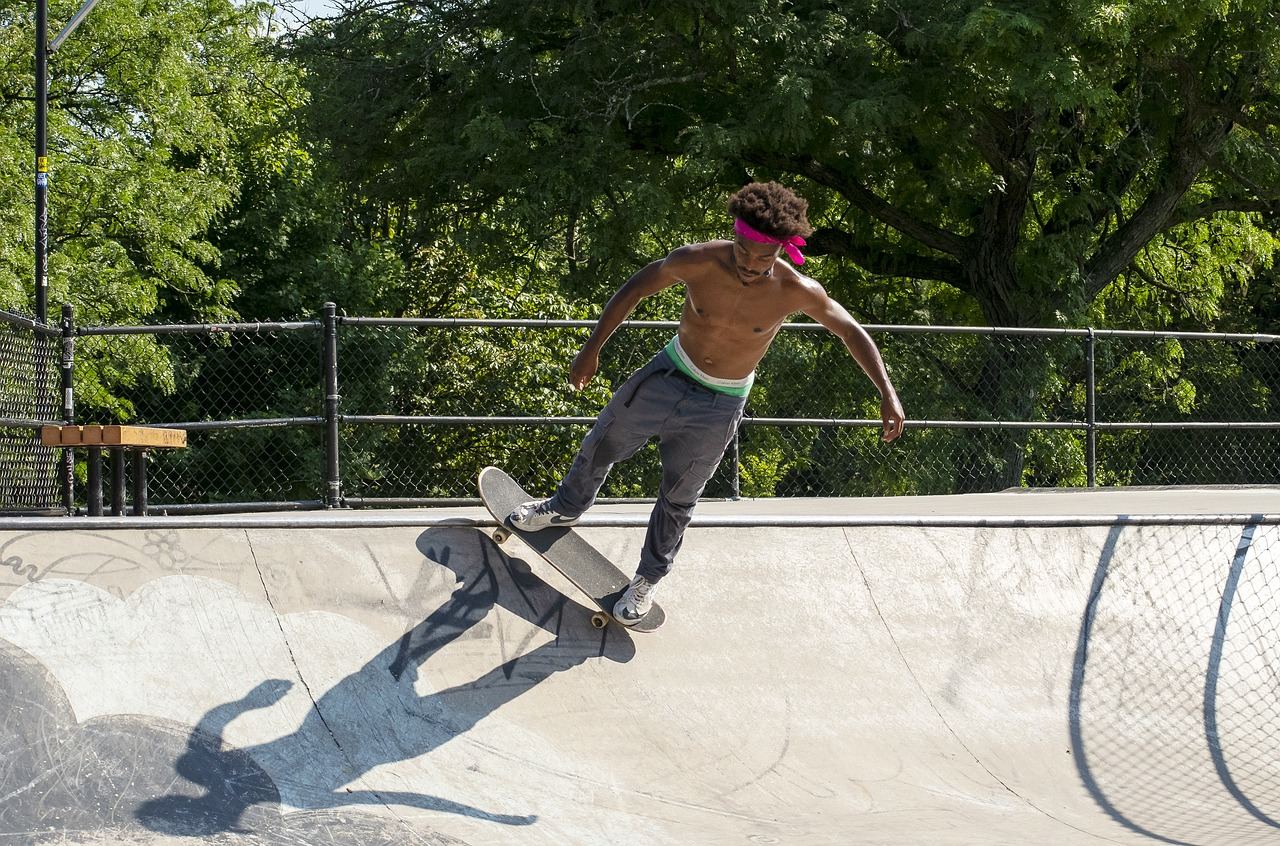
Skateboarding isn't just for teens — it's a lifelong puzzle where muscle memory can bring back skills you thought you lost, regardless of age.
Getting started with skateboarding as a beginner involves mastering the basics of balance and movement on a wheeled wooden deck – pushing for speed, then using body weight and foot pressure to steer, stop, or launch tricks.
Unlike cycling or rollerblading, the board isn't attached to you, which means every movement is a negotiation – and that instability is exactly what makes the skill ceiling so high.
Skateboarding involves mastering balance and control on a skateboard through coordinated physical movements, including pushing off with one foot, shifting weight to steer, and executing tricks like ollies and hippy jumps. Practitioners spend sessions honing these skills through repetitive practice, adjusting their body position and foot placement to land tricks while managing falls and improving …
Skateboarding induces a flow state by engaging practitioners in a focused challenge of board control, where sustained practice yields immediate feedback through successful landings and improved stability. This creates a sense of accomplishment as skills progress, alongside opportunities for creative expression in trick variations and social belonging within skateboarding communities.
You think skateboarding is for rebellious teens. A sport that's all about falling down with no purpose.
That assumption is keeping you from an exciting hobby.
Skateboarding is actually about spatial problem-solving. Surfaces turn into puzzles that you navigate with your body instead of your eyes. Fearlessness isn't the goal; the skill lies in mastering falls, which transforms how you move. You develop a kinesthetic vocabulary. Once you learn a trick, it becomes a permanent part of you.
Consider a 34-year-old who returns to skating after a decade. By the afternoon, an ollie feels familiar again. Muscle memory defies age. It's knowledge that lives in your body, not like the stuff from textbooks.
You're curious if it's too late for you. Or if coordination is an issue.
The next section addresses those thoughts perfectly.
Skating looks effortless from the sidelines, but on the board, it's chaos. The board feels less like a partner and more like a challenge. You're trying to balance on something that's determined to escape.
It's a humbling realization that what you see is miles from what you feel.
The board slips away. Your ankles complain. Even standing feels wrong. Everything looks different now, especially the flat ground, which only adds to the challenge.
The journey starts with learning to balance on a board that seems to resist the idea. Somehow, just rolling in a straight line starts feeling like a real victory. Your attempts at ollies look nothing like the real thing yet, and you're just beginning to understand why. Finally, something small clicks in week four. That moment is enough to change everything about how you approach it.
It's not just a simple curve you have to conquer, but a wall. It's not about talent; it's about sticking with it until you push through.
Foot position feels minor but changes everything. Place your back foot precisely on the tail's edge instead of just anywhere in the back. This simple adjustment builds a strong foundation for your tricks. Watch how your feet move, maybe even in slow motion, to understand what's really happening.
When to start: Morning
Duration: 1 hour
Cost to try: $20
Success criteria: if you finished without falling too many times, do session 2.
Pre-builts often have trucks that are either too loose or too tight, leading to falls.
Use a skate tool to adjust the kingpin nut. Tighten until stable, then loosen slightly for responsiveness.
Beginners often lean forward, launching the board backward.
Align your weight over the bolts and practice standing until it's second nature.
Everyone goes for the ollie first, ignoring basics.
Dedicate your first weeks to mastering kick-turns. This groundwork speeds up your ollie progress.
Skate shoes lose essential board feel as they wear.
Check for sole compression; a thin sole wrecks your kickflip learning.
Pushing off with your front foot feels right but throws off your balance.
Video your technique to catch bad habits early. Switch to using your back foot to push.
Skate parks are where the action is, but don't overlook parking lots or street spots.
Your driveway can be a good starting point for learning the basics. Most cities boast at least one public skate park, usually free and open daily.
**Start with a quick Google Maps search for 'skate park near me'.
Read the reviews, locals often share session times and crew information in the comments. Skatepark.com's park finder is also a great resource, especially for discovering parks that may not appear in standard mapping apps.
Instagram and TikTok can quickly plug you into the local scene. Search for your city + 'skate' to find tagged spots and gain access to the informal network. USA Skateboarding's website provides updates on sanctioned events and lists regional clubs, which are helpful if competitive skateboarding interests you.
Approach the park proactively: say you're new and you don't want to disrupt the flow.
This shows you respect park etiquette, often earning you helpful advice.
Skaters appreciate those who recognize the space's flow.
Acknowledging that goes a long way in building rapport.
Not all skateboarding needs a skatepark. Choosing the right style saves you from buying the wrong board.
Street skating uses curbs, stairs, and ledges as your urban obstacle course.
Ideal for city dwellers. Great if you can't easily get to a skatepark.
Vert skating means hitting halfpipes and bowls. It's about speed, big air, and less ground tricks.
Steeper learning curve. Best for those with solid board control after a bigger rush.
Longboarding is for those who prefer relaxed rides and easy commuting. Wider and longer boards make it perfect for downhill cruising.
Great entry point. Boards cost $80–$150, and it's a friendlier learning curve.
Bowl or park skating involves smooth concrete with no street hazards. It's about flow and transitions, overlapping with vert but without the height.
More beginner-friendly. Perfect for those with skatepark access building up to more styles.
Freestyle skating is all about flat-ground tricks and board manipulation. It's footwork-heavy and feels more like a dance discipline.
Ideal for solo practice. Best for those who prefer setting their own pace without a skatepark crowd.
Another variant that pulls from the same roots is Whitewater Rafting.
If you want a related angle, Sporting Clays is the natural next stop.
Another variant that pulls from the same roots is Free Solo Climbing.
Most beginners spend months trying to land tricks – perfecting their foot position, memorizing the motion, watching the same tutorial seventeen times. The real problem is they're learning tricks before they've learned how to fall.
The key skill is commitment through the pop – your weight should move into the trick, not away from it.
Every bailed ollie or timid kickflip happens because you're retreating before the board leaves the ground. Flinching mid-trick keeps you from completing the motion.
Roll off your board at speed without falling – just step off smoothly. Do this until bailing feels boring instead of scary.
Film yourself from the side to see where your weight goes at pop. If you lean back before the board rises, that's the flinch.
Try stationary ollies on carpet or grass. Stay over the board through the full jump. Staying centered is what matters, not landing perfectly.
Give skateboarding a real shot with 12 sessions over 30 days. That's roughly three times a week, enough to move beyond initial bruises and feel what skateboarding truly is, not just what learning feels like.
If you're studying skate clips to analyze tricks, you're thinking about skateboarding beyond just doing it. Upgrade your deck, find local skate spots, and dive into a committed 90 days with real intention.
If the sessions are just okay and don't cross your mind otherwise, that's a sign. Indifference after 12 sessions suggests skateboarding fits an image, not your personality. That won't change with more time.
If every session felt like a drag beyond the falls, that's clarity. Some activities are less motivating in practice than in theory. No need to force it.
The real giveaway? Spotting someone's foot position as they skate past. Noticing the stance and weight shifts turns this into a skill you're eager to learn.
Still looking for something to do? Browse things to do when bored for more ideas.
A quality beginner skateboard typically costs $80–$150, which includes the deck, trucks, wheels, and bearings. You can find cheaper options around $50, but investing in better quality equipment will improve your learning experience and durability. Additional gear like protective pads and shoes might add another $50–$100 to your initial setup.
Most people can learn to push and balance within a few days of practice, with consistent sessions of 30–60 minutes. Mastering fundamental tricks like ollies and kickflips typically takes 2–6 weeks of regular practice depending on your balance and coordination. Progression beyond that depends heavily on how often you practice and your natural athleticism.
Skateboarding has a moderate learning curve—balancing is easier than expected, but tricks require patience and persistence. Most beginners feel comfortable riding within their first session, though you'll likely fall multiple times while learning tricks. The challenge isn't insurmountable; it simply rewards consistent practice and mental resilience.
Essential safety gear includes a helmet (non-negotiable), wrist guards, elbow pads, and knee pads to protect against common fall injuries. Many beginners skip this gear, but wearing protection dramatically reduces injury severity and builds confidence while learning. As you progress, most experienced skaters at least wear a helmet consistently.
Practicing 3–4 times per week for 1–2 hours will show noticeable progression within weeks, while daily sessions accelerate skill development significantly. Even 20–30 minutes of focused practice beats sporadic longer sessions—consistency matters more than duration. Your improvement plateau will depend on how deliberately you practice specific techniques.
Street skateboarding uses real-world obstacles like stairs, rails, and ledges for technical trick combinations, while park skateboarding involves smooth ramps and bowls designed for flowing movements and bigger air. Street requires precision and quick adjustments, whereas park emphasizes flow and speed. Most skaters eventually try both, as they develop different skills and styles.