BoredomBusted — Find Your Next Favorite Thing To Do
Discover hobbies, activities, places, and ideas that spark joy. Whether you're looking for something creative, active, social, or relaxing, BoredomBusted helps you find your next favorite thing to do.
Browse our hobby guides, things-to-do collections, and place ideas to never be bored again.
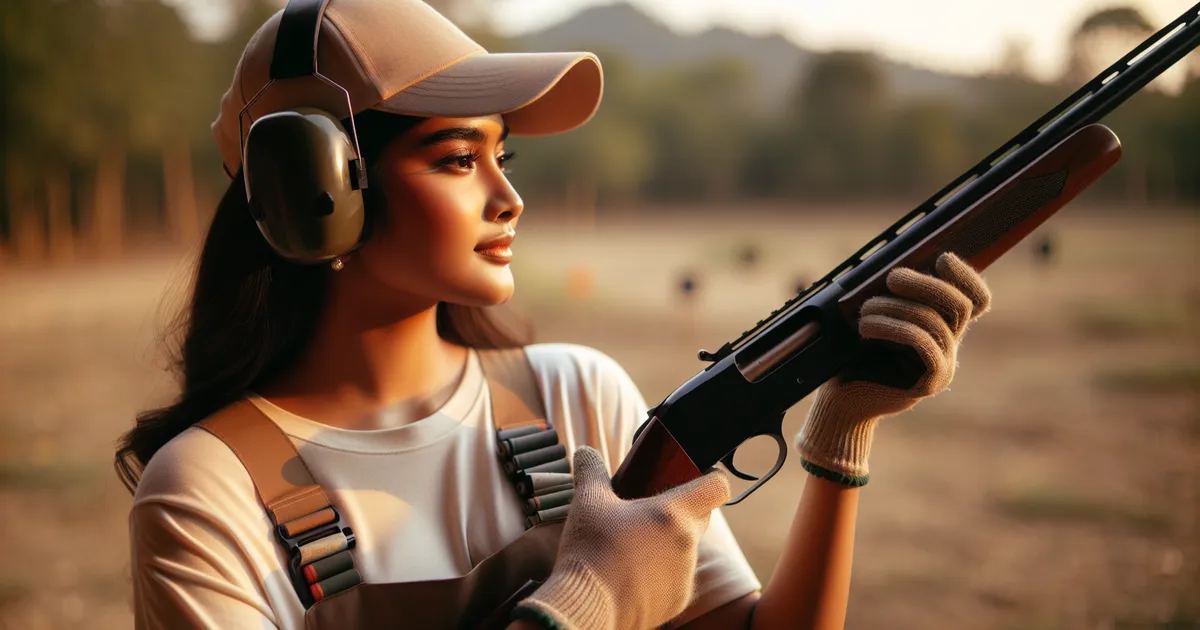
Sporting clays is not just about shooting targets; it’s a rapid-fire mental game where overthinking and complacency will sink your score before you even start.
Getting started with sporting clays as a beginner offers an exciting way to develop your shooting skills while enjoying the great outdoors. Sporting clays is a shotgun shooting sport where you move through an outdoor course and shoot clay targets launched to mimic live birds, rabbits, and flushing game.
Unlike trap or skeet – which repeat the same angles – every station on a sporting clays course is different, making it the closest thing to real hunting without a hunting license.
In Sporting Clays, participants walk a course of 10-15 stations, each simulating different hunting scenarios with clay targets launched at varied angles and speeds. They take turns calling 'pull,' tracking targets mid-flight, and firing a shotgun to break the clays, while physically hiking between stations and engaging in casual strategy discussions with fellow shooters.
Sporting Clays induces a flow state by requiring instant adaptability to new target presentations, merging skill with challenge for total immersion. The immediate feedback from hits and misses allows for rapid technique refinement, while the unpredictable nature of the course combats monotony and fosters a sense of accomplishment through tangible mastery milestones and camaraderie among participa…
You picture sporting clays as a pastime for yacht enthusiasts. Wealthy men in vests, shooting targets that sail smoothly through the air – how hard can that be?
That's a misread for a specific reason. Sporting clays isn't about mindless shooting but about strategy and skill adaptation.
A first-timer at a public course in Georgia captured the feeling well: "I thought I'd be bored after five minutes. By station three, I was genuinely frustrated – and I meant that as a compliment."
Frustration means you're engaged. It signals the sport's depth. The learning curve is captivating, and the next section reveals what your first session truly feels like before mastering any of this.
Watching sporting clays on video looks like casual confidence – people breaking targets with easy rhythm, calling "pull" like they've done it ten thousand times.
You have not done it ten thousand times.
The gap between watching and doing is exactly as wide as you think, and the first session is where you find out.
Before: Targets look slow on YouTube. You'll have a plan. Feels manageable. How hard can a moving disc be?
After: Targets are faster than your eyes expected. Your plan evaporated at station one. "Manageable" was a fantasy. You missed fourteen in a row and your shoulder is already talking to you.
Miss.
Miss again.
Call "pull" anyway.
The people breaking 80 out of 100 aren't naturally better at this – they just didn't stop at the session where quitting felt reasonable, and that session is almost always week two.
One thing worth knowing before you show up: call the target early, not when you're ready.
Most beginners wait until they feel locked in before they call "pull" – which means the target is already at peak speed and past the ideal intercept window before the gun moves.
Call it, find it fast, and trust that your eyes will catch up before your instincts will.
When to start: Early morning
Duration: 2 hours
Cost to try: $20
Success criteria: If you break at least one clay on each of two stations and reload, mount, and call pull without help, do session 2.
New shooters default to cheek-on-stock immediately because it feels like the "ready" position – but a pre-mounted gun kills your ability to track a fast crossing bird.
Call for the clay with the stock below your cheekbone, mount as the gun swings, and let the shot happen at the end of the movement, not the beginning.
Your eyes want to verify the sight picture – it feels logical – but the barrel blurs the moment you shift focus to it, and that's when you shoot behind every target.
Lock your eyes hard on the leading edge of the clay and trust your hands to put the barrel where your eyes are already looking.
Most stations let you watch a "show bird" before your scoring shot – beginners skip this or half-watch it, then react instead of anticipate.
Use the show bird to find the breakpoint first, then work backwards to figure out where you need to start your gun.
A teal bird going straight up feels like it needs a huge lead, so beginners swing past it and keep swinging – the target is actually slowing down, and the correct move is less aggressive than it looks.
Find the spot just above the clay's apex, pause your swing slightly, and fire there rather than chasing it past the peak.
Shooters who keep missing assume they need a tighter choke or different shells, and they spend money before diagnosing anything – almost every new shooter's miss is a lifting head, not a pattern problem.
Before changing any equipment, have someone watch your mount from the side and confirm your cheek stays welded to the stock through the entire shot.
Sporting clays is shot at dedicated shooting ranges and private gun clubs – specifically courses laid out across natural terrain, not flat indoor lanes.
Find your nearest options at shooting range or gun club.
Tell the person at the desk you've never shot sporting clays before and ask if there's a safety briefing before you go out.
That one sentence gets you a walkthrough of the course rules, a squad that isn't in competition mode, and usually someone who'll explain the bird presentation before you call "pull."
Not every format fits every shooter. Know what's out there before you book your first round.
FITASC is the international competitive version – harder target presentations, stricter rules, and no re-shoots if you miss your first look.
It's built for experienced shooters chasing a real challenge, not casual days at the course.
Skip this until you've got a solid season of standard sporting clays behind you.
Five stations, a handful of traps, rapid rotation – you shoot a compressed version of sporting clays in about 20 minutes.
It's the best starting point if you want the variety of sporting clays without committing to a full course walk.
Same course format, but targets fly faster and presentation angles are designed to punish lazy gun mounts.
Best for intermediate shooters who've plateaued and need something that forces better technique.
Not a sporting clays variant exactly – but shooters who add trap practice tighten their straightaway targets faster than almost any drill.
If your going-away birds are your weakness, one round of trap a week fixes that.
All targets thrown from a single compact field, not a roving course. It's popular in Europe and slowly spreading to U.S. clubs.
Good for shooters who want competitive variety but don't have access to a full multi-station layout.
Readers who enjoy this often gravitate toward Slingshot Shooting next.
Pistol Shooting lives in the same world — different mechanics, similar appeal.
Some of the same instincts show up in Rifle Shooting — worth a look if this clicked.
Beginners get distracted by mount speed and trigger timing. The gun itself is fine. The problem is with the eyes.
Master the hold point. Decide exactly where in the clay's flight path you'll start your visual pickup, even before calling for the bird. Not just a vague zone. A precise spot in space. Align this spot with the station's target presentation and commit to it.
A wrong hold point means endless chasing. Move too fast and the brain can't keep up, leading to missed shots behind birds you thought you were ahead of.
When you nail the hold point, the whole sequence slows down, letting you meet the bird instead of hunting for it.
Four sessions over 30 days. One per week, spaced enough apart that you're reflecting between them rather than just grinding through them.
If you're already thinking about your next round before you've put the gun away, that's the signal. Not that you're shooting well — but that the problem is pulling you in. Find a club with a membership and start going regularly, because the improvement curve at this stage is steep.
If you had fun but didn't think about it much afterward, the social context was probably doing the heavy lifting. Try one more session solo or with a stranger before you decide. If the interest still doesn't stick without the group energy, a structured shooting league might fit you better than sporting clays.
If you were watching the clock and doing math on when it would be over, trust that. The outdoor setting, the pace, the repetition — none of that changes much. If it wasn't working by session three, you have a clean answer.
You're watching course walkthrough videos on YouTube at 11pm for no particular reason. Not because you're preparing for anything — just because understanding why someone leads a crossing target differently on station 7 is somehow interesting to you.
That low-level pull toward the technical detail is the clearest signal sporting clays has actually gotten into your head.
If the nearest course is more than 45 minutes away, the logistics will eventually beat the motivation. Every session requires a dedicated trip. When enthusiasm dips — and it will dip — that drive becomes the reason you skip.
A shoulder injury or chronic neck issue is a real structural barrier, not a minor inconvenience to push through. The mount, the recoil, the repeated rotation — they accumulate. Shooting through pain just builds bad mechanics on top of a problem that won't go away.
If you genuinely need fast, measurable progress to stay motivated, the early months here will test that patience hard. Improvement is non-linear — you'll plateau for weeks, then something clicks. That cycle works for some people and quietly kills the interest of others.
Plenty of people land on sporting clays after browsing the full hobbies list — that's a fine place to start, too.
Sporting clays is a clay shooting sport that mimics hunting scenarios with targets launched at varying angles, speeds, and elevations across a course. Unlike trap and skeet, which use fixed shooting stations, sporting clays involves moving between multiple stations with different target presentations, making it more dynamic and challenging.
No, most sporting clays ranges offer shotgun rentals for beginners, and many clubs allow you to borrow equipment for your first visit. Once you're committed to the hobby, purchasing your own shotgun is recommended, with beginner-friendly models available starting around $300–$500.
A typical round of 100 targets costs $15–$30 at most clubs, plus ammunition at $5–$10 per box of 25 shells. Membership fees and range fees vary by location but generally range from $25–$100 annually, with some clubs offering day passes for $10–$20.
A standard round of 100 targets takes 2–3 hours, depending on course difficulty, group size, and how crowded the range is. Most shooters spend about 1.5–2 minutes per station, including setup, shooting, and moving between locations.
Sporting clays has a learning curve, but beginners can enjoy it from day one with proper instruction and realistic expectations. Most ranges offer coaching or beginner-friendly courses, and improvement comes quickly with practice as you develop timing, lead technique, and shooting consistency.
Wear comfortable, weather-appropriate clothing that allows free arm movement, closed-toe shoes with good grip, and eye/ear protection (required at all ranges). Bring ammunition, water, sunscreen, and a small towel; most ranges provide clay targets and can loan or rent shotguns to new shooters.