BoredomBusted — Find Your Next Favorite Thing To Do
Discover hobbies, activities, places, and ideas that spark joy. Whether you're looking for something creative, active, social, or relaxing, BoredomBusted helps you find your next favorite thing to do.
Browse our hobby guides, things-to-do collections, and place ideas to never be bored again.
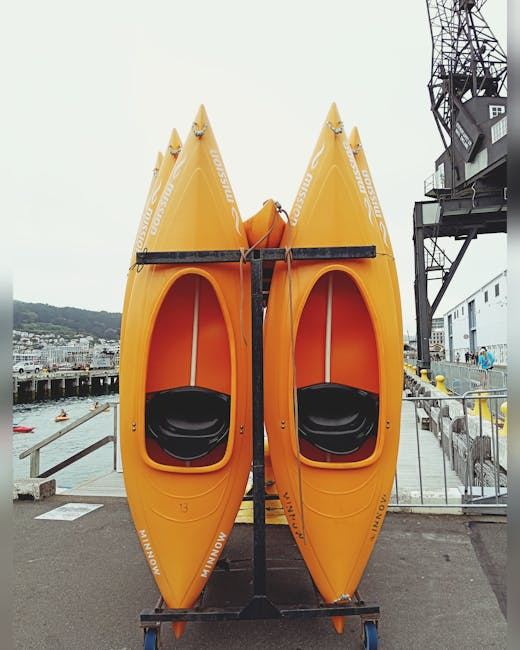
Sprint kayaking looks easy — until you're gasping for breath and balancing in an unstable boat while trying to master technique at full speed.
Getting started with sprint kayaking as a beginner involves mastering the technique of paddling narrow, low-profile boats efficiently over set distances – typically 200m, 500m, or 1000m.
Unlike sea kayaking or whitewater, there's no navigation challenge. The entire game is power output, blade efficiency, and how much discomfort you can sustain at full speed.
Sprint kayaking involves high-intensity paddling on flatwater, where you perform explosive strokes in a narrow kayak, alternating between max effort sprints and moderate paddling. Each session includes specific stroke sequences—catch, pull, exit, recovery—while managing the kayak's balance and stability, demanding both physical coordination and mental focus.
Sprint kayaking fosters a flow state through rhythmic and intense strokes that require precise timing and body coordination, creating immediate feedback as you sense speed gains during intervals. This activity also offers a sense of accomplishment through measurable improvements in speed and endurance, while the novelty of mastering kayak instability keeps each session engaging.
You think sprint kayaking is just rowing but lying down. A narrow boat, a double paddle, calm water — how hard can it be?
That assumption makes sense until your first 500-meter effort humbles you in about ninety seconds flat.
Take a recreational paddler stepping into sprint training for the first time. They're fit, they've kayaked on holidays, they're not worried. Then they discover that a sprint kayak is deliberately designed to be unstable — so every session is also a balance training session, whether they asked for one or not. The boat is fighting them while they're trying to go fast.
Then there's the technique gap. A 140-pound paddler with clean mechanics will consistently beat a stronger athlete who's just yanking the water. And on top of that, managing stroke rate, controlling early race aggression, and holding form when your lungs are on fire are three separate skills that take months to wire together.
Fit.
Experienced on water.
Still completely unprepared.
That's because sprint kayaking doesn't reveal its complexity until you're already trying to go fast — and by that point, you're already hooked enough to want to figure it out.
The gap between "I kayak on holidays" and "I sprint kayak" is wider than it looks — and the learning curve is exactly what closes it.
Watching sprint kayaking looks like controlled power — clean strokes, silent water, a boat that goes exactly where the paddler wants.
Your first session is a different sport entirely. The kayak moves. You don't decide when.
You'll be wet before you launch. Arms burning by minute four. The boat points everywhere except forward, and that's where all your energy goes — not into speed, not into technique, just into not tipping over a hull that has no interest in staying still.
Exhausted after ten minutes. Watching club members glide past you like it costs them nothing. Quietly wondering if you're built for this. Sprint kayaking has a steeper initiation curve than almost any paddle sport — the people ahead of you just paid that cost before you arrived.
Your grip is already too tight. Sprint kayaking uses a loose, rotating grip — hands don't clamp the shaft, they guide it as your torso drives the stroke. White-knuckling the paddle is the single fastest way to exhaust your forearms and build a stroke that takes months to unlearn. The next section covers the mistakes that keep beginners stuck in that frustrating phase far longer than necessary.
When to start: Early morning
Duration: 1-2 hours
Cost to try: $0
Success criteria: If you paddle 15 minutes at a steady rhythm and finish with clean forward strokes and no paddle drops, do session 2.
Sprint kayaking seats feel secure when you lean back. New paddlers do this out of habit, not knowing it ruins their power transfer.
Keep your sit bones forward and spine tall. Picture your torso as a coiled spring. The core should do the work, not the arms.
Pulling the blade far behind the hip feels powerful but adds dead weight. It's not helping you move faster.
End the stroke just as the blade reaches your hip for a smooth, efficient exit.
A tight grip seems natural for beginners but exhausts the forearms quickly.
Hold the paddle lightly during recovery. Tense up only at the catch, then loosen immediately.
Paddling with just your arms neglects the powerhouse of your torso. It leaves about 60% of your potential untapped.
Film yourself from behind. Check for shoulder rotation in every stroke.
Foot pedals look like something you adjust for a better fit, but they boost performance when used correctly.
Push the pedal on the side of the catching blade.
This creates a leg-to-hip connection where true sprint power begins.
Sprint kayaking needs flat, calm water — lakes, reservoirs, and flat-water canals are the standard venues. A marked course and dry boat storage on-site make a location genuinely usable for training.
When you make contact, lead with one sentence: you're a complete beginner and you don't own a boat. That single line gets you a loaner K-1 and a coached intro session at most clubs — instead of turning up to a competitive practice and quietly floundering.
Same flatwater racing format, but you're kneeling in an open or decked canoe using a single-blade paddle. The technique gap from kayak is significant.
Your whole stroke mechanics change — this isn't a minor adjustment. Best for paddlers who want a genuine fresh challenge after getting comfortable in a kayak.
Classified competition for athletes with physical impairments, run under the same sprint distances and rules. Adaptive equipment is tightly regulated here — your boat choice actually affects your classification.
This is one of the few Paralympic disciplines where that level of technical scrutiny applies. Best for paddlers managing limb difference, mobility limitations, or similar conditions who still want competitive racing.
Longer distances — typically 18–36km — with portages around obstacles. The fitness demand shifts entirely from explosive power to sustained aerobic output.
Boat costs are similar, but you'll want a touring-oriented K1 rather than a pure sprint hull. Best for sprint paddlers who find the 200m and 500m distances feel over before they've warmed up.
Technically its own discipline, but many sprint kayakers cross over. It's a 20-person paddling crew in a long ornate boat, racing 200–500m — and gear cost is near-zero since boats and paddles are almost always club-provided.
The team dynamic is what solo sprint completely lacks — and for a lot of paddlers, that's exactly the point. Best for people who want the flatwater racing experience without committing to solo training.
Sprint kayaking's rougher, less predictable cousin — long narrow boats designed for open water and downwind runs rather than still lanes. Balance demands are noticeably higher, and you will swim.
Best for sprint kayakers near a coast who want their flatwater fitness tested by conditions they can't control.
If you want a related angle, Recreational Kayaking is the natural next stop.
For something adjacent, see Kayak Fishing.
Beginners spend their first months pulling harder — more arm, more grunt, more burn.
The paddle isn't what's slowing you down. Your hull angle is.
The one skill is rotation-first catch timing — the discipline of fully rotating your torso before the blade enters the water, so the catch happens at maximum reach with your core already loaded, not your arm.
Most paddlers dip the blade at 70% rotation and pull with their shoulder. That's not a sprint stroke — that's a rowing machine with worse posture.
When your blade catches at full rotation, your lats and obliques drive the stroke instead of your deltoids. Those muscles don't fatigue in the third race — your shoulders do.
Without it, you'll plateau around 6–7 km/h in a K1 and wonder why faster paddlers look effortless while covering twice your distance per stroke.
Start on dry land. Sit on a chair with a broom handle, rotate until your front shoulder touches your chin, then pause one beat before "catching." Train that pause until it's automatic.
Once the pause feels natural on land, take it to the water with a marker drill. Place a piece of tape on your cockpit edge — your top hand must cross past it before the blade enters the water. If it doesn't, your catch is early.
The third drill is the honest one: film a 50m sprint from a dock or bank, then watch only the frame the blade enters the water. Check whether your torso is still mid-rotation or already past center. Most paddlers who think they've fixed their catch see the footage and find they haven't.
Most people quit before they have real information. Six sessions over 30 days gives you enough to actually decide — three to stop fighting the boat, three more to feel what the stroke is supposed to do.
Before session four, you're mostly managing discomfort. After six, the discomfort is familiar — and you'll know whether you want more of it.
You're thinking about your catch angle between sessions. You noticed your split time dropped and you want to know why. That specific loop — small measurable change, unexplained, demanding an answer — is how sprint kayaking actually hooks people.
Book a coached assessment. Your technique is already limiting your ceiling.
You didn't hate it — you also didn't think about it once when you weren't in the boat. That gap usually means the idea of sprint kayaking appealed more than the reality.
Extend by four sessions only if you haven't yet paddled on open flat water in good conditions. Environment matters more than most people expect.
Not nerves. Not soreness. A specific reluctance before each session that didn't ease once you were on the water.
Read that honestly. The sport doesn't get less technical, less repetitive, or less solitary — and if those things didn't improve after six sessions, they won't.
You keep watching on-water footage — not race highlights, but technique breakdowns. Catch position, rotation, blade angle. That specific curiosity about how the stroke works, not just what it produces, is the actual tell.
No navigable flat water within 45 minutes of where you live. You need a lake, a calm river, or sheltered water available consistently — train in gaps and you'll never build the continuity the sport requires.
Shoulder instability or a history of rotator cuff injury. The high-volume, high-rotation stroke loads the shoulder joint in a very specific way. Paddlers with unresolved shoulder issues get hurt — often quietly, over months — and this isn't boilerplate caution.
You need a team environment to stay motivated. Sprint kayaking is a solo training sport — racing is individual, most on-water work is individual. Club culture helps at the edges, but if you've historically quit solo training, you'll quit this.
For a wider menu of options, see our list of hobbies.
If sprint kayaking feels like too much to commit to right now, browse what to do when you're bored for lower-stakes ideas.
Entry costs vary based on location, but expect $50–$150 for a single race entry and $200–$800 annually for club membership and coaching. Equipment rental typically runs $30–$60 per session if you don't own a kayak; purchasing a sprint kayak ranges from $1,500–$5,000+. Many clubs offer starter packages and used equipment at lower prices.
You don't need to be elite to start—most clubs welcome beginners of all fitness levels. Sprint kayaking builds explosive power and endurance, so expect your fitness to improve significantly within weeks. A basic level of cardiovascular health and core strength helps, but training will develop both.
You can learn fundamental paddling technique and complete your first flatwater sprint in 4–8 weeks with regular coaching and practice. Competitive performance typically requires 6–12 months of consistent training, but you can participate in beginner races much sooner. Most clubs structure beginner programs to get you racing within your first season.
The basics—paddling straight and building speed—are easier than they appear, but mastering synchronization with teammates (in doubles or crews) and race strategy takes dedicated practice. Individual technique refinement is ongoing even for experienced paddlers. With patient coaching, most people find the learning curve manageable and rewarding.
At minimum: a sprint kayak, paddle, personal flotation device (PFD), and water-appropriate clothing. Most clubs provide kayaks during introductory sessions, so you can start with just a PFD and athletic wear. As you progress, you'll invest in your own kayak, specialized paddles, and race kit.
Competitive paddlers typically train 4–6 times per week, combining on-water sessions, dryland strength work, and technique drills. Beginners can see progress with 2–3 sessions weekly. Training frequency increases as you prepare for race season, usually peaking 8–12 weeks before major competitions.