BoredomBusted — Find Your Next Favorite Thing To Do
Discover hobbies, activities, places, and ideas that spark joy. Whether you're looking for something creative, active, social, or relaxing, BoredomBusted helps you find your next favorite thing to do.
Browse our hobby guides, things-to-do collections, and place ideas to never be bored again.
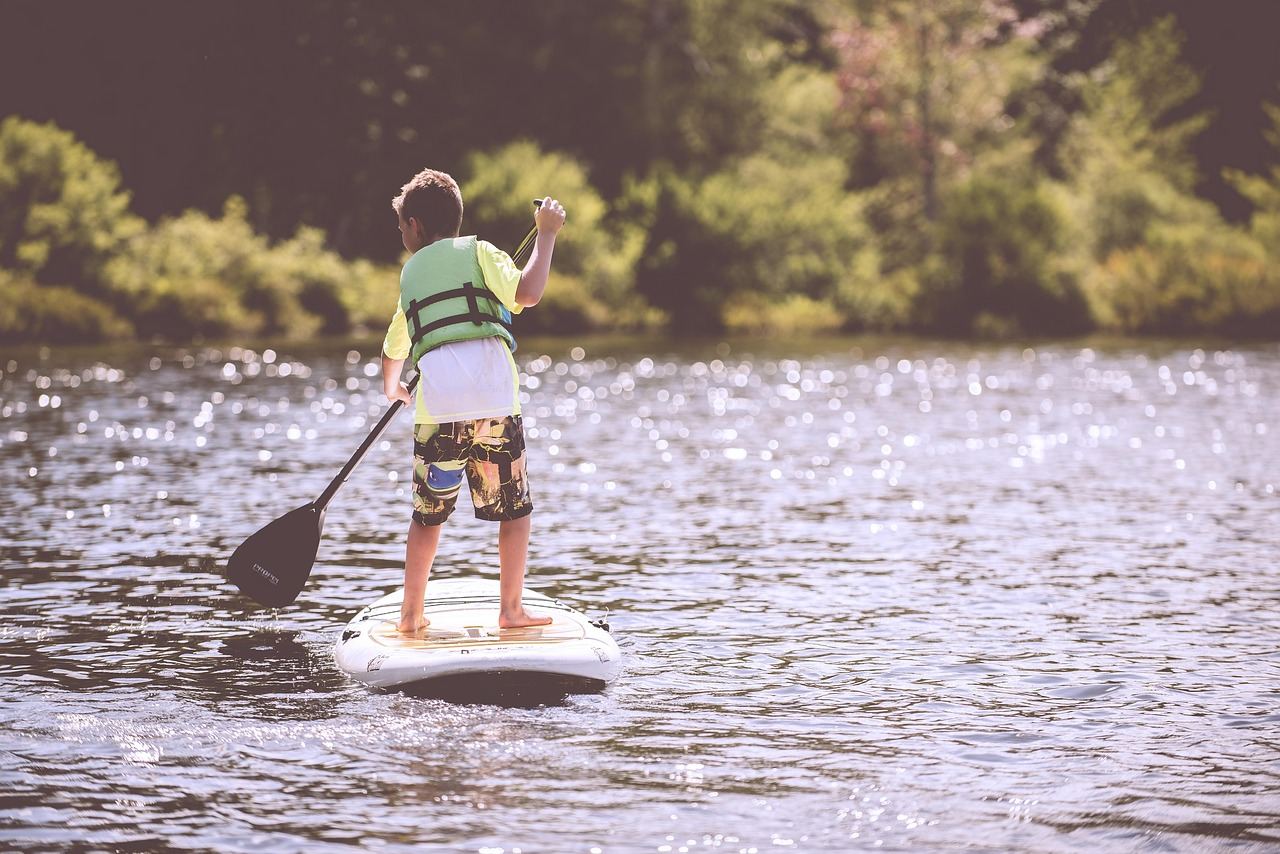
Most think Stand-Up Paddleboarding is a once-a-year vacation hobby, but its constant core engagement and skill ceiling make it a mental workout that'll zap your attention like few other activities.
Getting started with stand-up paddleboarding as a beginner is an enjoyable way to experience the water while improving balance and core strength. Stand-up paddleboarding is a water sport where you stand on a large, buoyant board and use a single long paddle to move across the water.
Unlike kayaking or surfing, you're fully upright the whole time – which means your core is working constantly, and you can actually see where you're going.
In stand-up paddleboarding, you stand upright on a paddleboard, using a single-bladed paddle to navigate calm waters, rivers, or ocean flats. You engage your core muscles to maintain balance against gentle waves or currents, shifting your weight as you alternate strokes with the paddle. This involves scanning your surroundings for obstacles and adjusting your posture and paddle technique as neede…
Stand-up paddleboarding induces a flow state through the need for constant balance and attention to technique, where each stroke provides immediate feedback, fostering skill improvement. This activity also promotes social belonging through group paddles and racing, offers a sense of accomplishment after overcoming physical challenges, and delivers novelty with changing water conditions that stimu…
You think Stand-Up Paddleboarding is a vacation activity. Something you do once in Hawaii, post to Instagram, and never think about again.
That assumption is costing you one of the best full-body-plus-mental-health combos available without a gym membership.
A friend who paddles a local reservoir three mornings a week describes it as "the only hour where I'm not thinking about anything else" – not because it's relaxing, but because the water won't let you zone out.
The gear side of this is where most beginners stumble before they even get wet – and knowing what actually matters will save you a lot of money and frustration.
Gliding across water on a paddleboard seems easy. In reality, it's not.
Expect about 45 minutes of wobbling. You'll likely fall, and you'll realize that your core muscles are in for a workout.
In your first try, you'll find your feet too close together, you might paddle backwards, and you might look down at your board. Your arms will try to do all the work. But when you fall, it'll probably be sideways into shallow water.
By the time you figure out how to keep your hips loose and blade angle correct, things start to change.
Your gaze shifts to the horizon, your whole body works together, and you stay up longer than expected.
There's one vital prep step before hitting the water. Begin with your feet shoulder-width apart and perpendicular to the board's centerline. Most beginners mistakenly position themselves as if they're on a surfboard, making small ripples seem daunting.
That first week feels wobbly, tiring, and a bit embarrassing. For most newcomers, it's a humbling experience. The ones who return for week two aren't necessarily more fit, but they've realized that embracing instability is essential.
When to start: Morning
Duration: 1-2 hours
Cost to try: $30
Success criteria: if you finished without falling into the water, do session 2.
The arms look like the obvious engine, so that's where beginners put all their effort – and they're exhausted in twenty minutes.
Bury the blade fully before you pull, rotate from your hips and core, and treat your arms as connectors rather than the power source.
It's instinct to shift weight toward your heels when something feels unstable – but on a SUP, that sinks the tail and makes steering a nightmare.
Find the carry handle on the deck and put your feet equal distance either side of it – that's your center point, and the board will immediately feel calmer.
Nobody reads the instructions, and holding a paddle like a broom handle feels totally natural until your wrists start aching.
One hand goes on the T-bar grip at the top – always – so your whole stroke becomes a push-pull motion instead of just a drag.
Choppy water makes beginners tense up and go rigid, which is exactly when the board wins and you don't.
Bend your knees slightly, widen your stance a few inches, and let the board move under you rather than trying to flatten every wobble with your legs.
Most rental setups hand you whatever's available, and a paddle that's too short turns every stroke into a painful crouch.
Stand upright and adjust the shaft so the blade's top edge sits at your wrist when you raise your arm straight above your head – that's the starting point for most paddlers.
SUP happens wherever there's calm water – lakes, rivers, coastal bays, and reservoirs are the most beginner-friendly spots.
Ocean paddling exists, but flatwater is where you build your balance first.
Walk up and say: "I've never done this before – what do I need to know before I get on the water?"
That one sentence gets you a rundown of local hazards, a nudge toward the right board width, and usually someone who'll paddle near you the first time out.
This is standard SUP – calm lake or bay, no agenda, just paddling.
It's the baseline everything else branches from.Best for beginners, full stop.
A basic inflatable board runs $400–$800 and handles this perfectly.
You do yoga. On a board. On water.
The instability forces deeper engagement from your core – which sounds fun until the tree pose sends you in.
Best for people already comfortable on a board who want a low-impact, high-focus challenge.
Longer distances, narrower boards, more efficient glide.
Think half-day or full-day paddles along coastlines or rivers.
Best for people who get bored in one spot and want the hobby to go somewhere – literally.
Touring boards run $800–$1,500+ and don't perform well in surf or tight spaces.
Shorter, more rockered boards designed to catch and ride ocean waves.
Completely different skill set from flatwater paddling.
Best for people already comfortable on a board who live near a coast – not a beginner move.
Expect a dedicated surfing SUP to cost $700–$1,200 on top of whatever you already own.
River rapids on a paddleboard.
The boards are stubby and bombproof; the learning curve is steep and the wipeouts are real.
Best for experienced flatwater paddlers who have also spent time in kayaks or reading moving water.
Don't start here – this is the variant you graduate into, not the one you begin with.
A close neighbor worth considering: Endurance Racing.
Some of the same instincts show up in Sprint Kayaking — worth a look if this clicked.
Inline Skating is a sibling pursuit and often surfaces the same kind of curiosity.
Beginners often mistakenly focus on balance, squatting lower, and gripping the paddle tightly.
Balance doesn't matter as much as you think. It's actually a symptom of what you're missing.
Hip-driven paddle engagement is the true skill to master. Each paddle stroke should start with your hips rotating toward the blade, not your arms pulling through the water.
Lead with your hips. The board tracks straight. Your core handles instability, and the paddle grips the water without slipping.
Without using your hips, you're spending twice the energy for half the speed. Arms tire quickly, the board veers constantly, and you're stuck correcting it.
Engage your hips, and everything stabilizes. Your movements become rhythmic, not reactive. Sessions transform from tiring slogs to smooth, enjoyable rides.
Six sessions over 30 days. That's your test — spaced out enough that you're reflecting between them, not just grinding through a crash course.
SUP needs enough repetition to get past the wobbly phase. Most people find their balance starts clicking around sessions three or four, which means six sessions is the minimum before you have real data.
If you're already thinking about where else you could paddle — different lakes, a river stretch, maybe an ocean bay — that's not excitement about SUP, that's the hobby itself taking hold. Buy used gear, figure out storage, and stop renting.
If you paddled, it was fine, and you didn't think about it in between, that's honest data. Indifference at session six usually means SUP is scratching an outdoor itch that something cheaper or closer would scratch better. Try a kayak or a trail run before you invest further.
If the instability genuinely stressed you out every single session — not first-session nerves, but persistent dread each time you showed up — that's a clean signal, not a character flaw. Some people don't like being on unpredictable surfaces. That's just useful information.
You're not even on the water yet, but you keep pulling up satellite maps of local lakes and reservoirs — scoping put-in spots on your commute, noticing rivers you'd never paid attention to before. That low-level map habit is one of the clearest early signals this hobby has actually landed.
If you have a chronic balance condition or an inner ear issue, no amount of practice changes that baseline — SUP will be a constant fight, not a release. That's worth knowing before you spend anything.
If you live landlocked with no realistic access to calm flatwater within 30–40 minutes, the logistics will grind you down before the habit ever forms. Enthusiasm doesn't survive a 90-minute round trip every single time.
If you need your hobby to be low-cost and low-storage, SUP fights you on both from day one. Boards are bulky, gear adds up, and rental fees stack fast before you own a single thing.
No prior experience is necessary — beginners can learn the basics in a single session. Most people achieve basic balance and paddling technique within 30 minutes to an hour of getting on the water. Starting in calm, shallow areas like lakes or protected bays makes learning much easier.
Entry costs range from $30–50 per hour for rentals, making it accessible to try before investing. If you decide to buy your own board, expect to spend $300–1,500 depending on quality and type. You'll also need a paddle ($50–200), a personal flotation device, and a dry bag, though many rental facilities provide basic equipment.
Most people notice improved balance and core strength within 3–4 weeks of regular paddling. For significant fitness gains, aim for 2–3 sessions per week of 45 minutes to an hour each. The full-body workout engages your core, shoulders, and legs with every stroke.
Yes — paddleboarding provides a low-impact cardio and strength-training workout that burns 300–500 calories per hour depending on intensity. It's particularly effective for core stability, balance, and shoulder strength while being gentle on joints. You can adjust the intensity by paddling on flat water or tackling waves and longer distances.
Calm lakes, bays, and sheltered lagoons with minimal wind and flat water are ideal for learning. Avoid rivers with currents, ocean waves, and windy conditions until you've built solid balance and paddling skills. Always wear a personal flotation device and paddleboard with a partner or in designated areas with lifeguards or instructors nearby.
Beginners typically feel comfortable for 45 minutes to an hour before fatigue sets in. As you build endurance, most paddleboarders enjoy 1.5 to 3-hour sessions for exploration and fitness. Weather conditions, water temperature, and personal fitness level all affect how long you can safely paddle.