BoredomBusted — Find Your Next Favorite Thing To Do
Discover hobbies, activities, places, and ideas that spark joy. Whether you're looking for something creative, active, social, or relaxing, BoredomBusted helps you find your next favorite thing to do.
Browse our hobby guides, things-to-do collections, and place ideas to never be bored again.
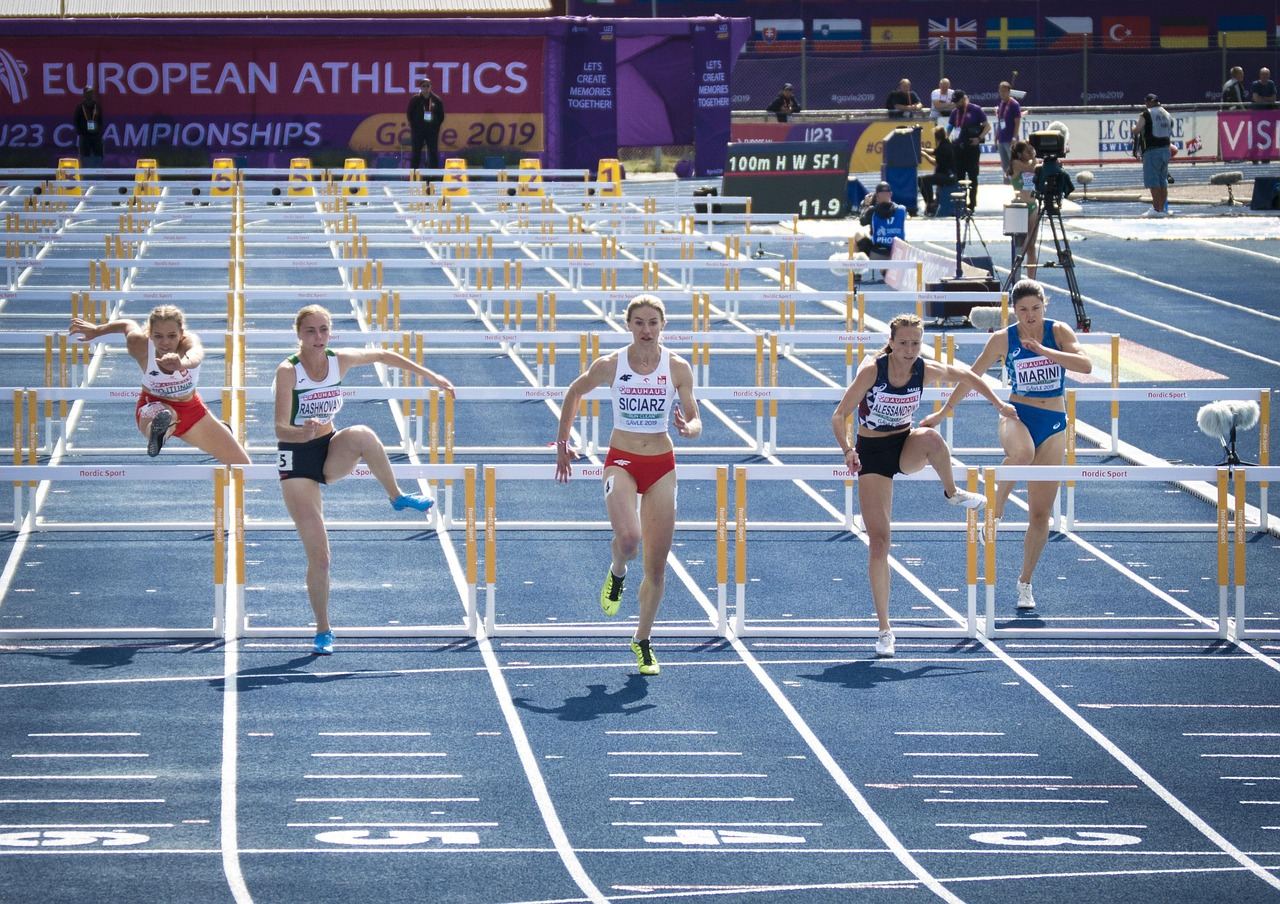
Steeplechase isn't just running through obstacles — it's a lesson in race intelligence, where learning to read the course can drop half a minute from your time.
Learning steeplechase as a beginner involves mastering the unique combination of distance running and obstacle navigation across 3,000 meters while clearing four barriers and one water jump per lap — repeated every single lap.
Flat distance running rewards whoever can sustain pace the longest. Steeplechase punishes whoever loses focus for even a single stride. A mistimed jump mid-race costs seconds that no amount of conditioning can recover.
That makes it a technical sport disguised as a distance event. If you can run 3K comfortably but ignore the barriers, you will lose to a slower runner who can clear them cleanly.
In steeplechase, participants perform track-based drills that include mastering barrier clearance, executing water jump simulations, and completing continuous hurdles with a focus on rhythm and technique, often in sets of 10-15 reps. This involves specific actions like lead and trail leg whips, L-7 stretches for hip flexibility, and sprinting over hurdles spaced apart, all while simulating the co…
Steeplechase fosters a flow state through repetitive, focused drills that require skill mastery, providing immediate feedback as you improve your technique and timing. The challenge of navigating hurdles and water jumps creates a sense of accomplishment and keeps participants engaged, while the physical intensity helps release endorphins, further alleviating feelings of boredom.
You think steeplechase is just running with some extra steps. Hurdles, a water pit, and a lot of mud — nothing special beyond that. That assumption is going to make every other section on this page confusing.
Steeplechase values efficiency over speed. Your 5K time doesn't matter if you're losing ten seconds every lap on the barriers. The water jump tests rhythm, not speed — revealing race intelligence more than split times.
This event combines endurance, sprint mechanics, and technical skills.
Athletes who plateau in flat racing discover new potential here.
Take the collegiate runner who switched to steeplechase mid-year after stagnating in the 5K for two seasons. Instead of trying to get faster, she got smarter, dropping nearly forty seconds by learning to read the race instead of just running it.
The gear and entry point are simpler than you'd expect.
But what you choose to train first will determine whether month one feels like progress or punishment.
Watching steeplechase on a screen, it looks like running with occasional water features. Then you're standing at the edge of a 28-inch fixed barrier with a pit on the other side, and your brain quietly refuses to cooperate. That gap – between spectator and participant – is exactly where the first few sessions live.
Your first session, the barriers aren't the problem. You'll clear them fine in isolation. It's the water jump that makes you look like you've never covered ground on two legs. **The issue isn't fear – it's that your takeoff foot hasn't become instinct yet**, and every approach is a half-second of panicked recalculation.
By week three, the rhythm starts connecting. One or two barriers per rep actually flow – which is enough to keep you coming back. Then week four introduces a new kind of tired: the hip flexors, specifically, because steeplechase uses a jump-stride that flat running never asks for.
Most people fixate on the water jump. It's photogenic and frightening. But the barrier that actually breaks your rhythm is the one right after it – you're still recalibrating when it appears.
Quit-worthy.
Embarrassing in a specific way.
Nobody sees what you're building yet. The runners who stick past week three understood something early: discoordination is the actual first skill. They were methodically burning through it. The next section covers the mistakes that keep people stuck in that phase far longer than necessary.
When to start: Early morning
Duration: 1 hour
Cost to try: $0
Success criteria: If you can clear all 3-5 markers with a smooth lead-leg and trail-leg motion and keep running 10 steps after each jump, do session 2.
The barrier looks jumpable, so beginners try to clear it clean – and land shin-deep in water, completely off-stride.
Plant your lead foot on top of the barrier, not in front of it, and step down into the water rather than leaping over it.
Flat-track runners import their even-split mentality directly into steeplechase, which destroys rhythm and stacks fatigue fast.
Shorten your stride two steps before each barrier to reset your approach – treat the jump as part of the rhythm, not an interruption to it.
Sprint hurdlers assume the mechanics transfer, but steeplechase barriers are fixed and you hit them tired, not fresh off the blocks.
Add barrier-specific walkovers and slow-approach step-ups to at least two training sessions per week before you attempt them at pace.
The repeated knee drive over fixed barriers taxes hip flexors in a way that pure running doesn't – beginners figure this out mid-race.
Add standing hip flexor holds and weighted leg raises to your strength work from week one, not as rehab after week eight.
The barriers slow everyone down, so beginners overcorrect by hammering the open stretches – and they're cooked by the final water jump.
Run your first lap deliberately half a beat slower than feels necessary; steeplechase rewards patience far more than any flat race does.
Steeplechase runs on standard 400m tracks — specifically ones with a water jump installation. Most of those live at college campuses or dedicated club facilities, not your average municipal track.
Start at usatf.org/find-a-club — filter by "track and field" and your state. That's the USA Track & Field club directory, and it's the fastest legitimate path to a coached environment with actual barriers.
Once you find a club, be specific when you show up. Tell the coach you're interested in steeplechase — not just distance running. That one sentence is what gets you into a barriers session instead of a generic tempo run. It also means someone will be watching when you approach the water jump for the first time — which matters more than you'd think.
No water jump here – just regular hurdles on a standard track. It focuses on rhythm and speed. Perfect for beginners looking to gain confidence in jumping before tackling the water pit.
Indoor track races with altered barrier spacing. Expect fewer obstacles and tighter turns. Ideal for competitive runners seeking consistent race practice beyond the outdoor season.
Ditches, mud, and uneven surfaces replace the track. Barriers lie on natural terrain, adding unpredictability. Great for trail runners or those bored with typical laps. Good shoes with grip are essential to tackle this course.
Shorter races with barriers tailored for smaller frames. Distances are typically 1500m. Best for younger athletes who aren't ready to face adult barrier heights.
Mix steeplechase with obstacle course elements like walls and crawls. Expect varied pit widths. Great for those who love the steeplechase concept but want more than traditional track events.
Cyclocross lives in the same world — different mechanics, similar appeal.
If this resonates, Cross Country Running explores a similar direction.
Longboarding lives in the same world — different mechanics, similar appeal.
Most beginners grind laps and obsess over sprint speed. The real bottleneck isn't fitness – it's that they're treating the water jump like a wall instead of a transition.
The one skill is water jump rhythm – specifically, learning to plant your lead foot on the barrier at exactly the right distance so you step off into the pit, not down into it. An inch too close and you drop straight into the water; an inch too far and you stall your momentum completely. It's a spatial skill, not a strength skill.
Once your plant foot distance becomes automatic, you stop losing two to three seconds per lap on recovery – and those seconds compound over 3,000 meters. Without it, your "fitness gains" are mostly compensating for a technical leak that training more will never fix.
Eight sessions over 30 days — roughly twice a week, spaced enough to recover between them and actually notice what changes.
Steeplechase isn't a single skill. It's a stack: stride rhythm, water jump approach, barrier clearance, pacing across 3,000 meters. Eight sessions won't make you good, but they'll tell you the truth.
If you're showing up early and staying late, that's not enthusiasm — that's your body telling you it wants to solve the obstacle problem, not just run past it. Start logging your barrier splits and find a club with a real steeplechase pit.
If the sessions feel neutral — tolerable but not compelling — that's not a green light. Run one more two-week block focused purely on water jump work before you decide. That specific element either hooks you or it doesn't, and two weeks is enough to know.
If you're dreading sessions before you get there — not nervousness, actual dread — that's a clean answer. Steeplechase pairs sustained distance fatigue with repeated barrier impact, and some runners find that combination punishing in a way that doesn't motivate them, and no amount of reframing changes that.
You're watching race footage — not sprints, not road races, specifically steeplechase — and you're studying the water jump approach like it's a problem you're personally going to fix. Distance runners who don't feel that pull toward the obstacle drop the barriers the moment training gets hard.
A history of knee or ankle instability is a structural concern worth taking seriously. Repeated barrier landings on uneven footing stress those joints in ways flat-track running doesn't, and that stress compounds fast once you're training at race volume.
Without access to a regulation steeplechase pit, your water jump mechanics are guesswork — and that guesswork catches up with you in races, not in training where you can quietly compensate.
If your schedule supports only one run per week, the skill stack won't consolidate. Steeplechase rewards frequency in a way most track disciplines don't — occasional effort doesn't move the needle here.
Not sure steeplechase is for you? The full hobby list covers everything else worth considering.
Steeplechase is a long-distance running event that combines elements of middle-distance and cross-country racing, typically covering 3,000 meters with 28 hurdles and 7 water jumps. Unlike regular track running on flat surfaces, steeplechase challenges runners to navigate both fixed obstacles and varied terrain, requiring not just speed but tactical planning and mental toughness.
Most runners need 12–16 weeks of dedicated training before competing in their first steeplechase event, though this depends on your current fitness level. If you're new to running entirely, expect 6–12 months of base-building before starting formal steeplechase training.
You'll need running shoes (preferably spikes for traction), comfortable running clothes, and access to a track or training facility. Most clubs and schools provide the hurdles and water jump setup, so you don't need to invest in expensive equipment initially—just commit to a training program.
While steeplechase is more technical than casual running, beginners are welcome if they have basic running fitness and are willing to learn proper hurdling technique. Starting with track running fundamentals and attending coaching sessions will help you progress safely and avoid injury.
Entry fees for local steeplechase races typically range from $15–$50, while joining a running club or track team usually costs $50–$200 annually. If you want coaching support and regular training facilities, expect to budget an additional $300–$600 per year for club memberships or coaching programs.
Common steeplechase injuries include stress fractures, ankle sprains, and knee issues from repeated impact on hurdles. Proper technique coaching, gradual training progression, and cross-training with low-impact exercises like swimming can significantly reduce your injury risk.