BoredomBusted — Find Your Next Favorite Thing To Do
Discover hobbies, activities, places, and ideas that spark joy. Whether you're looking for something creative, active, social, or relaxing, BoredomBusted helps you find your next favorite thing to do.
Browse our hobby guides, things-to-do collections, and place ideas to never be bored again.
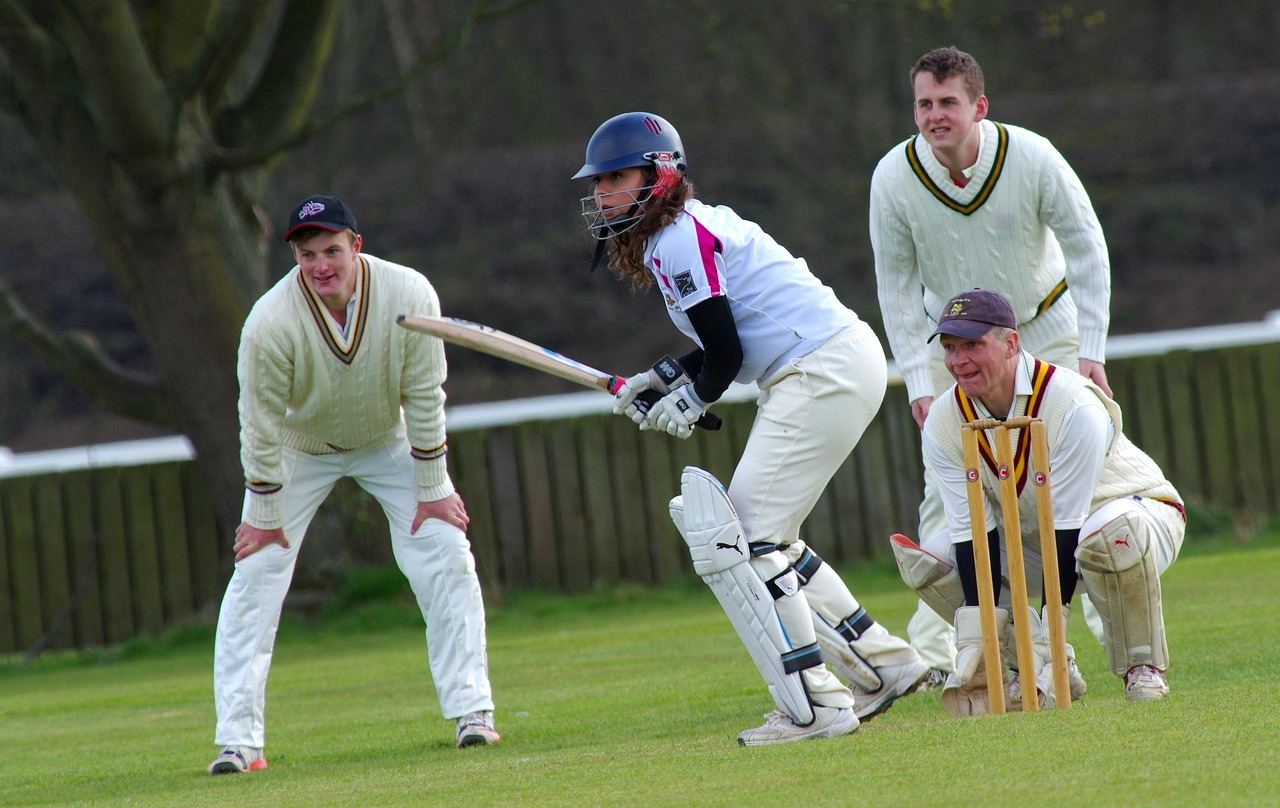
T20 isn’t just a barrage of sixes — it’s a strategic chess match with each ball reshaping the game’s narrative, revealing a hidden layer of tension and tactics that a highlights reel can’t capture.
Getting started with T20 cricket as a beginner can be an exciting way to engage with the sport, as each team faces exactly 20 overs (120 balls), making a full match wrap up in about three hours.
Unlike traditional cricket, which can stretch across five days, T20 strips the game down to pure aggression:
In T20 Cricket, you practice aggressive batting through drills that include hitting underarm throws and executing ramp shots, while your bowling focuses on accuracy with yorkers and quick releases, complemented by fielding exercises that improve agility and explosive movement, all tailored to simulate the intensity of a match in a condensed timeframe.
T20 Cricket combats boredom by creating high-stakes skill feedback loops, where immediate results from boundary hits and successful yorkers foster a sense of accomplishment and encourage ongoing engagement, while the format's fast pace facilitates flow states that immerse participants in the action.
You think T20 is cricket with the boring parts removed. Highlights reel. Sixes and coloured kits and nothing your grandfather would recognise. That's the assumption – and it's exactly backwards.
Here's what actually happens when you watch your first T20 knowing this: a dot ball stops being nothing and becomes a bowler winning a round.
India vs Pakistan, 2022 T20 World Cup. Last over, 16 runs needed. Virat Kohli on strike. Every single delivery was a chess move with consequences.
That's not a highlights reel – that's pressure compressed into six balls, and it's almost unbearable to watch.
Once you see the tactics, you can't unsee them – and the next section is about how to actually start watching this way, not just hoping it clicks.
Watching T20 cricket feels fast, instinctive, almost casual. Playing it reveals exactly how much is happening in the half-second before a bowler releases the ball. The gap between those two things is where most beginners live for the first month.
Your first net session will involve a lot of fresh air. The ball arrives, you swing, you miss — and your footwork was wrong before the delivery even pitched. By week two you start making contact, but the ball goes nowhere near where you aimed it. The thing that catches beginners off guard is how physical the confusion feels — weight on the wrong foot, bat angling the wrong way, timing that evaporates under pressure.
Somewhere around week three, one shot clicks. Usually a cut or a pull — something with a clear trigger. You'll spend the rest of that session trying to repeat it. Week four you're still inconsistent, but you stop being surprised. That shift — from surprised to unsurprised — is the real marker that something is working, not the scoreboard.
T20 batting rewards pre-meditation more than reaction. Top batters decide their shot before the ball is bowled, based on field placement and length patterns — not after it leaves the hand. Pick one shot you'll commit to against a specific delivery type. You'll learn more in an hour than a month of "reacting naturally" will teach you.
The next section covers the mistakes that keep beginners stuck in the frustrating half of that curve longer than necessary.
When to start: Morning
Duration: 2 hours
Cost to try: $10
Success criteria: If you hit 10 cleanly controlled shots into the cone-marked area and can name one batting plan and one field placement, do session 2.
T20's fast pace makes beginners feel like every ball is an opportunity – and bowlers exploit that feeling on purpose.
New bowlers think raw speed wins wickets in T20, but length and variation are what batters actually misread.
Copying Rohit Sharma's opener role because you like him will put you in situations your current skills can't handle.
Beginners focus entirely on the ball, missing gaps that are already open and waiting.
The panic-hitting mentality feels justified in T20, but early wickets collapse innings faster than low run rates do.
T20 cricket happens at cricket grounds, sports clubs, and increasingly at indoor cricket centres for net practice and off-season training.
The national governing body is the England and Wales Cricket Board (ECB). Outside England, check Cricket Australia, Cricket South Africa, or your national equivalent – they all run club-finder tools built the same way.
Walk in and say: "I'm new, I want to bat and bowl but I haven't played organised cricket before."
That sentence specifically gets you a net session with someone watching, not a spot in the Saturday XI where you'd be invisible.
Tape-ball replaces the hard leather ball with a tennis ball wrapped in electrical tape. That single swap changes how the ball swings, how hard you can hit, and whether you leave with all your fingers intact.
This is the lowest-barrier entry into real T20 cricket — no protective gear, no expensive kit, just a roll of electrical tape and a tennis ball.
Pairs cricket rotates every batting pair through a fixed number of overs. No one bats for 40 minutes while everyone else fields.
It's built for small groups and mixed-ability games where keeping everyone active matters more than finding out who wins.
Indoor cricket runs in a netted arena with modified scoring rules. It's T20 compressed into something faster and more chaotic.
Facility hire usually runs $15–30 per session depending on your city. The trade-off is year-round cricket with no ground, no pitch, no weather dependency.
The Hundred gives each team 100 balls instead of 120, with bowlers delivering in blocks of five from the same end. It sounds like a minor tweak.
It isn't. Captains think about rotations and matchups completely differently — this is not the first format you should learn, but a strong one to graduate into.
Street cricket has no fixed rules, no gear requirements, no pitch. You play with whatever space and players show up.
Most people actually start here. It's a perfectly legitimate place to stay if you're in it for fun, not competition.
If this resonates, Shortboard Surfing explores a similar direction.
Field Hockey is a sibling pursuit and often surfaces the same kind of curiosity.
Wakeboarding is a sibling pursuit and often surfaces the same kind of curiosity.
Most beginners obsess over hitting harder.
The power was never the problem – reading the bowler's length early is what separates a clean 18-ball 30 from a frustrated 6-ball duck.
The one skill is pre-movement trigger reading – watching the bowler's wrist position and release point in the last stride, not the ball after it leaves the hand.
By the time the ball is airborne, you've already lost 40% of your decision window.
When you train your eyes to pick up release cues, you stop reacting and start positioning – your feet move before conscious thought kicks in.
Without it, every short ball surprises you, every yorker jams you, and you spend the whole innings timing it badly when the real problem is you were always a half-second late.
Good timing isn't a gift. It's just earlier information.
Commit to 6 sessions over 30 days — roughly one or two per week. That's enough time to get past the coordination wobbles and actually feel what batting or fielding is like when your body starts remembering the movements.
Fewer than 6 and you're not testing the hobby, you're just visiting it.
If you're already thinking about the next thing to work on before your current session ends — a shot you almost middled, a delivery length that felt natural — that's not enthusiasm about sport in general, that's cricket specifically pulling at you. Start looking for a local club with beginner nets.
If the sessions felt fine but forgettable, you probably haven't found your role yet. Cricket rewards specialists — if batting hasn't clicked, one session focused entirely on bowling or wicketkeeping can reset everything. Add 3 more sessions in a different position before you walk away.
If you felt low-grade resistance every time you showed up — not nerves, not difficulty, just not wanting to be there — that's a clean answer. Cricket has a long feedback loop, and if the process holds no interest, the occasional good moment won't carry you through months of practice. Spend that time on something with a shorter feedback loop.
You're watching a T20 match and mentally tracking why a bowler changed their line, or why a batter switched to switch-hits. That low-level tactical curiosity — reading the game within the game — is the thing that keeps players coming back for decades.
If your nearest club or net facility is more than 45 minutes away, the logistical friction will quietly kill the habit before it has a chance. Cricket isn't a solo sport you can practice meaningfully in a backyard.
If you have existing shoulder, elbow, or lower back issues, the bowling and throwing mechanics put repeated stress on all three. This isn't solvable with minor modifications — playing through it usually makes things worse.
If your schedule only frees up in 20-minute pockets, cricket doesn't compress well. A net session needs 90 minutes to be worth the trip, and match days are a half-day commitment minimum.
When you don't want to commit, things to do when bored is a better starting point.
A typical T20 match lasts around 3 hours from start to finish, including breaks and innings changes. This compact duration makes it ideal for evening entertainment, fitting comfortably between work or school and dinner plans. The entire experience, including team walks and ceremonies, rarely exceeds 3.5 hours.
You need access to a TV, streaming service, or stadium ticket where T20 matches are broadcast—major platforms include ESPN+, Willow TV, and regional sports channels. A basic understanding of cricket rules helps, but many newcomers pick up the flow quickly by watching a few matches. Joining online fan communities or cricket subreddits can accelerate your learning.
T20 is actually one of the easiest cricket formats to follow since matches are shorter and focus on exciting batting moments rather than strategic patience. The basic concept—teams taking turns batting and trying to score more runs—is straightforward, and commentators explain plays in real-time. You'll understand the fundamentals within one or two matches.
Ticket prices vary widely based on location, teams, and venue, typically ranging from $20 to $200+ for premium seats. International T20 tournaments and franchises (like IPL or Big Bash) often have higher prices than domestic matches. Check official venue websites or ticketing platforms like Ticketmaster for specific events in your area.
T20 is played at every level—from professional tournaments to local cricket clubs, school teams, and casual weekend matches. Many communities have amateur T20 leagues where beginners can join recreational teams with minimal experience. Start by contacting your local cricket club to find casual games or beginner-friendly formats like 'tape ball' cricket.
T20 limits each team to 20 overs (120 balls) per innings, creating faster-paced, high-scoring matches compared to Test cricket (5 days) or ODI cricket (50 overs per side). The shortened format encourages aggressive batting, unexpected finishes, and entertainment-focused play rather than grinding strategic battles. This makes T20 perfect for viewers with limited time or those seeking drama-filled sports action.