BoredomBusted — Find Your Next Favorite Thing To Do
Discover hobbies, activities, places, and ideas that spark joy. Whether you're looking for something creative, active, social, or relaxing, BoredomBusted helps you find your next favorite thing to do.
Browse our hobby guides, things-to-do collections, and place ideas to never be bored again.
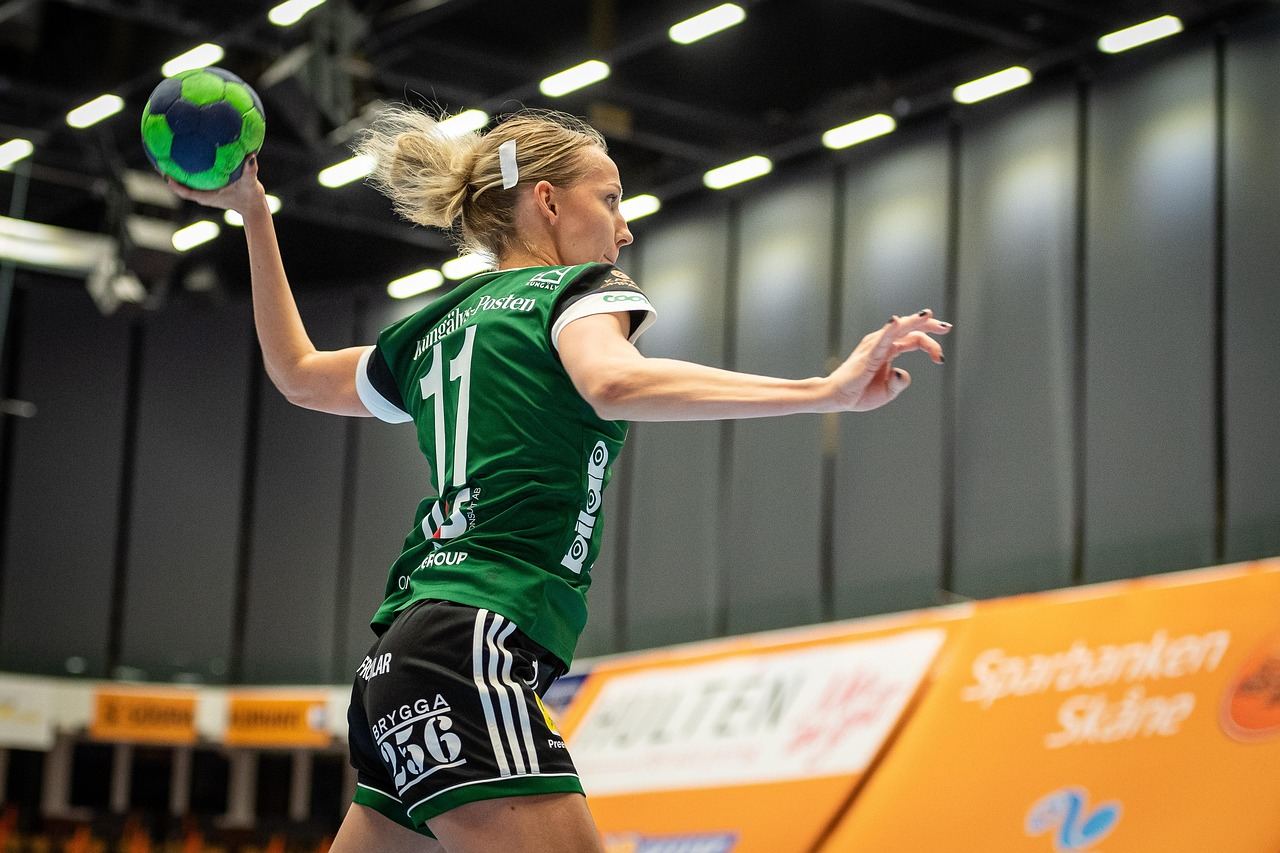
Team Handball isn't just gym class nostalgia—it's a high-speed, full-contact game with defenders body-checking aerial shots over 60 mph.
Getting started with team handball as a beginner involves understanding the basic rules and techniques of this fast-paced sport where two teams of seven compete to score goals.
Games run two 30-minute halves.
What separates it from basketball is constant contact, a dedicated goalkeeper, and scoring rates that make low-scoring games nearly impossible.
In Team Handball, players engage in fast-paced drills and scrimmages, sprinting to ball stations, dribbling towards target zones, and executing various shot types while competing against defenders, all within a structured yet fluid practice setting that emphasizes skill repetition and teamwork.
Team Handball combats boredom through skill feedback loops, where immediate success or failure from shooting and passing drills fosters a flow state, while competitive elements provide a sense of accomplishment and social belonging through teamwork and camaraderie.
You think Team Handball is that thing from middle school gym class – the one nobody understood and everyone forgot by lunch.
Maybe you picture a circle of people awkwardly passing a foam ball. That image is wrong in almost every way that matters.
Handball is a full-contact sport played at sprint speed. Defenders are legally allowed to body-check you mid-air, and goalkeepers face shots clocked above 60 mph.
The court is smaller than a basketball court, which means there's nowhere to hide. Every player reads the defense, sets picks, and executes in real time – not just the point guard.
Tactically, it more closely resembles basketball or hockey than anything you played in PE. Possession cycles, zone defense, fast breaks, and set plays are all live simultaneously.
A club-level match runs two 30-minute halves with near-constant transitions. Possession changes hands in seconds.
Basketball pace.
Hockey mentality.
Soccer-sized crowd.
That's the sport most people dismiss from a single foggy gym memory. The one everyone forgot by lunch turns out to be one of the fastest team sports on the planet.
If you're now wondering whether you could actually play this thing, the entry bar is probably lower than you're bracing for – and that's exactly where we're going next.
Watching team handball on screen, it looks like a chaotic, faster version of soccer with more elbows. Then you hold the ball for the first time and realize your hand doesn't grip it the way you expected — and everyone is already moving. The game has already started making decisions without you.
Most beginners walk in excited, vaguely athletic, and confident about throwing. They walk out winded after six minutes, unsure where to stand, and getting called for walking violations they didn't know existed. The gap between where you think you'll be and where you actually are is the whole first session. Hooked anyway — that part tends to be accurate.
Week one is mostly just tracking the ball while everyone else seems to operate on some unspoken movement system. Week two, the three-step rule stops blindsiding you — but your passes are still either too soft or aimed at someone's face. Then week three happens: you start reading the defense a half-second earlier, which means you stop reacting and start anticipating — and the game goes from frantic to actually readable. By week four you're not good, but you're playing rather than just surviving, and that's the line where the hobby actually begins.
The rule that trips up almost everyone early is the pivot foot reset. The three steps don't start when you dribble — they start the moment you catch the ball, every single time, even mid-motion. Confusing at first.
Penalized constantly at first.
Suddenly obvious.
Once it clicks, you stop feeling like you're playing catch-up with a rulebook and start playing actual handball. That's the moment most people decide they're coming back next week — and it's also when the mistakes that stall progress start to matter.
When to start: Morning
Duration: 1 hour
Cost to try: $10
Success criteria: If you complete a mini-match with at least 3 clean passes and 1 shot on goal, do session 2.
Throwing Full Power Before Learning the Jump Shot
New players assume handball is about arm strength, so they wind up and launch from flat feet every time.
Fix this by practicing the jump shot footwork first – step, gather, jump – with zero ball, until the rhythm is automatic.
Beginners watch the ball instead of reading the defense, so they plant themselves and wait for a pass that never comes.
Move before you're open, not after – drill cutting toward the post and back out repeatedly until repositioning feels like your default, not an afterthought.
Handball balls are smaller than a basketball, and first-timers instinctively palm them – which kills wrist snap and control on every throw.
Switch to a fingertip grip in warm-ups first, pressing all five fingers into the seam until it stops feeling wrong.
Most beginners come from sports where dribbling is optional, so they walk three, four, five steps without thinking.
Count out loud – literally say "one, two, three" – every single rep in your first month of practice until the limit is physical instinct.
New defenders react to fakes because they're locked onto the ball or the throwing hand – the hip doesn't lie, the hand does.
In every defensive drill, train your eyes to track the shooter's hip, not the arm, and the number of fakes that beat you will drop immediately.
Team handball is played in sports halls and indoor courts — the same spaces used for basketball or volleyball, so they're easier to find than you'd think.
When you show up, say exactly this: "I'm a complete beginner, is there a spot for me to train with the group?" That phrase gets you paired with a coach or veteran player instead of dropped into a scrimmage you're not ready for.
Played on sand with four-player teams and smaller courts. Spin shots and jump throws are actively rewarded with bonus points – so the game feels flashier than the indoor version.
Best for anyone who wants a lower-stakes, summer-social version before committing to a full squad.
No special gear beyond beach-appropriate athletic wear – the court is the expensive part, and public beaches handle that.
Smaller court, smaller ball, fewer players. It's the standard entry point for kids, but adults use it for pickup games when a full eleven-person roster isn't happening.
Best for beginners or anyone trying to learn the rules without the chaos of eleven people running at them.
The original outdoor version played on a grass pitch, now mostly historical. Almost nobody plays this recreationally anymore – it's worth knowing exists so you don't accidentally cite century-old rules.
Skip this one unless you're a purist or writing a history paper.
Standard handball adapted so all players compete from wheelchairs. Rules around movement and dribbling shift significantly, but the core throwing and goalkeeping structure stays intact.
Best for players with mobility limitations who want the real competitive experience, not a watered-down version.
A regional variant popular in Central Europe, played with a smaller team and different boundary rules. It's close enough to standard handball to be confusing if you learned one and then encounter the other.
Best for players based in Czech or Slovak communities where it's still actively organized.
If the texture of this appeals to you, Ultimate Disc is built on similar bones.
Whitewater Rafting lives in the same world — different mechanics, similar appeal.
If you want a related angle, Sepak Takraw is the natural next stop.
Most beginners spend all their energy on throwing harder. The real bottleneck is the 3-second decision before the throw.
The skill is reading the defense's weight shift – watching where a defender's hips and feet are committed, then exploiting the half-second before they can recover. It's not about reacting faster. It's about learning to see commitment in a defender's body before they even know they've shown it.
When you can spot a committed defender, every pass, shot, and fake becomes a calculated choice instead of a guess – and suddenly the game slows down in a way that has nothing to do with fitness. Without it, you'll keep throwing into bodies and wondering why your technique isn't translating to goals.
Eight sessions over 30 days. Two a week — which is exactly what most recreational leagues and club practices run anyway.
Fewer than eight and your body hasn't had time to stop feeling completely lost. More than eight in month one and you're outpacing your skill level — which mostly just makes the sport feel harder than it is.
If you're running plays in your head on the commute home and showing up early to warm up, that's not enthusiasm for exercise. That's a sport clicking into place. Find a structured club, tell the coach you want to develop, and stop treating it like a trial.
If you don't hate it but you don't think about it either, you probably haven't found your position yet. A natural goalkeeper is a completely different athlete from a wing or a pivot — handball rewards people who find their role. Add four more sessions and specifically ask to rotate positions before you write this off.
If you dreaded going every single time, that's data, not failure. Handball is loud, physical, crowded, and demands constant spatial awareness under pressure — eight sessions is enough to know whether that energizes or drains you.
If your area has no club within 45 minutes, the logistics will kill this before the sport gets a chance. Handball can't be approximated solo — it needs a court, a goal, and other people. Check access before you get attached to the idea.
Shoulder or wrist injuries that haven't fully healed are a real structural problem. The throwing mechanics put significant repetitive load through the rotator cuff — this isn't a hobby you can ease into with a compromised joint.
If you strongly prefer individual sports — where your results are yours alone — the team accountability here will feel like friction, not fun. Every defensive breakdown involves six people. Every fast break is a group decision made in under two seconds. That's the whole sport.
You stumble onto a match clip and immediately rewatch the goal sequence — not because you were looking for handball content, but because the speed and geometry of it held your attention without permission. That's the signal.
Still looking for something to do? Browse things to do when bored for more ideas.
Team handball is played between two teams of 7 players each (6 outfield players and 1 goalkeeper), with the goal of throwing a ball into the opponent's net. Players can run with the ball for up to three steps, must bounce or pass it afterward, and matches typically consist of two 30-minute halves for adults. The team with the most goals at the end wins.
No, beginners of any athletic background can learn handball, though basic coordination and teamwork skills help. Most clubs offer beginner-friendly training sessions that teach fundamental techniques like passing, shooting, and footwork from scratch. It's more important to have enthusiasm and a willingness to learn than previous sports experience.
Membership costs vary by location and club level, typically ranging from $200–$600 annually, with some clubs charging monthly fees of $30–$80. Additional costs may include equipment (jersey, shoes, gloves) at $100–$300 initially. Many beginner programs offer trial sessions for free to assess if the sport suits you.
Most beginners develop solid foundational skills within 3–6 months of regular training (2–3 sessions per week). Competitive-level ability typically requires 1–2 years of consistent practice and game experience. Progress depends on your athletic background, training frequency, and dedication to improvement.
Essential equipment includes handball shoes (with good grip and ankle support), a handball (sizes vary by age/gender), and comfortable athletic clothing. Many clubs provide jerseys and balls for training, so beginners can start with just proper footwear and clothing. You may eventually invest in protective gear like gloves and a sports bag.
Handball does carry a moderate injury risk due to its fast pace and physical contact, with common injuries being sprains, strains, and minor collisions. However, proper warm-up, technique training, and adherence to safety rules significantly reduce injury rates. Most recreational players avoid serious injuries by playing smart, wearing appropriate gear, and respecting game rules.