BoredomBusted — Find Your Next Favorite Thing To Do
Discover hobbies, activities, places, and ideas that spark joy. Whether you're looking for something creative, active, social, or relaxing, BoredomBusted helps you find your next favorite thing to do.
Browse our hobby guides, things-to-do collections, and place ideas to never be bored again.
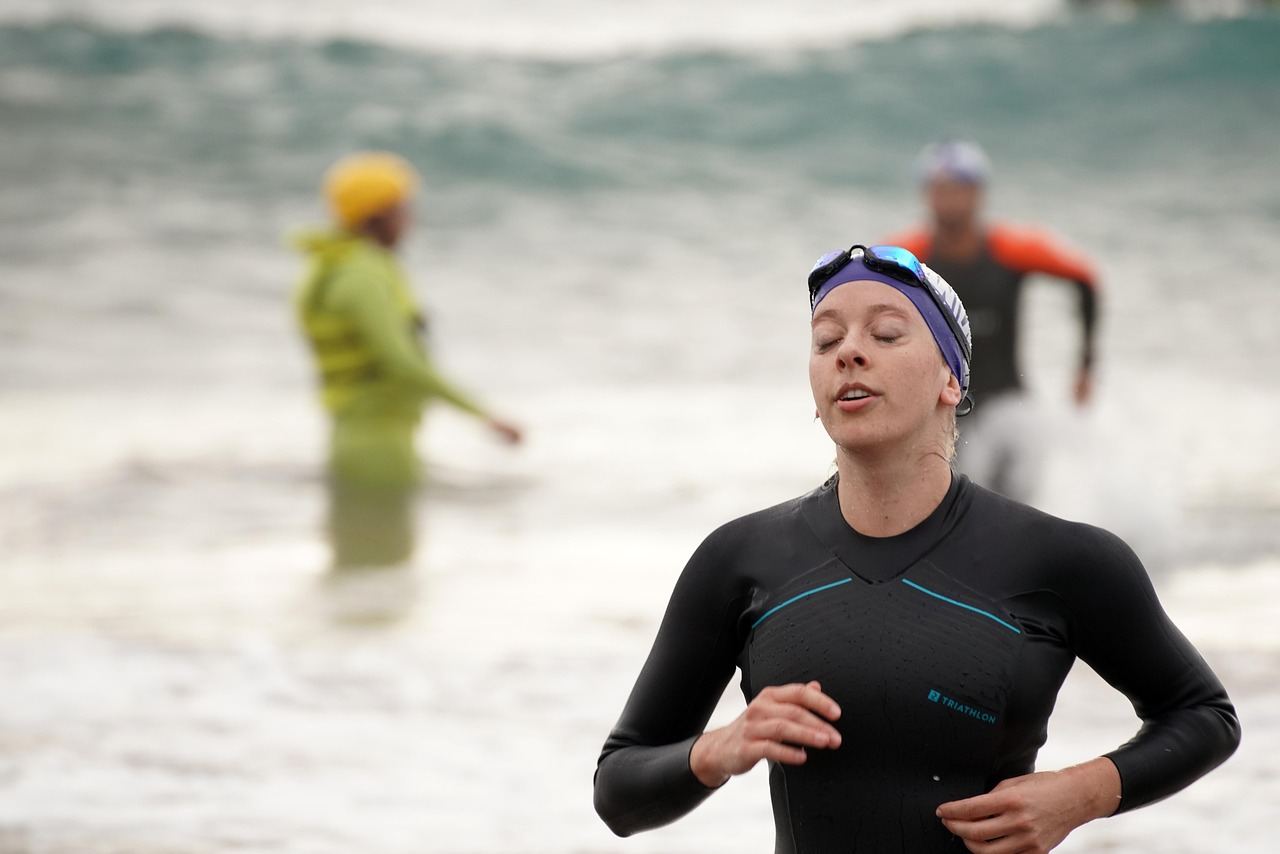
Triathlon isn’t about elite athletes and punishing yourself; it’s a community of everyday folks tackling three sports — even a nurse can finish a sprint tri after just eight weeks of training.
Getting started with triathlon as a beginner involves mastering the essentials of swimming, cycling, and running to prepare for a seamless experience in your first race. Triathlon combines swimming, cycling, and running into a single timed race – completed back-to-back with no breaks between disciplines.
Unlike running or cycling alone, the real challenge isn't any one sport – it's managing three different bodies of fitness, gear, and pacing strategy at once.
In triathlon, participants swim distances of 2-7 kilometers, cycle for 2-5 hours, and run between 6-12 miles, often training in structured sessions that focus on specific disciplines or combine them in 'brick' workouts to enhance endurance and efficiency.
Triathlon fosters measurable progress through tracking performance metrics like pace and power output, which provides immediate feedback, a sense of accomplishment, and clear goals that combat feelings of monotony and disengagement.
You think triathlon is for people who wake up at 4am by choice and own a bike that costs more than a car payment. You picture Ironman. You picture suffering. That's the wrong unit of measurement entirely.
A nurse in her mid-forties finished her first sprint tri after eight weeks of training. She couldn't swim laps continuously when she started. She finished middle of the pack and signed up for another one before she got to the car.
That's the actual entry point – not the finish-line photo with the finisher's medal after 140.6 miles.
The gear question is coming next, and yes – you can start without spending $3,000.
Watching a triathlon on YouTube looks like a logistics problem someone else solved. You assume the hard part is fitness. The hard part is doing three things badly at the same time and not quitting between them.
The swim will humble you first. Strong runners routinely gasp at 200 meters because open-water breathing is nothing like running cardio — it's a technique problem, not a fitness problem. Your first few sessions in the water will feel like starting from zero, even if you're fit everywhere else.
The first time you run off the bike, your legs will feel like concrete — that sensation has a name, brick legs, and it doesn't warn you before it arrives. Transitions feel like rest breaks at first. They're not rest breaks — they're a fourth discipline, and treating them as one changes your race time more than an extra training session will.
One thing pool training won't teach you: sighting. Every 8–10 strokes in open water, you need to lift your head and spot a buoy. Skip that skill and race day becomes a panicked zigzag that adds real minutes to your swim. Train it deliberately from session one, or you'll learn it the expensive way on the course.
Three sports. Every session exposes a different gap. That's not a flaw in the sport — it's exactly why triathletes come back, because there's always something specific to fix, and fixing it is genuinely satisfying. The next section covers the mistakes that keep beginners stuck in the frustrating half of that loop longer than they need to be.
When to start: Early morning
Duration: 2 hours
Cost to try: $0
Success criteria: If you complete a continuous swim-bike-run brick with a smooth transition to each sport and finish the last 5 minutes of the run at a steady jog, do session 2.
Having a goal makes people push hard every single day. Then they wonder why they're exhausted by week three.
The fix is a polarized intensity split. 80% of your sessions should feel genuinely easy — conversational pace, low heart rate, no grinding. Save hard efforts for one or two sessions per week, maximum.
Swimming, cycling, and running feel manageable in isolation. The moment you dismount after a long ride, your legs turn to concrete. That transition is a specific physiological adaptation — and you have to train it deliberately.
Do a short run immediately after every third or fourth ride. Ten to fifteen minutes is enough. The goal is teaching your muscles to switch fuel sources under fatigue, not logging extra mileage.
A saddle just 2cm too low kills power output. It also torches your knees over long distances. Getting this wrong doesn't just slow you down — it puts you on the injury list before race day.
Use the heel-on-pedal method as a baseline: your leg should be fully extended at the bottom of the stroke. Book one professional bike fit before your first race, not after your first injury.
New triathletes hit the water at 110% and arrive at the bike transition already cooked. The swim is the shortest leg — blowing up there costs you the entire race, not just a few seconds.
Seed yourself at the back or side of your wave. Starting wide keeps you out of the contact-sport scramble at the front.
Treat the first 200 meters as a warm-up with a clock attached. If you can exhale fully and hold a steady stroke, your pace is right. If you're gasping, you've already made the mistake.
T1 and T2 feel like logistics, not training. So most people leave them for race day — and lose two minutes fumbling with a wetsuit and helmet clips under pressure.
Practice the full sequence at least twice before race day: wetsuit off, helmet on, shoes clipped in while moving. Two minutes lost in transition is two minutes you can't run back.
Triathlon training splits across three environments – open water or lap pools for swimming, public roads or cycling paths for the bike leg, and running tracks or trail networks for the run.
Most training happens close to home, stitched together from whatever venues you already have access to.
Triathlon clubs are used to people showing up nervous – say "I'm a beginner training for my first sprint" and they'll slot you into a new-member orientation or a coached open-water session before you've finished the sentence.
That one sentence also saves you from accidentally joining a group hammering Ironman-distance prep on week one.
A sprint is the shortest standard format – typically a 750m swim, 20km bike, and 5km run. This is where almost every beginner should start, not the Olympic or full-distance races YouTube keeps recommending. Gear requirements are identical to longer formats, so nothing changes except the suffering duration.
Double the sprint distance across all three legs. It's the format used at the actual Olympics, which makes it sound prestigious – it's really just the next logical step after you've finished a sprint and caught the bug. No special gear shift, just more training time.
A 1.9km swim, 90km bike, and 21.1km run. This is where the hobby starts requiring serious time investment – multi-month training blocks, not weekend prep. Entry fees jump significantly here, often $300–$400+, and a quality bike matters more at this distance.
3.8km swim, 180km bike, a full marathon to finish. This is a lifestyle commitment, not a hobby dabble – most people who do one have been training triathlon for at least two years. Budget for a proper road or triathlon bike; a department store hybrid won't survive this.
No swimming – just run, bike, run. If open-water swimming is the thing keeping you off the start line, this removes it entirely without sacrificing the multi-sport format you're curious about. A solid entry point if the swim feels like too big a barrier right now.
If the texture of this appeals to you, Sprint Kayaking is built on similar bones.
If the texture of this appeals to you, Endurance Racing is built on similar bones.
Inline Skating is a sibling pursuit and often surfaces the same kind of curiosity.
Most beginners obsess over their swim split or bike pace – they're racing each discipline instead of racing the race. The real plateau isn't fitness. It's that they never learn how to enter each segment already thinking about the next one.
The skill is transition pacing – specifically, learning to exit one discipline at a controlled effort so your body can actually perform in the next. Not go slow in T1. That's not it. It's knowing, on the final 400m of your swim, that you're about to run barefoot across concrete, rack a bike, and immediately hit a climb – and modulating your output now so that sequence doesn't blow you apart.
Athletes who build this skill stop hemorrhaging minutes in the first 10 minutes of each new leg – that's where most amateur race time is actually lost. Without it, you finish the swim gassed, cramp on the bike, and run the first kilometer on legs that never recovered. With it, your transitions start feeling like resets instead of emergencies.
Nine sessions over 30 days — three swims, three bike rides, three runs, spread across the month so you have space to reflect between disciplines rather than just survive them.
That's not random. Triathlon's brutal trick is that hating one discipline while loving another feels like failure — but it's actually just Tuesday.
You need enough reps in each to separate "I'm bad at this yet" from "I genuinely don't want this." Do all three. Don't skip the one you dread.
If you keep finding reasons to go back — even when it's inconvenient, even after a rough session — the multi-sport structure is working for you, not against you. Sign up for a sprint triathlon within the next 60 days. Deadlines make the training real.
If the sessions felt fine but you're not thinking about them afterward, that's not a green light. Tolerating a three-discipline training load for months is a slow grind toward quitting — and tolerating is exactly what that flat response predicts.
If you were watching the clock through most sessions — not just one — that's a clean answer. Triathlon asks too much logistics and time to be something you grit-and-bear indefinitely. Don't reframe that as a discipline problem.
You start doing math in your head — calculating whether you could fit a morning swim before work. Nobody asked you to. That idle scheduling obsession is the actual signal — and it's specific to triathlon because the sport is genuinely logistical.
If you're already solving the puzzle before you've committed, your brain has already committed.
Open water access or pool availability is a real barrier — not a motivational one. If the nearest lap pool is 45 minutes away and closed three days a week, your training will collapse before month two. Full stop.
Triathlon also demands recovery time that stacks. If your schedule already runs at 95% capacity, adding three disciplines doesn't compress — it breaks something else in your life.
If a chronic joint issue affects two or more load-bearing areas, triathlon's cross-training reputation can mislead you. It's still high cumulative volume. Talk to a physio before you talk to a coach.
Most beginners start with a sprint triathlon, which typically includes a 750m swim, 20km bike ride, and 5km run. This distance is achievable within a few months of training and allows you to test whether triathlon is right for you before committing to longer distances.
Training for a sprint triathlon usually takes 12–16 weeks with 4–6 training sessions per week. The timeline depends on your current fitness level and swimming ability, which is often the most challenging discipline for new triathletes.
You can begin with basic equipment for $500–$1,500: a decent bike, running shoes, and a swimsuit. As you progress, investments in a triathlon wetsuit, clip-in cycling shoes, and a road bike can increase costs, but the entry-level gear is sufficient to start.
Triathlon is generally more demanding because it requires training three disciplines, not one, and your muscles face different stresses throughout the race. However, sprint triathlons are shorter overall than marathons and may feel more manageable if you enjoy variety in training.
Yes—many successful triathletes weren't strong swimmers initially and improved through consistent training. Swimming lessons specifically for triathletes are highly recommended, and you can complete the swim portion at a comfortable pace; speed comes with practice.
Transition (switching from swimming to cycling to running) is a critical but learnable skill that usually takes 1–2 minutes per transition. Practice your gear setup and changing routine during training to avoid wasting time and energy on race day.