BoredomBusted — Find Your Next Favorite Thing To Do
Discover hobbies, activities, places, and ideas that spark joy. Whether you're looking for something creative, active, social, or relaxing, BoredomBusted helps you find your next favorite thing to do.
Browse our hobby guides, things-to-do collections, and place ideas to never be bored again.
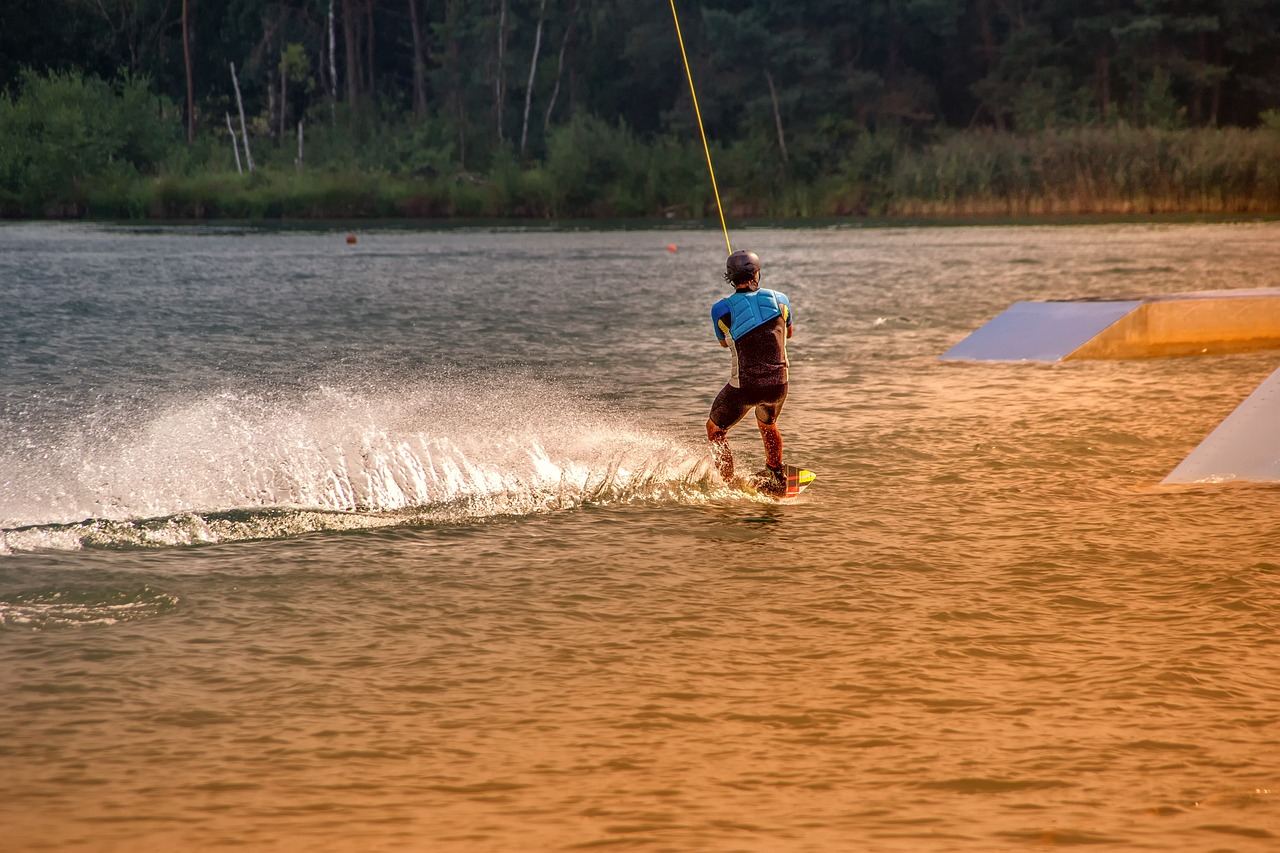
Wakeboarding's magic isn't about flair—it's the micro-decisions and tension release that have a middle-aged beginner up in just two hours.
Getting started with wakeboarding as a beginner involves learning to balance on a buoyant board while being towed across the water's surface at thrilling speeds.
Unlike waterskiing, both feet are locked into bindings – so the board moves with you, making tricks, jumps, and wake-to-wake air genuinely possible for everyday riders.
In wakeboarding, riders are towed behind a boat while gripping a rope, using a board with bindings to navigate water at speeds of 20-25 mph. They perform techniques like cutting across the wake, executing jumps, and landing with precision, all while adjusting their body position for balance and timing their tricks with the boat's movement.
Wakeboarding induces a flow state through high-speed decision-making and trick execution, where the combination of skill and challenge creates intense focus. The immediate feedback from successful landings and the dopamine rush from chaining tricks provide a sense of accomplishment. Novelty is constant as riders adapt to varying water conditions, and social interaction fosters belonging in group …
You think wakeboarding is a summer-vacation flex. A boat, a rope, a guy doing backflips while his friends film from the stern. You're here because you're bored, not because you think this is actually for you.
The boat just moves you forward. Every edge, every angle, every second upright is you making micro-decisions your body doesn't know how to make yet. The water gives you instant feedback that gym equipment never will — and your nervous system learns faster because the consequences are immediate.
The learning curve has nothing to do with athleticism. Skiers, surfers, and snowboarders all describe the same shift — a specific, trainable way of releasing tension that cracks something open physically. You can't logic your way into it. You have to feel it.
A 40-year-old office worker with zero board sports background typically gets up within a single two-hour session. Not gracefully. But up. That's the moment the sport stops being a spectator thing and becomes a personal puzzle.
The gear list looks intimidating from the outside. It's shorter — and cheaper — than you're assuming right now.
Watching wakeboarding looks like someone casually skimming water while doing tricks. Getting up for the first time feels like being dragged face-first through a washing machine. Arms already tired. Rope yanking your shoulders forward. Knees won't cooperate. Board keeps spinning sideways. Water up your nose, again — then the board finds its angle, your weight shifts back, the rope pulls you up instead of forward, and you're standing. It's maybe four seconds.
Those four seconds repeat, badly, for most of week one. Week two you stay up longer, but turning feels like a completely separate skill you haven't started learning yet. By week three, edge control starts clicking — you'll feel the difference between fighting the water and actually riding it. Week four is the real turning point: you stop being exhausted just trying to exist on the board.
Before session one, remember this: keep your arms straight and let the boat do the pulling. Every beginner instinct says to pull the rope toward you — that's what kills your balance immediately. Straight arms, patient weight shift, trust the boat.
Around day two of week one, you'll want to quit. Soaked, arms wrecked, everyone else looking effortless. That's the exact moment most people leave — which is why the people who stay always look like they picked it up fast. The next section covers the mistakes that keep beginners stuck in that frustrating window longer than they need to be.
When to start: Early morning
Duration: 2 hours
Cost to try: $100
Success criteria: if you finished without falling excessively, do session 2.
Pulling with their arms instead of letting the rope do the workThe boat is doing the pulling – beginners just don't believe it yet, so they yank.
Keep your arms straight and locked, let the rope tension load through your legs, and resist the urge to row yourself out of the water.
Standing up too early in the popEvery new rider rushes the moment the board clears the wake, popping upright before they've actually left the water.
Stay crouched through the entire wake, and only extend when you're already airborne – not when you think you're about to be.
Riding with the rope too longA longer rope feels like more room to breathe, but it puts you in the flattest, most unstable part of the wake.
Start at 55–60 feet so the wake has a defined edge you can actually use as a ramp.
Looking down at the boardIt feels like you're checking your footing, but dropping your chin is exactly what kills your balance – your body follows your eyes.
Fix your gaze on the boat's tower or the horizon, and let your feet find their position without supervision.
Edging too hard before building a feel for the rope angleNew riders dig a hard edge immediately, which throws off the rope angle and sends them skipping sideways instead of up.
Practice a slow, progressive edge – start flat and gradually increase pressure through the wake rather than committing to a sharp cut from the outside.
Wakeboarding happens on open water – lakes, reservoirs, and designated cable parks are your three real options.
Lakes and cable parks each offer a different learning curve, and cable parks are genuinely better for beginners.
Once you find a session, tell whoever runs it that you've never been on a board – don't soften it. That one sentence gets you a shallower starting position, a slower boat speed or cable setting, and someone standing nearby instead of watching from a distance.
Not every version of wakeboarding needs a boat. A few of these are genuinely different sports in disguise.
Cable wakeboarding pulls you via an overhead system around a fixed course. No boat, no crew, no coordination required.
This is the clearest starting point for beginners — cheaper per session and the tension is steadier than a boat pull.
Wakeskating is the same setup as cable or boat riding, but with no bindings. Your feet sit free on a grip-taped deck, closer to a skateboard than a wakeboard.
Tricks feel rawer and falls happen faster without straps to keep the board underfoot — skaters adapt quickest here.
Wakesurfing uses a shorter, thicker board. You ride the boat's wake and eventually drop the rope entirely.
The wave does the work — it's easier on the body and nothing like the intensity of standard wakeboarding. A strong fit for riders who want something sustainable long-term.
Kiteboarding swaps the boat for a large power kite. You're wind-dependent, and the kite and the board are two separate skills you're managing at once.
Gear runs $2,000–$4,000+ to set up properly. Don't go this direction until you're genuinely committed.
Functionally identical to boat wakeboarding — the technique transfers directly. The wake is smaller and the whole setup is cheaper to access.
A jet ski gets you on the water fast if booking a full boat session isn't realistic — useful to know if a friend already owns one.
Readers who enjoy this often gravitate toward Longboarding next.
A close neighbor worth considering: Cross Country Running.
If the texture of this appeals to you, Alpine Skiing is built on similar bones.
Most beginners spend their first ten sessions obsessing over grip and arm position. The arms aren't the problem — the hips are.
The one skill is hip-first edge control: driving your hip toward the boat before your shoulders move. Your lower body sets the board's edge into the water. Your arms don't carve — they just hold the rope steady while your hips do the actual work.
When your hips lead, the board bites the water at the right angle. The rope tension works for you instead of yanking you off balance. Without it, you catch edges randomly and wakeboarding feels like controlled falling — because it is, until this clicks.
Every cut toward the wake. Every pop off the lip. Every landing that doesn't fold your knees.
All of it runs through this single movement pattern — which means fixing it once pays off across every part of your riding.
Once hip-first movement becomes automatic, the next question is where to practice it — and that depends heavily on whether you're riding behind a boat, a cable system, or a winch.
Six sessions over 30 days. That's the test. Spread them out — roughly one or two a week — so you have enough time between sessions to reflect rather than just react.
Wakeboarding has a real learning curve. Your first two sessions are mostly falling, and your third is where something clicks or doesn't. Six sessions gets you far enough past the frustration phase to feel actual momentum.
If you're already planning your next session before you leave the water, that's not enthusiasm — that's signal. The people who stick with wakeboarding almost always describe it this way. Book a recurring lesson block and start thinking about whether you want your own board.
If you had fun but it's not pulling at you, be honest. "It was fine" rarely becomes a long-term hobby without external pressure. You could extend to eight sessions, but only if you're genuinely curious about improving — not just hoping the feeling grows.
If you were miserable and watching the clock, that's information, not failure. Wakeboarding is physically demanding, repetitive in the early phase, and cold. If all three of those things bothered you equally, more time won't fix the fit.
You've never wakeboarded, but you slow down every time you pass a lake and see someone doing it. You watch clips without looking for them.
That low-level pull — before you've even tried it — is the most reliable predictor of follow-through in physical hobbies. Trust that more than first-session results.
No consistent access to a boat or cable park is a structural problem, not a motivation problem. This hobby requires water, equipment, and usually other people. An hour each way every single session is friction that quietly kills most hobbies — this one included.
A history of shoulder or lower back injuries is worth taking seriously. Falls are part of learning, and the rope pulls hard — that load goes somewhere. Talk to a physio before you commit, not after your first wipeout.
If you need a solo hobby — something you can do on your own schedule without coordinating people or facilities — wakeboarding will fight you on that constantly. It's a social, logistically dependent sport almost by design.
Initial costs typically range from $300–$600 for a quality wakeboard and bindings, plus $50–$150 for a life jacket. Lessons run $50–$100 per hour, and boat rental or club membership fees vary by location but generally cost $30–$100 per session. Many beginners start by renting equipment to test the sport before investing in their own gear.
Most people can get up on a wakeboard within 3–10 sessions with proper instruction, though this varies based on swimming ability and athleticism. Achieving basic control and balance typically takes 1–3 months of regular practice. Mastering tricks and advanced techniques requires 6–12 months of dedicated training.
No previous water sports experience is required, though swimmers and athletes with board sports background often progress faster. Wakeboarding has its own learning curve, and proper instruction from a certified coach makes a significant difference in how quickly you progress. Your main requirements are comfort in water and basic fitness.
Like any water sport, wakeboarding carries inherent risks including falls, collisions, and rope injuries, but these are manageable with proper safety precautions. Always wear a U.S. Coast Guard–approved life jacket, use helmet protection, practice with a spotter present, and take lessons from certified instructors. Most injuries are minor sprains and bruises; serious accidents are rare when safety protocols are followed.
You should have basic core strength, upper body endurance, and good balance, but you don't need to be an athlete to start. Wakeboarding builds strength over time as you practice, though cardiovascular fitness helps with longer sessions. Starting with conditioning exercises targeting your legs, core, and shoulders will speed up your learning and reduce fatigue.
Cable wakeboarding parks are an excellent alternative where stationary cables tow you instead of a boat, often at a lower cost with no boat ownership required. These parks are increasingly common in major cities and provide controlled, safe environments for beginners and experienced riders alike. Check your local area for cable parks, as they're more accessible and beginner-friendly than private boat options.