BoredomBusted — Find Your Next Favorite Thing To Do
Discover hobbies, activities, places, and ideas that spark joy. Whether you're looking for something creative, active, social, or relaxing, BoredomBusted helps you find your next favorite thing to do.
Browse our hobby guides, things-to-do collections, and place ideas to never be bored again.
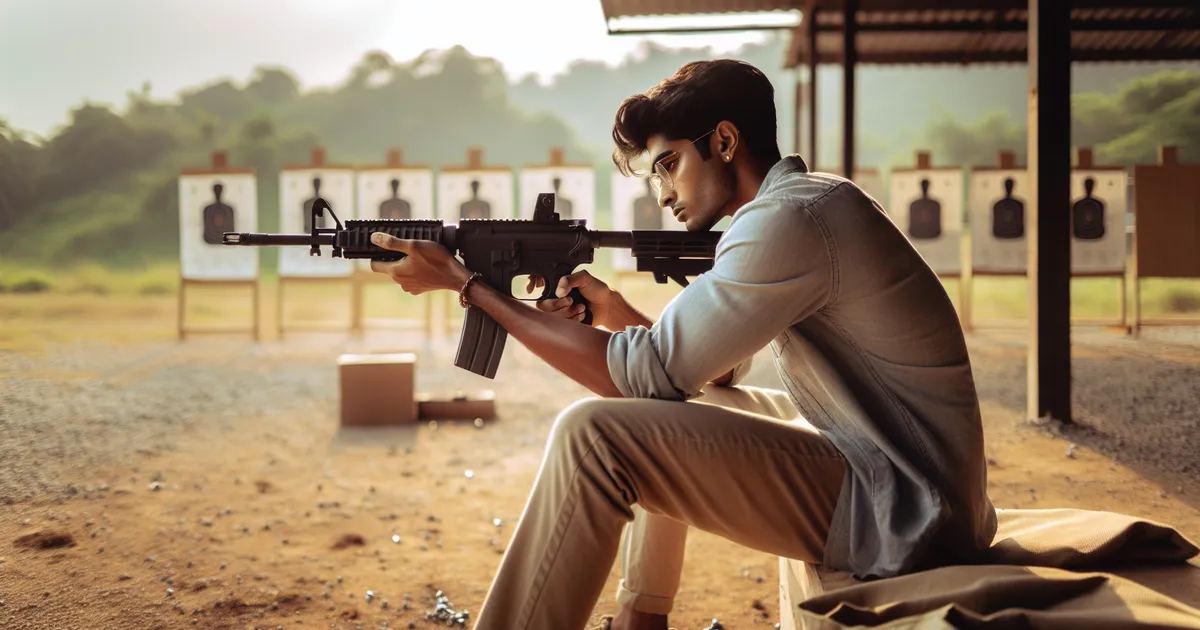
Target shooting isn't just about hitting the target; it's a mental struggle with your own physiology and focus that even veterans find challenging.
Learning target shooting as a beginner focuses on developing your aim and control while engaging with different types of firearms and equipment.
You choose a discipline, learn the fundamentals, and measure progress through tighter groupings over time.
Unlike hunting, there's no field craft – the entire challenge is you, the equipment, and the distance between them.
In target shooting, hobbyists engage in structured practice drills using firearms like pistols or rifles, focusing on stances, grips, and aiming techniques to hit specific targets. Sessions involve repetitive actions such as firing at dot drills, executing controlled pairs, and performing movement drills to enhance precision and control. Each practice is meticulously timed and measured to track p…
Target shooting combats boredom through immediate skill feedback loops, where visible results from each shot provide a clear sense of accomplishment. This activity fosters flow states by demanding intense concentration on technical aspects, allowing for immersive experiences that minimize self-awareness. The variety of drills introduces novelty and challenge, preventing routine stagnation while p…
Target shooting is about guns. That's the assumption — and it's almost entirely wrong.
You're picturing a range, some ear protection, and the satisfaction of making holes in paper. That part's real. But it's the smallest part of what's actually happening.
The real skill is managing your own nervous system. Your heartbeat, your breathing, the micro-tremors in your hands — shooting forces you to confront all of it, in real time, under mild pressure.
Precision sports reward stillness is something almost nobody practices anymore — which is why most beginners are genuinely shocked by how hard it is to calm down on demand.
There's a feedback loop here that most hobbies don't have. Every single shot tells you something true about your focus, your grip, your breathing pattern in that exact moment.
A competitive target shooter at a club final once described it this way: she said her score had less to do with technique than with whether she'd slept well and stopped arguing with herself about the last shot.
Same target. Same distance. Different mental state — and the groupings don't lie.
That mental discipline is the part people stay for. Most beginners show up for the hardware and come back for the headspace.
Watching competitive shooters on video looks clean. Calm stance, steady breath, tight groups on paper.
Your first session will feel nothing like that.
That changes faster than you expect. By the end of your first month, those scattered groups become something you can explain — and fix.
Week one is mostly noise. You'll shoot inconsistently and have no reliable way to tell whether grip, stance, breath, or trigger pull caused it. Every variable looks guilty when you don't yet have a baseline.
Week two is when isolation starts. You fix one thing, and a different problem surfaces. That's not regression — that's the process working.
By week three, your groups tighten noticeably. For the first time, a miss starts to feel like information instead of failure. That shift in perception is the real milestone.
Week four lands you with a repeatable process. It won't always work. But it'll be yours.
Miss.
Miss again.
Start to wonder if this is just who you are with a gun — and then one shot lands exactly where you called it, and you finally understand what the process is for.
Dry fire practice at home — trigger pulls with an unloaded, verified firearm — will accelerate your first month faster than extra range time will. Your trigger control problems aren't a range problem. They're a repetition problem, and you can solve them without paying per round.
The next section covers the mistakes that keep beginners stuck in the frustrating half of that curve longer than necessary.
When to start: Early morning
Duration: 1.5 hours
Cost to try: $30
Success criteria: If you put 10 shots into a palm-sized group at 7–10 yards with no safety or loading errors, do session 2.
New shooters fixate on where the holes land instead of how repeatable their setup is.
Lock your stance, grip, and sight picture first – shoot 50 rounds focusing only on process, then look at the target.
It sounds like the right move, and every action movie confirms it – but breath-holding creates tension that transfers straight to the barrel.
Exhale halfway, pause naturally, then break the shot in that still moment before your body demands air again.
Anticipating recoil is a reflex, not a character flaw – your brain is just trying to protect you from a noise and a kick.
Dry-fire daily for two weeks – no ammo, no recoil, just building the muscle memory of a smooth, rearward press.
Most beginners assume dominant hand equals dominant eye – they're often wrong, and they spend months wondering why their shots keep drifting.
Close each eye separately while pointing at a fixed object to confirm which eye stays on target –then set up your stance around that eye, not your hand.
The logic feels sound: better gear means better results – but expensive calibers punish flinching and hide bad habits behind range anxiety and cost per round.
Start with a .22 LR for the first three months –cheap ammo means more trigger time, and more trigger time is the only thing that actually makes you better.
Target shooting happens at dedicated shooting ranges – indoor and outdoor – plus gun clubs and sporting clubs that maintain their own private ranges.
Walk in and say "I'm a complete beginner and I'd like to try before I commit to anything."
That one sentence usually gets you a range safety briefing, loaner equipment, and someone standing next to you for the first session – for free or close to it.
The classic: one target, one gun, slow deliberate shots at distance. It's the purest test of fundamentals – grip, breath, trigger control, all exposed.
Best for beginners who want to actually learn the skill before adding complexity. A basic .22 pistol keeps costs low, and most ranges cater to this format by default.
You're moving, drawing from a holster, engaging multiple targets under a timer. It's athletic, loud, and social – much closer to a sport than a practice session.
Best for people who got bored standing still. Gear costs climb fast here – holsters, belts, and competition-legal guns add up before you know it.
Long-range shooting, often 300 to 1,000 yards, where wind and physics matter as much as aim. The math is half the hobby – and some people love that part more than the shooting.
Best for detail-oriented types who like solving problems between shots. Entry-level precision setups start around $800–$1,200, not counting optics.
Same concept – hit the circle – but with a bow instead of a firearm. It's quieter, more accessible, and legal in more places.
Best for people who want the focus and discipline of shooting without the firearms barrier.
Compressed air, not gunpowder – which means indoor ranges, lower cost, and far fewer restrictions. Olympic athletes train on these, so don't mistake "air" for "easy."
Best for anyone starting out or shooting in an urban area without easy range access. A solid starter air rifle runs $100–$200, and some people never feel the need to upgrade.
For something adjacent, see Slingshot Shooting.
If the texture of this appeals to you, Airsoft is built on similar bones.
Some of the same instincts show up in Rifle Shooting — worth a look if this clicked.
Trigger control is the one skill that makes target shooting click.
Most beginners obsess over their aim – adjusting their stance, chasing a tighter grip, wondering if they need better equipment.
The real problem is almost never where the gun is pointing. It's when they're pulling the trigger.
The skill is trigger control – specifically, the ability to press the trigger straight back without disturbing the sight picture. Not squeezing fast, not jerking at the "right moment," but applying slow, continuous pressure until the shot breaks as a surprise.
When you master it, your groups tighten immediately – not because you're aiming better, but because you stop yanking the muzzle offline at the last second.
Without it, you can have perfect form and a $2,000 rifle and still scatter shots like you're guessing.
Every other improvement you make builds on this one. Skip it, and you're just decorating a broken foundation.
Four sessions in 30 days. That's the test.
One session a week gives you enough spacing to notice whether you're thinking about it between visits – or forgetting it existed. It's also enough to get past the awkward first range trip and see what the skill actually feels like when it starts to click.
You keep pausing on slow-motion shooting footage online – not for the spectacle, but because you're watching their grip or their trigger pull. That specific curiosity, the technical pull toward how rather than just wow, is exactly what sustains this hobby long-term. If you're picking apart technique before you've even started, you're probably already in.
If none of those apply and your four sessions are done, the next step is figuring out what gear actually makes sense for where you are – that's exactly what the resources section covers.
Initial costs typically range from $200–$500 for a basic air rifle or rimfire rifle, plus $50–$150 for safety equipment like ear protection and glasses. Range fees vary by location but generally cost $10–$25 per session, and ammunition is relatively inexpensive for practice.
Requirements vary by location and firearm type. Most public ranges don't require a license to participate, but you may need a background check or membership. Check your local regulations and contact your nearest range directly for their specific policies.
You can develop solid foundational skills in 4–8 weeks of regular practice, shooting 1–2 times per week. Consistent improvement happens over months and years, but noticeable progress in accuracy and consistency comes fairly quickly with proper technique and instruction.
Air rifles use compressed air and are quieter, cheaper to operate, and often legal in more places, making them ideal for beginners. Firearms (rifles and pistols) offer more power and realism but require licensing in many areas and have higher operating costs.
No—target shooting has a manageable learning curve. With basic instruction on stance, sight alignment, and trigger control, beginners typically hit targets within their first few sessions. Progress depends on practice frequency and willingness to learn proper technique.
Expect a safety briefing, instruction on range rules, and guidance on proper handling and shooting technique. Most ranges are welcoming to beginners, and staff or instructors will help you get set up at a shooting station suited to your skill level.