BoredomBusted — Find Your Next Favorite Thing To Do
Discover hobbies, activities, places, and ideas that spark joy. Whether you're looking for something creative, active, social, or relaxing, BoredomBusted helps you find your next favorite thing to do.
Browse our hobby guides, things-to-do collections, and place ideas to never be bored again.
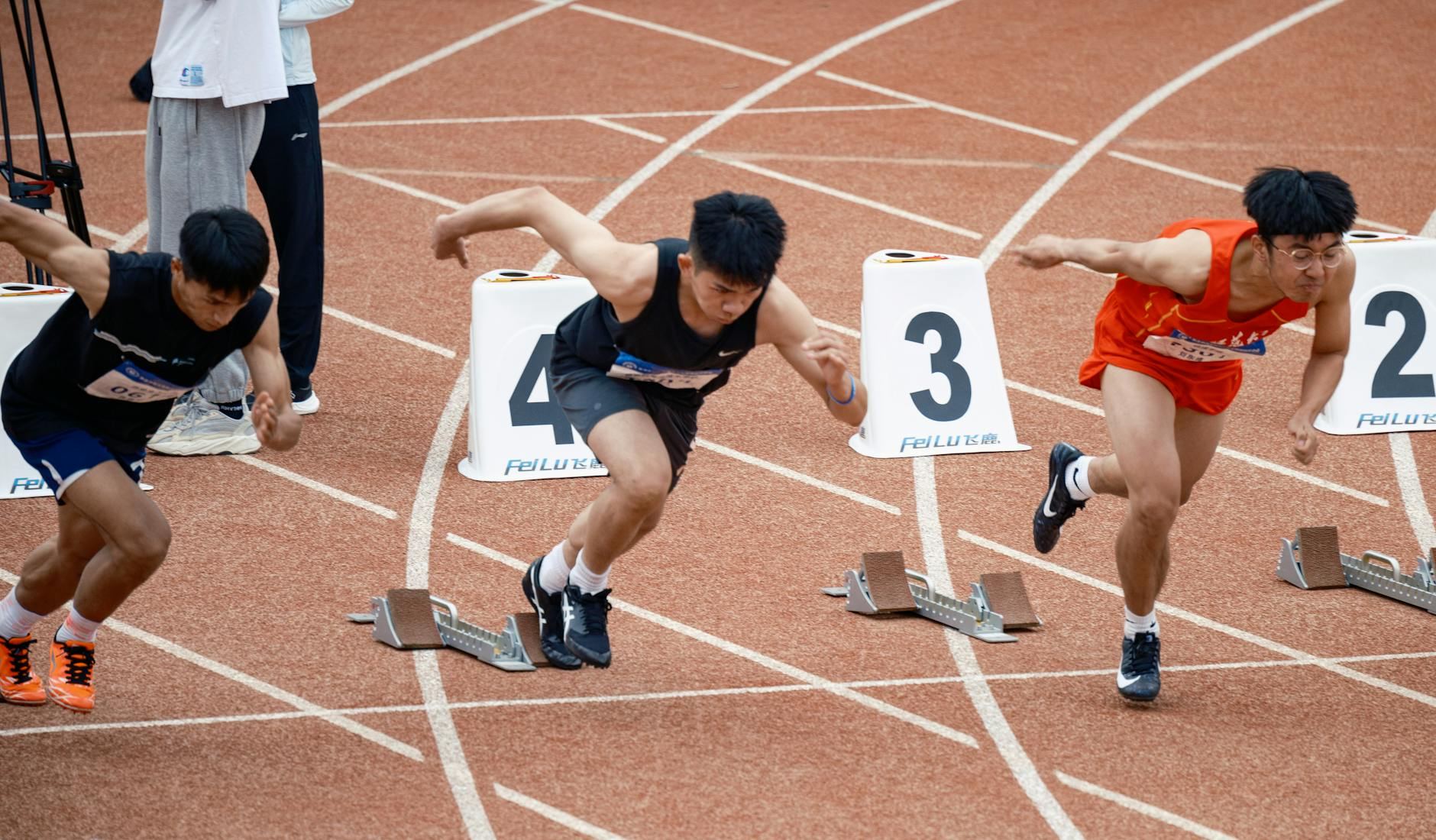
Track running isn't just repetitive laps—it's a complex decision-making sport where each 400-meter sprint sparks curiosity and measurable improvement.
If you are getting started with track running as a beginner, your focus will be on improving speed and mastering your pacing strategy. Running laps on a measured oval – usually 400 meters – where every variable is controlled so your only job is getting faster.
Unlike road running, there's no wind excuse, no uneven pavement, no scenic distraction.
The track gives you pure data: splits, times, progress.
That's what makes it addictive.
In track running, you perform structured interval workouts on an oval track, executing high-intensity sprints of precise distances like 200 meters, followed by recovery periods to build speed and endurance. This includes warm-ups, specific sprint sets, and cool-downs, allowing you to practice pacing and improve your performance through measured efforts and time tracking.
Track running combats boredom through rapid skill feedback from quantifiable lap times, enabling a flow state where the challenge of pacing meets the skill of timing, silencing distractions. The structured nature of intervals fosters a sense of accomplishment as you log improvements, while social interactions during workouts enhance motivation and community engagement.
You think track running is just laps. Round and round, nothing to think about, maybe something you did in high school gym class and hated.
That assumption is costing you one of the most mentally engaging sports you could pick up today.
A runner who hits the track for the first time expecting boredom usually leaves with a notebook. Not because someone told them to log their times — because they ran one 400-meter rep, looked at their watch, and immediately wanted to know what would happen if they changed their arm position on the back straight.
That measurability is the hook.
Your first session at the track — before you've built a plan or bought anything — is where that actually becomes real.
Watching track running looks clean. Efficient. Almost boring.
Then you step onto the oval and realize the oval doesn't care how ready you feel.
Before: Wind in your face. Legs fine, lungs wrong. Lap two feels like lap eight. Everyone else looks effortless. You are not everyone else.
After: You know your lane. You know your splits. The breathing still hurts – but now it hurts on your terms.
One thing worth knowing before you show up: start in lane 8, not lane 1.
Lane 1 is shorter on the curves, which sounds like a perk – it isn't. Tighter turns at the wrong pace wreck your stride and your shins before you've built either.
Give yourself room to run straight until running straight feels natural.
Ugly first sessions. No sense of pace. Lungs that quit before your legs do.
That's not a sign you're bad at this – it's just what the sport costs before it starts paying back.
When to start: Early morning
Duration: 1 hour
Cost to try: $0
Success criteria: If you ran 3 sprints of 50–100 meters and each one had a strong push-off and clean finish, do session 2.
Lane 1 is the shortest path around the track. That makes it feel like the obvious choice. But the tight curve loads your left ankle and knee on every lap — and everyone else is cutting inside on you the whole time.
Run Lanes 2–3 on easy days. Save Lane 1 for timed efforts only — your joints will thank you after month two.
A marked oval is a psychological trap. Every lap feels like a time trial. Most beginners run too hard too often without ever deciding to — the track just pulls it out of them.
Your easy laps should feel embarrassingly slow — slow enough to say a full sentence out loud. If you can't, you're not actually running easy.
Most beginners buy whatever's on sale. Or whatever looks fast. They haven't run enough yet to know whether they overpronate, supinate, or land midfoot — so the shoe choice is basically a guess.
Log two weeks in a neutral shoe first. Then take that shoe to a specialty running store. The wear pattern on the sole tells a trained fitter everything — no gait analysis appointment needed.
400m repeats with a friend sounds simple. But if you're in different lanes, the outer lane is running farther. Neither of you knows who actually won.
Use the stagger marks painted on the track — they exist for exactly this reason. Or agree to share one lane and rotate so the comparison stays honest.
Standing on a track between reps feels unproductive. So beginners cut rest short. Then they wonder why their last two reps fall apart.
Time your rest exactly. For most beginners, a 1:2 work-to-rest ratio is the floor, not the ceiling — a 90-second rep means three full minutes before you go again.
Track running happens on dedicated 400m ovals — usually at high schools, community colleges, or municipal athletics facilities. School tracks are often open to the public outside of team practice hours. Those two venue types — athletics track and public park — are your most realistic starting points before you ever join an organized group.
To find organized groups, start with USA Track & Field's club finder at usatf.org/clubs — the national governing body, and their directory is actually maintained.
Once you show up, one move separates people who fit in from people who drift off after two sessions. Tell whoever's running the session that you're new to structured track work and ask which workout group matches your pace. That puts you with a training partner at your actual level — not just standing at the back wondering what 400m repeats means.
Road running takes the same motion to streets, paths, and sidewalks. Distance and terrain are yours to control — which makes it the natural next step once you've built a base.
The transition is low-friction. No new gear, no new skills — just more variety than the oval can offer.
Cross country replaces smooth surfaces with grass, mud, hills, and uneven ground. Your stabilizer muscles and your focus take a hit — and that's exactly the point.
Best for runners who want a physical and mental challenge, or who compete in school or club settings.
Trail running is cross country taken further — forest paths, rocky climbs, serious elevation. Shoes matter here in a way they don't on roads; trail-specific grip adds $80–$150 to your kit.
Best for people who find road and track running mentally flat.
Sprint events keep you on the track but shift the goal to raw speed over 60–400 meters. Training changes significantly — more explosive work, far less mileage.
Best for people whose natural instinct is to go fast rather than far.
Masters track organizes competitive racing by age bracket, starting at 35+. The structure is identical to standard track racing. The difference is that everyone lining up beside you has actually lived the same number of years.
If you assumed serious competition was only for the young, this resets that assumption entirely.
If the texture of this appeals to you, Padel is built on similar bones.
If you want a related angle, Doubles Tennis is the natural next stop.
Some of the same instincts show up in Longboarding — worth a look if this clicked.
The real lever isn't how fast you go. It's whether you know how to distribute effort across a distance.
Coaches call it pacing by feel, or running by perceived exertion. Not "run comfortable" — that's useless advice. It means knowing, at 200m into an 800m race, exactly how much you've spent and how much you have left, without looking at a watch.
Without this skill, every race is a gamble. You go out too hot. You fade badly. You wonder why training times never show up on the clock.
Runners who build it finish with something left at the bell lap. **And when someone surges mid-race, they can respond — because they haven't already spent everything chasing a split in the first 200m.
You build this in training, not on race day. Run 400m repeats with your watch face-down, then guess your split before checking — log the gap between your guess and reality every session. Practice negative splits deliberately: run the second 200m of every 400m faster than the first, until restraint in the first half becomes instinct. After each workout, rate every 200m segment on a 1–10 effort scale from memory, then compare ratings across weeks to find where your perception drifts.
Once this clicks, your race variants — the 400m, the 1500m, anything in between — start to look very different.
Track Running is a unique experience, but is it actually a good fit for you?
Most people know within a few sessions whether something has legs. The problem is they quit too early – or push through way too long – because they never set a clear test upfront.
Here's yours: eight sessions over 30 days. That's roughly twice a week, which is enough to feel real adaptation without burning out a beginner's body.
It's also enough laps to stop feeling like a lost tourist every time you show up at the track.
You want to come back.
You're thinking about your next session between runs. You're curious about your split times, or why lane one feels different from lane three.
This signals you're not just tolerating track running – you're engaging with it. Start tracking your 400m time now, before progress becomes invisible.
You're indifferent.
You don't dread it. You don't crave it. You just... went.
This usually means you haven't found your angle yet – pace goals, a training partner, a specific event distance to chase.
Give it one more month with a concrete target before walking away.
You actively didn't want to be there.
Not tired. Not sore. Just somewhere else in your head every single lap.
That's real information – and it's not a character flaw, it's a mismatch.
Road running, trail running, cycling, or swimming might give you the cardio hit without the format that's clearly grinding you down.
You're watching race footage you didn't plan to watch. Not marathons – specifically track events, middle-distance stuff, people pushing through the final 100 meters.
That low-grade pull toward the oval is the signal most track runners describe from before they started.
If it keeps showing up, it's not random.
Chronic lower-leg or joint issues – shin splints, stress fractures, knee instability – get significantly worse on a track's hard, banked surface.
This isn't about toughening up; it's about the repetitive unilateral loading that a 400m loop creates.
No access to an actual track changes the sport fundamentally.
Road intervals are a different training stimulus – valid, but not the same thing.
If the nearest public track is 40 minutes away, the dropout math is already working against you.
You hate repetition at a structural level. Not boredom – actual aversion to doing the same loop, the same drill, measuring the same distance over and over.
Track running is built on that repetition as a feature. If it reads as a bug to you, trust that read.
If you've decided to give the eight sessions a shot, the next section has everything you actually need to start – and a short list of what to skip buying until you know this is sticking.
You'll need a good pair of running shoes designed for track surfaces, comfortable athletic clothing, and a water bottle. Most tracks provide the surface itself, so you can begin with just these basics. As you progress, you might add a stopwatch or running watch to track your times.
Most runners notice improvements in endurance and speed within 4–6 weeks of consistent training. Significant progress in your times typically emerges after 8–12 weeks of dedicated practice with proper training structure.
Track running is accessible to beginners because you can start at your own pace and gradually build speed and distance. The flat, measured surface is actually easier on your joints than road running, making it a good starting point for new runners.
Many public tracks are free or charge minimal facility fees ($5–$10 per visit). Organized clubs and coaching programs typically range from $50–$200 per month depending on the level of instruction and community involvement.
Track running takes place on a measured, banked oval surface (usually 400 meters) that's easier on joints and allows for precise speed training, while road running covers varied terrain and distances outdoors. Track running emphasizes speed work and technique, whereas road running builds different endurance patterns.
Beginners should train on the track 2–3 times per week to allow adequate recovery between sessions. This frequency builds fitness safely while preventing overuse injuries that can come from running the same surface too frequently.