BoredomBusted — Find Your Next Favorite Thing To Do
Discover hobbies, activities, places, and ideas that spark joy. Whether you're looking for something creative, active, social, or relaxing, BoredomBusted helps you find your next favorite thing to do.
Browse our hobby guides, things-to-do collections, and place ideas to never be bored again.
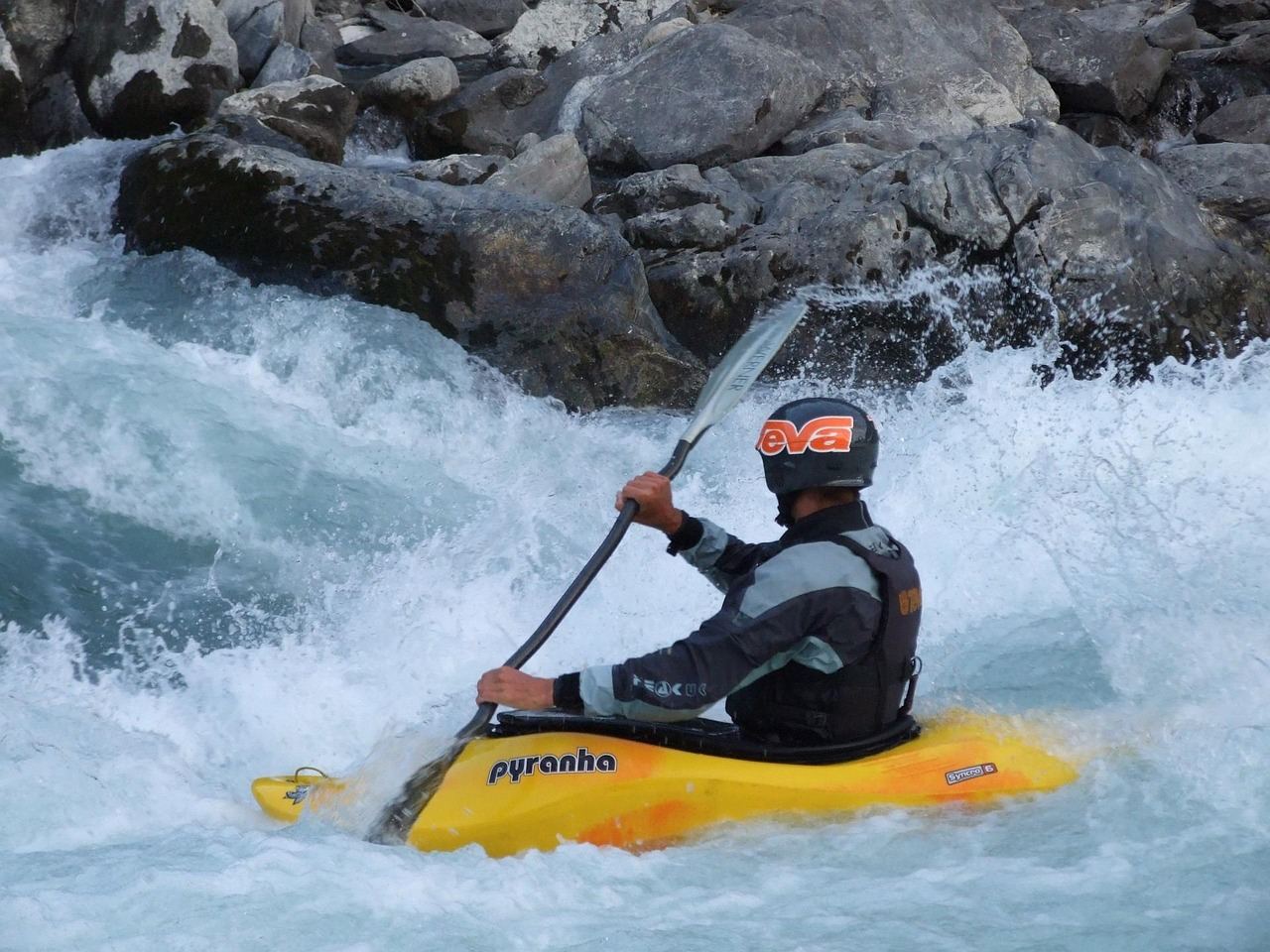
Whitewater kayaking isn't just chaos — it's a structured lesson in reading water, where beginners focus on skill-building, not survival.
Learning whitewater kayaking as a beginner involves understanding how to effectively use your paddle and body weight to maneuver through moving river waters – using paddle strokes and body weight to navigate current, waves, and drops.
Unlike flatwater kayaking or canoeing, the river does the work of creating challenge.
You're not generating speed; you're managing chaos.
Whitewater kayaking involves paddling through turbulent river rapids in a short, plastic kayak, where you actively maneuver around obstacles, execute precise strokes, and maintain control through body positioning. You scout rapids from the bank, identify optimal paths, ferry across currents, and practice drills like power circles to refine your skills while navigating dynamic water flows.
Whitewater kayaking induces a flow state through intense, real-time demands that require precise maneuvers and split-second adjustments, creating immersive focus. The immediate feedback from each stroke and maneuver fosters a sense of accomplishment as you conquer river sections, while the ever-changing conditions provide novelty that keeps you engaged and prevents routine.
You think whitewater kayaking is for adrenaline junkies who want to get thrashed by a river.
You picture helmets, chaos, and a 50/50 chance of swimming.
That assumption is keeping you off some of the most rewarding water you'll ever paddle.
Reading water is a learnable skill, not a reflex you're born with. The sport is tiered by design — and most beginners never need to leave the lower tiers.
Beginners spend their first sessions on calm currents spotting eddies and current lines. They're not surviving rapids — they're building a framework for reading moving water that takes actual sessions to develop.
The mental focus required is the point. On the water, you cannot think about work, your phone, or anything else — and that enforced presence is why paddlers come back, not the danger.
A first-time paddler in a guided beginner clinic on a Class II river will spend most of their session learning to ferry-angle across current and peel out of eddies. The guide corrects their paddle angle. They laugh at a messy exit.
They run the same feature five times. Not because they have to.
Because they want to get it clean.
That progression from messy to controlled is what makes this sticky as a hobby — there's always a cleaner line to chase, a move to repeat until it clicks.
And before you get on the water, there's some gear you'll want to understand.
The videos make it look like controlled chaos — paddler reads the river, punches through the wave, emerges grinning. The twenty wet exits before that shot don't make the reel. And "reading the river" is a skill that takes months to even begin — the footage just skips that part.
You will swim. Plan for it. Week one is mostly underwater — wet exits, missed braces, and the slow realization that a paddle is harder to control than it looks. Week two, the brace strokes start clicking and Class I water feels almost manageable. Then week three hands you a rapid that flips you immediately, and you'll wonder if you've made zero progress. That flip is exactly when the skill is forming — the bad sessions aren't setbacks, they're the curriculum.
You stop fighting the current and start feeling it. Not mastery — more like the river stops being a threat and starts being a conversation. Most people quit in week three, convinced they're the exception who just doesn't get it. They quit about three days before it starts making sense.
The one thing worth locking in before session one: drill your wet exit on flatwater until it's automatic, not just comfortable. Upside down in moving water with adrenaline spiking, comfortable disappears fast — automatic is all you've got. The next section covers the mistakes that keep people stuck in the frustrating half longer than they need to be.
When to start: Early morning
Duration: 2 hours
Cost to try: $40
Success criteria: if you finished without flipping your kayak, do session 2.
Kayaks look simple until you're upside-down in moving water. That's when you find out what hull shape you actually needed. Most beginners buy before they've paddled enough to know the difference.
Book two or three intro lessons before you spend anything. Most clubs rent gear, and a good instructor will tell you exactly which hull shape matches the rivers you'll actually paddle — information no showroom employee can give you.
Arms feel like the obvious engine, so you use them. They're wrecked by the second drop. The real power source is your torso, and most beginners don't find that out until they're too tired to paddle back to the takeout.
Practice on flatwater first. Keep your lower hand nearly still and drive each stroke by twisting your core — not pulling with your bicep. Once that clicks, you'll last twice as long on moving water.
Practicing capsizing feels like practicing failure. So beginners skip it. Then a real flip happens on real water and the panic is worse than it needed to be.
The wet exit is the most important skill you'll use on every river — drill it until it's boring. Find a calm pool or slow stretch, flip deliberately, pop your skirt, and exit cleanly. Do it enough times that it stops feeling like a crisis.
The current moves fast. The view from your cockpit hides half the hazards. Beginners charge in and react instead of planning — and that's how you end up pinned against something you saw too late.
Get out of your boat before committing to anything unfamiliar. Walk the bank and identify your entry point, your line through the feature, and your exit eddy before you touch the water. Two minutes of scouting beats ten minutes of swimming.
A wet exit works, so it becomes the plan. That's fine for your first few months — it stops being fine the moment you paddle anything with real consequence, where swimming is dangerous and self-rescue is the only option.
Start learning your combat roll by month two. Take a pool session with an instructor and drill the hip snap separately before you try the full motion in current. The hip snap is the whole move — everything else is just positioning around it.
Whitewater kayaking happens on moving rivers – everything from calm flatwater lakes and rivers for early practice to technical whitewater rivers and rapids once you're ready.
Most paddlers start at dedicated outdoor activity centers that run structured beginner sessions with rental gear included.
Tell the club coordinator you're a complete beginner and haven't paddled moving water before – that one sentence gets you routed to a pool session or flatwater intro day instead of dropped into a river you're not ready for.
Most clubs keep beginner slots open specifically because they'd rather spend an afternoon teaching you a wet exit than rescue you from a strainer.
Creek boating is steep, low-volume rivers with tight lines and big drops. Miss your line and you're swimming into a rock sieve or a undercut — that's the concrete version of high-consequence.
This is where paddlers go after they're solid on Class IV and want to push into genuinely committing terrain. Creeking boats are shorter and more rockered than river runners, running $800–$1,200 new — not where you start, but where a lot of experienced paddlers end up.
Playboating — also called freestyle — means parking your boat in a single wave or hole and performing aerial and spinning tricks. You're not going anywhere. The river becomes a gym, not a route.
It attracts people drawn to skill mastery over exploration — the kind of paddler who'd rather nail one move a hundred times than run a new river. Playboats are tiny and purpose-built. Don't buy one first.
River running is the baseline. Point A to point B, managing whatever rapids appear. If you're new, this is where you start — full stop.
Standard all-around kayaks work fine here and cover most rivers a beginner will ever paddle. There's no specific discipline attached — just moving water and forward progress.
Slalom racing puts gates over the river and you race through them against the clock. It's technical, measurable, and develops paddle precision faster than almost any other format.
Slalom boats are narrow and purpose-built — not your first purchase, but worth renting before you commit. If you came from team sports and want whitewater with a scoreboard, this is your lane.
Squirt boating uses low-volume boats designed to sink partially below the surface and interact with underwater currents. It looks like kayaking got weird, and that's an accurate description.
This is a niche within a niche — advanced paddlers curious about the river's subsurface hydraulics, not beginners exploring options. The boats are extremely specialized and the community is intentionally small.
If this resonates, Recreational Kayaking explores a similar direction.
If the texture of this appeals to you, Sea Kayaking is built on similar bones.
For something adjacent, see Kayak Fishing.
Most beginners spend their first year getting stronger — more powerful strokes, harder paddling, fighting the river harder. The river doesn't care how strong you are.
The one skill is reading water before you commit to a line — specifically, learning to identify the "V" shapes on the surface and what they tell you about what's underneath. A downstream V (pointing toward you) means clear, fast-moving water you can ride. An upstream V (pointing away) means something solid is creating a pillow — rock, ledge, obstruction.
Most beginners are already in the feature before they've read it. You want to make that decision from upstream, not mid-drop.
Once you can identify downstream Vs, eddy lines, and hydraulic curls from ten feet back, you stop reacting and start navigating. That gap — reactive vs. deliberate — is exactly what separates a chaotic run from a controlled one.
Without it, you paddle harder. You compensate for lines you chose wrong. That's the exact muscle memory that gets people hurt on Class III water.
Scout every rapid on foot first. Stand river-left or river-right above the drop, and trace the Vs downstream with your finger before your boat ever touches the water.
Once that habit is locked in, add a feedback loop. Film yourself from shore on easy Class II runs, then pause the footage and identify where you entered versus where the downstream V actually was. The gap is usually humbling.
The drill that ties it together is eddy hopping on mellow water — paddling from eddy to eddy, stopping in each one to read the next ten feet before moving. Do it enough and the surface patterns stop being something you analyze. They start being something you just see.
The next section covers the specific river features where this skill matters most — and the ones where getting it wrong has real consequences.
Whitewater kayaking has a steep enough learning curve that one session tells you almost nothing — you're too busy surviving to know if you like it. Four sessions gets you past the panic phase and into actual movement. That's where the real signal lives.
If you're already looking up local rivers between sessions, that's not enthusiasm — that's the hobby choosing you. Start researching a beginner paddle club and consider your first gear rental for a full weekend trip.
If you finished the four sessions and feel roughly neutral, that's usually a logistics problem, not a chemistry problem. Try one session with a different instructor or a different class of water before you write it off.
If you actively dreaded being on the water — not nervous, not cold, but genuinely unhappy — trust that. The chaos overstimulating you in a way that doesn't resolve with more sessions is real information.
You keep watching river-run videos at 11pm — not to learn, just because you want to see the water.
That specific pull, toward moving water rather than the gear or the culture, is the honest version of interest. Most people who stick with whitewater for years describe feeling it before they ever sat in a kayak.
Shoulder or rotator cuff injuries are a structural barrier, not something to push through — the paddle brace that keeps you from flipping puts serious torque on unstable joints.
If you're more than 90 minutes from any moving water, the logistical drag will quietly kill your consistency before skill ever builds. Distance doesn't make this impossible, but it does make it a second job.
Whitewater also demands a specific tolerance for cold, wet discomfort that doesn't go away — even in summer, a wet exit means you're swimming. If physical discomfort derails your focus rather than fading into the background, this one will fight you every session.
When you don't want to commit, things to do when bored is a better starting point.
Beginners can start on Class I-II rapids with basic paddling skills taught in introductory courses, usually lasting 4-6 hours. Most outfitters provide guided tours for novices before progressing to more challenging Class III+ rapids that require intermediate to advanced techniques.
A complete kayak setup (kayak, paddle, spray skirt, PFD) typically ranges from $800–$2,500 depending on quality and brand. If you're just starting, many outfitters and local clubs rent equipment for $30–$60 per day, letting you try the sport before investing.
Basic competency on Class II rapids takes 10–20 hours of active paddling over several weekends. Advancing to Class III safely typically requires 3–6 months of regular practice, combined with river-specific training and mentorship from experienced paddlers.
Whitewater kayaking uses specialized short, maneuverable boats designed for rapids, quick turns, and handling turbulent water, while regular kayaking uses longer, stable boats for calm lakes and flatwater. Whitewater also requires advanced skills like bracing, rolling, and edging to navigate obstacles and currents.
Whitewater kayaking carries inherent risks—cold water, rocks, and powerful currents—but danger is significantly reduced with proper training, safety gear (helmet, PFD), and paddling within your skill level. Most injuries occur when paddlers exceed their ability or skip safety precautions.
Spring (April–June) offers peak water levels from snowmelt and is ideal for most rivers, though summer and early fall also provide good conditions depending on your region. Water temperature, rainfall patterns, and dam releases affect optimal kayaking windows, so check local river conditions before planning trips.