BoredomBusted — Find Your Next Favorite Thing To Do
Discover hobbies, activities, places, and ideas that spark joy. Whether you're looking for something creative, active, social, or relaxing, BoredomBusted helps you find your next favorite thing to do.
Browse our hobby guides, things-to-do collections, and place ideas to never be bored again.
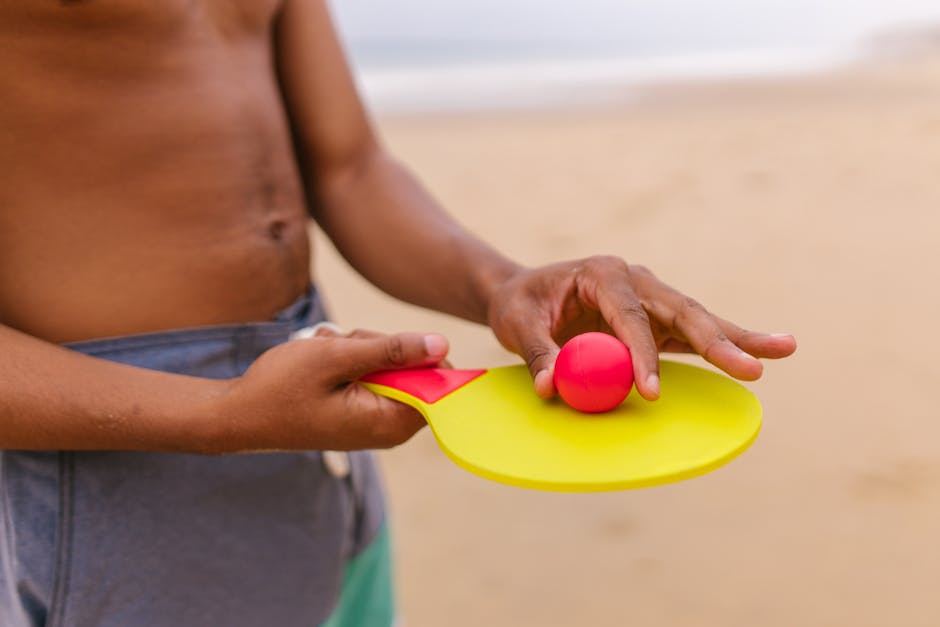
Unleash your boredom with Beach Tennis, the thrilling sport that blends tennis and volleyball on sandy shores! Get active, enjoy the outdoors, and learn the rules with our guide. Perfect for singles or doubles, Beach Tennis offers fun, fitness, and a fantastic way to socialize. Dive into this exciting game today!
Most people assume beach tennis is just tennis played in flip-flops. It's not. The ball never bounces. Every single shot is a volley, which means the game is faster, the rallies are shorter, and your reflexes are tested from the very first point.
It's also played almost exclusively in doubles, on a smaller court, with a solid paddle instead of a strung racket. Once you understand that, the sport starts to make a lot more sense — and becomes genuinely hard to put down.
Three things define how beach tennis actually works, and all three will feel unfamiliar if you're coming from any other racket sport.
No-bounce volleys change everything about court positioning. Because the ball can never touch the sand, you're always moving forward to intercept, not back to let it drop. Players stay close to the net far more than in tennis.
The solid paddle gives you less control than you expect. Without strings to absorb impact, directing the ball takes a much softer touch than beginners instinctively use. Hitting hard is easy. Placing the ball is the skill.
Sand slows your feet in ways that completely break your timing. A lateral step that takes half a second on a hard court takes a full second on soft sand. Every movement has to be anticipated earlier, or you'll be playing catch-up all game.
Your first session will probably be a loose doubles game with whoever shows up. There's no formal class structure at most beach courts — you just grab a paddle and start hitting.
The first thing that surprises people is how quickly rallies end. Because no one can let the ball drop, even a slightly awkward shot forces an immediate response. Beginners spend a lot of time lunging and popping the ball straight up — which is basically a gift to the other team.
The most common beginner mistake isn't technical — it's positional. New players hang back near the baseline like they're playing regular tennis. In beach tennis, the net is your territory. The sooner you move forward and own it, the sooner the game clicks.
You'll also be more winded than expected. Running on sand at full pace for two hours is a proper workout, even if the rallies themselves are short.
At the beginner level, everyone is just trying to keep the ball in play. At the intermediate level, players learn to place shots. But the thing that marks a genuinely good beach tennis player is their use of topspin lobs over the net player.
Because the ball can never bounce, a deep topspin lob over a net-rushing opponent is almost undefendable. It sails over their reach and would land deep — but they can't let it land. They have to scramble back through the sand to retrieve it, which usually ends the point.
The setup for this shot is subtle. You draw the opponent forward with a short, low ball, then punish them the moment they commit to the net. It's a two-shot combination, and once you start seeing it, you realize every high-level beach tennis rally is built around either executing it or preventing it.
A basic beach tennis paddle runs $25–$45. A tube of balls is around $10–$15. If you're playing at a public beach with free courts, your total startup cost is under $60. Most people borrow a paddle for the first few sessions anyway.
A mid-range paddle ($60–$120) makes a real difference in touch and durability. Add court fees if your local beach charges for marked courts (usually $5–$15 per session), and you're looking at $150–$200 total for year-one gear.
A performance paddle from brands like Babolat or Quicksand runs $130–$250. If you want your own portable net for playing anywhere, add $80–$200. Tournament entry fees are typically $20–$50 per event. Annual spend for a serious recreational player is roughly $400–$600.
Entry-level paddle ($25–$45): Any solid foam or fiberglass paddle works for learning. Don't overthink it yet.
Beach tennis balls ($10–$15): These are specifically depressurized — regular tennis balls or orange stage balls play completely differently. Get the right ones.
Sunscreen and a hat: You'll play longer than planned. Sand reflects UV. This is not optional.
Performance paddle ($130–$250): Carbon fiber faces and different foam densities genuinely matter — but only once you're consistent enough to feel the difference.
Portable net ($80–$200): Useful if your beach has no permanent courts. Premature if you're still figuring out whether you like the sport.
Beach-specific athletic shoes: Most casual play is barefoot or in water shoes. Dedicated beach tennis shoes exist but are a later purchase.
Beginners focus on price. They should be focusing on weight. Beach tennis paddles range from around 330g to 390g, and that 60g difference feels enormous after an hour of volleys in the sand.
Lighter paddles (330–355g) give you faster swing speed and less arm fatigue — the right choice for almost every beginner. Heavier paddles generate more pace on drives, but require more wrist strength and conditioning to use consistently.
Face material matters too. Fiberglass faces are more forgiving and better for learning touch. Carbon fiber faces are stiffer and reward precise technique. If you're buying your first paddle, fiberglass is the right call — it forgives mishits instead of punishing them.
Not every group is worth joining. Here's what to look for:
They have a regular weekly session, not just occasional meetups. Consistency is how you improve. A group that plays twice a week beats a better group that plays whenever.
Mixed skill levels are a feature, not a problem. Playing up against better players is the fastest way to improve. Avoid groups that only pair beginners together.
Someone is willing to explain the rules to new players. Beach tennis has a few quirks (no-bounce, net height, service rules) that trip up newcomers. A good group makes that transition easy.
They play on proper marked courts, not makeshift setups. Learning the right court dimensions from the start matters more than it seems — positioning habits form early.
There's social time after play. Beach sports have a culture of hanging around after. That's where you actually get tips, make connections, and decide whether you want to keep showing up.
If you play other racket sports, check the BB racket sports guide — some clubs run multiple disciplines and beach tennis groups often form from existing tennis or padel communities.
Beach tennis has a smaller community than tennis or pickleball, which is actually an advantage. Everyone tends to know each other, and drop-in games happen constantly at beaches where courts exist.
Online, r/beachtennis on Reddit is active and genuinely useful for gear questions and finding local players. The ITF Beach Tennis page lists sanctioned events if you want to find competitive play. Facebook Groups are still the most reliable way to find local pickup games — search your city plus "beach tennis" and you'll usually find something.
In person, the sport clusters around coastal cities and inland beach volleyball complexes. If your area has beach volleyball, ask those players — the courts and community often overlap. Beach tennis associations in the US and Europe run regional leagues that welcome beginners with no ranking requirements.
Give it 30 sessions before you decide. Here's what the progression actually looks like:
Sessions 1–10: You're getting comfortable with the no-bounce rule and finding your positioning at the net. Rallies are short, and you're making a lot of errors. That's normal.
Sessions 11–20: You start reading the game a half-second earlier, and rallies start to feel controlled rather than chaotic. You notice yourself choosing shots instead of just reacting.
Sessions 21–30: You have a serve you trust, a go-to shot under pressure, and a sense of how to work a point with a partner. You're a real player.
Stop if you reach session 15 and the beach environment feels like an obstacle rather than a feature — the sand, the sun, the outdoor setup. Those things don't go away.
Keep going if you find yourself watching beach tennis clips online and mentally breaking down how the net player is setting up their lob trap — unprompted, on a Tuesday evening, nowhere near a beach.
Racket Sports List — see how beach tennis compares to every other paddle and racket sport in one place.
How to Play Tennis: Beginner's Guide — useful if you want to understand the scoring and serve mechanics that beach tennis borrows directly from tennis.
Rules of Pickleball: Complete Beginner's Guide — if the no-bounce volley game appeals to you, pickleball runs on similar logic and is much easier to find courts for inland.
List of Team Sports — beach tennis is almost always played doubles, so if you like team-format sport, here are more options worth exploring.
Definitive List of Hobbies — if beach tennis isn't the right fit, the full BB hobbies list is a good place to find what is.
Beach tennis is played on sand with a smaller court, lower net, and softer ball, making it easier on joints than traditional tennis. The rules are simpler and points are counted to 16 instead of traditional tennis scoring, making it more accessible for beginners and recreational players.
You'll need a beach tennis racket (lighter and smaller than regular tennis rackets), a pressureless ball, and appropriate footwear or play barefoot on sand. Most local beach tennis clubs provide equipment rentals, so you don't need to invest in gear before trying it out.
A singles or doubles match usually takes 30–45 minutes, making it a great activity that fits into a casual afternoon without a huge time commitment. The shorter duration and simplified scoring system mean you can play multiple matches in one session.
Beach tennis is beginner-friendly and doesn't require prior tennis experience since the rules are simpler and the softer ball moves slower. Most people can pick up basic technique and start having fun within their first few sessions.
Beach tennis provides excellent cardiovascular exercise, builds leg and core strength from moving on sand, and improves agility and balance. The low-impact nature of the sport on soft sand also reduces stress on joints compared to court tennis.
Beach tennis works for both singles and doubles play, so you can join a match with others or organize games with friends. Most beach tennis communities and clubs organize regular meetups where you can find players and partners at your skill level.