BoredomBusted — Find Your Next Favorite Thing To Do
Discover hobbies, activities, places, and ideas that spark joy. Whether you're looking for something creative, active, social, or relaxing, BoredomBusted helps you find your next favorite thing to do.
Browse our hobby guides, things-to-do collections, and place ideas to never be bored again.
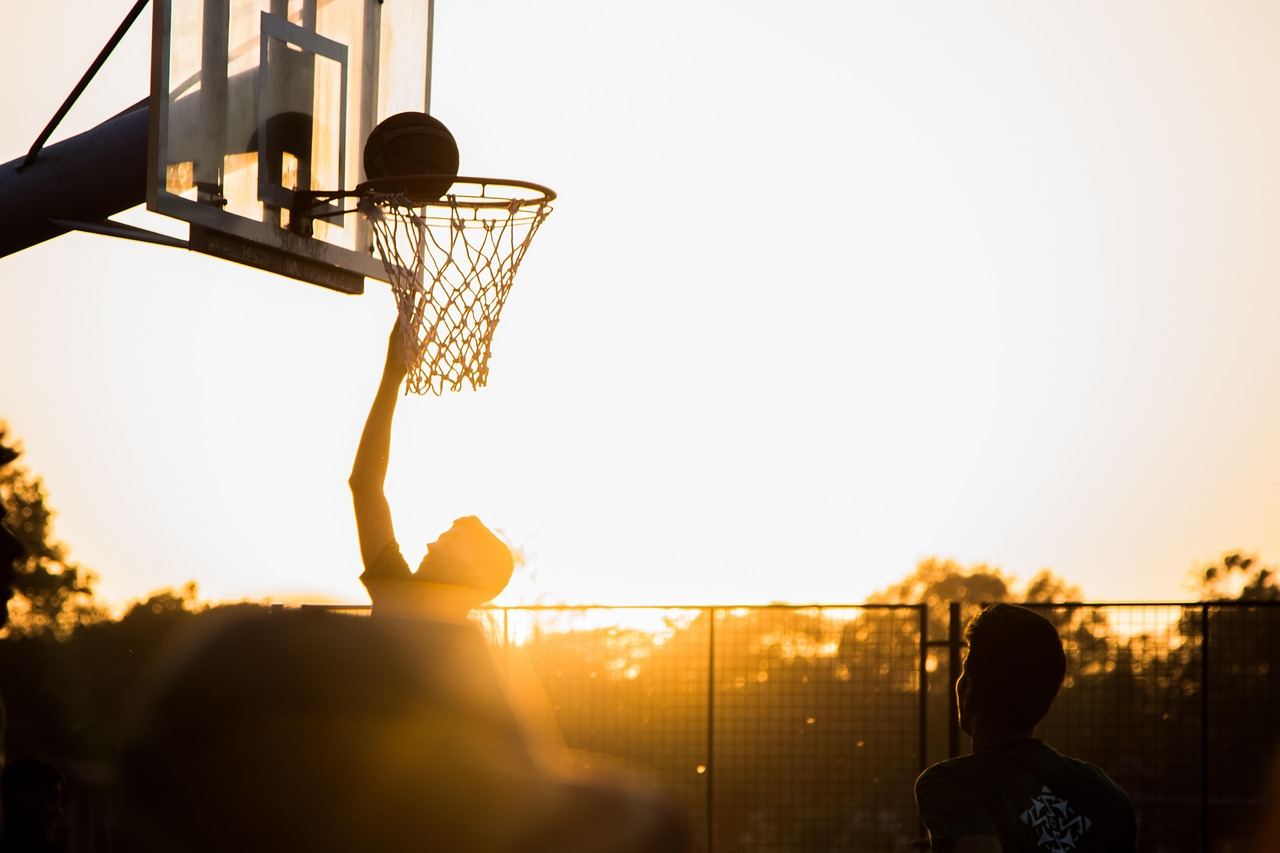
3x3 basketball isn’t just simpler pickup; the 12-second shot clock forces quick decisions, exposing weaknesses professional players didn't expect.
Getting started with 3x3 basketball as a beginner is straightforward, involving three players per team, one basket, a smaller court, and 10 minutes on the clock.
Possession resets behind the arc after every made basket or defensive rebound – no shot clock drama, no transition, just constant half-court decision-making.
Unlike pickup basketball, 3x3 has standardized FIBA rules and an official world ranking system, which means casual games and Olympic competition share the exact same format.
In 3x3 basketball, players engage in fast-paced, half-court games with three players per side, focusing on actions like dribbling, passing, shooting, and defending within strict game rules, requiring quick decision-making and adaptability in gameplay scenarios.
This hobby fosters a flow state by demanding constant engagement through rapid decision-making and skill feedback, ensuring players are actively involved and cannot hide from the action, leading to a sense of accomplishment and connection with teammates.
You think 3x3 is pickup basketball with a fancier name. Half-court, fewer players, shorter game — basically the warm-up before the real thing starts.
That assumption is exactly why most people who try it get humbled inside the first five minutes.
When 3x3 debuted as a full medal sport at the 2021 Tokyo Olympics, the teams that struggled weren't amateurs. They were full-court professionals who underestimated how fast the game closes.
No buildup.
No rotations to bail you out.
Just you, two teammates, and a 12-second clock that doesn't care how good you are at the other game.
The good news is that knowing this puts you ahead of most people who show up unprepared. Next up: what you actually need to start playing.
Stepping onto a sunlit court for 3x3 feels deceptively simple at first. The pace is misleading — everyone moves faster than you'd expect, and the arc feels tighter. It's a constant sprint with nowhere to hide because slow moments don't exist.
In your first week, expect to be exhausted within ten minutes and unsure of who's checking the ball. By week two, the pace becomes predictable, but your shot feels off because setting your feet is a luxury.
The thing most beginners don't see coming is the arc rule. After every basket and rebound, the ball goes back to the arc before you can attack again. Miss that reset and you'll be standing under the basket while the other team scores untouched. The whole defensive shape of the game only makes sense once you've been burned by this once.
By week four, something shifts. Defense stops feeling reactive and starts feeling positional — you stop chasing and start reading. Your body was adjusting through weeks two and three without you noticing — which makes the mistakes in the next section worth knowing before you start.
When to start: Morning
Duration: 1.5 hours
Cost to try: $5
Success criteria: If you completed a full 3x3 game and made at least one pass, one shot, and one defensive stop, do session 2.
In 3x3, you get 12 seconds. New players eat half of that dribbling in place, waiting for something better to materialize.
Force a shot or pass by the 8-second mark — treat it as your personal deadline, not the referee's.
Standing too close to the basket feels safe. It removes every driving lane your teammates are trying to use.
Park yourself at the two-point line corners — that single habit opens driving and passing options your team didn't have before.
Players conditioned in full-court ball pause after a turnover, waiting to set something up. That pause is where 3x3 momentum goes to die.
Sprint to the arc the moment possession changes. Quick turnovers are a scoring weapon in 3x3 — only if you move before the defense resets.
Defenders panic when an offensive player catches beyond the arc. They reach, they foul, and now the opponent gets a free throw plus possession.
Stay vertical and contest without your hands crossing the line. The arc already makes scoring hard — trust it and stop gambling.
The mid-range died in 5-on-5, so players stopped practicing it entirely. In 3x3, a one-dribble pull-up off the check is wide open and almost nobody takes it.
Drill the one-dribble pull-up for ten minutes every session, starting from a simulated check spot. Defenders aren't ready for it. Most players never will be — until they practice it deliberately.
3x3 basketball is played on half-courts – any paved surface with a single hoop works, from dedicated outdoor courts to community rec centers.
Look for outdoor basketball courts and recreation centers near you first.
When you show up, say: "I play casually – just learning 3x3 rules."
That one line usually gets you folded into a team for open runs rather than left watching from the sideline.
It also signals you're not there to ball-hog – which matters more than your skill level.
This is FIBA 3x3 — the official Olympic format. It runs on a shot clock, uses specific scoring rules, and requires a dedicated ball that's slightly smaller and heavier than a standard basketball.
Built for serious competition and tournaments. Official matches go to 21 points or 10 minutes. The official 3x3 ball runs $30–60 more than a standard one — a worthwhile upgrade once you're playing regularly.
Pickup half-court strips everything back. Any ball works. Rules like "make it, take it" get decided by the group before tip-off.
This is where most people start — and where most people stay. The low barrier is the point.
King of the Court keeps everyone in the action. Winners stay on. Losers rotate out. Every possession has real stakes.
The format that turns a casual session into something competitive without needing any official structure to do it.
21 is the game for solo players or pairs. First to hit exactly 21 wins — go over and you reset. No equipment beyond a ball and a hoop.
Genuinely useful for practice sessions, not just a fallback when you can't fill a roster.
Wheelchair 3x3 uses the same half-court setup as the official game, with adapted rules covering travel and contact specific to wheelchair basketball.
Most clubs provide chairs for recreational players, so owning specialized equipment isn't a prerequisite for getting on the court.
If this resonates, Street Basketball explores a similar direction.
Flag Football lives in the same world — different mechanics, similar appeal.
Readers who enjoy this often gravitate toward Longboarding next.
Beginners obsess over shooting and ball-handling. Then they wonder why games still don't break their way.
The thing that actually separates improving players from stuck ones is off-ball positioning — knowing where to be when you don't have the ball. In 3x3, the half-court is small. Every step you take either opens space or collapses it.
Miss your spot. Drift unguarded. The court shrinks for everyone.
Hit the right spot at the right moment, and every dribble forces the defense to choose. Defenses crack when you're positioned correctly. They hold when you're not.
The habit won't form from reading about it. These three reps build the instinct faster than scrimmage alone.
Once this movement becomes automatic, the next question is which positions on the court give you the most leverage — and that depends on the format you're playing.
Eight sessions in 30 days is the test. You need enough time to truly engage and start to feel the rhythm of the game.
Showing up early and staying late without hesitation means you're hooked. Dive deeper by finding a regular crew, joining local 3x3 leagues, and investing in a high-quality outdoor ball.
If you're indifferent and not eager to get back, consider if the people you played with might have been the issue. Playing with the wrong group can dull the experience.
Actively not wanting to be there suggests the game may not be for you. It's not about endurance — it's just not the right fit.
The telltale sign? You're glued to NBA highlights, but more interested in strategy and movement than flashy dunks. If you're watching the guard cut before the pass arrives, your brain's naturally wired for 3x3 basketball's nuanced patterns.
Looking for something different? The hobbies list is the easiest way to scan what else is on the table.
Not ready to pick a hobby yet? The boredom busters page has smaller things to try first.
3x3 is played with 4 players per team on a half court instead of 10 players on a full court. The game is faster-paced, emphasizes individual skill and quick decision-making, and uses a 12-second shot clock instead of the standard 24 seconds. It's also more accessible since fewer people and less space are needed.
A typical game lasts 10–15 minutes, with the first team to reach 21 points winning (or 18 points if time runs out first). This shorter format makes it perfect for casual play, tournaments, or fitting multiple games into a single session.
You only need a standard basketball, a hoop, and a backboard on a half court. A regular gym court works, but 3x3 can also be played on outdoor courts, driveways, or park facilities. No additional gear is required beyond basketball shoes and comfortable clothing.
3x3 is more physically and mentally demanding because you cover more court with fewer players, so you're constantly involved in play. However, it's easier to learn for beginners since there are fewer complex team formations and rotations to master compared to 5v5.
Find a local court with a hoop and gather 3–7 friends (so you can form two teams with subs). Many communities, gyms, and parks offer casual 3x3 leagues or pick-up games. You can also start with informal streetball sessions and progress to organized tournaments once you're comfortable.
Ball handling, shooting accuracy, and court awareness are essential since there's limited space and constant defensive pressure. Physical conditioning and quick decision-making are also critical because the constant movement means you're rarely resting. Strong fundamentals matter more than size or athleticism alone.