BoredomBusted — Find Your Next Favorite Thing To Do
Discover hobbies, activities, places, and ideas that spark joy. Whether you're looking for something creative, active, social, or relaxing, BoredomBusted helps you find your next favorite thing to do.
Browse our hobby guides, things-to-do collections, and place ideas to never be bored again.
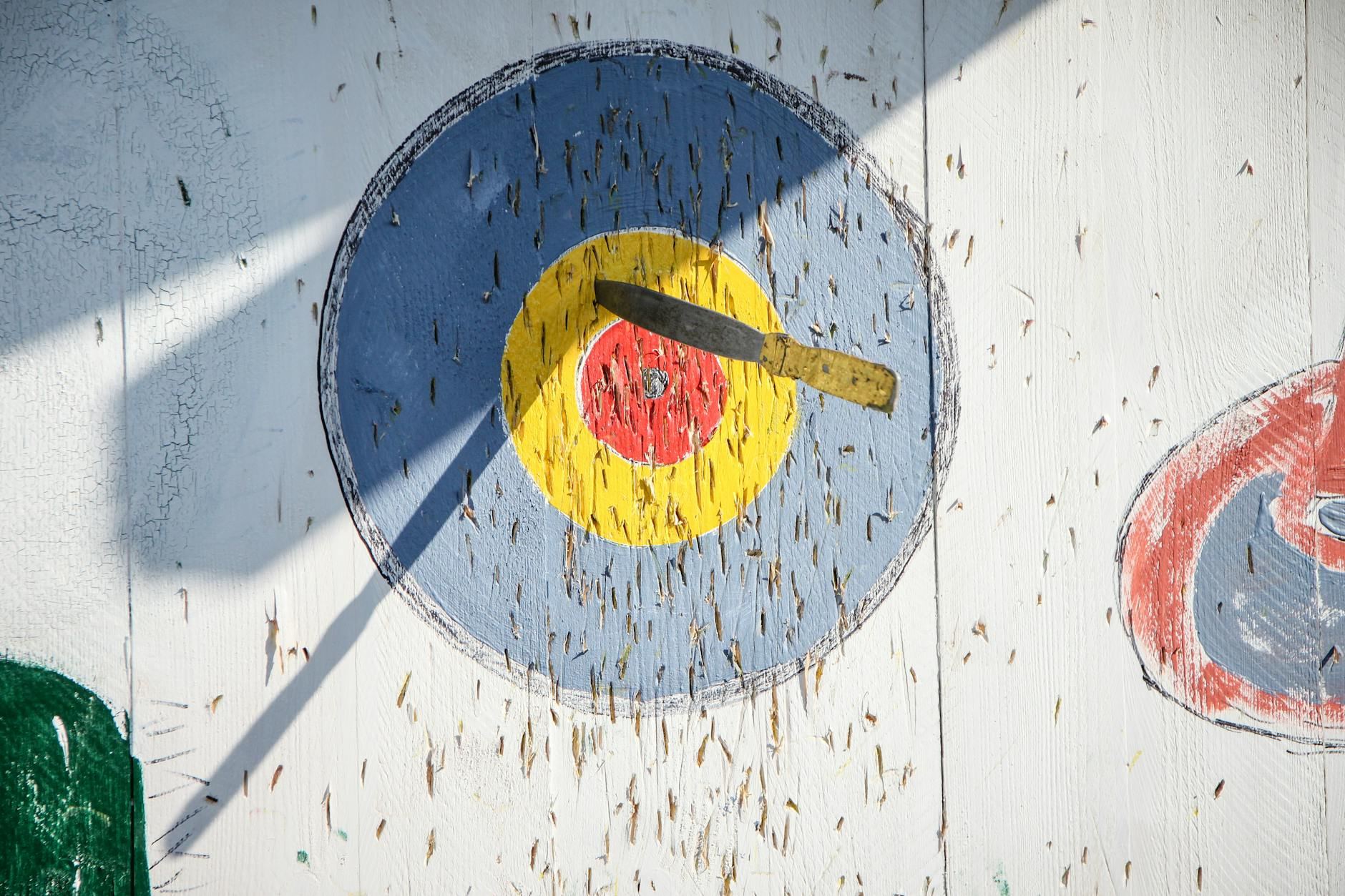
Knife throwing isn't just a carnival act—it's a precision sport that teaches self-correction and mental focus through controlled mechanics, not strength.
Getting started with knife throwing as a beginner involves understanding the fundamentals of blade balance and technique to ensure your throws are accurate.
Unlike axe throwing, it demands precision over power – the thrower controls rotation through distance and grip, not force.
It's solo-friendly, deeply technical, and requires almost no equipment to start.
In knife throwing, you practice a precise sequence of physical actions aimed at a wooden target, focusing on consistency and accuracy. You adopt a staggered stance, grip the knife, and execute a smooth throw while shifting your weight, refining this technique through hundreds of repetitions, visualizing your aim to improve muscle memory and achieve clean hits.
Knife throwing induces a flow state by demanding total concentration on precision throws, creating an immersive experience where immediate feedback on each throw helps refine skills. This process fosters a sense of accomplishment through mastery, as repetitive practice enhances muscle memory and offers a continuous challenge with varied techniques, keeping sessions engaging and rewarding.
You think knife throwing is just a "carnival trick." Like a guy in a leather vest doing stunts at a fair.
Knife throwing is a rotation sport where precision matters more than strength. It's about controlling half-turns over a distance, syncing up distance, grip pressure, and release point.
Strength isn't the key—consistency is. You repeat the same motion until your body learns it, moving from guesswork to intention.
Mentally, it's tougher than it looks. You're out there solo, correcting your mistakes as they happen. **This builds a focused self-reliance that's rare in most hobbies.**
Picture a competitive thrower: five blades, human silhouette, seven meters away. They adjust as they go, watching where the blade hits, not where it sticks.
It's about rotation, not just aim. That's the essence of knife throwing.
You're already wondering what kind of knife you actually need. That's next.
That perfect rotation looks smooth and effortless when someone else does it. The knife spins gracefully, landing with a satisfying thunk as it sticks upright in the wood.
Your first attempts won't match that scene. The real challenge lies in managing the rotation count. Until you've thrown fifty knives that bounce handle-first off the target, rotation count remains a mystery.
Landing a stick seems easy when you watch, but as you practice, it's clear that distance matters more than strength. Instead of consistent thunks, you'll find yourself with half-rotations and handle hits. The knife often ends up on the floor.
Almost nothing sticks at first, which is completely normal. You're not just adjusting your form, you're learning how a full rotation works.
Soon, you'll find a distance that works and you'll stick with it. That's exactly what you should do.
Consistency starts to show, but it's a mixed bag. You'll manage a few perfect throws in a row, followed by a chaotic streak, and then hit another good series.
By then, you start knowing a bad throw as soon as it leaves your hand, and this awareness is a real milestone.
Before your first session, mark your throwing distance with tape and leave it. Beginners often adjust their position when throws fail, not realizing it's grip pressure, not distance, causing the problem.
It bounces off. Again. You pick up the knife from the floor, contemplating quitting.
That struggle is exactly the point. Knife throwing barely tests your patience initially but demands persistence with every failed throw. Those who endure through week two are choosing a path most won't.
When to start: Early morning
Duration: 1 hour
Cost to try: $20
Success criteria: If you finished without hitting yourself or anyone else, do session 2.
Most beginners think standing far away makes them look impressive. They don't realize that the distance should be based on spins, not power.
Fix your starting distance at 10–12 feet for a single rotation throw. Adjust by a foot closer or farther until the blade sticks.
Handle-throwing and blade-throwing need different grips and releases. Many new throwers don't check their knife's design, leading to mismatched techniques.
Check the balance point first. If it tips toward the blade, handle-throw; if it tips toward the handle, grip the blade.
Kitchen and pocket knives often break or behave erratically when thrown. Beginners shy away from proper knives thinking of cost, but get poor results.
Get a purpose-made, no-handle, single-piece steel thrower in the 200–300 gram range. It will save you time and frustration.
Some beginners hold the knife longer thinking it helps with aim. This often results in the knife hitting the ground early instead of the target.
Release the knife when your throwing arm is fully extended at eye level. When it feels slightly early, it's usually perfect.
Throwers often use side-on stances like in baseball or darts. This causes rotation problems and makes troubleshooting difficult.
Face the target with your shoulders square. Keep your dominant foot slightly back and throw straight down the centerline.
Dedicated throwing ranges aren't your only option. Try backyard gatherings, archery ranges, or even Renaissance fairs. Some fairs and living history clubs welcome new throwers on practice days.
A structured scene does exist through the American Knife Throwers Alliance (AKTA) and the International Knife Throwers Hall of Fame (IKTHOF).
Admit when you're a beginner. It secures a safety briefing, loaner knives, and guidance for those first throws.
Consistency over variety matters at the start. Stick to one distance—3, 4, or 5 meters—until your rotation becomes automatic.
No-spin involves a controlled wrist release, sending the knife forward without rotating.For an instinctive, tactile approach without worrying about distance, this is ideal. Standard knives work fine at first, but specialized no-spin knives are available.
This suits experienced throwers seeking a new challenge. Accuracy demands increase significantly beyond 7 meters. You don't need new gear, just the space and time to practice.
Structured scoring and standardized rules are great if you love clear goals. As a bonus, competition-legal specs may require specific knives, which can affect costs.
Skills often translate between knife and axe throwing. Axes use similar rotational throws with different release points. Many enjoy both, and you can try axes at dedicated ranges before investing.
Another variant that pulls from the same roots is Skeet Shooting.
If the texture of this appeals to you, Trap Shooting is built on similar bones.
If the texture of this appeals to you, Ice Sailing is built on similar bones.
Most beginners believe achieving a perfect throw is about refining their release technique. But this isn't where success lies. The real key is mastering the knife's spin count.
Control your spin count to transform your throws from luck to precision. Feel your knife's rotations over a distance, then adjust the distance to match your natural spin. This way, your throws consistently land blade-first because of deliberate mechanics, not chance.
With spin control, you can instantly predict the outcome by moving slightly forward or backward. Instead of randomly adjusting and hoping for the best, you can refine your positioning intelligently. Failing to focus on spin control means you're stuck adjusting your throw instead of using your distance to perfect it.
Commit to eight sessions over 30 days, aiming for twice a week.
If you find yourself arriving early and staying late, that's commitment. It's time to consider upgrading your tools and diving deeper. Invest in throwing knives over $40, join a local club, and shift your focus to building skills rather than simply trying things out.
Being neutral—enjoying it while you're there but forgetting about it later—means you might only be half-engaged. Instead of giving up, add more challenges like aiming for distance or specific rotations. This could add the structure needed to reignite your interest.
If each session feels like a relief once it's over, that's a clear signal. The slow, solitary nature of the hobby isn't for everyone. It's okay to step away if the repetition isn't enjoyable for you.
You're watching throwing videos at 11pm for no reason. This pull toward the repetitive motion suggests your brain is already engaged. It's worth taking action on this curiosity before it fades.
If knife throwing feels like too much to commit to right now, browse what to do when you're bored for lower-stakes ideas.
Yes, knife throwing is safe when practiced with proper technique and safety protocols. Always throw in a designated area away from people, never retrieve knives while others are present, and wear closed-toe shoes. Taking a lesson or watching instructional videos before starting is recommended to learn correct form and avoid injury.
You'll need balanced throwing knives specifically designed for the sport—typically 6-8 inches long and weighing 3-5 ounces. These are different from kitchen knives and cost $10-30 each. You can start with a budget-friendly set of 3-5 knives before investing in premium options.
Most beginners hit targets consistently within 2-4 weeks of regular practice (2-3 sessions per week). Developing advanced technique and mastering different throwing styles takes several months. Your progress depends on practice frequency, natural coordination, and quality instruction.
You need at least 12 feet of clear throwing distance and 6 feet to either side for safety. A wooden target (typically made from pine or cottonwood) mounted on a stand or wall is essential. Most people practice in backyards, garages, or at dedicated throwing ranges.
Knife throwing builds hand-eye coordination, focus, and arm strength while teaching patience and discipline. It requires mental concentration to maintain consistent form and hit targets repeatedly. Many people find it meditative and stress-relieving due to its demand for full attention.
Initial startup costs range from $50-150: expect to spend $30-60 on a beginner knife set and $80-150 on a wooden target. If you already have a suitable throwing area, you can start with just knives and a DIY target. Premium equipment and lessons add to costs, but basic setup is affordable.