BoredomBusted — Find Your Next Favorite Thing To Do
Discover hobbies, activities, places, and ideas that spark joy. Whether you're looking for something creative, active, social, or relaxing, BoredomBusted helps you find your next favorite thing to do.
Browse our hobby guides, things-to-do collections, and place ideas to never be bored again.
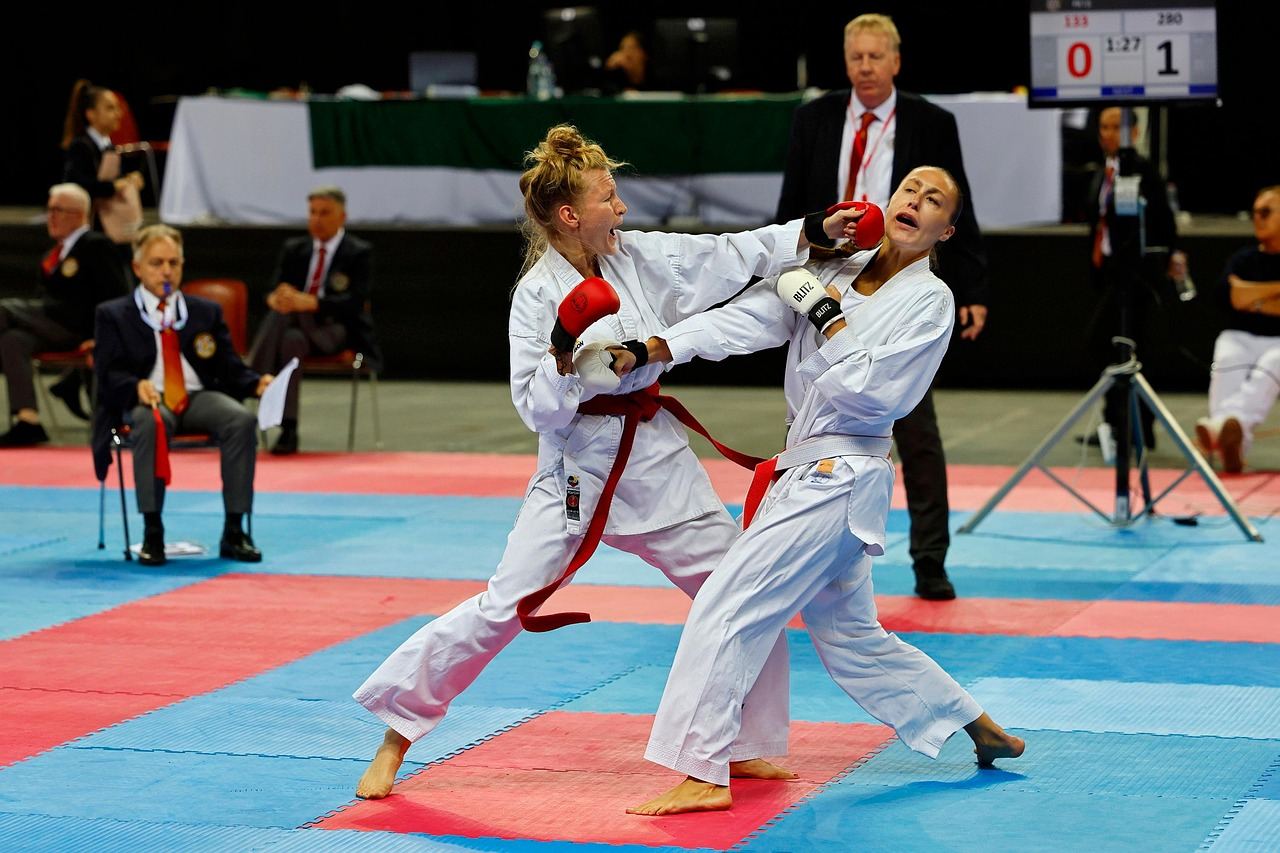
Martial arts isn't just about fighting — it's a holistic practice focusing on personal growth, discipline, and community building.
Getting started with martial arts as a beginner combines the development of physical strength with the cultivation of mental discipline. Styles vary from traditional Karate and Taekwondo to modern MMA.
Training involves mastering techniques and sparring partners. It builds resilience, both physical and mental.
Practicing martial arts involves a mix of solo drills like shadowboxing and footwork, partner work for technique repetition, and sparring or rolling to apply skills in real-time. Hobbyists engage in physical conditioning tailored to combat, study tactics for improvement, and refine their personal style through structured practice.
Martial arts create flow states by offering clear goals, immediate feedback, and a balance of challenge and skill, keeping participants fully engaged and focused. The continuous feedback loops from sparring and drills foster a sense of progress, while the camaraderie among practitioners satisfies social belonging and creates a shared identity.
Martial arts seems like it's all about combat and aggression. That's what keeps many people from giving it a try.
The truth is that martial arts fuses physical training with mental discipline. It's about teaching respect, focus, and self-control alongside technique.
Fitness improves. Confidence soars. Stress starts to fade. The practice focuses on personal growth and community, not simply fighting.
So where does this misunderstanding come from? Time to explore the real philosophies at the core.
Your first class will likely leave you winded within ten minutes. The footwork feels foreign, the stances strain muscles you forgot you had, and your brain is processing more information than it can hold. Most beginners walk out of their first session not feeling empowered — they feel completely lost. That's normal, and it means you're in the right place.
Here's what catches people off guard: partner drills expose you immediately. You can shadowbox alone and look decent. The moment another person is in front of you, timing collapses, distance vanishes, and the technique you just drilled stops working. The gap between knowing a move and actually landing it is wider than almost any beginner expects. This isn't failure — it's just what learning under pressure feels like.
The first few sessions are repetitive by design. The same punch. The same stance correction. The same footwork pattern. It feels mechanical and unglamorous compared to the dynamic sparring you see on video. But those slow, repetitive drills are exactly where the real skill gets built. Skipping them mentally — wanting to rush to the "real" stuff — is the fastest way to plateau early.
Around sessions three or four, something small clicks. A combination lands cleanly. Your stance holds under mild pressure. You stop thinking about your hands and start reading your partner. That tiny moment of competence is what keeps serious practitioners coming back for years. The beginner phase is short, but it's where most people quit — which makes knowing the common mistakes ahead of time genuinely useful.
When to start: 8:00 AM
Duration: 1 hour
Cost to try: $0
Success criteria: If you can hold front, back, and horse stance for 10 seconds each and land 10 clean kicks and punches on target, do session 2.
Most beginners spend weeks researching Muay Thai vs. BJJ vs. Karate before ever stepping on a mat. That research spiral feels productive, but it mostly delays the thing that actually teaches you anything — training. Every style looks different from the outside than it feels from the inside.
Try two or three free or drop-in classes before committing to a gym or style. What matters most early on is finding a school with good coaching and a training culture you like. Style becomes a real preference only after you've felt what sparring and drilling actually demand from your body.
New practitioners almost always want to spar before their fundamentals are solid. The intensity is appealing — it's why you signed up. But drilling sloppy technique under pressure just locks in bad habits that take months to undo.
Slow shadowboxing and controlled partner drills build the movement patterns that sparring later depends on. Coaches call it "drilling to automaticity" — when a guard or a hip escape happens without thinking. You can't rush that stage. The beginners who skip it plateau fast.
Going 100% every round is one of the most common early mistakes. It usually comes from ego — nobody wants to get tapped or tagged by someone with less experience. So beginners muscle through instead of thinking, and they stop learning almost immediately.
Sparring at 60–70% effort forces you to actually apply technique instead of surviving on athleticism. It also keeps training partners willing to roll or drill with you. Gyms notice who spazzes out. Being the person who trains smart earns you better rounds with better partners — which accelerates everything else.
Progress in martial arts comes in bursts separated by long flat stretches. Beginners often interpret a plateau as a sign they've hit a ceiling or chosen the wrong path. In most cases, it just means a new concept hasn't clicked yet — not that nothing is working.
The feedback loop in sparring is the clearest signal you have — not how you feel leaving class. If your training partners are harder to submit or hit than they were two months ago, you're progressing. Keep showing up consistently through the flat periods. The next burst usually arrives without warning.
Some beginners supplement class time with solo YouTube drills and skip the gym culture entirely. The conditioning and technique work isn't wrong — but it leaves out the part that actually keeps most people training long-term.
The camaraderie built through consistent partner work is the main reason most people stick with martial arts for years. Shared effort in drilling and sparring creates a sense of belonging that solo training can't replicate. Show up to open mat. Stay for the post-class conversations. That social layer isn't a bonus — it's a core part of why this works.
Start with r/martialarts, r/bjj, r/karate, or r/MMA on Reddit. Each has active communities answering beginner questions and recommending gyms by location. The style-specific subreddits are especially useful for finding people near you.
For in-person training, your best options are dedicated martial arts gyms, boxing clubs, and university or community college dojos. Many YMCAs and recreation centers also run structured Karate or Taekwondo classes at low cost. These aren't just fitness classes — you'll spar with the same partners week after week, which is where real community forms.
Meetup.com lists open mat sessions and sparring groups in most mid-sized cities. Search your style by name — "BJJ open mat" or "Muay Thai sparring" — and you'll find drop-in groups that welcome newcomers. Facebook Groups are still heavily used by local clubs to coordinate training schedules and post event invites.
Larger governing bodies like USA Karate, US Judo, and the International Brazilian Jiu-Jitsu Federation (IBJJF) maintain affiliate gym directories on their websites. If you want a vetted gym with certified instructors, those directories are your most reliable starting point.
Traditional styles like Karate, Taekwondo, and Judo give you a defined path. Belt systems mark your progress. Classes follow a curriculum. You always know what you're working toward.
This is the right fit if you thrive with clear milestones and want martial arts to feel like a long-term practice, not just a workout. Many practitioners stay with a single style for decades.
Brazilian Jiu-Jitsu and wrestling are built around grappling — controlling, pinning, and submitting opponents on the mat. Striking takes a back seat. Position and leverage are everything.
BJJ especially is known for being one of the most mentally engaging martial arts — every roll is a live puzzle you solve with your body. It suits people who like problem-solving under pressure.
Muay Thai, Boxing, and Kickboxing put striking at the center. Punches, kicks, elbows, knees — you learn to deliver and absorb impact with control. Pad work and bag rounds make up most sessions.
These styles double as serious cardio. If your main goal is fitness but you want it wrapped in skill-building, striking arts deliver both without compromise.
Mixed Martial Arts combines striking and grappling into one complete system. It's what you see in the UFC — but amateur and hobbyist competition exists at every level. Training covers multiple disciplines simultaneously.
MMA suits people who get bored doing the same thing repeatedly. The variety keeps training fresh, and competition gives you an honest external measure of where you stand.
Tai Chi and Aikido prioritize flow, balance, and internal awareness over raw power. Movements are slower and more deliberate. The focus is on reading energy and redirecting force rather than overpowering an opponent.
These styles appeal to people drawn to mindfulness and movement meditation. If you want martial arts to be a calming, meditative practice rather than an intense physical grind, this is your entry point.
Many Karate and Taekwondo schools run family classes and youth programs. Kids as young as four train alongside adults. The shared goals and belt milestones give families a built-in activity with visible progress.
The social element runs deep here. Dojos build tight communities — training together consistently creates bonds that go well beyond the gym floor.
If this resonates, Lethwei explores a similar direction.
For something adjacent, see Weightlifting.
The skill that separates improving martial artists from those who plateau is learning to read and respond to resistance in real time. Not drilling harder. Not training longer. Responding.
Drills build the movement. Sparring tests it. But what actually develops you is the moment between the two — when your partner does something unexpected and your body has to figure out what to do before your brain catches up. That moment is where real martial arts learning happens.
Most beginners treat sparring like a test they might fail. The people who improve treat every round as live feedback on what their technique actually looks like under pressure. Getting caught with a shot doesn't mean you lost. It means you just found out your guard drops when you're tired.
Once you start seeing resistance that way, the plateau disappears. Every roll, every round, every drill with a resisting partner becomes information. The next section covers how practitioners actually structure their training to keep that feedback loop working.
Commit to four sessions over the next month — roughly once a week — at a local gym or class. That's enough time to feel what training actually demands from you.
You replayed a technique in your head on the drive home. You caught yourself practicing a stance in the kitchen. That mental loop is the real signal — your brain is already treating this as a skill problem worth solving. Pick a single style, find a gym with consistent instruction, and commit to a three-month block.
You showed up, you moved, you left. No particular pull toward it, no strong resistance. That usually means you hit the wrong style or the wrong gym, not the wrong hobby. A striking-heavy class like Muay Thai feels completely different from the ground control of Brazilian Jiu-Jitsu. Try one more style before walking away.
The close physical contact bothered you. The structure felt rigid. You watched the clock. That's honest data — not every high-intensity physical hobby fits every person. If the movement side called to you but the combat didn't, something like rock climbing or competitive swimming gives you the same flow state and skill progression without the contact.
You started watching sparring footage at 11pm just to understand what you did wrong. When the feedback loop pulls you in that deep without anyone asking you to, the hobby already has you.
Martial arts can be started at any age, with classes available for kids to adults.
No, martial arts training will help you improve your fitness over time.
Aim for 2-3 times a week to build skills and improve fitness effectively.
Yes, most classes are designed with beginners in mind, focusing on safety and proper technique.
Initially, you only need comfortable workout clothes; gear can be acquired as you progress.