BoredomBusted — Find Your Next Favorite Thing To Do
Discover hobbies, activities, places, and ideas that spark joy. Whether you're looking for something creative, active, social, or relaxing, BoredomBusted helps you find your next favorite thing to do.
Browse our hobby guides, things-to-do collections, and place ideas to never be bored again.
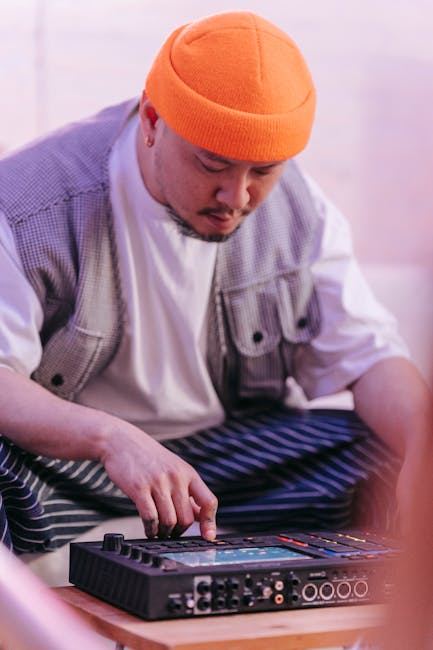
Beat making isn't just pressing play—it's about iterating sounds until the rhythm feels inevitable, revealing the depth of compositional thinking.
Learning beat making as a beginner opens up a world of creativity, allowing you to craft rhythmic tracks using drum patterns, samples, and synthesized sounds inside software called a DAW.
Unlike playing an instrument, you're composing and producing simultaneously.
Bring a track to life in one session.
In beat making, you use Digital Audio Workstation (DAW) software to create music by programming drum patterns, layering melodic elements, and manipulating audio samples, all while iterating on your work through real-time adjustments to pitch, volume, and effects.
Beat making induces a flow state through its rhythmic structure, balancing repetition with variation, while immediate auditory feedback from your adjustments fosters a sense of accomplishment and motivation, as well as creative expression by transforming mundane loops into unique compositions.
You think beat making is just opening an app and hitting play on some drums. Maybe add a few layers and call it done. That assumption is why so many quit before discovering what this hobby actually demands.
Beat making is about mood and emotion. Every sound placed changes the tension and release of your track.
The loop you imagine might take 10 minutes. The loop that moves people's heads takes 10 iterations. That's where the real work lives.
You're not just picking sounds. You're learning how rhythm touches people physically. That skill will change every musical experience you have after it.
Take Khrysis, who makes 30 versions of a single hi-hat pattern before committing. He tweaks the same bars repeatedly until the space between hits feels exactly right.
Gear is probably the first thing on your mind right now — and it turns out the answer is a lot simpler than the forums make it look.
Watching someone make a beat looks like flow. They're clicking, chopping, layering – and it sounds good in minutes.
Your first session will not look like that.
Week one is mostly DAW orientation. You spend more time learning the layout than making any actual sound. Week two, you finish something – four bars, it loops, and you will play it for anyone who stands still long enough.
By week three, you can hear what's wrong with your drums. That means your ears are already ahead of your hands – which is exactly where they should be. Week four, you start a beat, hate it, and start another. That instinct is the whole job.
The loop sounds flat. Nothing sits right. The gap isn't taste – it's reps. Everyone who sounds good has already made about fifty bad beats. You've made three.
Set your tempo before you do anything else. Most beginners pick sounds, get attached, then realize the BPM is wrong for the genre they wanted – and nothing transfers cleanly once you're emotionally invested in a loop. Pick the tempo, pick the genre, then build. The next section covers the mistakes that keep people stuck in the frustrating half far longer than necessary.
When to start: Morning
Duration: 1 hour
Cost to try: $0 (using free software)
Success criteria: If you build an 8-bar loop with a kick, snare, and hi-hat that plays cleanly without clipping, do session 2.
Empty projects can feel lacking, driving beginners to stack layers prematurely.
Focus on your kick, snare, and hi-hat first. If it doesn't hit with these core elements, more sounds won't fix it.
Separately adding bass and kick leads to clashes, making beats sound muddy on proper speakers.
Route kick and bass to the same bus early. Use a frequency analyzer to ensure they're not competing in the 60–100Hz range.
Using full loops without chopping them makes the loop do all the work.
Cut the sample into slices. Rearrange at least three parts and pitch two differently before adding drums.
Your ears adjust quickly, and what feels balanced at one volume often isn't.
Keep your master output at a conversational level. Mix mostly at this volume to avoid surprises later.
Beginners often get pulled toward starting new projects, leaving many unfinished.
Commit to exporting a rough mix before starting new sessions. One complete beat teaches more than several unfinished ones.
Beat making is mostly a home setup — laptop, headphones, corner of your room. To move beyond your bedroom setup, check recording studios for hourly booth rentals. Community music centers sometimes host open production nights where you can meet people face to face.
There's no governing body for beat making — no association, no official club network. The culture runs entirely on community, which means the entry points are scattered but real.
Once you've found someone, how you introduce yourself matters. Say "I'm new, still learning my DAW" — that framing invites honesty, not competition.
Producers in these spaces routinely share templates and walk newcomers through their workflow. A single session with someone experienced can compress weeks of solo trial-and-error into one afternoon.
Use software like FL Studio, Ableton, or GarageBand with a mouse and keyboard. It's a rapid process where feedback is immediate, making it a great start for beginners. Free options exist, so you can get going without spending a cent.
Work with equipment like Roland TR-8S or MPC series. It's tactile and hands-on. Best for people who already know they hate staring at screens.
Chop and pitch existing recordings into new creations—a key technique in hip-hop. You're reworking sounds like solving a puzzle, which is perfect if you enjoy digging through old records.
Build layers with short phrases on the fly and focus on live execution. Best for musicians who play instruments and want to produce without sitting at a computer.
Create unique sounds using synthesizers and audio processing, with the beat as a secondary element. Takes time to master, but producers who excel here don't sound like anyone else.
Another variant that pulls from the same roots is Electronic Drumming.
Guitar is a sibling pursuit and often surfaces the same kind of curiosity.
Acoustic Guitar is a sibling pursuit and often surfaces the same kind of curiosity.
Groove quantization awareness is the skill that sets music apart. It's knowing when to push notes slightly off-beat, when to drag them, and how much human touch gives life to a loop without making it sloppy.
Computers align notes perfectly. Humans do not, and our ears crave that imperfection.
Once you internalize this, your drums start to breathe. Stack all the expensive samples and plugins you want — without this human feel, your music will sound mechanical.
Perfect timing is the least human thing you can do to a beat.
Thirty days. Eight sessions. That's the test.
Eight sessions is enough to move past the initial software confusion and start making actual decisions. Sound choices, pattern choices — the moves that reveal whether beat making is a real interest or just another way to pass the time.
When you keep finding excuses to work on your beats, that's your green light. The software starts feeling like a natural tool instead of a barrier. Your next step is to study music theory and your favorite producers.
If each session ends in neutral feelings, pay attention. This usually means you enjoy the idea of beat making more than the act. You could tack on four more sessions, but if nothing draws you back naturally, that's honest data about your interest level — not a motivation problem.
Dreading opening the DAW is a clear signal. This isn't the "I need to work harder" kind of dread — it's genuine disinterest in being there. Trust the data and move on.
The sign you shouldn't ignore: you're dissecting beats in your head during your daily routine, wondering how they made that sound. That's the natural transition from listener to creative thinker — and you didn't try to make it happen.
If beat making feels like too much to commit to right now, browse what to do when you're bored for lower-stakes ideas.
You can start with just a computer and free DAW software like GarageBand, Audacity, or FL Studio's trial version. As you progress, many producers invest in a MIDI controller (around $50–$200) and studio monitors or headphones for better sound accuracy, but these are optional initially.
A simple beat can take 20–30 minutes once you understand the basics, while more complex, polished tracks typically take 2–8 hours depending on your skill level and creative vision. Beginners may spend longer experimenting with sounds and arrangements.
The fundamentals are accessible to beginners—most people can create a basic beat within their first session. However, developing ear training, mixing skills, and a unique sound takes consistent practice over weeks and months.
Yes, beat making doesn't require prior music theory knowledge or instrument experience. Most DAWs include built-in sounds and loops, and many successful producers started without formal training by learning through tutorials and experimentation.
Beat making spans hip-hop, trap, electronic, lo-fi, house, ambient, and more—the genre depends entirely on the drums, samples, and sounds you choose. The skills you learn apply across all styles, giving you flexibility to explore different sounds.
You can start completely free using open-source DAWs and sample packs. Premium options range from $100–$500 for professional software, but many producers create high-quality beats using free tools indefinitely.