BoredomBusted — Find Your Next Favorite Thing To Do
Discover hobbies, activities, places, and ideas that spark joy. Whether you're looking for something creative, active, social, or relaxing, BoredomBusted helps you find your next favorite thing to do.
Browse our hobby guides, things-to-do collections, and place ideas to never be bored again.
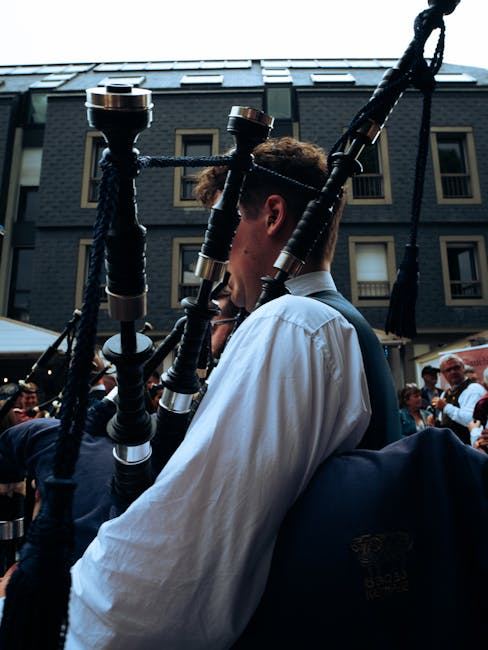
Bagpipes are more than a novelty — mastering them demands simultaneous control of airflow and pitch, a feat most musicians never face.
Learning bagpipes as a beginner involves understanding how to manage the airflow and create a continuous sound through the instrument's unique design. Bagpipes is a wind instrument played by blowing air into a bag, which then feeds a continuous tone through melody and drone pipes.
Unlike most wind instruments, the bag acts as an air reservoir – so the sound never stops between breaths.
That unbroken drone is what separates it from every other instrument you've considered.
Practicing bagpipes involves structured techniques like breath control, finger drills, and tempo progression. Hobbyists focus on maintaining consistent tone and pressure, develop muscular control through targeted exercises, and practice full tunes while recording their sessions for feedback. Each practice session is planned with specific goals, ensuring a deliberate approach to mastering the inst…
Bagpipe practice creates incremental skill feedback through measurable progress in technique and tempo, which sustains engagement. This structured approach fosters a sense of accomplishment as hobbyists achieve specific goals, build physical competency, and expand their repertoire, keeping boredom at bay.
You think bagpipes are a novelty. A costume piece for funerals or Scottish festivals, then back into the attic.
That assumption makes sense from the outside. But bagpipes are one of the most physically demanding instruments you can attempt to learn — and most people who dismiss them have never had to coordinate two separate pressure systems with their body at the same time.
The melody pipe — the chanter — runs on a nine-note scale with no sharps, no flats, and zero room to fudge pitch. There's no volume knob either. Every dynamic comes from finger technique: tiny ornaments called doublings and throws that take months to land cleanly and years to make musical.
Stuart picked up the pipes at 42 and described his first six months as "learning to rub my belly and pat my head, except both jobs have exams." He wasn't being dramatic. Keeping bag pressure steady with his arm, maintaining the blowpipe, and fingering a melody simultaneously is the baseline — not an advanced skill.
Something.
Surprising.
Nobody puts them down.
The people who try bagpipes and quit are far outnumbered by the ones who can't stop thinking about them — which is exactly why your first session is designed the way it is.
At a Highland Games or funeral, the pipes sound inevitable — ancient, full, frictionless. Picking up a practice chanter for the first time is the opposite of that. It's a thin plastic tube producing a reedy squawk, and the fingering chart in your other hand might as well be a foreign language.
You came in expecting ceremony. What you get instead is a fingering puzzle where covering holes slightly wrong turns a clean note into a squeal. Your neighbors will notice before you do.
Then, usually around session three or four, you land a clean scale run — every note distinct, no squeaks, fingers lifting and landing in the right order. It doesn't mean you've mastered anything. It means your hands have stopped fighting the instrument and started listening to it, which is a different thing entirely.
The top hand position is the part most beginners quietly get wrong. It feels awkward, so they adjust — and a bad grip locked in during chanter practice becomes a serious problem when you move to full pipes, where correcting it costs weeks. The next section covers the mistakes that keep people stuck at the chanter far longer than necessary.
When to start: Morning
Duration: 1-2 hours
Cost to try: $2.00 for sheet music
Success criteria: If you finished without producing a consistent sound, do session 2.
Highland bagpipes are powerful and expensive — and that's exactly why beginners buy them too early. The instrument feels like the goal, so owning it feels like progress.
Your fingers need to build muscle memory before your lungs enter the equation. Use a practice chanter for three to six months before touching the full pipes. The chanter costs a fraction of the price and removes every variable except the one that actually matters: your fingering.
Inconsistent bag pressure produces drone warbles and chanter squeals — sounds most beginners blame on a bad reed or a setup problem. Usually it's neither.
Steady your pressure with daily practice on a bag or balloon before moving to the full instrument. Your arm squeeze and your breath should move as one rhythm — any gap between them is where the sound falls apart.
Gracenotes are how bagpipe notes separate from each other. Without them, distinct notes blur into a single sustained wall of sound.
Most beginners skip ahead to tunes because tunes feel rewarding. The problem is that sloppy gracenote habits bake into muscle memory fast and take months to undo. Drill clean, consistent gracenotes in isolation until they're automatic — then bring them into a tune.
A bag that doesn't hold pressure will silence your drones mid-tune. Beginners usually blame their blowing or their reeds. The real culprit is often an unsealed or under-seasoned bag.
Re-season or reseal the bag regularly and confirm it holds pressure before every session. A slow leak means the bag is working against your arm the entire time you play — you'll tire out before you find your sound.
Beginners adjust drone slides endlessly and never land on a stable sound. That's because the drones depend entirely on the chanter reed — and a cold reed plays sharp until it warms up.
Warm up your chanter reed for ten minutes at playing pressure before you touch the drone slides. Once the reed stabilizes, tune the drones to match it — not the other way around.
Practice wherever neighbors don't hear you. Open fields, garages, basements, or rehearsal rooms work early on.
Once you're on full pipes, try community halls and outdoor parks on weekdays.
Introduce yourself with this line:
"I've been on the practice chanter for [X weeks] and I'm looking for an instructor or a learner's band."
This helps pipe majors guide you to the right beginner resources or instructors.
Not all bagpipes sound like a Scottish funeral. The instrument family is wide \u2013 and some versions are genuinely more beginner-friendly than the one you\u2019re picturing.
This is the one everyone thinks of. Loud and meant for outdoor use, it has nine notes. The Highland bagpipe is the global default when you hear \u201cbagpipe.\u201d Expect to spend $500\u2013$1,500 for a decent student set; cheap imports play badly and teach worse habits.
The Irish cousin offers a quieter, nuanced sound and is played seated, using bellows instead of lung power. Great for a reed-like tone, not the battle cry feel. Gear costs more, often $1,000\u2013$3,000+ even for practice sets. Quality makers often have waitlists.
Bellows-blown and tuned to the Highland scale, these pipes offer the traditional sound without the volume. Ideal if you need a session-friendly option at home. Cost is between Highland and Uilleann pipes, roughly $600\u2013$1,500 for a playable set.
Quieter still, these have a closed-end chanter for a clipped, staccato sound. Perfect for those drawn to English folk music \u2013 a distinct style all its own.
Technically not bagpipes, but essential for beginners. This single quiet reed instrument teaches fingering before you move on to a full set. Cost is $40\u2013$80, and it\u2019s all you need for your first year.
Another variant that pulls from the same roots is Saxophone.
Some of the same instincts show up in Trombone — worth a look if this clicked.
For something adjacent, see Opera Singing.
Most beginners obsess over fingering – memorizing the holes, drilling the scale, chasing cleaner notes.
The fingers aren't the problem. The bag is.
The one skill is bag pressure control – the ability to maintain a steady, continuous air column through the bag while simultaneously breathing in. Your mouth refills your lungs. Your arm keeps squeezing.
The bag acts as a buffer so the drones never waver. Most beginners let that pressure spike and crash with every breath, and the pipes scream at them for it.
Without steady pressure, your drones go flat every time you inhale – that warbling, seasick sound that makes rooms clear out. Every embellishment and gracenote you drill depends on a stable foundation that broken pressure destroys.
Flat drones. Wavering pitch. A sound nobody wants to hear twice.
With steady pressure, the pipes suddenly sound like bagpipes. Not a cat. Bagpipes.
Start on the practice chanter with a bag simulator or a simple balloon rig before you ever touch full pipes. Isolating the squeeze-breathe coordination away from live drones removes a layer of chaos that masks what's actually going wrong.
Once your arm has a baseline, recordings become your sharpest feedback tool. Listen only to the drones – not the melody.
Once this coordination clicks, everything else – tone, embellishments, tuning – becomes a question of refinement rather than rescue. The next section covers the specific pipe setups where bag pressure issues show up hardest.
Commit to 8 sessions over 30 days — roughly twice a week. That spacing gives you room to absorb each session rather than just grind through them back to back.
If you're reaching for the chanter between sessions without deciding to, that's the hobby. Not enthusiasm, not discipline — just the thing pulling at you. Get a personal practice chanter and find a full instructor before the next month is out.
If sessions feel neutral — not dreaded, just unremarkable — give it two more weeks with one concrete target, like playing a single melody cleanly start to finish. Bagpipes have a long feedback loop, and flat early progress isn't the same as wrong fit.
If you loathed every session, that's a clean answer. Not a character flaw, not a difficulty problem — just data. Something else deserves your time.
The sign worth paying attention to: you're at a parade or a funeral, everyone else has moved on, and you're still watching the piper's arm pressure on the bag. That's not admiration. That's recognition.
If nothing here clicks, our guide to what to do when bored covers shorter, lower-commitment options.
Most beginners can play basic tunes within 3–6 months of consistent practice (30–45 minutes daily), though mastering proper technique and complex pieces typically requires 1–2 years. Progress depends heavily on practice frequency and access to a qualified instructor.
A decent starter bagpipe typically costs $300–$800, while professional-grade pipes range from $1,000–$3,000+. You'll also need a practice chanter ($30–$100) and reeds, making total startup costs around $400–$1,000 for a beginner setup.
Bagpipes have a steep initial learning curve because you must control air pressure while fingering patterns simultaneously, which feels unnatural at first. However, the difficulty levels off after the first few months, and consistent practice with a teacher makes progress manageable for most people.
You'll need a practice chanter (to learn fingering without the bagpipe), a full set of bagpipes, reeds, and ideally a qualified instructor. Many beginners start with a practice chanter alone to build foundational skills before investing in full pipes.
While online tutorials exist, learning bagpipes without an instructor is not recommended because improper technique becomes difficult to unlearn and affects tone quality and progress. A teacher ensures you develop correct fingering, breathing, and embouchure from the start.
Scottish bagpipes (Great Highland Bagpipe) are louder and deeper with a wider range, while Irish bagpipes (Uilleann pipes) are quieter and played with hand-pumped bellows rather than mouth-blown. Scottish pipes are more common for beginners and wedding/ceremonial performances.