BoredomBusted — Find Your Next Favorite Thing To Do
Discover hobbies, activities, places, and ideas that spark joy. Whether you're looking for something creative, active, social, or relaxing, BoredomBusted helps you find your next favorite thing to do.
Browse our hobby guides, things-to-do collections, and place ideas to never be bored again.
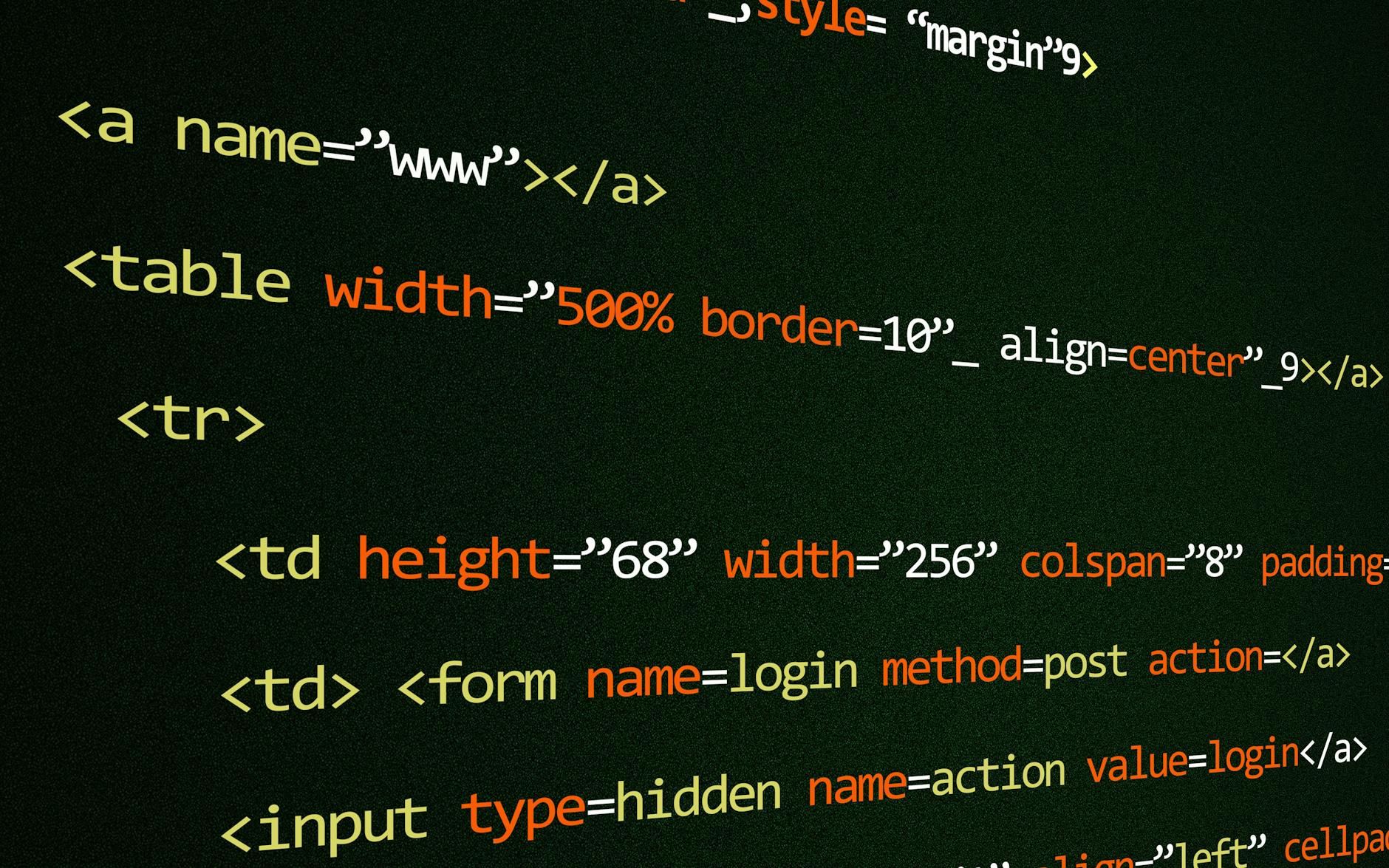
Coding is less about typing code or math cleverness—it's mostly reading, debugging, and the patience to experiment until you succeed.
Learning coding as a beginner opens up a world where you can transform your ideas into executable instructions for computers.
You break down complex problems into smaller steps and test each part.
Most start with one language, creating simple applications. Calculators and games often come before bigger projects.
In coding, you engage in self-directed projects by writing code in languages like Python or JavaScript to create apps, automate tasks, or analyze data, using a computer to type commands, debug errors, and test functionality over sessions that typically last 1-3 hours.
Coding induces a flow state through escalating challenges, providing immediate skill feedback as you debug and iterate on projects, fostering a sense of accomplishment when you launch a functional app or website, while also nurturing creative expression and social belonging in collaborative environments.
Coding isn't about memorizing syntax or being a math genius—it's about breaking down messy real-world problems into solvable pieces.
Every programmer spends half their time reading other people's code, debugging broken things, and googling solutions they've forgotten.
The actual typing is the smallest part. Working through a problem systematically is what matters. Experimenting with solutions and testing ideas come next. You need to tolerate the frustration of being wrong repeatedly until something works.
You'll start by typing something simple like `print("hello")` and feel a rush when it works. But expect a lot of staring at that blank screen.
Your first error will hit fast. A wall of red text that looks disastrous. It usually just means you missed a punctuation mark.
You'll spend twenty minutes hunting for a tiny mistake. It's frustrating, but this teaches you that computers are literal and stupid in a useful way.
By session's end, you'll have the computer repeating words or doing basic calculations. That tangible proof of your work will hook you more than you expected.
When to start: Early morning
Duration: 1 hour
Cost to try: $0
Success criteria: If you write and run a short program that prints your name, asks for input, and echoes the result without errors, do session 2.
Most beginners don't stall because coding is too hard. They stall because of five specific habits that compound fast. Each one feels harmless at first — then suddenly nothing works and you don't know why.
React and Django have great branding. Data types and algorithms do not. So beginners jump straight to frameworks — then hit a bug they can't diagnose because they don't understand what's happening underneath.
Spend your first weeks on fundamentals: variables, loops, functions, and basic data structures. It feels slow. It pays back everything later. freeCodeCamp and CS50 both front-load exactly this material for a reason.
Copy-pasting a solution feels productive. It isn't. You fix the immediate error and create three more you can't explain. The real problem is that you've outsourced the thinking — which is the only part that actually builds skill.
When you find a Stack Overflow answer, rewrite it by hand and explain each line out loud before you use it. Sounds tedious. Takes five extra minutes. Cuts your debugging time in half over the next month.
Beginners over-engineer constantly. You're writing a to-do app and suddenly you're planning a microservices architecture. This happens because planning feels like progress — but it isn't code.
Solve the problem in front of you, not the hypothetical one three versions away. Get it working first. Refactor second. Optimize never, until something is actually slow.
Nobody reads the docs voluntarily at first. Then something breaks and you spend two hours on forums before someone tells you the answer is in the official documentation. On page one.
Make the official docs your first stop, not your last resort. Python's docs, MDN for JavaScript, and Django's own tutorials are genuinely readable. Most forum rabbit holes exist because someone skipped them.
Tutorial hell is real and it's comfortable. You feel like you're learning because the instructor's code works. But it's their thinking, not yours. Finishing a 10-hour YouTube series and then freezing when you open a blank file is the tell.
After any tutorial, close it and rebuild the project from scratch without looking. You'll get stuck. That's the point. The gaps you hit are exactly what you still need to learn.
The Programmer's Hangout is your gateway to a bustling general programming server. It's perfect for a broad range of tech chat and real-time collaboration.
Over 200,000 members populate Reactiflux, making it the go-to place for React and JavaScript enthusiasts.
Python Discord hosts one of the most vibrant communities for Python lovers, with endless opportunities for learning and troubleshooting.
Discord channels are free and cater to large groups, making them superior to Slack for massive coding communities.
Programming models are the building blocks. Whether you're diving into procedural, object-oriented, functional, scripting, or logic-based coding, these models define the core structure of languages like C, Java, and Python.
Naming conventions are crucial for clean code. Use camelCase for variables, snake_case for Python, PascalCase for class names, and SCREAMING_SNAKE_CASE for constants to maintain clarity and readability.
Consistent code style is key to collaboration. Pay attention to indentation, line length, bracket placement, and comments to ensure your code is easy to read and work with.
Full-stack development demands expertise across both front-end and back-end. It's a complete path for those who want to handle complete development workflows, combining multiple languages and technologies.
If the texture of this appeals to you, Scripting and Automation is built on similar bones.
Engine Rebuilding lives in the same world — different mechanics, similar appeal.
If the texture of this appeals to you, Raspberry Pi Projects is built on similar bones.
The real shift comes with reading and understanding others' code.
Many beginners focus on writing their own code. But the real boost comes when you grasp how existing code works—be it a library, a framework, or a Stack Overflow answer.
If you can read code fluently, you can learn any language and solve any bug. You're not always starting from scratch.
Writing is only a small part of coding. Understanding code is where the real skill lies.
This hobby is for you if you: - You get genuinely annoyed when things don't work and can't rest until you figure out why - You prefer solving problems alone at your own pace rather than in group settings - You like seeing immediate, tangible results from your effort (a program that runs, a feature that works) - You're willing to spend 3 hours debugging something that took 20 minutes to write It's probably not for you if: - You need frequent external validation and feedback to stay motivated - You get frustrated when progress feels invisible or takes weeks to materialize - You strongly prefer doing things the "right way" from the start rather than iterating through broken versions
For quicker fixes, see our roundup of things to do when you're bored.
Most beginners can grasp basic coding fundamentals in 3–6 months with consistent practice (10–15 hours per week). However, becoming proficient enough for a job typically takes 6–12 months, while mastering advanced skills can take several years. The timeline depends on your learning pace, the programming language, and how much time you dedicate to practice.
Python is widely recommended for beginners because it has simple, readable syntax and is used across web development, data science, and automation. JavaScript is another solid choice if you're interested in web development. Start with whichever aligns with your goals, as the fundamental concepts transfer across languages once you master one.
Yes, there are many free resources including freeCodeCamp, Codecademy's free tier, Khan Academy, and YouTube tutorials that teach coding fundamentals thoroughly. Free options work well if you're self-disciplined, but paid courses often provide structured learning paths, mentorship, and certifications that can accelerate progress.
Coding is learnable for anyone, regardless of background—it's about logic and problem-solving rather than prior technical knowledge. Most beginners find the first few weeks challenging as they adjust to new concepts, but it becomes easier as patterns and fundamentals click. Consistent practice and patience are more important than innate ability.
Free options exist through open-source platforms and tutorials, while quality paid courses typically range from $15–$500 depending on the platform and depth. Bootcamps and professional certifications cost $5,000–$20,000+. Your budget depends on whether you prefer self-paced free learning, structured courses, or intensive bootcamp training.
You only need a computer (Windows, Mac, or Linux) and internet access to start learning. Most programming environments and tools are free to download, and you can write code in a basic text editor to begin. As you advance, you might invest in specialized code editors or IDEs, but these are optional for beginners.