BoredomBusted — Find Your Next Favorite Thing To Do
Discover hobbies, activities, places, and ideas that spark joy. Whether you're looking for something creative, active, social, or relaxing, BoredomBusted helps you find your next favorite thing to do.
Browse our hobby guides, things-to-do collections, and place ideas to never be bored again.
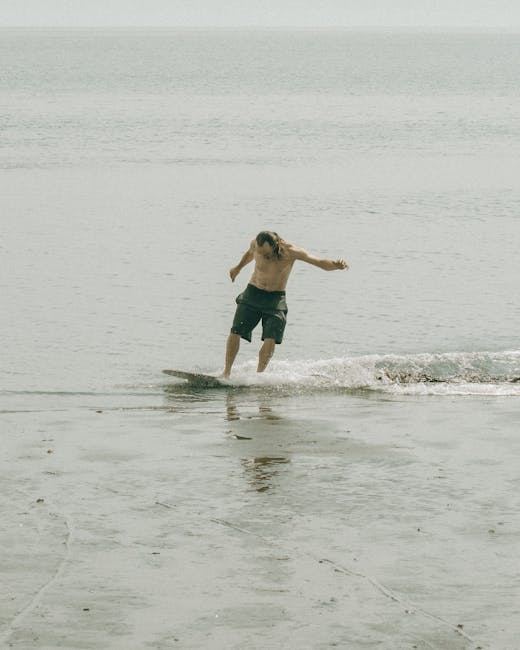
Skimboarding isn't just for kids; it demands precision and skill, from mastering flatland maneuvers to navigating tricky shorebreaks without fins.
For beginners, getting started with skimboarding offers an exhilarating way to enjoy the beach while mastering the balance needed to ride a small, flat board across a thin layer of water at the shore's edge.
You drop the board mid-run, jump on, and glide toward (or away from) breaking waves.
Unlike surfing, there's no paddling out.
Unlike skateboarding, the terrain is always moving.
The challenge is the timing, not the equipment.
Skimboarding involves timing runs at the beach to catch receding waves, placing a wooden board onto wet sand or shallow water, and leaping on it to glide. Riders focus on stability while navigating shifting sand, performing maneuvers such as shuvits and 360s, and practicing agility drills to enhance balance and core strength.
Skimboarding fosters a flow state through immediate skill feedback loops, where each glide and trick landed yields tangible progress, boosting dopamine levels and creating a sense of accomplishment. The unpredictability of wave conditions and the necessity for adaptive decision-making keep the experience fresh and engaging, while community involvement enhances motivation and creativity.
You think skimboarding is just another beach pastime for kids who skipped surf lessons. A quick sprint, a shaky glide, a quick fall – all over in minutes.
That's only part of the story. Skimboarding is much deeper and demanding than a mere beach toy.
Watch Blair Conklin navigate a shorebreak and you'll stop underestimating skimboarding.
Reading waves, controlling board angles mid-air, landing on disappearing surfaces – it's a balancing act that demands full engagement.
This gap between perception and reality is part of what makes your first true session surprising.
Be prepared before hitting the sand.
From a distance, skimboarding is controlled chaos. Someone sprints at the water, drops a board, and somehow glides ten feet back to shore. It's a smooth trick, but that 'nothing' feeling takes months of practice to achieve.
In the beginning, you'll find yourself sitting in wet sand more often than not. The board shoots out from under you like it's got a mind of its own. Your feet will barely touch it before you're on the ground.
As weeks pass, you'll notice that the difference between failure and success is tiny. Just a few millimeters in foot placement can change everything. Once your body learns this, it becomes a natural habit.
Get ready for an unexpected lesson: drop the board while you're still moving. Hesitating kills any chance of holding momentum. Every fall in that first week is because of slowing down to feel ready. Next, we'll talk about avoiding that and other common mistakes.
When to start: Early morning
Duration: 1 hour
Cost to try: $20
Success criteria: If you finished without falling too many times, do session 2.
The wave looks closer than it is, so beginners wait until they're almost on it before releasing the board.
Drop the board 6–8 feet before the water's edge – you need it sliding fast before your feet ever land on it.
Charging straight at the water seems like a good idea, but it's a trap. A direct approach stops you cold when you meet the wave's power.
Approach at roughly a 45-degree angle so the board skims along the wave face instead of stopping dead against it.
New skimboarders often leap onto the board like it's a puddle, causing the nose to dig straight into the sand.
Step onto the board back foot first, then front – it's a plant, not a jump.
Smaller boards look easier to control, but they sink into the sand on every run.
Your board should be large enough that its top edge reaches between your hip and chest when stood upright next to you.
Beginners go for bigger waves, not aware that skimboarding thrives on a thin layer of water.
- Stick to the wash zone where the wave has already broken and is spreading thin across the sand.
Skimboarding thrives at the shoreline where thin water from receding waves creates the perfect canvas. Whether at ocean beaches with gentle slopes or in flatland sites like flooded parking lots and lake shores, it offers thrills for every location.
Be upfront about being new when you join a group. Enthusiasts are happy to guide you to the best spots, tide times, and proper gear for your skill level. Skimboarders may guard their locations, but they share tips generously if you ask.
Flatland happens on wet sand at the shoreline. You just need a thin water layer and a smooth board.
Perfect for beginners who want to learn spins, shuvits, and board grabs in a predictable setting without surprise waves.
Sprint up, toss the board, and ride a wave like a mini surf session. Wave skimboarding demands athleticism and precise timing.
Best for those who mastered flatland and want a test, with boards ranging from $150 to well over $300.
Rivers replace beaches here. Ride currents in shallow, rocky beds.
The unpredictable flow is technical, making it ideal for coast-deprived skimboarders seeking challenge and consistency.
Flooded parking lot? Backyard? Drained pool? They're all makeshift skim zones with a thin water layer.
Perfect for passionate landlocked skimboarders or anyone wanting to refine their flatland tricks.
Ponds and calm riverbanks offer alternatives with shallow, smooth entries.
An answer for those who learned inland, using the same gear as flatland but without the sand.
A close neighbor worth considering: Shortboard Surfing.
Some of the same instincts show up in Longboard Surfing — worth a look if this clicked.
Windsurfing is a sibling pursuit and often surfaces the same kind of curiosity.
Most beginners focus on run-up speed and board drop.The real problem is almost never either of those things.
Reading your wave window is the skill that changes everything. This means knowing when the wash is at the right depth and distance for you. Not just "timing" in a vague sense. It's about scanning the sand, spotting the thin moving film of water, and placing your drop point inside it before the wave dies under you.
Once you can reliably identify your window, your board stops sinking on contact and actually planes.Every other skill suddenly has a foundation to build on.
Without this skill, you're chasing phantom waves and blaming your technique when it's really a targeting problem. Speed, stance, and pop all feel broken when you're launching from the wrong spot.
Six sessions within a month. Try hitting the beach twice a week so you really start feeling the rhythm, but not so often that your muscles have forgotten between tries.
If you're arriving early and leaving late, something's clicked. You're already thinking about your next session. It's time to look into a better board that will last beyond just one season.
If you were okay with it but never really excited, that's a sign. You've had some fun moments but nothing compelling enough to return without prompting. This hobby might just be an interesting experience to check off.
If the thought of more beach days triggers dread, listen to that. Struggling with soggy clothes and constant falls might not be worthwhile. Accept it as a clear signal and move on without guilt.
You stop to watch skimboarders during a beach walk, not out of politeness but to study their moves and compare them with your own past runs. That constant analysis shows real investment and potential for growth.
When you don't want to commit, things to do when bored is a better starting point.
Skimboarding uses shorter, thinner boards designed to ride on wet sand and shallow water, while surfing requires deeper water and larger boards to catch waves. Skimboarding is more about speed, tricks, and quick maneuvers on the beach and shorebreak, whereas surfing focuses on riding larger ocean swells for extended rides.
Most beginners can master basic riding and simple tricks within 2–4 weeks of regular practice. Progressing to intermediate tricks and more complex maneuvers typically takes 2–3 months of consistent effort.
A quality beginner skimboard typically costs between $100–$250, depending on brand and materials. You don't need much else to get started—just your board and access to a beach with shallow water or wet sand.
No, skimboarding doesn't require waves at all. You can skim on wet sand during low tide, in shallow water along the shore, or in the small shorebreak when waves are present, giving you options year-round.
Skimboarding has a steeper initial learning curve than skateboarding because you're balancing on a moving, slippery surface that demands precision. However, many skaters find it easier since they already understand board control and foot placement.
Low tide with a wide, flat expanse of wet sand is ideal for beginners, while intermediate riders prefer small shorebreak waves for added challenge. Avoid beaches with steep slopes, rocks, or debris, and look for clean, compact sand that doesn't create too much friction.