BoredomBusted — Find Your Next Favorite Thing To Do
Discover hobbies, activities, places, and ideas that spark joy. Whether you're looking for something creative, active, social, or relaxing, BoredomBusted helps you find your next favorite thing to do.
Browse our hobby guides, things-to-do collections, and place ideas to never be bored again.
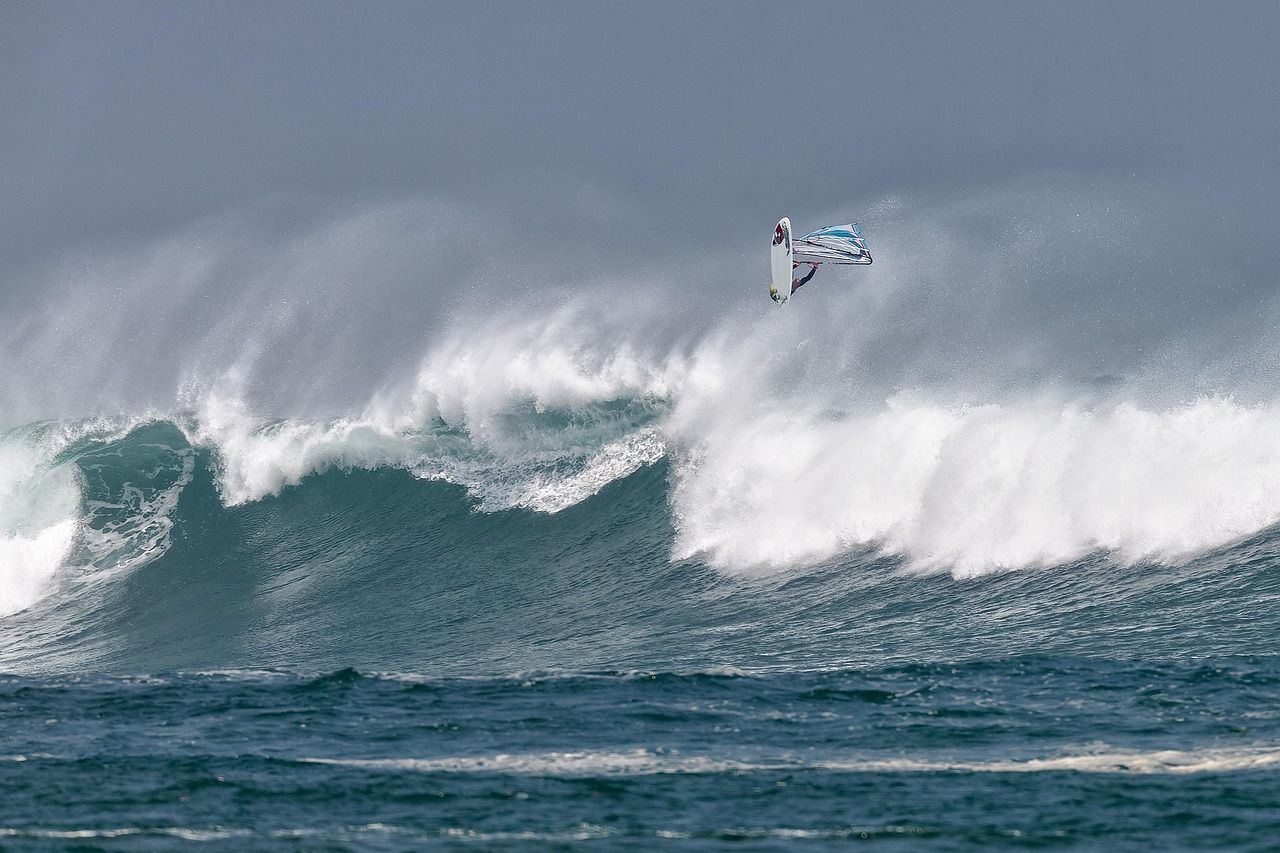
Windsurfing isn’t just for sailors; it transforms your body’s awareness of movement—one lesson might leave you gliding within hours, no experience needed.
Getting started with windsurfing as a beginner opens up a thrilling way to harness the wind and glide across the water.
You steer by tilting the mast, shifting your weight, and angling the sail.
Unlike kitesurfing, there's no separate kite overhead.
Unlike sailing, you're standing on the board itself, physically connected to the rig at all times.
Windsurfing involves physically rigging and tuning the sail and board, executing beach or water starts, balancing on an unstable platform while trimming the sail for power, and performing maneuvers like tacks and gybes. Each session requires constant micro-adjustments to balance, stance, and technique in response to wind and water conditions, making it a highly engaging and focused activity.
Windsurfing creates a flow state by providing immediate feedback on performance through constant adjustments and discrete goals, alongside a progressive skill ladder that keeps practitioners engaged in their development. This dynamic environment promotes deep practice and a sense of accomplishment, reducing feelings of boredom and enhancing intrinsic motivation.
You think windsurfing is for retired sailors and people who own boats.
You've seen it in the background of a 1987 travel brochure and filed it under extreme sport I'll never try. That assumption is cutting you off from a skill that rewires how your body reads moving environments — wind, water, balance, feedback — all at once.
Windsurfing is fundamentally a balance and feedback sport. Your body is constantly reading the water and adjusting, building a kind of physical intelligence that transfers to almost nothing else you do. The wind isn't the obstacle — it's the tool, and learning to read it changes how you move through open spaces permanently.
Most beginners are upright and moving within the first two hours. Raw fitness barely moves the needle — patience does. The people who progress fastest are the ones who stop fighting the board and start listening to it.
A 42-year-old accountant from Ohio proved this on a Tuesday afternoon in Tarifa. No sailing background. No surf experience. Just a two-hour lesson on a wide beginner board and an instructor who told her to stop gripping so hard.
That small adjustment — loosening up — was the turning point. By hour three she was gliding parallel to the shore, laughing too hard to steer properly. She came back the next morning before the instructor arrived.
Not a fluke.Not an athlete.
Just someone who showed up without the wrong expectations — which is exactly the advantage you have walking into your first session knowing what the gear actually does.
Watching windsurfing looks like controlled flight – someone gliding across water like the wind owes them a favor. Your first session looks nothing like that.
The sail will feel like a wet, angry kite. You will fall into the water before you're ready. You will fall into the water when you think you're ready.
Before:
After:
What the First Four Weeks Actually Look Like
Week 1: You're learning to stand on the board and pull the sail out of the water without immediately falling back in – that's the whole job.
Week 2: You start feeling wind direction in your body rather than just chasing the boom around like it owes you something.
Week 3: You sail in a straight line – short, wobbly, genuinely thrilling, probably into a shallow area you didn't plan on.
Week 4: You're not good yet, but you stop dreading the water start – and that's the moment the sport actually begins.
Quit.
Don't quit.
Both thoughts arrive in week two.
It's not a coordination problem – it's that the body and the wind need several awkward conversations before they agree on anything, and there's no shortcut through that negotiation.
One thing worth knowing before you hit the water: don't start with a large sail.
Bigger feels like more power, but beginners overpower themselves constantly – a smaller sail (around 4–5 square meters) is easier to control and lets you feel the wind without being dragged by it.
When to start: 8:00 AM
Duration: 1.5 hours
Cost to try: $0
Success criteria: If you can uphaul, stand on the centerline, and sail 30 seconds across open water without falling in, do session 2.
Bigger sail feels like more power, so beginners default to it. What they get instead is a rig that yanks their arms out in the first gust.
The test is simple: if your arms are shaking within 60 seconds of pulling up the sail, drop one size before you go back out. Speed comes from control, not square footage.
Standing near the tail feels stable — the board isn't wobbling and you feel planted. But that's exactly why the nose keeps lifting and acting like a brake.
Move your feet toward the mast base until the board planes flat. The nose should skim the surface. If it's pointing at the sky, you're too far back.
Gripping the boom tight feels like control. It's actually tension running straight up your arms and into your shoulders — and it burns you out faster than any workout.
Loosen your grip until the sail almost feels like it's steering itself. Your hands are a connection point. The sail does the work — you just guide it.
New sailors yank the whole rig backward trying to catch wind. It kills balance and stalls the board — the opposite of what they're after.
Keep the mast tilted slightly forward, then pull your back hand toward your hip to sheet in — that's the move that actually generates power. Pulling the whole rig toward your body just spills the wind.
Onshore wind blows straight at the beach, which means every run pushes you into shore. You spend the whole session dragging gear back up the beach instead of actually sailing.
Find a spot with cross-shore wind — blowing parallel to the beach — so you have room to move without constantly fighting your way back to the start. That one change gives you double the practice time per session.
Windsurfing happens on lakes, reservoirs, bays, and coastal beaches. You need enough fetch — open distance for wind to build — and a launch area shallow enough to recover gear without panicking. Search Google Maps for "windsurfing" or "watersports centre" near your postcode or county to find active local spots.
Search "windsurfing club [your county or nearest coastal town]" — clubs are location-specific, so county beats city every time. In the UK, the RYA (Royal Yachting Association) club finder at rya.org.uk lists affiliated clubs by region. In the US, use the US Windsurfing Association affiliate list at uswindsurfing.com, or search Meetup.com for "windsurfing" or "watersports" — urban sailing groups often run beginner windsurf days on nearby reservoirs.
For structured lessons, look for BICS-certified schools (Board International Certification Scheme) — searchable by region and built around beginner progression.
When you contact a club or school, tell them you've never been on a board. Don't soften it. That one sentence gets you placed on a proper Start Windsurfing course instead of handed gear and pointed at the water — which is how most people quit on day one.
Freeride is what most people actually learn — cruising open water at moderate speed, no tricks, no racing. This is the foundation everything else builds on. Get comfortable here before you even think about specializing.
Freestyle windsurfing is flat water, smaller boards, and a focus on spins, jumps, and technical tricks. Think skateboarding more than sailing. The learning curve never really ends — that's the point for people who want something to chase.
Wave windsurfing puts you on ocean swells, using the sail to launch off breaking water. It's the most physically demanding version of the sport. You need solid water-reading skills before coastal conditions become an asset rather than a hazard.
Speed windsurfing strips everything back — flat shallow water, narrow unstable boards, one objective. Those boards aren't built for learning anything except velocity, and gear costs climb fast once you're chasing records.
None of these four require you to reinvent your technique from scratch. The next variant does.
Windfoiling puts a hydrofoil under the board and lifts you clear of the water at speed — smoother, quieter, and genuinely surreal. It's the fastest-growing variant right now. The foil setup adds $1,500–$3,000 to your kit, so this one's for experienced windsurfers who know exactly what they're signing up for.
If the texture of this appeals to you, Shortboard Surfing is built on similar bones.
A close neighbor worth considering: Longboard Surfing.
Readers who enjoy this often gravitate toward Skimboarding next.
Most beginners spend their first months obsessing over sail control — pulling, adjusting, fighting the rig. The rig isn't the problem. Their hips are.
The skill that separates people who improve from people who plateau is hip-led body steering — shifting your hips forward or back along the board's centerline to control speed and balance, instead of yanking the sail to compensate.
Hips toward the mast: you de-power and slow down. Hips driven back toward the tail: you engage the board and accelerate. The sail becomes a fine-tuner, not a steering wheel.
The sail stops feeling like something you're wrestling. It becomes something you're reading.
Without this, every gust sends you scrambling and every lull kills your momentum. With it, your body absorbs the changes automatically — and your hands go quiet.
Stand on your board on dry land, close your eyes, and shift your weight forward and back along an imaginary centerline. Feel which muscles fire and where the pressure moves underfoot.
On the water, sail with loose arms for 60-second intervals — forcing your legs and hips to do all the balancing work instead of gripping the boom tighter. After each run, ask yourself one question: was I pushing with my legs or pulling with my arms? The answer tells you exactly where the session went wrong.
Six sessions over 30 days. Space them out — roughly one or two per week — so you have time to reflect between them rather than just react.
Windsurfing has a learning curve that doesn't reveal itself in one afternoon. Six sessions gives you enough repetition to separate "this is hard" from "this isn't for me."
You're annoyed when the forecast doesn't cooperate. You're clocking wind conditions without meaning to. That's not obsession — that's the hobby working on you.
Start looking at beginner gear packages and ask your instructor about transitioning off rental equipment.
Not painful, not exciting — just fine. This usually means you haven't had that first real glide yet, the moment the sail loads up and the board lifts. Extend by three sessions before walking away. If indifference holds after that, it holds.
Not frustrated — genuinely dreading the water, the wind, the whole setup. Some people love the idea of windsurfing and hate the physical reality of it. That's a clean answer, not a character flaw.
You're watching windsurfing footage at 11pm for no reason. Not tutorials — just people sailing in clean conditions, sound on. That low-level pull toward watching other people do it is one of the clearest early signals this hobby has its hooks in you.
No realistic water access is the bluntest disqualifier. Windsurfing can't be approximated indoors or simulated meaningfully — you need consistent access to open water with manageable wind.
If that's a two-hour round trip you can't commit to, logistics will kill your momentum before skill ever has a chance to build.
Shoulder or rotator cuff injuries are a real structural issue. The rig is heavy and the pulling forces are constant, especially at the beginner stage before technique compensates for strength.
The early plateau is real and it lasts weeks. If you need visible progress to stay motivated, windsurfing will test you harder than most hobbies at this stage.
Not ready to pick a hobby yet? The boredom busters page has smaller things to try first.
Most beginners can grasp the fundamentals in 5–10 hours of lessons and feel comfortable on the water in 2–3 weeks of regular practice. Becoming proficient enough to handle various wind conditions and perform tricks takes several months of consistent effort.
You generally need at least 8–10 knots of wind to get started, though lighter winds of 6–8 knots work for heavier riders. Most windsurfers prefer 12–20 knots for the best balance of control and speed.
A beginner board and sail package runs $800–$1,500, though you can start cheaper by renting equipment ($30–$50 per session). Factor in lesson costs ($50–$100 per hour) and optional gear like wetsuits and harnesses.
Windsurfing has a steeper learning curve than surfing because you're managing both board balance and sail control simultaneously. However, instruction and practice can bridge this gap—many people without surfing experience become competent windsurfers within a season.
Windsurfing uses a sail attached to the board, while kitesurfing uses a large kite controlled by lines. Windsurfing offers more direct control and works in lighter winds, whereas kitesurfing generates more power but requires more space and stronger winds.
Windsurfing works best on lakes, bays, and coastal areas with consistent wind and enough space to jibe and maneuver. Avoid narrow rivers, crowded swimming areas, and spots with strong currents or obstacles that limit your movement.