BoredomBusted — Find Your Next Favorite Thing To Do
Discover hobbies, activities, places, and ideas that spark joy. Whether you're looking for something creative, active, social, or relaxing, BoredomBusted helps you find your next favorite thing to do.
Browse our hobby guides, things-to-do collections, and place ideas to never be bored again.
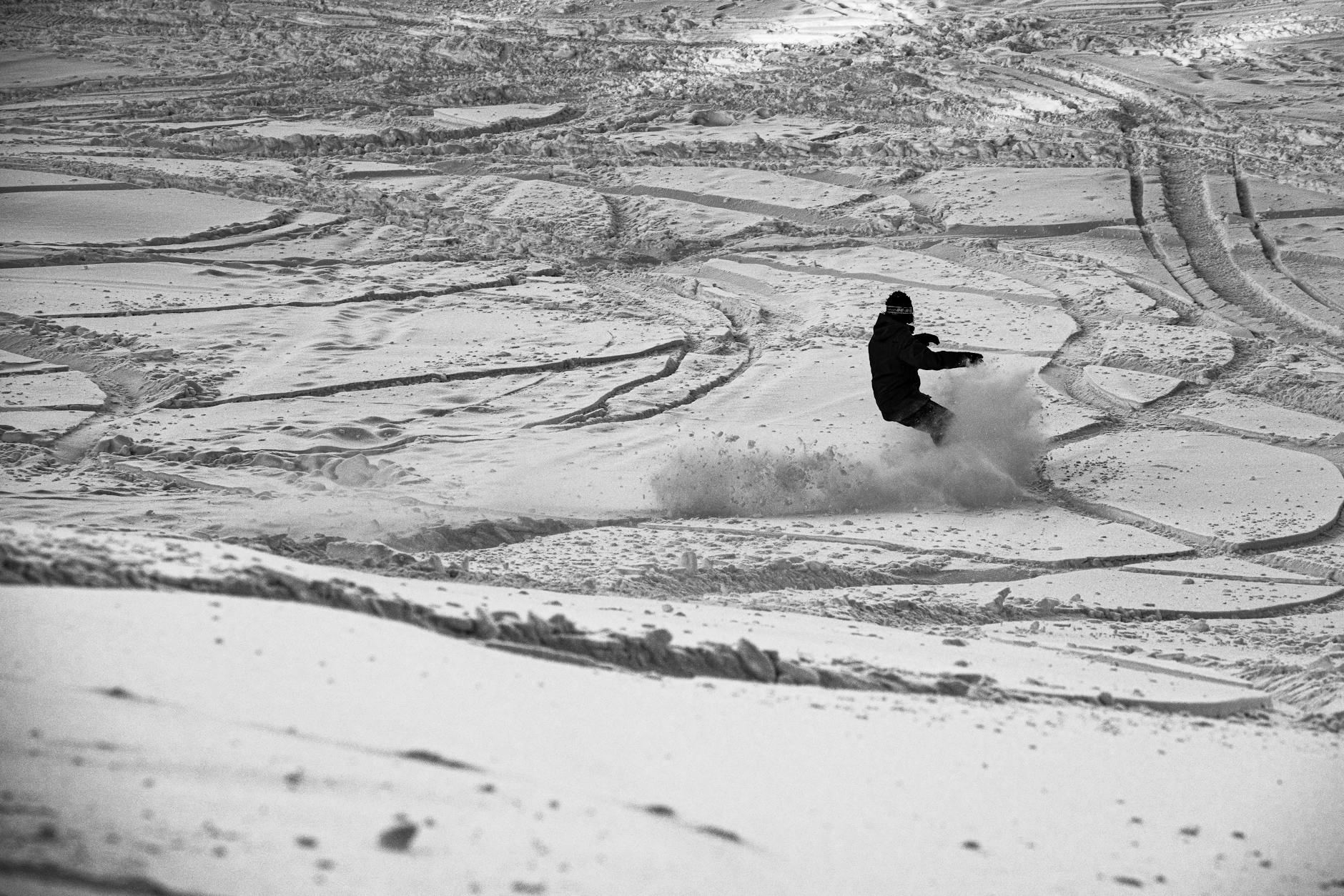
Forget the misconception that snowboarding is just for young thrill-seekers — it's a surprising coordination challenge where adults often excel faster than expected.
Learning snowboarding as a beginner is an exciting journey that allows you to fly downhill with both feet fixed to a single board. You steer using your edges and body weight. It's a rush once you get the hang of it.
Keeping both feet together makes balance tricky initially, but it pays off. Turns become fast and fluid with practice.
Snowboarding merges the technical skills of skiing with the style of skateboarding and surfing.
Snowboarding involves strapping into a snowboard, adopting a low athletic stance, and descending snow-covered slopes while executing controlled turns and rotations. Practitioners engage their core and shift their weight to navigate terrain variations, absorb impacts, and perform tricks like ollies, requiring mental focus to visualize lines and adjust movements dynamically as they ride.
Snowboarding induces a flow state by matching high-speed demands with skill levels, fully engaging practitioners in the moment while they navigate unpredictable terrain. This creates a feedback loop where immediate improvements in performance foster motivation, while the thrill of conquering challenging runs and social connections with other snowboarders combat feelings of boredom and emptiness.
You think snowboarding is a young person\u0027s sport. Half-pipes, baggy pants, teenagers not caring about their knees – you\u0027ve decided it\u0027s not for you.
That mindset is stopping you from one of the most absorbing hobbies an adult can have.
It\u0027s not about fitness or age. Snowboarding is a coordination challenge for your whole body. It\u0027s about retraining how your brain talks to your hips, something adults often master faster than they expect.
The mountain isn\u0027t the point. Sure, it\u0027s where you practice, but the real value is in focusing intensely on staying upright, leaving all other thoughts behind.
Snowboarding\u0027s social layer is surprisingly rich. There\u0027s a culture of helping strangers on the chairlift. You\u0027ll gain more useful advice from fellow riders over a weekend than from months at the gym alone.
Imagine a 43-year-old accountant picking up a board for the first time. It\u0027s not like the ads – it\u0027s more real.
Day two: she\u0027s linking turns on a green run, legs burning, completely offline. Her entire focus is on the next ten feet of snow. In that state – absorbed, physical, present – she\u0027s exactly where the next section leads.
Snowboarding feels like learning to fall in slow motion, over and over, on an unforgiving surface. That sensation of hovering just above the edge but never quite landing is real.
The gap between wanting to soar and actually falling is where many people quit. But it's also where skill-building begins.
Expect sore wrists and a bruised tailbone that feels like it has its own personality. You'll slowly realize that your front foot controls everything. Around day four, edges might start clicking into place, like flipping a switch you didn't know existed.
It's not a talent gap – just a two-session hump. Most people who quit expected to skip it.
Before you start, know that your instinct will be to lean back when sliding out of control. Resist that urge. Do the opposite. Pressing weight into your front foot brings the board back under you. Fighting that instinct dominates the first day.
When to start: Morning
Duration: 2 hours
Cost to try: $100
Success criteria: if you finished without falling excessively, do session 2.
Stiff boots may seem supportive, but they resist the forward flex beginners need to turn smoothly.
Ask for soft or medium flex boots rated 1–4 at the rental shop. Check this before leaving the counter.
It feels natural to lean back when it gets steep, but this kills your edge control. This leads to speed wobbles and falls.
Point your front hand down the slope. Your weight will follow.
It's instinctive to watch the board, but doing so causes your body to rotate unnecessarily.
Focus on a point 20–30 feet ahead. This keeps your body aligned.
Panic often leads beginners to flatten the board, which only speeds them up.
Use your edge deliberately to stop. Dig in your heelside or toeside edge, like scraping mud off a boot.
Greens can feel boring, tempting you to try harder runs before mastering the basics.
Stick to blue runs until you can link 10 consecutive turns smoothly. That's your true benchmark.
You can snowboard at ski resorts, terrain parks, and dedicated snow sports centers. Some even offer indoor or dry-slope facilities for off-season practice.
Community hills in your area are great for early-season practice. Don't overlook them as a beginner.
Say you're a beginner and want to learn stopping and heel-edge control. This direct approach shows you're serious.
Being specific attracts better attention from the instructor. They hear vague "I'm new" all the time, so make your interests clear.
This is the default. You ride groomers, venture into trees, hit a few natural features – no specialization required.
All-mountain is where almost every beginner should start, full stop.
Your standard rental setup covers this completely.
This is rails, jumps, halfpipes, and making the terrain park your playground.
It's best for riders who get bored with straight lines and want a skill progression that never really ends.
You leave the resort boundary behind and ride untracked powder in the mountains.
This is for experienced riders only – the avalanche risk is real and requires dedicated safety training and gear.
Your board splits in two and becomes skis for the uphill, then reassembles for the descent.
It's backcountry riding without the helicopter or snowcat – you earn every run yourself.
Splitboard setups run $800–$1,500 and replace your standard board entirely.
Not a discipline exactly – more a specific condition that changes everything about how you ride.
Wider boards with a setback stance keep you floating instead of nose-diving in heavy snow.
If you already love snowboarding and have an upcoming deep-snow trip, a dedicated powder board is the one upgrade that actually feels like a different sport.
For something adjacent, see Snowkiting.
Another variant that pulls from the same roots is Ultimate Disc.
Beginners often fixate on avoiding falls. They brake, sit back, and grip the board tightly.
Ironically, staying safe keeps them stuck. They're confined to green runs season after season.
Edge pressure timing is the key — specifically, shifting your weight to the downhill edge at the start of each turn.
Forget leaning. Avoid steering with your feet. Focus on pressing your front foot down as the turn begins. This action ensures the board carves instead of skidding sideways.
Get this right. Turns transform from feeling like controlled crashes to movements you control. Without it, your runs become a series of skids. You might seem to improve, but you're just falling with more style. Speed isn't terrifying anymore, because you're using it. It's no longer a battle, but an ally.
Commit to 4 snowboarding sessions in 30 days. This gives you the chance to break through the tough first tries and really see if it's for you.
If by the end, you're sore and a bit bruised but already thinking about which run to try next, you're hooked. That's the sign that snowboarding has grabbed you. Consider tracking your progress and maybe investing in some personal gear to make the experience even better.
If the sessions left you feeling indifferent, not bad but not great, something might be off. Often, it's the rented gear or trying to tackle the slopes alone. Before deciding it's not for you, try one more session with a more experienced friend. It can change how you feel about the whole thing.
If you counted the minutes to leave the snow, that's a clear indicator. Snowboarding might not be your scene if the mountain vibes leave you cold. Some people love the look of snowboarding more than the reality, and that's perfectly normal.
Find yourself watching snowboarding videos just for fun? That's the pull. It's a sign that you have a genuine interest and motivation that goes beyond the slopes.
Not living near a mountain or hating the cold can make snowboarding an uphill battle. If travel isn't feasible for regular rides, the hobby won't progress much. Plus, existing joint injuries or a dislike for freezing temps are real hurdles no gear can fix.
Most beginners can learn basic snowboarding skills in 3–5 days of consistent practice, including stopping, turning, and riding on flat terrain. Becoming comfortable on varied slopes and terrain typically takes 2–4 weeks of regular riding.
Snowboarders face sideways down the mountain and use body weight and edge control to carve, while skiers face forward using two separate skis. Snowboarding has a steeper learning curve at first but feels more natural to those with skateboarding or surfing experience.
A complete setup with board, boots, bindings, and helmet costs $400–$800 for beginner-quality gear, while premium equipment runs $1,000+. Renting is cheaper at $30–$60 per day, making it ideal for testing the sport before investing.
Snowboarding is moderately difficult at first—you'll likely fall frequently during your first few days as your body adjusts to the sideways stance and balance required. However, most people find it becomes intuitive quickly, especially if they have skateboarding or surfing background.
Children as young as 4–5 years old can begin snowboarding with proper instruction and equipment, though 6–8 is more typical for comfortable learning. Younger children may progress faster due to fearlessness and natural flexibility.
Wear waterproof jacket and pants, thermal base layers, insulated gloves or mittens, a beanie, goggles, and thick socks designed for snow sports. Proper outerwear keeps you dry and warm, while the goggles protect your eyes from wind and snow glare.