BoredomBusted — Find Your Next Favorite Thing To Do
Discover hobbies, activities, places, and ideas that spark joy. Whether you're looking for something creative, active, social, or relaxing, BoredomBusted helps you find your next favorite thing to do.
Browse our hobby guides, things-to-do collections, and place ideas to never be bored again.
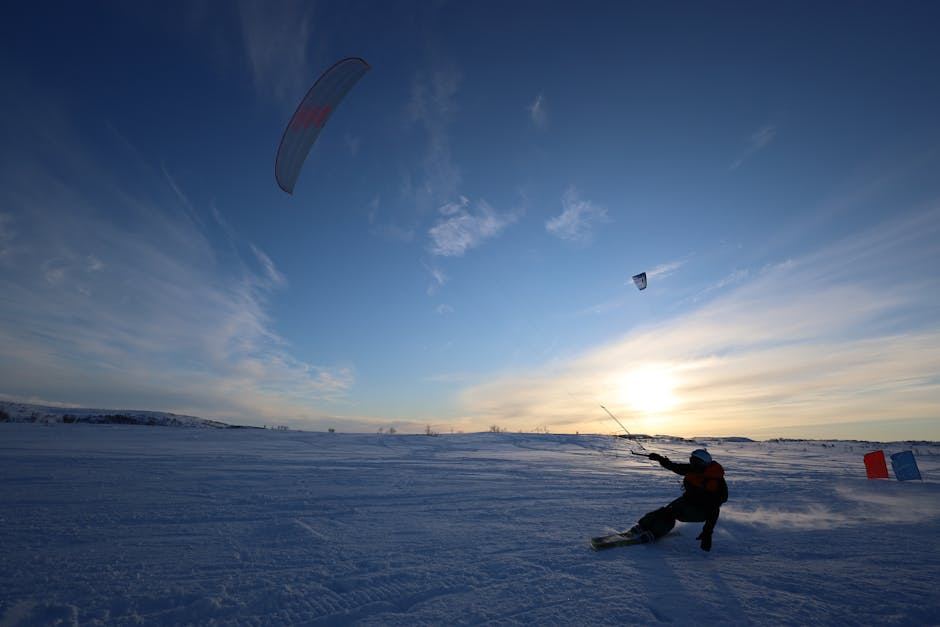
Most assume snowkiting is just skiing with a kite, but it's really about unlocking vast landscapes and mastering kite control long before it snows.
Getting started with snowkiting as a beginner involves using a large power kite – the same kind used in kitesurfing – to pull you across snow or ice on skis or a snowboard.
The kite does the uphill work, which means you can ride terrain that chairlifts don't reach and travel distances that regular skiing can't touch.
In snowkiting, you launch a traction kite on snow-covered terrain, using wind power to propel yourself on skis or a snowboard, while actively steering the kite through its wind window to control speed and direction, requiring physical adjustments and continuous scanning for wind shifts and obstacles.
Snowkiting induces a flow state through the synchronization of kite steering and skiing muscle memory, providing immediate sensory feedback that enhances focus and engagement, alongside a sense of accomplishment from mastering skills and the novelty of varying wind conditions.
You think snowkiting is just kitesurfing with skis. Just swapping waves for snow, right?
That assumption is costing you the whole picture.
Snowkiting transforms geography. Flat frozen lakes, uphill ridges, open fields: your kite makes terrain optional. It's about exploring areas skis alone can't reach.
The learning curve flips typical snow sports. You don't start on the snow. You practice controlling the kite in your backyard or park first. Snow arrives later.
Snowkiting scales differently than skiing. Skilled riders don't just go faster. They travel farther and higher. Some cover over 60 miles in one session through backcountry terrain.
Imagine a rider in Wyoming crossing a frozen reservoir. Five hours through open rangeland. No lifts. No groomed paths. Just the kite and vast silence. He called it the quietest he'd ever been while moving so fast.
That's not what you picture on day one. But that's where most people's expectations fall apart. Understanding this changes everything.
Watching snowkiting videos, everything looks effortless – rider locked in, kite steady, carving clean arcs across open white.
In person, the kite feels alive in a way that footage doesn't prepare you for. The wind has opinions, and yours don't count yet.
The kite pulls you sideways, edges catch, and snow hits your face. You're not moving the way you imagined. It feels like a mismatch between your expectations and reality.
It's all about learning to relaunch the kite from snow. The first week is more about groundwork than gliding.
By the second week, you begin to feel the kite's power window. This means getting pulled in unexpected directions – just part of the learning process.
Short rides happen by the third week. 20 to 50 feet might not sound like much, but it feels huge given the effort invested to get there.
As you reach the fourth week, you start to read the kite's position instead of merely reacting. This awareness is pivotal. It's when control begins to form.
Park the kite at 45 degrees when stopping to regroup. 12 o'clock risks it dropping into the power zone, which can cause unexpected dragging.
Frustration peaks in the second week. You're cold and considering switching sports. This is typical for most. Those who persevere learn snowkiting's learning curve isn't gradual, but more like a step. The key is standing at the base long enough to move upward.
When to start: Morning
Duration: 2 hours
Cost to try: $30
Success criteria: if you finished without crashing or injuring yourself, do session 2.
Ignoring wind window basics leaves beginners clueless about power zones. They jump to flying without understanding where power lies.
Spend a full session walking the kite through the wind window by hand on a calm day—no board—until you can predict the power zones.
Beginners often head downwind when overpowered, thinking it'll slow them down. This keeps them in the power zone, making things worse.
To cut power quickly, steer the kite to 12 o'clock. Reposition before momentum overtakes your ability to react.
Beginners grab foil and C-kites without realizing the power behind a 10m kite. This often ends in unexpected drags across icy terrain.
Start with a 2–4m trainer kite. Use it for several sessions until controlling the kite becomes second nature.
Weather apps don't differentiate between hard-pack and fresh powder. One allows for edge control, the other can take you for an uncontrollable ride.
Check snow reports for surface hardness and downsize your kite on icy days to ensure better control.
Many new riders see the safety quick-release as a last resort. They hesitate to use it, risking harm by not acting quickly in dangerous situations.
Practice activating the release system on the ground until it's an automatic response when things go wrong.
Snowkiting thrives on open, flat snowfields like frozen lakes and wide alpine meadows. These sites provide the necessary space to fly your kite and learn safely, unlike crowded ski slopes.
Meet fellow enthusiasts by starting with the International Kiteboarding Association's regional directory. Search "snowkite club [your country/state]" on their website for an updated list.
Facebook Groups are also a goldmine. Search "snowkiting [your region]" to connect with local communities.
Meetup.com is perfect for finding winter kite sessions in areas like Scandinavia, the US Midwest, and the Alps. These sessions often welcome beginners and include instructors.
In North America, the American Kiteboarders Association provides event and instructor information. Use the instructor finder at akite.org for reliable resources.
When you find a club, be upfront about needing a lesson. Saying, "I've never done this and I need a lesson before I touch a kite" shows commitment to learning safely. Clubs prefer to connect newcomers with certified instructors, which helps avoid picking up bad habits.
Certified instructors are not just knowledgeable; they carry liability insurance, unlike amateur enthusiasts.
Open fields and frozen lakes are your playground. Forget the marked slopes.
Ideal for beginners and intermediates looking to master control at their own pace. No need for extra gear beyond your usual setup.
Use lifts to glide down groomed runs, harnessing wind for speed and control.
Perfect for seasoned snowkiters who navigate easily through slopes. Be cautious, most resorts don't allow kiting, so verify before arriving.
Traverse vast distances through wild terrain using your kite as your engine.
This is for experienced kite handlers comfortable in remote areas, proficient in avalanche safety.
Try swapping the kite for a small paraglider on descents.
Only for those proficient in both sports— combine skills for an exhilarating ride.
Think ski touring with the kite pulling you uphill on flats.
Perfect for endurance-driven explorers aiming to reach remote summits without draining themselves before the descent.
Freestyle Snowboarding lives in the same world — different mechanics, similar appeal.
If the texture of this appeals to you, Splitboarding is built on similar bones.
Readers who enjoy this often gravitate toward Alpine Snowboarding next.
Most beginners focus on kite steering during their first sessions. Left, right, keep it steady.
The kite isn't the problem. Their feet are.
The one skill is reading and riding the power window – knowing exactly where your kite is in the sky relative to where the power lives, and deliberately moving it through zones rather than just holding it still.
The wind window is an invisible dome in front of you. The edge is neutral. The center is maximum pull.
Most beginners park the kite somewhere in the middle and white-knuckle it. They're not flying, they're surviving.
Internalize the window. Stop reacting and start choosing. Bleed power by sending the kite toward the edge.
Surge forward by diving it through the center. Every gust stops feeling like an emergency. Every lull stops feeling like failure.
Board skills, speed control, even jumping stabilize when you control the kite on purpose.
Master this and your sessions will transform. Next, we'll dive into how these practices influence your riding style.
Four sessions over 30 days. Try one each weekend so you can process what happened without rushing.
Checking wind forecasts the night before a session means you're into it. This is the hobby pulling you in. Consider upgrading to intermediate kite packages and find a coach to speed up progress. You'll see quick benefits from good instruction.
If you end each session feeling okay but not thinking about it later, listen to that. Extend your trial; try two more sessions in a different spot if possible. If your interest stays lukewarm, that's your answer—it's not a temporary thing.
Feeling cold and anxious without any improvement means it's not for you. Snowkiting requires comfort with changing conditions and being okay with falling in the cold. You can't force those to be fun.
Staying up late watching snowkiting clips and focusing on wind conditions, not tricks, is telling. This hobby grabs those obsessed with its nuances, not just the outcomes.
Living in an area with less than three months of reliable snow cover kills this hobby due to lack of practice time. Geography can determine whether this is doable or not.
Shoulder or rotator cuff injuries are serious barriers. Controlling a kite takes a toll on your shoulders, and frequent falls won't help. Consult a physio before buying anything to see if it's a dealbreaker.
If you need controlled environments, snowkiting isn't for you. The wind is unpredictable, and open spaces don't have safety nets. That's a knowledge gap, not a failing, and it's crucial to recognize.
Snowkiting is a deeper commitment than most boredom cures — for lighter options, check things to do when bored.
Snowkiting uses a large kite to harness wind power instead of gravity, allowing you to ride uphill, travel long distances, and move faster than traditional skiing. You'll need kite control skills alongside skiing or snowboarding ability, making it more complex but offering unique terrain possibilities.
Basic equipment (kite, board, harness, boots) typically costs $800–$2,000 for a beginner setup. Lessons from experienced instructors are highly recommended and usually run $100–$300 per session to safely learn kite control and snow techniques.
Most people need 3–5 days of dedicated lessons to develop basic control and safety skills. Becoming comfortable and confident enough to ride independently typically requires 10–20 hours of practice under instruction.
You'll need consistent winds of at least 10–12 mph to progress, though most snowkiters prefer 12–20+ mph for stability and speed. Too little wind makes control difficult, and too much (above 25+ mph) can be dangerous for beginners without proper training.
Like any extreme winter sport, snowkiting carries risks including getting carried aloft by strong winds, crashes, and cold exposure. These risks are significantly reduced with proper instruction, protective gear, and starting in beginner-friendly conditions with appropriate wind speeds.
You need open, flat terrain like frozen lakes, snowy plains, or mountain valleys where wind flows consistently—not forested areas. Ideal locations avoid obstacles and have predictable wind patterns; popular snowkiting destinations include places like Switzerland, Patagonia, and northern Canada.