BoredomBusted — Find Your Next Favorite Thing To Do
Discover hobbies, activities, places, and ideas that spark joy. Whether you're looking for something creative, active, social, or relaxing, BoredomBusted helps you find your next favorite thing to do.
Browse our hobby guides, things-to-do collections, and place ideas to never be bored again.
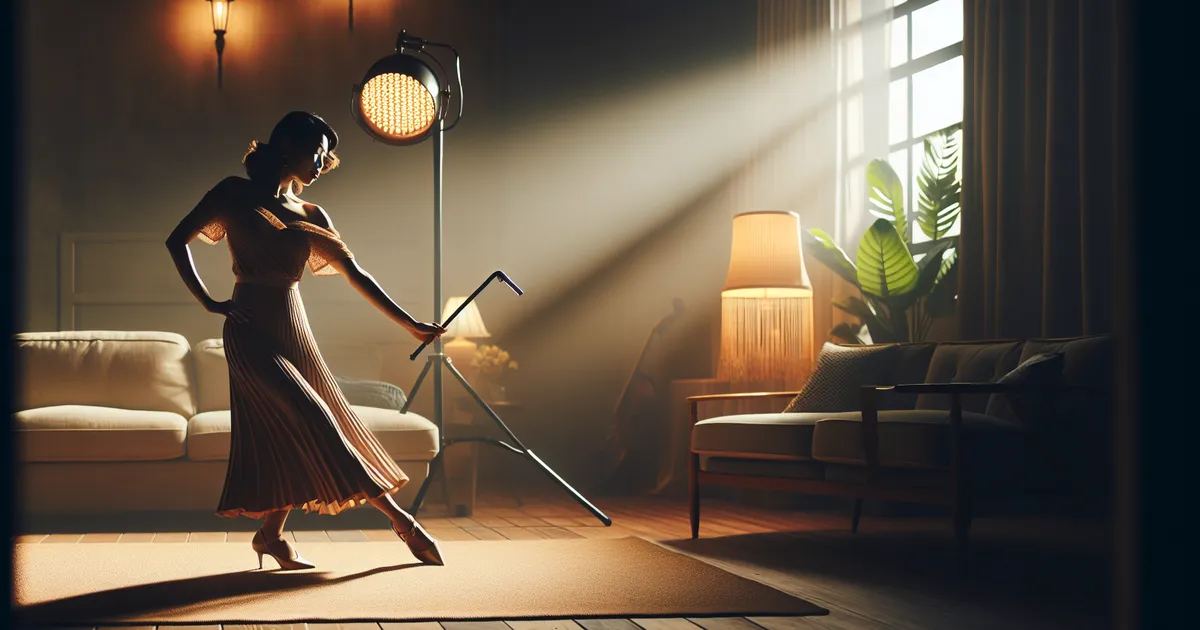
Swing dance isn’t just a nostalgic wedding throwback; it’s a high-speed dialogue with strangers that builds a vibrant community you can't find anywhere else.
Learning swing dance as a beginner introduces you to a vibrant world of partner dances – Lindy Hop, East Coast Swing, Balboa – built on a swinging, bouncy rhythm tied to jazz and blues music.
One partner leads, the other follows, and the conversation happens through touch, not choreography.
Unlike ballroom dance, there's no fixed routine – you improvise every song, which means you're never actually done learning it.
In Swing Dance, participants engage in rhythmic footwork drills and body isolation exercises, practicing sequences like rock steps and triple steps while connecting with partners through 6- or 8-count patterns, all set to lively jazz music.
Swing Dance induces a flow state through rhythmic entrainment, where the challenge-skill balance keeps dancers fully engaged, while immediate feedback from partner interaction fosters a sense of accomplishment and community, combating feelings of isolation and stagnation.
You think Swing Dance is the thing your grandparents did at a wedding. Polite. Nostalgic. Vaguely athletic if the old man really committed to it.
That assumption is costing you one of the most socially alive hobbies you could pick up right now.
Swing is a conversation between two people moving at speed. Like any good conversation, the interesting part is the improvisation, not the script — every dance is built in real time, which means you're reading another person's body and responding in half a second, every song.
Most partner dances lock you into choreography. Swing doesn't. And the social scene that grows around that structure is the actual product — Swing dancers show up to weekly socials, travel to exchanges in other cities, and dance with strangers for three hours on a Tuesday. It's a ready-made community with a low entry price.
A beginner who takes six weeks of Lindy Hop classes can walk into a social dance and genuinely connect with an experienced partner. The follow/lead structure makes the gap bridgeable from night one — not because you know everything, but because the experienced dancer can work with you wherever you are.
You're not signing up to perform.
You're signing up to show up.
The next question is what that actually looks like the first time you walk in the door.
Watching swing dance looks like organized joy – two people floating through each other's momentum like it's effortless. Then you try it and discover your feet have apparently never met your brain before today.
The gap isn't skill. It's vocabulary – your body doesn't speak this language yet.
That second list isn't week two – it's closer to week four. The distance between those two lists is exactly what the first month feels like.
Quitting here feels logical. It feels like proof you're not built for this.
It's not – it's just the week before the rhythm stops being something you chase and starts being something you have.
One thing worth knowing before you walk in: swing dance has a lead-follow conversation, not a choreography. The beginner mistake that sets everyone back is one partner doing both jobs – which mostly means the lead muscling through instead of signaling clearly.
Followers: don't try to anticipate. Leads: don't try to force. You fix it by making your movements intentional, not bigger – and that distinction is exactly where most beginners go wrong first.
When to start: Morning
Duration: 1 hour
Cost to try: $10
Success criteria: if you finished without knowing all the steps perfectly, do session 2.
The count starts as a tool and turns into a leash. Your brain gets so busy managing numbers that it never frees up enough attention to actually feel the music.
Switch to humming the melody instead. Humming forces your body to interpret rhythm rather than calculate it — and that shift is what separates dancers who move with the song from dancers who move beside it.
New dancers grab and pull because connection feels abstract until someone explains it. The connection lives in your torso, not your hands.
Keep your elbows slightly in front of your body and initiate every movement from your sternum. Your arms just transmit what your core decides — they're the messenger, not the message.
Every move you see on YouTube is built on a six-count or eight-count basic that most beginners rush through in week one. The patterns look easy, so people skip ahead. Then nothing they learn after that sits right.
Spend your first month drilling only the basic and triple step in place. Every pattern you add later will click faster because of it — not slower.
You fumble, you stop, you explain. Now your partner has lost the pulse entirely.
The apology disrupts the dance more than the mistake did. When you fumble, keep moving and reset to the basic. Your partner is trained to recover with you — not wait for a debrief.
Street shoe rubber grabs the floor mid-spin and sends torque straight into your knees. That's before you've built any technique to compensate.
Get a pair of suede-soled shoes under $60 before your second class. This isn't a style choice — it's a joint protection choice.
Swing dance happens at dedicated ballrooms, social dance studios, and community centers – but also bars, brewery taprooms, and rented event spaces where a local scene has taken root.
Check dance studio and community center pages if you want somewhere consistent week to week.
When you walk in, say exactly this: "I'm a complete beginner – is there a leader or follower I can rotate with?"
That sentence gets you pulled into the rotation, pointed toward the beginner corner, and usually introduced to whoever's teaching the intro lesson before the social dancing starts.
Swing dance isn't one thing. It's a family – and picking the wrong branch early is the most common reason beginners quit.
Lindy Hop is the original, born in 1920s Harlem – it's what most people mean when they say "swing dance."
It's partner-based, rhythmically complex, and has room to grow for years without hitting a ceiling. Best for anyone who wants a deep skill with a serious social scene behind it.
A simplified, standardized version of Lindy – fewer improvised moves, cleaner footwork patterns.
The right starting point for most beginners, and most intro classes default to it anyway. If a local studio just calls it "swing," this is probably what you're getting.
Danced in a slot rather than a circle, with a smoother, more grounded style – it fits modern pop and R&B, not just jazz.
The social scene skews slightly older and the technique takes longer to feel natural. Best for people who want something versatile enough to dance at a wedding and a swing event on the same weekend.
Compact, close-hold dancing that originated in crowded 1930s ballrooms where big moves weren't possible.
It rewards musicality over flashy kicks – the subtlety is the point. Best for people drawn to connection and nuance over performance.
Less a partnered dance, more a high-energy solo or semi-partnered style with kicks and fast footwork.
Treat it as a skill to add into Lindy Hop, not a starting point – it's rarely danced on its own.
Some of the same instincts show up in Contemporary Dance — worth a look if this clicked.
Some of the same instincts show up in Hip-Hop Dance — worth a look if this clicked.
For something adjacent, see Folk Dance.
Most beginners spend months drilling steps – getting the footwork cleaner, the timing tighter, memorizing more moves.
The footwork isn't the problem. The connection is.
The one skill is physical lead-follow connection – specifically, the ability to communicate direction and timing through frame tension rather than hand-pulling or body telegraphing. A lead shouldn't be steering a partner; they should be creating a subtle, shared pressure through the frame that the follow reads before the step happens.
It's not a grip. It's not a push. It's a maintained, elastic tension – like two people holding opposite ends of a resistance band and moving together without either end going slack.
Without it, every move requires the lead to signal early, and the follow to guess – which means you're both dancing slightly separately, just nearby each other.
When the connection clicks, follows can read moves they've never seen before, and leads stop feeling like they're "dragging" their partner through choreography.
Every hour you spend on footwork without fixing connection just makes you a more polished dancer who still can't lead a stranger on a social floor.
Eight sessions over 30 days. That's two classes a week – enough to get past the awkward first steps and actually feel the music start to make sense in your body.
One session a week and you'll reset every time. Eight sessions and you'll have a real answer.
If you keep looking up songs between classes and you're annoyed when the session ends, that's not enthusiasm for exercise. That's the hobby working. Find a local social dance night and go before the month is out.
If you went every time but nothing pulled you back, the music probably isn't landing yet – or you're stuck in a beginner class that's too slow to show you what swing actually feels like at speed. Try one open social dance before you quit. The energy is completely different from a classroom.
If you counted down the minutes and dreaded the drive there, that's a clean answer. Some people hate the physical proximity, the improvisation, or the social pressure of partner work – and those things don't get easier with repetition.
You're not dancing yet – but you're watching Lindy Hop clips at 1am and losing track of time. That low-level pull, before you've even bought shoes, is more reliable than how you feel after the first class.
If the music is already doing something to you, the dancing will too.
Chronic knee, hip, or ankle issues are a real barrier. Swing involves constant weight transfer, rotation, and quick directional changes – those mechanics aggravate existing joint problems without deliberate modification.
No active local scene means the social layer disappears entirely. Swing dance without a community is a significantly diminished version of the hobby – the classes alone won't replicate it.
If you deeply dislike physical contact with strangers, the lead-follow dynamic won't gradually feel neutral. Partner dancing requires genuine comfort in someone else's space – not tolerance built through repetition.
If you're ready to try it, look for a class with a dedicated beginner track, a teacher who social dances regularly, and a venue that hosts open dances – those three things together are where the real learning happens.
Not ready to pick a hobby yet? The boredom busters page has smaller things to try first.
Most beginners can pick up fundamental steps and basic patterns within 4–6 weeks of regular practice. You'll be comfortable dancing socially with partners much sooner than mastering advanced techniques, which typically requires several months of consistent training.
Swing dancing is performed to jazz and swing music, typically at tempos between 120–160 beats per minute. Classic artists like Duke Ellington, Count Basie, and Benny Goodman are popular, though modern swing bands and DJ sets at social dances also work great.
While swing is a partner dance, most beginners start in group classes where instructors rotate partners frequently. You don't need to bring your own partner, and the community aspect actually makes it easier to learn and stay motivated.
Group classes typically range from $10–20 per class, with unlimited monthly memberships around $50–100. Beyond instruction, you only need comfortable shoes—no special attire required to begin, making it an affordable hobby to try.
Swing dancing is very beginner-friendly despite looking complex—the basic step is just a six-count pattern that feels natural once you practice it a few times. Instructors build from simple steps to more creative moves, so you progress at your own pace without feeling overwhelmed.
Smooth-soled shoes or sneakers work best because they allow your feet to slide and pivot easily on the floor. Avoid rubber-soled athletic shoes that stick too much, and choose something comfortable that you can move in freely—many dancers prefer vintage or dance-specific shoes once they're hooked.