BoredomBusted — Find Your Next Favorite Thing To Do
Discover hobbies, activities, places, and ideas that spark joy. Whether you're looking for something creative, active, social, or relaxing, BoredomBusted helps you find your next favorite thing to do.
Browse our hobby guides, things-to-do collections, and place ideas to never be bored again.
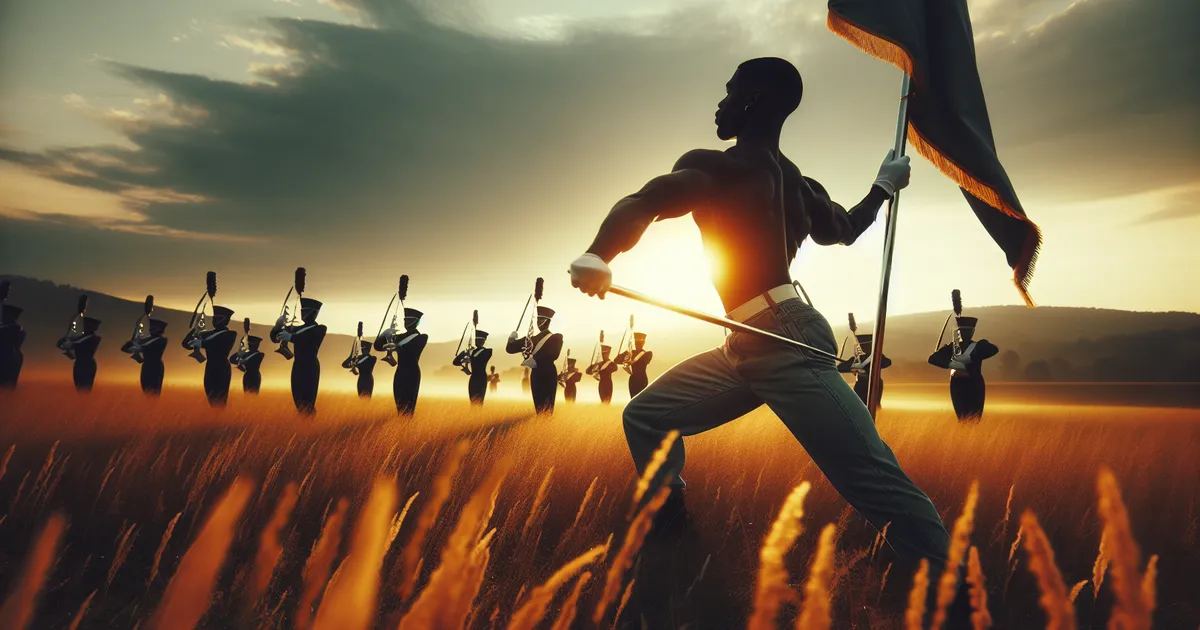
Color guard isn't just flag twirling at halftime; it's an intense athletic art requiring discipline, strength, and strategic choreography beyond most gym sessions.
Learning color guard as a beginner involves mastering the art of spinning flags, rifles, and sabers in sync with marching bands during choreographed routines.
It blends dance, gymnastics, and equipment skills into one unique discipline.
Performances are meant to be seen from 50 feet away. This distance changes how you train your body entirely.
Color Guard involves practicing intricate choreography with flags, rifles, and sabres, focusing on skills like flag spinning, dance movements, and strength conditioning. Participants engage in repetitive drills to master techniques such as drop spins, jazz walks, and pirouettes, while also conditioning their bodies with exercises like squats and planks to enhance performance.
Color Guard induces a flow state by matching high-skill demands with challenge levels, requiring total concentration on precise movements, which distorts the perception of time. Immediate feedback from mastering spins or successful tosses reinforces motivation and reduces monotony, while the sense of accomplishment from progressing through complex sequences fosters a rewarding experience that cou…
You think it's flag twirling at halftime. You think it's the group that marches next to the band while the real athletes play football. That assumption is wrong – and it's costing you one of the most physically and artistically demanding hobbies you could pick up.
A competitive winter guard unit trains intensely. They dissect eight counts of a phrase for two hours, rebuild it, then run it full-out until the transitions are automatic under pressure – that's closer to an athletic sport than most people's gym sessions.
The physical side is just the entry point. The mental game is where performers truly shine. That's what the next section gets into.
Picking up a color guard flag for the first time feels like juggling chaos. There's a calculated smoothness in performances that you can't feel yet. The gap is massive — and closing it isn't intuitive. The difference between knowing and doing is a surprise.
Week one's chaotic energy surprises many. Heart pounding and a flag in your face. Everyone else seems to have it together while you drop your flag repeatedly. Counts make no sense, and you feel out of step.
By the third week, you'll hit phrases perfectly, only to lose them seconds later. It feels like progress and regression intermingling every minute. An automatic motion in week four shifts everything. That's when it starts to click and feels less impossible.
The equipment feels foreign, and your body protests. Being the slowest in the room doesn't mean you're failing. It's just your body adapting to new demands. Grasping color guard means understanding its rhythm — everything centers on an 8-count. Practice clapping it while chatting. It seems small but is essential. Until rhythm is your second nature, your technique will lag. Up next, the pitfalls that can stall your progress before you even spot them.
When to start: Early morning
Duration: 1 hour
Cost to try: $20
Success criteria: if you finished without injury, do session 2.
New performers latch onto equipment like their life depends on it. They think it assures control. It actually leads to more drops.
Loosen your grip so the equipment can move slightly. Let your fingers guide the spin, don\'t throttle it.
Beginners drill while counting beats in their heads. They hit the beat but don\'t move with it. It's not the same thing.
Record yourself from a high angle, then align the video with the music. See how your body lags behind the music.
Everyone wants to dive into the flashy moves. But tossing too soon teaches your hands to make wobbly throws.
Focus on a single-count flat spin for 100 catches before adding vertical throws. Get the fundamentals solid first.
Beginners often memorize arm positions without grounding their weight. This throws off balance and flow.
Practice a single move with a partner watching your center of gravity. Feet wide, chest up, avoid leaning back.
You imitate veterans next to you, thinking you match their moves. Body type differences mean this can backfire.
Get personalized feedback from an instructor to adjust using your own proportions, rather than copying someone else.
Color guard practice spots are flexible. School gyms, community centers, and outdoor parking lots offer ample space.
Contact local community centers or schools to secure a space for your own practice.
Be upfront about being a beginner. Asking about beginner ensembles directly helps skip awkwardness and connects you with supportive instructors and the right gear immediately.
Winter Guard transforms the gym into a stage, with recorded sound and theatrical staging. The floor gets covered in custom tarps that match each show's theme.
Ideal for those wanting a performance vibe without a football season. Expect costs for tarps, costumes, and props.
Drum Corps Color Guard is all about touring and high-level competition. The training is intense and demands peak athleticism.
Perfect for seasoned performers seeking top-tier training – expect tuition around $3,000-$5,000 covering travel and instruction.
Join a high school marching band guard for a classic starting point. Perform on a football field with a marching band.
Best for beginners thanks to structured instruction and a supportive team.
Independent World and Open Class circuits offer freedom and innovation. Embrace designs more daring than traditional school programs.
Great for adults and experienced performers who are past school eligibility.
Exhibition and Community Guard focuses on casual local events. With no judging, enjoy performing without the pressure.
Perfect for adults wanting a social experience or those tired of competitive stress.
For something adjacent, see Hip-Hop Dance.
For something adjacent, see Tap Dance.
Most beginners obsess over learning the toss — height, catch rate, repetitions.
The toss isn't the problem. The body is.
The real game-changer is mastering body-to-equipment timing. Initiate the equipment movement from your body, not follow it.
Your spin, toss, and flag work should emerge from your body.
Arms shouldn't work independently while your torso stands by.
Integrated movement makes your equipment stop looking mechanical. Nail the toss all you want — without this, you still appear task-bound rather than performing.
Use a mirror for a slow-motion drill. Run your flag work at half tempo. Watch whether your core leads or follows the flag. Fix the habit if the flag moves first.
Always mark movements from the center out. Start with torso position and arm path. Add the equipment second. Never reverse this order.
Film one 8-count from different angles. Use the side view to check if your weight transfer is truly driving the equipment.
Go for 8 sessions over 30 days — about twice a week.
Mastering color guard means tackling two challenges: equipment work and movement. Eight sessions give you the repetitions to experience both without the cloud of being overwhelmed.
If you find yourself craving the next session, it's not typically because of the equipment. It's the satisfaction of synchronization you're after. That desire to align with others means you're hooked. Consider joining a beginner ensemble or winter guard program to dive deeper.
Indifference might signal two things: boredom or frustration. If you're bored, it's time to move on. However, if frustration made you keep showing up, giving it four more sessions might tip the scale.
Actively dreading sessions is valuable feedback. Color guard requires a mix of precision and group dynamics that isn't for everyone. It's okay to step away if it doesn't feel right.
Catching yourself glued to marching band footage at odd hours can indicate a genuine interest. If you watch flag movements intently, it's a sign of a deeper connection to color guard's visual narrative.
Shoulder and wrist issues can be a serious blocker. Overhead tosses and catches stress these joints. There's no easy workaround in technique.
Weekend commitments are a dealbreaker from November to April. If Saturdays can't be freed up, team reliance on full participation won't work for you.
Solo sets out rarely fit into color guard. If the constant need for group accountability drains you instead of energizing you, the format will constantly pose a struggle.
Most color guard programs provide flags, rifles, and sabres, so you typically don't need to purchase equipment upfront. However, you'll need comfortable athletic shoes, practice clothes, and may eventually invest in a uniform depending on your program's requirements. Check with your local color guard organization or marching band to confirm what's supplied versus what you need to provide.
Basic flag tosses and rifle catches can be learned in 4–6 weeks with consistent practice, but mastering choreography and synchronization takes several months. Most students develop solid foundational skills by the end of their first season, which typically runs 3–6 months depending on competition schedules.
No prior dance experience is required—color guard programs accept beginners and teach choreography from scratch. However, general athletic ability, coordination, and willingness to learn movement quickly will help you progress faster and enjoy the activity more.
Most competitive color guard programs require 8–15 hours per week during their season, including rehearsals, competitions, and private practice. If you're in a school marching band, practices are often integrated with band rehearsals and happen 4–5 days per week.
Yes, color guard is primarily competitive—programs participate in local, regional, and national competitions where they're judged on technique, synchronization, visual impact, and artistic interpretation. However, some community groups and schools offer recreational color guard options with less emphasis on competition.
Most school-based color guards are open to middle and high school students, typically ages 12–18, though some programs accept younger performers in feeder groups. Community and independent color guard organizations may have different age requirements, so check with your local program for specific eligibility.