BoredomBusted — Find Your Next Favorite Thing To Do
Discover hobbies, activities, places, and ideas that spark joy. Whether you're looking for something creative, active, social, or relaxing, BoredomBusted helps you find your next favorite thing to do.
Browse our hobby guides, things-to-do collections, and place ideas to never be bored again.
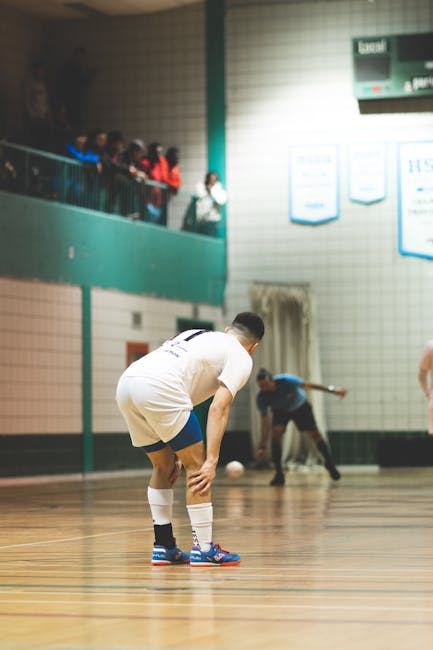
Futsal isn't just smaller soccer; it sharpens decision-making and skills under pressure, producing talents like Ronaldo and Messi in tight spaces.
Getting started with futsal as a beginner is an exciting way to enjoy soccer indoors while honing your skills in a fast-paced environment. Games run two 20-minute halves with no walls in play – out means out.
What separates it from casual kickabouts or regular soccer is the relentless close-range decision-making the small space forces on every single touch.
In futsal, players engage in fast-paced, small-sided soccer drills emphasizing close ball control, quick decision-making, and high-intensity movement, often practicing skills like toe-taps, V-moves, and one-touch passing in competitive scenarios on a compact indoor court.
Futsal induces a flow state through its high-tempo demands, offering immediate skill feedback and a sense of accomplishment, while its social dynamics foster belonging and team cohesion, ensuring continuous engagement and novelty with each session.
You think futsal is just soccer on a smaller scale. A consolation prize when a full pitch isn't available. Smaller game, smaller stakes.
That assumption is wrong. It's costing you a chance to engage in one of the most skill-building sports available to adults.
Futsal emphasizes touch and decision-making over raw athleticism. In tight quarters, you're forced to plan two moves ahead. Fitness alone can't cover weaknesses here.
The low-bounce ball changes the game. It demands clean control. Every bad touch sticks out; every good touch, precise and deliberate.
Social intensity is high. With five players, you're always in the action. There's no waiting on the sidelines, wishing for a cross.
Ronaldo, Messi, Neymar—these legends honed their skills on futsal courts in Brazil and Portugal. The tight, high-pressure environments shaped their technique, not just open fields of grass.
You're already wondering what you actually need to get started. That's the next part.
Playing futsal feels like a whirlwind. The pitch has shrunk, and everything moves at hyperspeed, leaving you scrambling to catch up.
You barely have time to react as the ball sails past, faster than your brain can process. Your early sessions are all about trying to close that gap.
Before you get started, know this: the pivot foot rule will change how you play. Receiving the ball while in constant motion is crucial, and understanding this can drastically change your game right from the start.
You'll feel out of sync, confused, and maybe even a bit embarrassed. And then something clicks.
It's not about inherent talent. It's about how Futsal squeezes the learning curve so effectively that progress appears quickly if you're patient with the initial chaos.
When to start: Morning
Duration: 1 hour
Cost to try: $10
Success criteria: If you can receive and make at least 10 clean passes in a small futsal game and keep the ball in bounds on your dribbles, do session 2.
Using an Outdoor Ball IndoorsOutdoor balls are everywhere and cheap, so that's what new players grab first.
Swap to a low-bounce futsal ball immediately – low rebound is fundamental in futsal, and playing with a regular ball teaches you timing that won't transfer.
Planting Your Foot and Waiting for the Ball to Come to YouOutdoor football rewards patience on the ball; futsal punishes it.
Take one touch toward open space before you receive – moving onto the ball keeps defenders from timing their press and gives you a half-second that changes everything.
Kicking With Your Toe Instead of the Sole RollIt feels more powerful, so beginners default to it – especially under pressure.
Drill the sole roll for ten minutes every session.
Treating the Walls or Boards Like an ObstacleNew players avoid the boards the way they'd avoid a sideline – but the boards are a teammate that never misses a pass.
Start calling the rebound angle before you play the ball; doing this for just one session rewires how you read the whole court.
Sprinting at Full Speed to DefendOutdoor instincts say close the gap fast – in futsal, that burst leaves you turned around inside two seconds.
Drop into a slow, angled jockey stance when you need to reclaim the ball, cutting the passing lane rather than the player; you'll win the ball back twice as often without gassing yourself.
Futsal thrives on hard indoor courts. Sports halls, leisure centers, and smooth-floored gymnasiums with marked boundaries and small goals are perfect.
Say you're not competitive and just learning. Pickup groups often pair newcomers with experienced players. Someone will likely explain the rotation rules before you start your first game.
No referees and no formal boundary lines. Play on any flat surface you find. The rules are flexible, at least until someone argues about the boundaries.
Perfect for beginners who want to practice without committing to a league. Just bring shoes with grip.
Running is banned; walking only. Sounds simple until your lungs start burning and your brain realizes strategy matters.
Ideal for older players, beginners, or anyone recovering from an injury. Standard futsal gear applies, with no extra cost.
Recreational league futsal offers mixed skill levels and relaxed rules. The weekly schedule helps keep you committed to improving.
Expect to pay $50–$150 per season for registration, depending on your location.
Fouls lead to temporary team disadvantages, similar to hockey power plays. This creates exciting tactical situations where even one player down becomes intense.
Great for intermediate players wanting more intense competition.
This version uses an audible ball and teammate guidance for visually impaired players. The skills demonstrated are genuinely humbling.
Not for beginners, but some centers offer sessions open to sighted participants as a challenge.
Readers who enjoy this often gravitate toward Beach Soccer next.
Floorball lives in the same world — different mechanics, similar appeal.
Beginners often think shooting harder or running faster will help them in tight spaces. But losing possession isn't about speed or strength. It's about their untrained first touch under pressure.
Mastering directional control with your first touch changes everything. Properly angling your receiving foot moves the ball away from pressure instead of stopping it. In futsal, defenders close in seconds. Your first touch must propel you into your next move, not trap you in place.
You're creating angles that didn't exist a second ago. Owning this skill turns cramped spaces into new opportunities. Without it, you're always scrambling under pressure. The calm, composed player isn't faster or stronger—just more skillful with their touch.
Commit to 8 sessions over 30 days—roughly two per week. This gives you just enough touches on the ball to move past the initial chaos and feel whether the game actually fits you.
If you're counting down to the next session, that means the game aligns with how you think and move. It isn't about being skilled yet, but about wanting to be there. Join a regular pickup group or recreational league and commit to a full season.
Feeling indifferent typically indicates you haven't played against your match yet. Consider another four sessions in a structured environment to make sure. If it still doesn't click, letting it go is the right move.
Watching the clock because you're bored is telling. The game's pace and setup might just not be your style. It's okay if the small court and constant pressure don't suit you; this mismatch isn't something you can force.
Watching futsal clips at 11pm and analyzing specific tactics means the game has hooked your mind. Your curiosity here is a clear signal that futsal fits naturally for you.
If futsal doesn't feel like the right fit, our hobbies list has plenty of other directions to try.
Futsal is played indoors on a smaller, hard court (around 40x20 meters) with a heavier, lower-bounce ball that demands precise control and quick passing. The smaller space creates faster-paced, more technical play with fewer players per side (5 vs 11), emphasizing creativity and constant movement rather than long-range shots.
A standard futsal match consists of two 20-minute halves of running time, making the total game around 40-50 minutes including halftime break. Some recreational games may have shorter halves depending on the league or facility rules.
You'll need indoor court shoes with good grip and lateral support (not football studs, which damage indoor floors), shin guards, and comfortable athletic clothing. The ball and court are typically provided by the facility, though many players bring their own futsal balls for training.
Futsal is actually easier to pick up than outdoor football because the smaller court means less ground to cover and more frequent touches on the ball. However, the emphasis on technical skills and quick decision-making means you'll develop stronger passing and control abilities faster than in traditional football.
Court rental varies by location, typically ranging from $30–$100 per hour for a full court, though many facilities offer discounted rates for team bookings. Social leagues or drop-in sessions at community centers are often cheaper at $5–$15 per player per session.
Yes, most futsal facilities offer drop-in sessions where individuals can join teams for casual play, and many cities have recreational leagues with open sign-ups. This is a great way to meet other players and get comfortable with the game before committing to a permanent team.