BoredomBusted — Find Your Next Favorite Thing To Do
Discover hobbies, activities, places, and ideas that spark joy. Whether you're looking for something creative, active, social, or relaxing, BoredomBusted helps you find your next favorite thing to do.
Browse our hobby guides, things-to-do collections, and place ideas to never be bored again.
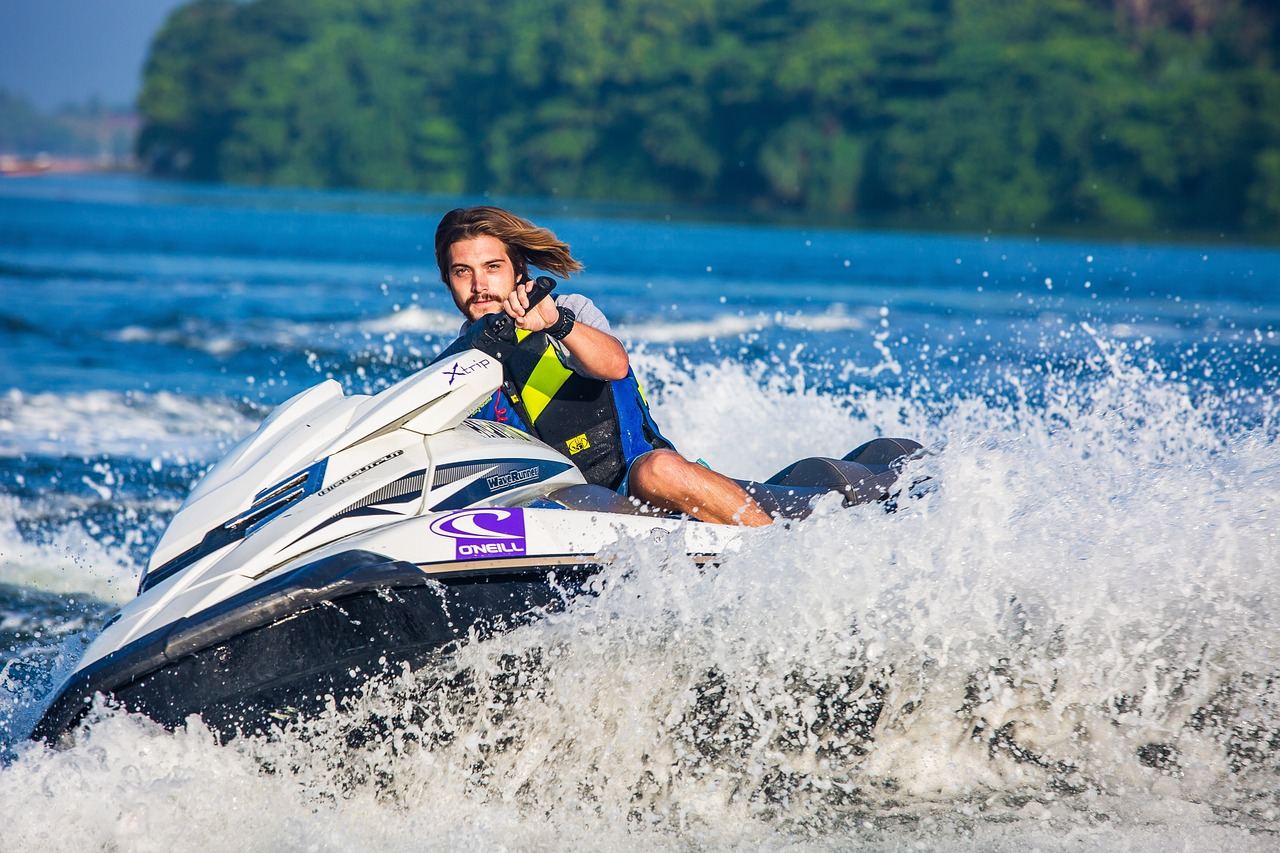
Jet skiing isn't just about high speeds — it’s a serene way to enjoy nature, making it family-friendly for all skill levels.
For beginners looking to get started with jet skiing, the experience offers an exhilarating blend of speed and adventure on the water.
You ride a motorized watercraft across lakes, rivers, or oceans, balancing thrill with relaxation.
From wave jumping to cruising calm waters, jet skiing offers a dynamic outdoor adventure.
In jet skiing, you operate a personal watercraft (PWC) by mounting it from the rear, controlling speed and direction through body weight shifts and throttle adjustments, while navigating and jumping across lakes and coastal waters, requiring constant awareness of hazards and water conditions to maintain balance and execute maneuvers.
Jet skiing induces an adrenaline rush from high-speed racing and wave jumping, creating a flow state that demands full sensory focus and immediate feedback on performance, while fostering a sense of accomplishment through mastering challenging skills and enhancing social connections during group activities.
You think jet skiing is only for thrill-seekers.
Images of high-speed chases and wild stunts dominate your mind. But here's a secret: it's not just about the adrenaline.Jet skiing can be a relaxing, family-friendly activity.
Imagine a calm day on the lake, cruising at a gentle pace, enjoying the view. It's perfect for beginners looking to soak in their surroundings.
A balance of excitement and relaxation,jet skiing transforms from an extreme sport to a leisurely escape when you dial back the speed.
Once you see this side, you're ready to explore the subtle joys of jet skiing.
The first time you open the throttle, the acceleration is sharper than you expect. Your shoulders tense, your grip tightens, and the spray hits your face before you've processed what's happening. Your body reacts before your brain catches up — that's the defining feature of your first session. At low speeds it feels manageable, almost slow. Then you add throttle and the whole equation changes.
What most beginners don't expect is how physical the steering is. A jet ski doesn't turn like a car — you steer by shifting your body weight, not just the handlebars, and that coordination takes real time to build. Your first attempts at a wide turn will feel stiff and overworked. You'll overcorrect. The ski will respond late, then suddenly. That's normal — it's not a flaw in your technique, it's just the learning curve announcing itself.
There's also the mental load that nobody warns you about. You're tracking your speed, reading the water surface, watching for boat traffic, and trying to remember to breathe. The first session feels like sensory overload disguised as fun. By the second or third time out, your brain starts filing things automatically — and that's when it actually becomes enjoyable.
Give it three sessions before you judge whether you like it. The gap between "this is chaotic" and "I understand what I'm doing" is smaller than it feels in the moment. Most of the frustration in those early rides comes from avoidable mistakes — not lack of ability. Knowing which mistakes to expect makes all the difference, so let's get into those next.
When to start: Early morning
Duration: 2 hours
Cost to try: $150
Success criteria: If you complete a full 1-hour ride, start the jet ski, make three smooth turns, and return it to the dock without stalling or clipping the lane buoys, do session 2.
Most beginners show up, strap on a life jacket, and go. They never check wind speed, wake patterns, or whether boat traffic is heavy that day. That gap in awareness is where most early accidents happen.
Before you ride, spend five minutes reading the water. Watch how other watercraft are moving. Notice chop, current, and wind direction. Calm water teaches you the craft. Rough water on day one teaches you fear.
Speed is the whole appeal. So beginners grab full throttle almost immediately. The problem is that a PWC steers through thrust — release the throttle and you lose directional control entirely.
Practice stopping and low-speed turns first, before you ever push past half throttle. Get comfortable with how the craft responds when you ease off. Speed is easy to add. Control takes deliberate practice.
New riders sit stiff and rigid, fighting the watercraft instead of working with it. Jet skiing is steered as much by weight shifts as by handlebar input. A tense body makes every correction late and exaggerated.
Keep your knees slightly bent and let your lower body absorb the water's movement. Think of your legs as suspension. The moment you relax your grip and trust your balance, the craft becomes dramatically easier to control.
The safety lanyard clips to your wrist and cuts the engine if you fall off. Beginners skip it constantly — it feels fussy, it gets in the way, and falling off seems unlikely. Until it isn't.
A driverless PWC at full throttle circles back unpredictably — and it can hit you. Clip the lanyard every single time. No exceptions. It takes three seconds and it's the most important habit you can build early.
Jet skiing feels independent by nature. You launch, you go, you figure it out. That independence is part of the appeal. But solo riding before you've built real water awareness is a genuine risk.
Ride with at least one other person for your first several sessions, and always tell someone your location and expected return time. Group riding also accelerates your skill — watching experienced riders handle chop and turns teaches you more than solo trial and error ever will.
Start with r/jetski on Reddit — it's the most active online hub for PWC riders. You'll find gear advice, ride reports, and locals posting meetups by region.
Facebook Groups are surprisingly strong for this hobby. Search "PWC riders" or "jet ski [your state/region]" and you'll land in groups where people organize weekend lake runs and swap rental tips.
Public boat launches and marina docks are where you'll meet riders in person. Show up on a weekend morning and conversations start naturally. Most PWC owners are happy to talk gear.
Check the Personal Watercraft Industry Association (PWIA) website for organized rides and safety events near you.
Jet ski rental shops also run guided group tours — especially at coastal resorts and popular lake destinations. It's a low-commitment way to ride alongside experienced people from day one.
This is the classic image most people have — wide open water, full throttle, spray everywhere. You're not doing tricks or racing anyone. Pure speed riding is for people who want intensity without a steep learning curve.
Most rental machines cover this well enough. If you own a PWC, a stand-up or sit-down model with a strong engine handles it even better. The ocean or a large lake gives you the room to actually open it up.
Wave jumping takes the speed side of jet skiing and adds a skill element. You're reading the water, timing your approach, and using your body to absorb or amplify the hit. This variant rewards people who want something to actually get better at.
Coastal waters or choppy lakes work best. It demands more physical awareness than flat-water riding, and your confidence on the throttle needs to be solid before it stops feeling chaotic.
Not everyone is chasing an adrenaline spike. Slow-paced cruising on calm water — a quiet lake, a bay, a river — is its own kind of satisfying. This version suits beginners, families, or anyone who wants to decompress rather than spike their heart rate.
Most sit-down PWCs handle this well at low throttle. The lower speed also means more mental bandwidth to actually notice your surroundings, which is half the appeal.
Group jet skiing — whether that's a casual ride with friends or an organized tour — changes the whole dynamic. You're pacing with others, communicating on the water, and sharing the experience in real time. The social element is what makes this version stick for people who'd otherwise lose interest riding solo.
Two-seater models are built for this. Guided tours in coastal areas often cover safety basics and take groups through routes with enough variety to keep it interesting for mixed skill levels.
Competitive jet skiing is a real sport with organized events at regional and national levels. Formats range from closed-course racing to freestyle, where riders are scored on tricks and execution. This path is for riders who need a goal to stay motivated — and who don't mind putting in serious practice time.
Stand-up PWCs dominate the competitive scene. Getting there means solid fundamentals first, then deliberate work on specific maneuvers. Local clubs are the fastest way in.
Equestrian Sports is a sibling pursuit and often surfaces the same kind of curiosity.
Another variant that pulls from the same roots is Rugby.
Paintball is a sibling pursuit and often surfaces the same kind of curiosity.
The skill that separates improving riders from those who plateau is learning to steer with your body weight before you ever think about the throttle.
Most beginners treat a jet ski like a car — they fixate on speed and expect the throttle to do the work. But a PWC doesn't steer when you cut the throttle. It goes straight. That instinct to back off the gas mid-turn is exactly what keeps riders stuck, fighting the water instead of working with it.
Every direction change starts with a weight shift — lean into the turn, press through your outside foot, and let the hull respond. Riders who internalize this stop muscling the handlebars and start feeling the water beneath them. That's when control becomes instinctive rather than reactive.
Once you trust your body to guide the ski, everything else — wave jumping, tight turns, rough water — starts to click into place. The throttle becomes a tool you time precisely, not a safety blanket you grab. That foundation is what the next section builds on directly.
Give yourself four sessions over about two months — once every two to three weeks. That's enough time to get past the mechanical awkwardness and feel what the experience actually is.
You finish a session and the first thing on your mind is getting back out there. That pull toward the water — not the memory of it, but the urge to go again — is the real signal. Start looking into rental memberships or group rides in your area. From there, the path to owning a PWC or joining a local water sports community opens up naturally.
You had an okay time but felt mostly neutral about it. That indifference often means you haven't hit the right conditions yet, not that the hobby is wrong for you. Try switching the context — if you rode solo on a calm lake, go with friends on choppier water, or vice versa. Speed and environment change the experience dramatically.
You spent most of the session waiting for it to be over. That's not nerves — that's a mismatch. The sensory overload and constant physical engagement that hook most riders actively drained you. Your pull is probably toward slower, quieter water — kayaking or paddleboarding will give you the same setting without the throttle.
If you find yourself checking wind and wave forecasts for a body of water you haven't even booked yet, you're hooked. That involuntary habit of scouting conditions before you have any reason to is the clearest sign this hobby has already gotten into your head.
Looking for something lighter? Our boredom-busters guide is built for exactly that.
A new jet ski ranges from $5,000 to $15,000+ depending on the model and brand, but many beginners rent for $50–$150 per hour to test the activity first. You'll also need a personal flotation device (PFD), which costs $50–$200, and insurance varies by location and watercraft. If renting regularly, budget $300–$500 per trip including fuel and rental fees.
Most people can grasp basic operation and control within 1–2 hours of instruction and practice. However, building confidence, learning safety protocols, and developing skills for different water conditions typically takes 5–10 sessions over several weeks. Advanced techniques and handling rough water require ongoing practice over months or years.
A Coast Guard-approved personal flotation device (PFD) is mandatory, along with a helmet to protect against impacts and water spray. Many riders also wear a wetsuit for temperature regulation and impact protection, water shoes for grip and safety, and eye protection or goggles. Some locations require additional gear like a kill switch lanyard that cuts the engine if you fall off.
Jet skiing has a relatively low barrier to entry—the basic operation is intuitive and most beginners feel comfortable within the first hour on the water. However, it requires good balance, situational awareness, and respect for water conditions and other traffic. Physical fitness helps, but it's accessible to people of varying abilities with proper instruction and practice.
Most jet ski operators require riders to be at least 12–16 years old (depending on location and local laws), with some allowing younger children as passengers. Teen beginners can start with smaller, less powerful models, while younger kids should always wear a PFD and be supervised by an experienced adult. Adults of any age can learn jet skiing with proper instruction and fitness.
Jet skiing is allowed on most lakes, rivers, and ocean bays, but specific regulations vary by location—many areas require registration, operator licenses, or boating certifications. Check with your local water authority, parks department, or coast guard for rules on designated jet ski zones, speed limits, and quiet hours. Popular jet ski destinations often have rental facilities that can advise on legal launch points.