BoredomBusted — Find Your Next Favorite Thing To Do
Discover hobbies, activities, places, and ideas that spark joy. Whether you're looking for something creative, active, social, or relaxing, BoredomBusted helps you find your next favorite thing to do.
Browse our hobby guides, things-to-do collections, and place ideas to never be bored again.
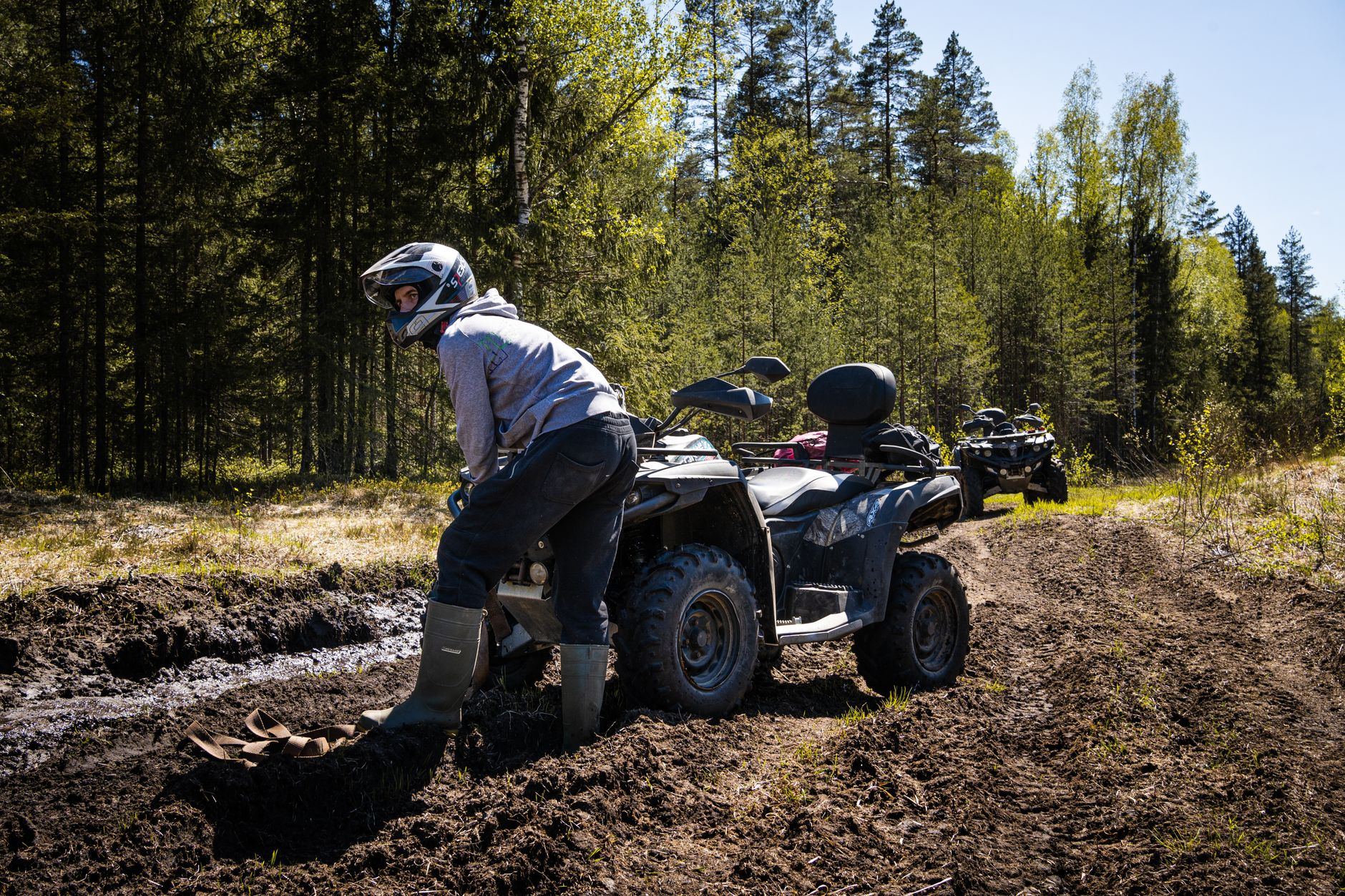
Quad biking is a body-position sport, not a throttle sport: riders who learn to shift their weight get safer and faster than riders who just buy a bigger machine.
Quad biking is riding an all-terrain vehicle (ATV): a four-wheeled machine you straddle like a motorcycle and steer with handlebars. People call it a quad, a four-wheeler, or an ATV, and they all mean the same thing. This page is about recreational trail riding, not racing and not farm work.
A typical day starts at a trailhead or off-road park with the machine on a trailer. You gear up, check the tires and brakes, then ride a marked loop for two to five hours at 10 to 25 mph. Most of the effort is steering with your whole body, standing, shifting, and leaning, not just twisting the bars.
Here is the part rental-shop brochures skip. Quads are heavy, tippy, and unforgiving of speed mistakes, and hundreds of people die on them in the US every year. Everything below assumes a helmet, a rider-training course, and exactly one rider per machine.
Quad biking is trail riding on a four-wheeled all-terrain vehicle (ATV). You trailer the machine to a legal riding area, gear up, and ride a marked loop for a few hours, shifting your weight through climbs, turns, and ruts while the machine does the heavy lifting.
Every few seconds the terrain changes and asks for a decision: line, speed, body position. That constant, physical problem-solving leaves little room for scrolling, and the noise, dust, and motion make a dull Tuesday feel very far away. By the time you load the trailer, your head is quieter than it has been all week.
Most people picture quad biking as sit-and-steer. Hold the throttle, point it at something muddy, laugh.
That works until the trail tilts. A quad weighs several hundred pounds, sits high, and has a narrow stance for that weight, so the machine tips when your body is in the wrong place.
Riding well is called active riding. You stand on the footpegs, move your weight uphill on a slope, and lean into corners. It is closer to mountain biking than to driving a car.
The risks are real and well documented. The CPSC counts an average of more than 800 off-highway vehicle deaths a year in the US, more than two-thirds of them on ATVs, and the pattern is consistent: no helmet, riders too young or too small for the machine, passengers on single-rider quads, riding on paved roads, and speed.
None of that makes it a bad hobby. It makes it a hobby with a training step most people skip, and the people who skip it are the statistics.
Your first ride will feel slower than you planned and more tiring than you expected. The machine vibrates through the bars, the thumb throttle takes a few minutes to trust, and your forearms start to ache within the hour. Nobody is graceful on day one, and that is the correct speed.
Spend it in a flat field or a wide, easy trail at walking pace. Practice starting, stopping, and steering. Use both brakes, the hand lever and the foot pedal.
Once the basics feel boring, you begin standing on the pegs and shifting your weight. The machine suddenly feels lighter and less like a thing that happens to you. This is where it starts to be fun.
By now you catch yourself gripping the bars too hard and staring at the front fender. Looking farther ahead and loosening your arms is the next step. Expect sore hands and a layer of dust or mud on everything.
A safety note for all three sessions: wear the helmet, goggles, gloves, boots, and long sleeves every time, ride only on trails marked for ATVs, and keep your speed low enough to stop within what you can see. If a trail makes your stomach drop, walk it first or skip it.
When to start: A dry weekend morning with good visibility
Duration: 2-3 hours
Cost to try: One guided ride or rental; the price depends on the operator and ride length
Success criteria: If you can stop in a straight line from 10 mph and stand and lean through easy turns without gripping the bars in panic, do session 2.
A helmet is not optional. Head injuries are the thing that turns a rollover into a funeral, and the rollover happens at 8 mph on a trail you have ridden twenty times.
Wear a DOT-approved helmet, goggles, gloves, over-the-ankle boots, long sleeves, and long pants every ride, even the short one to the creek.
Most quads are built for one rider. A second person shifts the weight and blocks your ability to move, so the machine rolls far more easily.
If you want to ride with a partner, rent a side-by-side with seats and belts. That is a different machine with different rules, and it is the right answer here.
A big utility quad is not a first quad. The ATV Safety Institute and the CPSC both say riders under 16 belong on age-appropriate youth models, never adult machines, and the youth size depends on age and engine size.
State laws differ, but rider size matters as much as age. You should be able to stand on the pegs and reach the controls comfortably, and a young rider on an adult machine is a recipe for serious injury.
Staying planted on the seat with your weight in the middle works on flat ground and fails on any grade. Slopes and corners are where rollovers actually start.
Practice standing, leaning uphill on side slopes, and moving forward on climbs before you ride anything steep. This is the core skill covered above.
Trails hide ruts, logs, and blind corners, and the machine does not care that you were just trying to keep up. Ride slower than the trail looks like it allows, always within what you can see.
Go with someone, or tell someone your route and return time.
Quad riding is social in a way that surprises people. Most riders go in groups, meet at trailheads, and spend half the day talking about the machine.
The ATV Safety Institute (ASI) runs the RiderCourse, a hands-on class with an instructor and a practice machine, usually a few hours long. Some dealers bundle it with a new-machine purchase, so ask. It is the best first step and also the best way to meet local riders.
Local ATV clubs organize group rides, trail work days, and charity runs. Search your state's name plus ATV club, and check your state or county parks website for designated OHV trails.
Reddit's r/ATV is active and blunt about gear and trail conditions. Meetup and local Facebook groups cover regional rides, and dealerships often host rides or know the clubs.
Public riding areas are usually run by state parks, national forests, or private trail systems that sell day permits. Hatfield-McCoy Trails in West Virginia, Sand Hollow State Park in Utah, and the sand dunes at Glamis in California are well-known destinations.
Guided tours at these places and many smaller parks are a low-pressure way to try it. Ride only where ATVs are legally allowed, because trespassing and illegal trail use are how areas get closed. Groups like Tread Lightly and the BlueRibbon Coalition work on keeping them open.
Many riding areas have campgrounds at the trailhead, so a riding weekend pairs naturally with car camping.
Quad riding splits into a few styles. Pick based on what you want out of a day.
A guide supplies the machine, helmet, and route, and usually gives a short orientation first. This is the cheapest way to find out whether you like it.
This is the default: marked routes through forest, hills, or desert at moderate speed. Most riders end up here. A mid-size utility or recreation quad is fine.
Dune riding feels different: loose sand, steep faces, and high-speed open areas. It also needs a flag on the machine in many areas and more careful machine choice. Not a first-day plan.
Sport quads are lighter, faster, and far less forgiving. Racing circuits and cross-country series exist, and every one of them expects serious protective gear. Come to this after you have real hours on a normal machine.
A side-by-side, or UTV, has seats, belts, and a roll cage, and it is designed for a driver plus passengers. It is a different machine and a different hobby. It is the safe answer to the passenger question.
Beginners think the skill is throttle control. It is weight transfer: moving your body so the machine stays planted instead of tipping.
Standing on the pegs lets your legs absorb bumps and lets you shift your weight freely. Lean your upper body into a turn, press down on the outside peg, and keep your arms loose.
On a slope, lean your weight uphill. Climbing, lean forward. Descending, shift back.
Find a flat, open, legal area with no traffic. Ride slow figure-eights at walking pace, standing, with your weight leaning into each turn. Do twenty of them in each direction.
Next, practice braking. Ride at about 10 mph, squeeze the brakes smoothly, and stop in a straight line. Repeat until stopping feels automatic, not dramatic.
After that, find a gentle slope and ride across it with your weight uphill, then straight up and straight down it. Never cross a steep slope sideways and never turn around halfway up it. If you stall on a climb, hold the brakes and get off on the uphill side.
The ATV Safety Institute RiderCourse teaches exactly these drills with an instructor watching. That is the fastest, cheapest way to learn it without finding out the hard way.
Here is a fair test: four sessions in 30 days. Take the ASI RiderCourse or a guided ride, then do three more outings on easy terrain.
Rent for all of it. Do not buy a machine yet.
Wear full gear every time, including the helmet, and keep each ride at a pace where you could stop in time. Keep notes on how you feel afterward.
You are already looking at used listings and planning the next ride. That is a signal, and the next step is a used machine, a hitch or trailer plan, and a budget for maintenance.
If you'd rather do that maintenance yourself, motorcycle repair teaches many of the same engine and brake basics.
You liked it but the hauling, the cost, and the cleanup sound like a second job. Keep renting. Plenty of people ride four times a year and never own anything.
You were tense the whole time and never relaxed. That is also valid data, and it is cheaper to learn it from a rental than a machine in the garage.
If a close call makes you want to ride harder instead of slower, pause. The riders who get hurt are often the ones who stopped being scared, so let the fear teach you something before you go back.
It can be. Safety agencies report hundreds of ATV deaths a year in the US, mostly from rollovers, no helmet, passengers, and young riders on adult machines. Training, a helmet, proper gear, and a machine sized for you reduce the risk a great deal, but they do not remove it.
Rules depend on where you ride. Most places do not require a driver's license for off-road riding on private land, but many states require ATV registration, a permit for public trails, and a safety course for younger riders. Check your state's DNR or parks agency before you go.
Prices vary a lot by region and operator, so check before you book. A guided ride or day rental is the cheapest way to try it, because the machine and usually the helmet are included. Owning is a much bigger jump: the machine, plus a trailer, permits, insurance and maintenance.
Not on a single-rider quad, which is most of them. A passenger shifts the weight and blocks your ability to move, and it raises rollover risk sharply. If you want to ride with someone, rent a side-by-side, which is built with seats and belts for passengers.
The common guidance from manufacturers and the ATV Safety Institute is nobody under 6, a machine under 70cc for ages 6 to 11, roughly 70 to 90cc for ages 12 to 15, and adult-size from 16. State laws vary, and supervision, a helmet, and a course matter more than the number.
They are the same thing. Quad bike is the common name in the UK and Australia, while ATV, four-wheeler, and quad are more common in the US. Side-by-sides, or UTVs, are a different kind of machine with seats, belts, and a steering wheel instead of handlebars.