BoredomBusted — Find Your Next Favorite Thing To Do
Discover hobbies, activities, places, and ideas that spark joy. Whether you're looking for something creative, active, social, or relaxing, BoredomBusted helps you find your next favorite thing to do.
Browse our hobby guides, things-to-do collections, and place ideas to never be bored again.
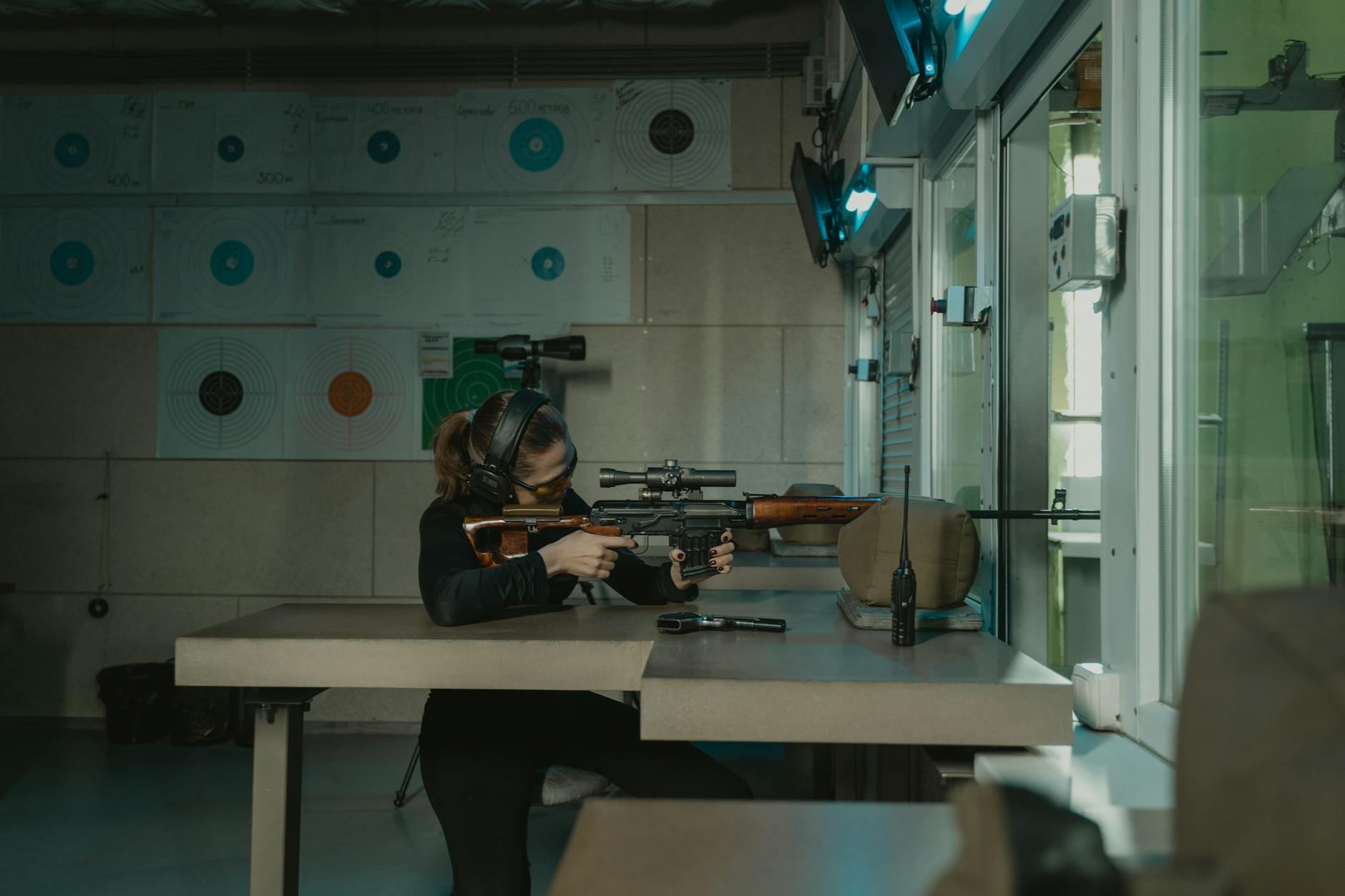
Rifle shooting isn't just for hunters or soldiers—it's a sport that builds focus and discipline, welcoming beginners from all backgrounds.
Getting started with rifle shooting as a beginner is all about developing focus and mastering your aim. You aim and fire at targets, bringing the skill into focus.
Each shot demands discipline and attention to detail. It's a pursuit that sharpens both mind and reflexes.
In rifle shooting, participants engage in a structured routine that involves setting up gear, planning practice sessions, adopting stable shooting positions, aiming, controlling breath, and executing precise trigger pulls. Shooters repeat these actions while running drills that focus on accuracy, speed, and transitioning between positions, often using dry-fire practice to hone skills without live…
Rifle shooting fosters a flow state through clear goals and immediate feedback, allowing hobbyists to adjust challenges as they improve, which keeps engagement high and boredom low. The immediate results from each shot provide a sense of accomplishment, while the complexity of skills required encourages continuous learning and mastery.
That's what most people assume. But the reality is far from that.Rifle shooting attracts people from all walks of life. From competitive athletes to casual hobbyists, many find satisfaction in the precision and focus it demands.
Safety and discipline are at the core of the sport.It's about personal growth and concentration. Many ranges cater to beginners with programs designed to provide a safe and welcoming space.
Your first session at the range is quieter than you expect. The smell of gunpowder lingers in the air. Your hands feel slightly awkward holding the rifle — it's heavier than it looks, and the stock doesn't quite sit right against your shoulder. You'll spend more time adjusting your position than actually shooting. That physical discomfort is part of the process, not a sign you're doing it wrong.
Here's the part most beginners don't see coming: breath control. You've heard the term, but you won't truly understand it until your crosshairs are drifting all over the target and you can't figure out why. Your natural breathing pattern — the same one you've had your entire life — suddenly becomes your biggest obstacle. The frustrating truth is that your body fights you before it cooperates.
Shots will land nowhere near where you aimed. You'll second-guess your trigger pull, your stance, your grip — all at once. That mental noise is normal. The feedback loop is actually what makes this sport work: every shot tells you something, even the bad ones. The target doesn't lie, which means every miss is information you can actually use.
By your third or fourth session, small things start clicking. Your position feels less forced. You notice the moment your breathing steadies before a shot. That's when the sport shifts from frustrating to genuinely absorbing. Before you get there, though, it helps to know which early mistakes are quietly holding most beginners back.
When to start: 8am
Duration: 2 hours
Cost to try: $0 - $50
Success criteria: If you put five shots on one target and keep them inside a 6-inch group, do session 2.
New shooters want live fire. The sound, the recoil, the hole in the target — that's the fun part. So dry-fire practice gets dismissed as busywork. But most trigger and breathing errors are impossible to diagnose mid-live-fire — they happen too fast.
Dry-fire slows everything down. You can feel exactly where your grip tension spikes, where your breath disrupts your hold, where your trigger pull goes sideways. Ten minutes of dry-fire before a live session will improve your groups faster than doubling your round count.
Beginners look at their groups and try to fix them by aiming harder. The problem is almost never the aim. Inconsistent groups almost always trace back to an unstable shooting position — a bent wrist, a tense shoulder, weight distributed wrong.
Build your position first. Get it consistent enough that you could hold the sight picture without thinking about it. Accuracy is a byproduct of a repeatable position, not the other way around.
Most beginners know breath control matters. So they take a big breath, hold it, and fire. That's the wrong sequence. Holding a full breath raises tension across your entire upper body — exactly what you don't want when trying to squeeze a trigger smoothly.
The correct method is to exhale naturally, then pause at your natural respiratory pause — the relaxed moment between breaths. You have roughly 8–10 seconds in that window before your body starts compensating. Fire within it.
Speed drills, transition drills, timed exercises — they look exciting on video and feel productive at the range. But drilling speed into a technique that still has flaws just makes you faster at making mistakes.
Spend your first few months shooting slowly and deliberately. Confirm your position, your breath, your trigger pull — shot by shot. Speed is something you earn by making the slow version automatic. It comes on its own once the mechanics are solid.
There's a difference between practicing and just shooting. Many beginners go to the range, fire rounds, and score themselves. That's not practice — that's testing without ever actually training.
Pick one specific thing to work on each session. Trigger control. Breath timing. Positional stability. Narrow focus produces faster improvement than general repetition. The immediate feedback from each shot only helps if you're actually watching for something.
Start with the NRA's club finder at nra.org — it lists affiliated shooting clubs and ranges by zip code across the US. The Civilian Marksmanship Program (CMP) is another strong lead, especially if you're interested in competitive or structured rifle events.
For online community, r/rifles and r/longrange on Reddit are active and beginner-friendly. People post gear questions, range reports, and technique breakdowns daily. The forums at Sniper's Hide (snipershide.com) go deeper on precision rifle topics if you want more technical discussion.
Local rifle and gun clubs typically host open shoot days, beginner orientation nights, and league-style competitions. Search for your nearest club through the Amateur Trapshooting Association or your state's rifle association. Showing up to a public range and talking to other shooters is still the fastest way to find your local scene.
Precision target shooting is the most structured path in the hobby. You pick a distance, fire at paper or steel targets, and measure every result against your last.
This is the best fit for anyone who gets satisfaction from measurable, incremental improvement. The feedback loop is immediate — every group you print tells you something useful.
Competitive rifle shooting runs across a wide range of formats — from Olympic-style prone shooting to practical rifle matches with moving targets and timed stages. Each format has its own ruleset and skill emphasis.
The social element here is a genuine draw. You're surrounded by people who take the craft seriously, and that raises your own game faster than solo practice usually does.
Dynamic shooting disciplines involve shooting from multiple positions, transitioning between targets, and working against the clock. It's closer to a physical sport than standing at a static bench.
This variant suits people who find pure stillness tedious but still want the precision challenge. Speed and accuracy have to coexist — you can't sacrifice one for the other.
Long-range shooting pushes accuracy out to several hundred yards or beyond. Environmental factors — wind, elevation, humidity — become variables you have to account for with every shot.
This is rifle shooting at its most technical and most meditative. It rewards patience and a genuine interest in the ballistics side of the sport.
Dry-fire practice uses an unloaded rifle to drill the fundamentals — position, breathing, trigger control — without ever going to the range. Many serious shooters spend as much time here as they do with live ammunition.
It's especially practical for beginners who want to build muscle memory before adding the noise, cost, and complexity of live rounds. The core skills transfer directly.
A close neighbor worth considering: Pistol Shooting.
Some of the same instincts show up in Sporting Clays — worth a look if this clicked.
The skill that separates improving shooters from those who plateau is trigger control — specifically, the ability to press the trigger without disturbing the rifle's aim.
Most beginners focus on aiming. They spend time on stance, sight picture, and breath control — all of which matter. But those elements get you to the moment of the shot. What happens in the half-second you actually pull the trigger determines everything. A flinch, a jerk, even a slight increase in finger pressure at the wrong moment — and the shot goes wide regardless of how perfect your setup was.
This is why dry-fire practice exists. Shooting without live ammunition removes noise and recoil from the equation entirely. You isolate the trigger press. You watch the sights. You learn, through repetition, what a clean break actually feels like versus a disturbed one.
Once trigger control becomes consistent, every other skill compounds faster — accuracy, speed, position transitions. The next section covers what a structured practice routine actually looks like so you can build that consistency from day one.
Commit to 4 range sessions over 30 days — roughly once a week. That's enough repetition to get past the awkward mechanics and feel what the sport actually is.
You're hooked. The sign is replaying a shot in your head on the drive home — analyzing your breath, your trigger pull, what you'd do differently. When that starts happening, move to structured drills. Start tracking your groups on paper, look into dry-fire practice at home, and consider booking time at a range that offers coaching. The skill ceiling here is genuinely deep.
Indifference after four sessions usually means the solo, static format isn't clicking. Before walking away, try a competitive format — even an informal one. Timed drills, head-to-head target comparisons, or a club league night change the dynamic entirely. Some shooters need a score on the board to care about the outcome.
That's real information. Rifle shooting asks you to slow down, be still, and stay in your own head — and that's genuinely not what everyone wants from a hobby. If you were watching the clock, the quiet focus at the core of the sport is probably working against you. Something with more movement and social noise — archery tag, motorsport, team-based shooting sports — might be a better fit.
If you catch yourself researching rifle scopes or ammunition at 11pm after your first session, that's not casual curiosity. That's the hobby already taking hold.
Not ready to pick a hobby yet? The boredom busters page has smaller things to try first.
No, you can rent a rifle at most shooting ranges to begin.
Generally, you must be at least 18, but younger shooters can participate with adult supervision.
Yes, when proper safety protocols are followed and under professional supervision.
Wear comfortable, non-restrictive clothing and closed-toe shoes for safety.
Regular practice, at least once a week, is recommended to enhance your skills.