BoredomBusted — Find Your Next Favorite Thing To Do
Discover hobbies, activities, places, and ideas that spark joy. Whether you're looking for something creative, active, social, or relaxing, BoredomBusted helps you find your next favorite thing to do.
Browse our hobby guides, things-to-do collections, and place ideas to never be bored again.
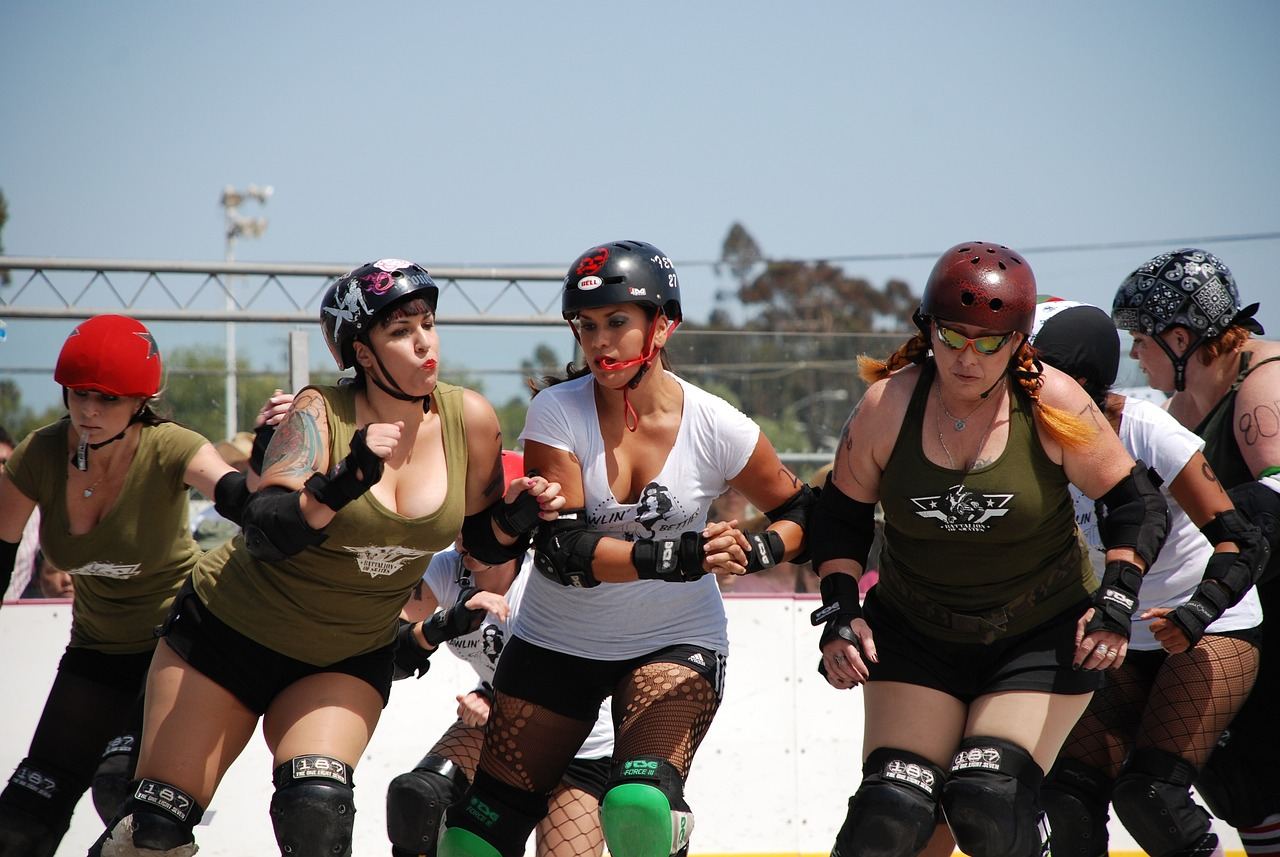
Roller derby invites all — it's not just for tough athletes, but a community for personal growth and friendship, regardless of fitness level.
Getting started with roller derby as a beginner involves understanding the balance of speed and strategy while skating.
Two teams compete by lapping opponents on a track to score points.
Strategic gameplay and high-energy action make it thrilling, while also building fitness and community spirit.
In roller derby, adults engage in a full-body skating activity that involves speed, agility, and strategic blocking while practicing foundational skating mechanics and strength exercises. Participants perform high-intensity interval training, alternate between maximum-effort bursts and brief recovery periods, and develop tactical skills for on-track competition.
Roller derby fosters continuous skill progression and social coordination, allowing participants to experience visible improvements in their skating and tactical abilities, while also creating a sense of belonging through teamwork and real-time feedback during practices and matches.
You think roller derby is only for tough athletes who already know their way around a rink.
Imagine a newcomer, Lucy, who traded her couch for skates. She joined a league with zero experience and quickly found a community ready to teach and support her. Each session challenged her, but she improved steadily, motivated by a team that celebrated every small victory.
Roller derby is more than just a sport; it's a welcoming community. It embraces newcomers, regardless of their starting point, pushing them to grow in skill and confidence.
So, whether you want to find a new circle of friends, challenge yourself physically, or simply skate for fun, roller derby offers a welcoming space.
Your first practice will feel chaotic in the best and worst way. Skates that felt manageable in a parking lot suddenly feel unpredictable on a flat track surrounded by moving bodies. Your ankles will burn, your quads will ache within twenty minutes, and your brain will be working overtime just to stay upright. The physical demand hits most beginners harder than they expect — this is full-body work from minute one.
The part nobody warns you about is the mental load. You're not just learning to skate — you're learning to fall correctly, recover fast, and absorb positional rules all at once. Most new skaters spend the first two or three sessions feeling like they're failing constantly. That feeling isn't a sign you're behind — it's what learning a complex physical skill actually feels like. Everyone in the room went through it.
Around sessions four or five, something shifts. Your crossovers get a little smoother. You stop staring at your feet. You start reading where other skaters are moving instead of just reacting to them. Roller derby rewards consistency in a way that's genuinely visible — you'll notice your own progress week to week. That feedback loop is what keeps most people coming back.
Getting comfortable on skates is only half the battle, though. The mistakes that slow beginners down most aren't the obvious ones — they're the subtle habits that form early and quietly hold you back. Knowing what those are before they get baked in will save you a lot of frustration.
When to start: Morning
Duration: 1 hour
Cost to try: $10
Success criteria: if you finished without falling excessively, do session 2.
Most beginners buy skates the moment they sign up. It feels logical — you need skates to skate. But blockers and jammers put very different demands on their equipment, and buying the wrong pair early means you're either skating in something that fights you or spending twice.
Borrow or rent gear for your first few sessions. Wait until you've practiced enough to know how you move on the track before you spend anything serious on your own pair.
Contact looks like the fun part, so new skaters rush toward it. The problem is that blocking and jamming require you to control your own body first. If your stops are shaky, adding another moving person into the mix makes everything harder and riskier.
Nail your T-stop, plow stop, and transitions before you think about contact drills. Leagues run minimum skills assessments for exactly this reason — the foundation has to be solid first.
Once-a-week practice is enough to stay familiar with skates, but not enough to actually improve. Roller derby rewards people who get extra time on their wheels between sessions. Your body needs repetition to build muscle memory, and one session a week just doesn't give it enough.
Find a local skate park, an open rink night, or even a smooth parking lot. Even 30 minutes of casual skating between practices compounds fast — footwork, balance, and confidence all build outside of structured drills.
New blockers fixate on the jammer coming up behind them. It feels like the obvious threat. But derby strategy actually lives in the pack — what your walls are doing, where the holes are opening, and how the opposing blockers are positioning. Staring at the jammer leaves you reacting instead of playing.
Train yourself to scan the whole pack first, then locate the jammer. It feels counterintuitive early on, but experienced skaters will tell you the same thing: the pack tells you everything.
Waiting until you feel ready to scrimmage is how you stay on the bench indefinitely. Nobody feels ready. Scrimmage is uncomfortable precisely because it's where you find out what your actual gaps are — not what you think they are during drills.
Get in the rotation as soon as your league allows it, even if you're nervous. The feedback you get from live play in a single session beats weeks of isolated drilling.
Start with the Women's Flat Track Derby Association (WFTDA) league finder at wftda.com — it's the most full directory of sanctioned leagues worldwide. Type in your city and you'll get a list of local leagues, most of which run dedicated fresh meat (beginner) programs.
The Men's Roller Derby Association (MRDA) runs a parallel finder for men's and co-ed leagues. If you're looking for junior programs, the Junior Roller Derby Association (JRDA) lists youth leagues by region on their site.
r/rollerderby on Reddit is active and beginner-friendly — people post gear questions, training tips, and league recommendations daily. Facebook Groups are equally useful; search "roller derby" plus your city name and you'll usually find a local group where leagues post open scrimmage invites and tryout dates.
Most leagues hold public bouts at roller rinks, sports halls, and flat-floor arenas. Attending one before you commit is the fastest way to meet skaters, ask questions, and get a feel for a league's culture. Skaters at these events are almost always happy to talk to newcomers — introduce yourself after the final whistle.
Fresh Meat programs are where most skaters start. These are beginner training tracks run by established leagues, focused entirely on skating fundamentals, stopping, and falling safely.
You won't be thrown into contact until you're ready. This is the entry point for anyone starting from zero skate experience.
Flat track derby is the most common competitive format. Teams of five skate an oval track, with one jammer scoring points by lapping blockers from the opposing team.
The strategy runs deep — every position has a distinct tactical role, and games are won as much by smart play as by raw speed. Most recreational leagues operate this format.
Blocking is its own art. Pivots and blockers form walls, break formations, and physically redirect opponents — all while skating at speed.
If you're drawn more to physicality than point-chasing, focusing on the blocker role gives you a physically demanding, tactically rich experience without ever needing to be the fastest skater on the track.
Some leagues offer non-contact or recreational scrimmage tracks for skaters who want the game format without full-body blocking. You still practice jamming, positioning, and footwork.
This suits skaters who want the tactical side of derby without the injury risk of contact play.
Travel teams and sanctioned bouts operate under WFTDA rules and involve inter-league competition. Training intensity increases significantly, and rosters are usually earned through tryouts.
This path is for skaters who've built solid fundamentals and want structured, high-stakes competition.
Roller derby leagues rely heavily on volunteers — referees, non-skating officials, announcers, and bout staff. Many people enter the community this way before ever putting on skates.
Volunteering gets you inside the sport immediately, with full access to the culture, the people, and the game — no gear required.
Track Cycling is a sibling pursuit and often surfaces the same kind of curiosity.
Ice Hockey lives in the same world — different mechanics, similar appeal.
If this resonates, Handball explores a similar direction.
The skill that separates skaters who keep improving from those who stall is edge control — the ability to shift your weight deliberately between the inside and outside edges of your wheels.
Most beginners skate flat-footed. They move forward, they stop, they don't fall too much — and they think they're progressing. But the real game is happening in the ankles. Every crossover, every tight corner, every controlled block starts with a skater who knows exactly which edge is loaded at any given moment. Without that, speed becomes uncontrollable and agility becomes luck.
Here's what it feels like when it clicks: you stop steering with your whole body and start steering with your feet. Corners get tighter. Recovery after a hit gets faster. You start reading the track instead of just reacting to it.
The good news is that edge control is trainable in every single practice — drills, scrimmage, warm-up laps. Once you know what you're building toward, the path to real improvement becomes much clearer. The next question is what that practice actually looks like.
Commit to 4 sessions over about a month — most leagues run weekly beginner nights, so this fits naturally into a normal schedule.
You're hooked. The tell is usually a specific moment — you finally held a block, or your crossovers clicked, or you made your teammates laugh mid-drill. That feeling of visible, physical progress inside a team that actually notices it is what roller derby runs on. Find out when fresh meat tryouts or league registration opens and get your name in.
That middle-ground feeling usually means the group dynamic hasn't clicked yet, not that skating is the problem. Try a different league or a public skate session before walking away — roller derby communities vary enormously in energy and culture, and the right one changes everything.
That's real information. If the physical contact made you tense rather than energized, or the team structure felt like pressure instead of support, roller derby's specific mix of collision and coordination probably isn't the right fit. Speed skating or a recreational hockey league gives you the rink energy without the full-contact element.
If you catch yourself watching derby footage at midnight to study a jammer's line, or pricing out skates before you've even finished the trial — that's not enthusiasm you manufactured. That's the sport already in your head.
Roller Derby is one path among many — browse the full hobbies list to weigh it against the rest.
If nothing here clicks, our guide to what to do when bored covers shorter, lower-commitment options.
Initial costs typically range from $200–$500 for basic gear (skates, helmet, protective pads, and mouth guard). Many roller derby teams offer loaner equipment for beginners during practice trials, so you can start without a full investment. Monthly dues or league fees vary by location but generally run $20–$50 once you join a team.
No prior skating experience is required—most leagues actively recruit beginners and offer training programs to teach you from the ground up. You'll need basic fitness and coordination, but the sport is designed to build your skills progressively through structured practices and mentorship from experienced skaters.
Most beginners can participate in their first scrimmage or bout within 3–6 months of consistent practice, though this varies by league and individual progress. The Roller Derby Athletic Association (RDAA) requires skaters to pass a skills assessment before competition, which typically takes 8–12 weeks of training for committed beginners.
You should have moderate cardiovascular fitness and basic lower-body strength, but you don't need to be an athlete. Roller derby builds endurance and strength as you train, so newcomers of various fitness levels can succeed with regular practice and conditioning.
Roller derby carries inherent contact and falling risks, but safety is taken seriously through required protective equipment and proper technique training. Leagues teach you how to fall safely and build your skills incrementally, with most injuries being minor bruises or sprains rather than serious harm.
Roller derby communities are known for being inclusive, supportive, and social, with strong camaraderie both on and off the track. Many skaters form lasting friendships and describe the league as a tight-knit family that welcomes diverse backgrounds and body types.