BoredomBusted — Find Your Next Favorite Thing To Do
Discover hobbies, activities, places, and ideas that spark joy. Whether you're looking for something creative, active, social, or relaxing, BoredomBusted helps you find your next favorite thing to do.
Browse our hobby guides, things-to-do collections, and place ideas to never be bored again.
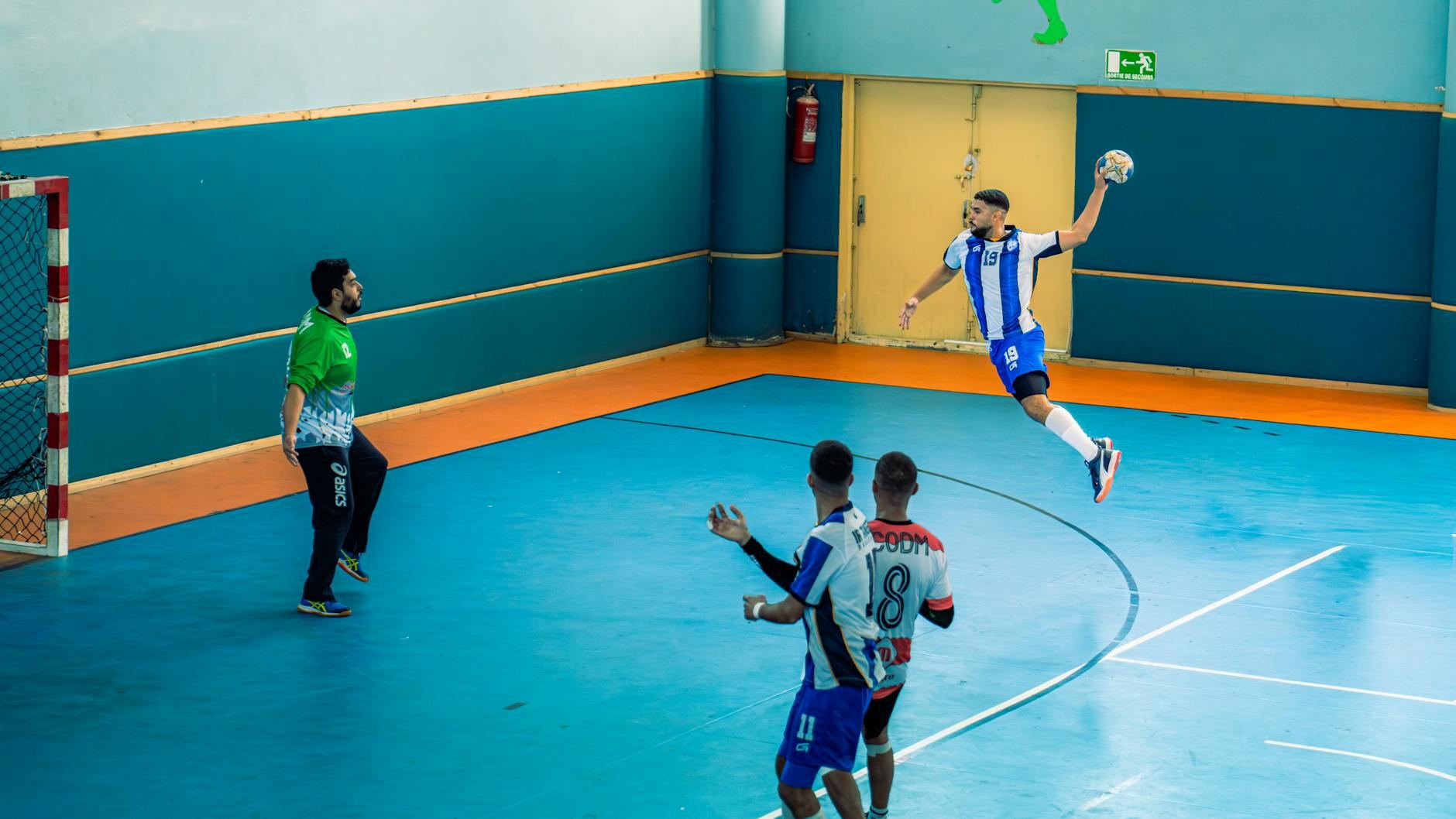
Handball may seem like a playground game, but it's a strategic powerhouse that rivals soccer and basketball in competition and teamwork.
Getting started with handball as a beginner provides an exciting way to engage in a fast-paced sport that combines elements of soccer and basketball.
Two teams pass and dribble the ball to score in the opponent's net.
Handball's speed and strategy make it an exciting mix of physical activity and team play.
In handball, participants engage in dynamic, team-based sessions that include skill-building drills like rapid passing, dribbling, and shooting, alongside strength exercises and modified games that mimic match conditions without competitive pressure. Players perform actions such as pivoting to evade defenders, squatting for throws, and sprinting in short bursts, all while focusing on precision an…
Handball induces a flow state through its high-speed, unpredictable rallies that require total immersion, where players experience immediate feedback from their actions, fostering motivation and engagement. The combination of skill feedback loops and social belonging in small-group games creates a dynamic atmosphere that breaks isolation and maintains excitement, preventing boredom through contin…
Handball seems like something you played in school once, right?
In reality, professional handball is a global sport. It's fierce, strategic, and holds its own with other major sports.
International leagues and tournaments are common. Players require intense athleticism and teamwork.
Quick reflexes
Strategic thinking
Smooth teamwork
This sport challenges your body and mind. You'll get a workout that's as mental as it is physical.
Ready to dive deeper?
Your first session will feel faster than you expected. The ball moves quickly between players, and your brain scrambles to track it while your legs try to keep up. What catches almost every beginner off guard is how much handball demands from your body all at once — you're pivoting, sprinting short bursts, and squatting into throws before you've had a chance to think about any of it. By the end of an hour, your shoulders and calves will remind you you were there.
The passing is where most beginners hit their first wall. You'll throw the ball and it'll sail wide, bounce awkwardly, or arrive at exactly the wrong moment. Precision under movement is a skill that takes time to build, and the court will make that obvious fast. That's not a failure — it's just the gap between watching handball and actually playing it.
The modified drills and small-group games you'll start with are designed to shrink that gap. You won't be thrown into a full match immediately. The repetition of basic passing and shooting patterns is where your muscle memory actually starts forming, even when it doesn't feel like progress yet. Those early sessions where nothing clicks are the ones doing the most work.
Most players start feeling the flow state around their second or third session, once their feet stop fighting the footwork. The sport rewards you quickly when something finally lands — a clean pass, a well-timed pivot, a shot that finds the net. That feedback loop is what keeps people coming back. Before you get there, though, it helps to know which early mistakes are slowing that progress down.
When to start: Early morning
Duration: 1 hour
Cost to try: $0
Success criteria: If you complete 15 wall passes and 15 two-hand catches in a row with the ball staying in control, do session 2.
New players see the full game and try to absorb everything simultaneously. It feels productive, but it fragments your focus and slows every skill down.
Pick one skill per session and drill it until it feels automatic. Passing is your foundation — start there before anything else. Clean passes create every scoring opportunity in the game.
Beginners default to watching the ball instead of moving. In handball, a stationary player is a useless one — defenders shut you down instantly.
Train yourself to sprint into open space the moment you release a pass. Even a short five-meter burst pulls defenders out of position and opens the court for your teammates.
Most beginners focus entirely on their throwing arm and forget their feet. Weak or misaligned footwork kills your power and accuracy before the ball leaves your hand.
Before each throw in practice, pause and check your stance. Your opposite foot should step forward as you release — that transfer of weight is where your real throwing power comes from.
Full competitive matches reward speed and instinct. Early on, you have neither — so you spend the whole game reacting to situations you don't understand yet.
Modified small-group games are where actual learning happens for beginners. Three-on-three drills that mimic match conditions give you repetitions at game speed without the chaos of a full seven-on-seven overwhelming you.
Beginners skip pivoting because it feels awkward at first. So they telegraph every move and defenders read them easily.
A sharp pivot changes your entire angle of attack in a split second. Practice pivoting in isolation — no ball, just your feet — until the motion feels natural. Once it's automatic, your ability to evade defenders jumps immediately.
Start with r/handball on Reddit — it's the most active English-language hub for players at every level. You'll find gear advice, rule discussions, and people posting local meetup requests.
For organized play, search the IHF (International Handball Federation) website for affiliated national federations. In the US, USA Team Handball maintains a club directory by state. Most clubs practice at indoor sports halls or university recreation centers — those are the venues worth calling directly.
Meetup.com has active handball groups in most mid-to-large cities. Search "handball" plus your city name. SportyHQ also lists recreational handball leagues and lets you message organizers directly.
Facebook Groups are surprisingly strong for this sport. Search "handball [your city]" — many local clubs post weekly pickup game schedules there rather than on a formal website.
Email your nearest university athletics department and ask if their handball club allows community members to join pickup sessions.
College clubs are almost always welcoming to outsiders. They practice regularly, have equipment, and someone there usually knows every other handball player in the region.
Recreational handball gives you sprints, jumps, and throws built naturally into the game. No programming required.
This suits people who want exercise that doesn't feel like exercise. The movement happens because the game demands it.
Competitive club handball is where formations, set plays, and coordinated defense become the focus. Skill matters, but reading the game matters more.
This is for people who get more satisfaction from outsmarting opponents than outrunning them. Club leagues exist at most skill levels, so entry isn't difficult.
Pickup handball needs minimal setup — a ball, a goal or marked wall, and a few people. Rules can be adjusted freely to fit the space and group size.
It's the version that works best for people who want social energy over structure. The game stays loose and the fun stays high.
Handball-based skill training isolates the drills — rapid passing sequences, shooting mechanics, and defensive footwork — outside of a live game context. You build ability at your own pace.
This fits people who prefer measurable improvement over game-day pressure. Progress is clear because the feedback is immediate — the pass lands or it doesn't.
Modified handball — smaller teams, lighter balls, simplified rules — is one of the most accessible entry points into team sport. The core skills transfer to basketball, soccer, and water polo.
It works well for anyone who needs a low-stakes environment to build confidence in a team setting. The game scales down without losing what makes it fun.
If you want a related angle, Krav Maga is the natural next stop.
Some of the same instincts show up in Track Cycling — worth a look if this clicked.
If the texture of this appeals to you, Floorball is built on similar bones.
The skill that separates improving handball players from everyone else is reading the play before it happens.
Handball moves fast. Passes travel across the court in under a second. If you're reacting to what you see, you're already late. The players who keep improving train themselves to read body angles, defensive gaps, and teammate positioning before the ball even moves.
It shows up everywhere — a pivot that draws the defender, a shot fake that opens a passing lane, a sprint timed to a teammate's shoulder turn. None of those decisions come from reaction speed. They come from pattern recognition built through deliberate repetition. The drills you do in practice — rapid passing sequences, modified small-group games — are what wire those patterns in.
Once you start seeing the game a half-second ahead, everything else — your footwork, your throws, your defensive positioning — starts clicking into place. The next section covers the physical fundamentals that give that instinct somewhere to go.
Give yourself four sessions over two weeks — roughly two per week — and you'll have a clear enough picture to make a real call.
You finish a session sweaty and slightly frustrated — maybe your passes kept going wide — but you're already replaying what you'd do differently next time. That mental loop is the signal.
If that's where you land, start finding a local club. Recreational leagues exist in most mid-sized cities, and the jump from casual sessions to structured team play is where handball actually opens up.
Four sessions in and handball felt fine — decent workout, reasonable fun — but nothing about it stuck in your head between sessions. That's not a failure. That's information.
Before walking away, try one proper small-sided game with other players. Solo drills and pickup passes don't show you what handball actually is. The sport lives in the chaos of a real match — the pivots, the split-second decisions, the connection with teammates. That context changes everything for some people.
If the sprinting felt punishing, the team coordination felt stressful rather than energizing, and you'd have left early if you could — handball isn't your fit, and that's a useful thing to know. The sport is high-contact, fast, and demands constant communication.
If you liked the movement but not the team dynamic, something like racquetball or squash gives you the same short-burst intensity in a solo format. If the physicality itself was the problem, a strategy-heavier team sport might be the better direction.
If you catch yourself watching handball match footage the night after your first session — not because you were told to, just because you wanted to understand what you saw — that involuntary curiosity is the real answer.
When you're ready to compare options, the hobbies list lays out every direction we cover.
For quicker fixes, see our roundup of things to do when you're bored.
Handball is a team sport where two teams of seven players try to throw a ball into the opposing team's goal. Players can hold the ball for up to three steps or three seconds before passing or shooting, and they advance by passing, dribbling (bouncing the ball), or running with it. The team with the most goals at the end of the match wins.
You'll need a handball (size 3 for youth, size 2 for children, size 1 for beginners), which is smaller than a basketball. Court shoes with good ankle support are recommended to prevent injury, and comfortable athletic clothing completes the basics. Most clubs provide additional equipment like cones and training gear.
Handball is relatively easy to pick up for beginners since the basic rules and passing mechanics are straightforward. However, developing coordination, game awareness, and throwing accuracy takes consistent practice—typically a few weeks of regular training to feel comfortable in matches. Most people grasp fundamentals within their first 2–4 training sessions.
Many local clubs charge $50–$150 per month for training, while casual recreational leagues may be $30–$80. Initial equipment (ball and shoes) runs $40–$100, though clubs often provide balls for training. Some community centers offer free or low-cost beginner sessions to get you started.
Children can begin handball around age 6–7 in structured programs, though informal throwing and catching games start earlier. Most clubs offer age-grouped teams from U8 through adult, so you can start at any age and find a group suited to your level. Adult beginners are welcome and can join competitive or recreational leagues.
Beginners benefit from 2–3 training sessions per week to build fundamentals and game sense without overtraining. Competitive players typically train 4–6 times weekly plus matches. Even 1–2 sessions per week will show progress if combined with consistent practice and match play.