BoredomBusted — Find Your Next Favorite Thing To Do
Discover hobbies, activities, places, and ideas that spark joy. Whether you're looking for something creative, active, social, or relaxing, BoredomBusted helps you find your next favorite thing to do.
Browse our hobby guides, things-to-do collections, and place ideas to never be bored again.
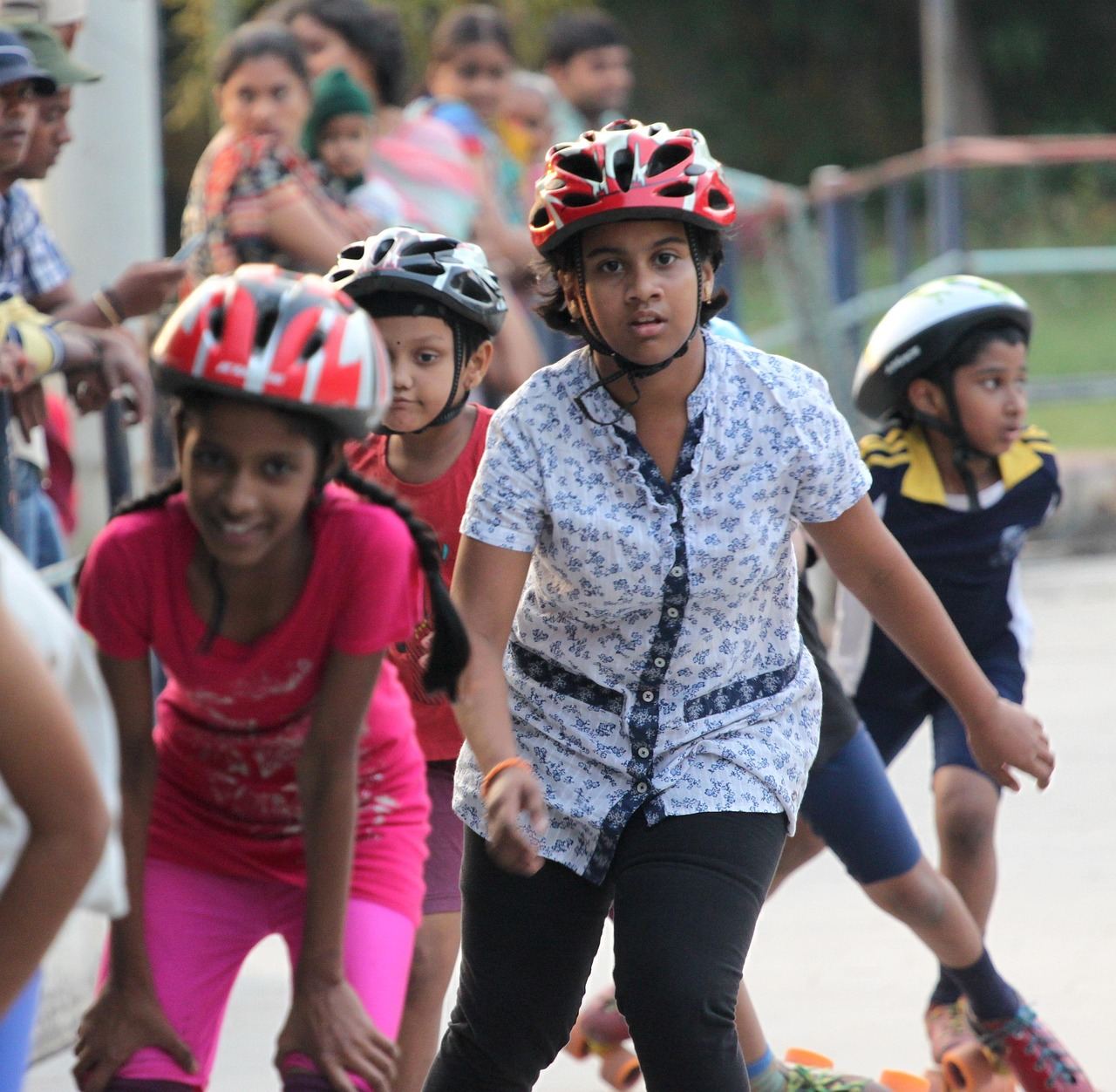
Roller sports aren't just about speed — they unlock a flow state through skill drills that keep you both focused and motivated.
Getting started with roller sports as a beginner involves simply strapping wheels to your feet and embracing the thrill of movement. Push off the ground, using your legs and body weight to build momentum. Feel the rush gliding across pavement, wood, or ice.
Roller sports demand balance, leg strength, and control. Whether you're skating, attempting roller derby, speed racing, or doing aggressive tricks, the ability to stop without falling is crucial.
Most begin by simply rolling forward. As confidence grows, you start to carve turns and find which discipline suits your style. Choose between cruising, competing, or mastering tricks.
In roller sports, participants strap on quad or inline skates and perform drills focused on balance and control, such as shifting weight between skates, executing slaloms, and practicing stops, often in community settings like rinks or parks.
Roller sports induce a flow state through skill-based drills that challenge abilities and create immersive focus, while immediate feedback from movement enhances motivation and fosters a sense of accomplishment as practitioners master sequences over time.
# Reframe Roller sports aren't about balance—they're about momentum and edge control. Most beginners waste energy fighting to stay upright when they should be learning to lean into turns and manage speed through body positioning. The wheels don't keep you stable; your ability to shift weight and use angles does. Once you stop thinking "don't fall" and start thinking "how do I direct this speed," everything clicks.
The first fifteen minutes will be a battle just to stand up. Your ankles and brain will not agree on how balance works. Legs will tremble from using muscles you didn't know you had. Holding onto a wall or railing for dear life? That's not a failure; it's how everyone starts.
Get ready for a surprising lightness when you manage three rolling strides without support. That moment feels like a small victory. A stumble will likely happen. But it won't hurt as much as you fear—it'll be more of a slow tumble than a hard fall.
By the end of the first hour, your feet will ache in new places. You'll be sweating more than you ever thought possible. What surprises most newcomers is how quickly they start planning the next chance to return.
When to start: Morning
Duration: 1 hour
Cost to try: $20
Success criteria: if you finished without falling more than twice, do session 2.
Most beginners skip the helmet and pads on casual sessions — the logic being that real falls happen at speed. But the worst beginner falls happen at low speed, when you're still figuring out balance.
Proper protective gear — helmet, knee pads, elbow pads, wrist guards — reduces injury risk by up to 85%. Wear it every session, not just the fast ones.
Ill-fitting skates are behind more "I'm just bad at this" moments than any lack of skill. If your foot is sliding around inside the boot, no amount of practice will fix your balance.
Your toes should lightly brush the front of the boot without being cramped. Wheel hardness matters too — softer wheels (lower durometer) grip better on rough outdoor surfaces, while harder wheels roll faster on smooth indoor rinks.
Leaning back feels safer — instinct says "don't fall forward." But sitting back on your heels kills your control and sets you up for a hard backward fall.
Bend your knees and shift your shoulders forward until they're stacked over your knees. Keep your back straight and your core tight. That position feels awkward at first, but it's the only one that gives you real balance.
It's tempting to skip the boring fundamentals and go straight to what looks cool. The problem is that stopping is a fundamental — and without it, speed becomes a hazard.
Nail the T-stop and plow stop before you push for speed or try any trick. Solid gliding and turning come next. Advanced moves built on shaky fundamentals just mean faster, harder falls.
Cracked sidewalks, gravel, and busy streets don't just make learning harder — they make basic movements feel impossible and turn minor stumbles into serious falls.
Start on a skating rink, an empty basketball court, or a smooth paved park path. Once your balance and stopping are solid, you can handle rougher terrain. Trying to build skills on bad surfaces just slows everything down.
Finding roller sports communities online can be tricky, as search results often miss specific platforms like subreddits or Discord servers. But official events and organizations are a great start.
For online connections, start by searching for specific communities like "roller skating Reddit" or "inline skating Discord." The RSA and World Skate sites may also have community links. Local rink websites are another resource for finding skating groups nearby.
Artistic roller skating runs on quad skates and borrows heavily from figure skating, dance, and gymnastics. Competitors choose from four disciplines: dance, figures, freestyle, and pairs.
This is the most technically demanding path if you're drawn to structured, scored performance — musicality, precision, and competitive rules all matter here.
Roller derby is a contact sport played on an oval track. Two teams send out a designated jammer. That jammer scores points by lapping opposing players while teammates block and defend.
Speed and agility matter, but derby rewards skaters who can read the pack and make fast tactical decisions under pressure. It's one of the few skating disciplines with a strong community league infrastructure for adults.
Jam skating pulls from breakdancing, gymnastics, and hip-hop. It's improvisational — you're responding to music, not following a fixed routine.
The footwork and acrobatics take real athletic ability to develop. But if individual style and rhythm matter more to you than competition, this is the most expressive path on skates.
Roller hockey is played on a rink using either quad or inline skates. The rules and format will feel immediately familiar if you've played ice hockey — the core skills transfer, but edge work on wheels is a different challenge.
Speed control and coordination take real time to develop. Best suited to skaters who want structured, sport-specific training with a clear competitive format.
Recreational quad skating is exactly what it sounds like. Sidewalks, streets, rinks — quad skates, no agenda.
Most people start here and stay here, and there's nothing wrong with that. It's the only style on this list that's genuinely accessible from day one at any age or fitness level.
Readers who enjoy this often gravitate toward Top Rope Climbing next.
For something adjacent, see Parkour.
If the texture of this appeals to you, Competitive Swimming is built on similar bones.
Skating straight with a neutral spine and level shoulders is crucial. Your speed, injury risk, and ability to learn complex moves depend on it. Beginners often lean or twist to balance, leading to a style that quickly stalls progress.
Once you glide smoothly with centered weight and steady upper body, every advanced skill becomes possible. Crossovers, backward skating, transitions, and jumps open up.
The next section explores which of these skills benefit most from proper form.
This hobby is for you if you: - You'd rather be outside moving than inside watching, even in mediocre weather - You're willing to look clumsy for 3-6 months before you feel competent at something - You enjoy community spaces (parks, rinks, trails) where you'll inevitably run into the same people repeatedly - You find falling and scraping yourself kind of funny instead of demoralizing It's probably not for you if: - You need to feel immediately skilled at a physical activity to stay interested - You prefer solo hobbies where your performance isn't observed by strangers - You have joint problems or balance issues that make you anxious rather than determined
Still looking for something to do? Browse things to do when bored for more ideas.
Beginners typically start with inline skating or quad roller skating, as both offer good stability and control for learning. Roller derby and aggressive skating require more advanced skills and are better suited for those with prior experience. Most people find inline skating easier to pick up due to its natural forward stride motion.
Basic entry-level gear—skates, helmet, and protective pads—costs between $100–$250 depending on quality and brand. You don't need expensive equipment to begin; budget-friendly options from established brands work well for learning fundamentals. Once you're committed, you may invest more in advanced or specialized equipment.
Roller sports are safe when you wear proper protective gear: a certified helmet, wrist guards, knee pads, and elbow pads. Start on smooth, flat surfaces away from traffic and obstacles, and practice falling safely to build confidence. Most injuries happen to people who skip protection or skate in unsafe environments.
Basic balance and forward motion take 1–2 weeks of regular practice for most beginners. Comfortable, confident skating typically takes 4–8 weeks with consistent effort. Mastering tricks, speed, or specialized disciplines like roller derby requires months to years of dedicated training.
Roller skating engages your legs, glutes, and core for balance and propulsion, while also working stabilizer muscles throughout your lower body. It's an excellent low-impact cardiovascular workout that builds endurance and leg strength without heavy strain on joints. Regular skating also improves balance, coordination, and hip flexibility.
Yes, roller sports are accessible to complete beginners of any age and fitness level. Start with a stable, beginner-friendly discipline like recreational inline skating, take lessons if possible, and progress at your own pace. Most people develop functional skills within a few weeks without prior experience.