BoredomBusted — Find Your Next Favorite Thing To Do
Discover hobbies, activities, places, and ideas that spark joy. Whether you're looking for something creative, active, social, or relaxing, BoredomBusted helps you find your next favorite thing to do.
Browse our hobby guides, things-to-do collections, and place ideas to never be bored again.
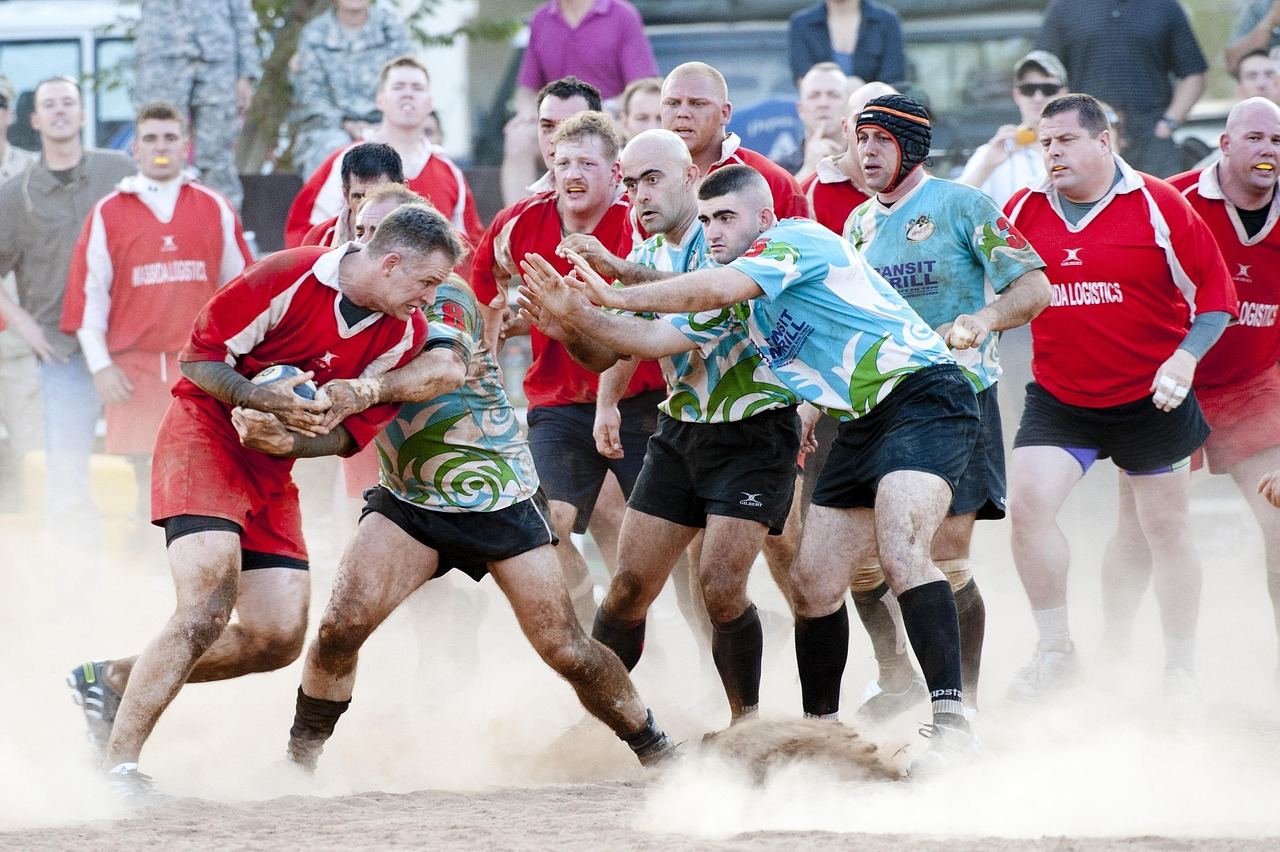
Rugby isn't just about tough tackles—it's also the surprising rhythm of skill drills that generates a flow state and maintains player engagement.
Getting started with rugby as a beginner can seem chaotic, yet it offers a thrilling blend of strategy and teamwork. Fourteen teammates lock arms in a scrum, clashing with opponents over loose balls.
Evading tackles with speed and agility, you sprint with the ball under your arm, passing just before getting brought down.
You'll run, tackle, and pass in relentless play. No pads, no breaks. Victory comes with a try, placing the ball in the end zone.
In rugby practice, hobbyists engage in solo or small-group drills that include explosive sprints, agility maneuvers, and strength-building exercises. Activities like burpees, cone drills, and ball-handling skills are performed to enhance fitness and replicate game conditions. Practitioners also execute progressive running drills and various core stability exercises to develop tackling strength an…
Rugby practice fosters a flow state through high-intensity drills, balancing skill and challenge to maintain focus. Immediate feedback from skill-based activities, such as passing accuracy and agility drills, creates a sense of mastery and accomplishment. The novelty of diverse movements and drills keeps engagement high, while the social aspect of potential team integration adds motivation, even …
Rugby isn't a sport for mindless brutes — it's strategic speed.
Players read formations, anticipate moves, and make tactical decisions without pauses. No huddle. No time-outs.
The smartest succeed in rugby because a wrong read loses your team 20 meters and momentum.
The first twenty minutes are a mix of confusion and clumsy movement. Your boots feel like weights, making every step awkward. The ball is smaller and harder than expected, slipping through your hands while everyone watches.
Colliding with someone is more painful than you expect, but you'll notice they move on quickly, unfazed. This is just how it goes.
After a few attempts, timing starts to click. You finally time a pass correctly or find yourself exactly where the ball needs to go. Suddenly, the satisfaction makes sense, despite the mud and bruises.
When to start: Morning
Duration: 1.5 hours
Cost to try: $10
Success criteria: If you complete 20 clean backward passes and 10 cone dodges without dropping the ball, do session 2.
New tacklers wait until they're almost on top of the attacker before changing their body position. By then, it's too late — the attacker has already read what's coming and adjusted.
The fix is a sharp, snapping movement close to the tackle — not a slow crouch from five meters out. Drop fast and late, and the attacker simply doesn't have time to jink around you.
Beginners see a gap closing and reach forward to close it — arms first, body trailing behind. The tackle looks committed but has almost no force behind it.
You need your feet close before you commit. Plant the same foot as your tackling shoulder — right foot for right shoulder — so your whole body drives through on contact, not just your arms.
This one feels counterintuitive. Contact happens and your instinct is to brace — so your feet stop. But a stationary tackler is easy to offload around or truck over.
Keep your feet moving after you make contact. Short, fast steps through the tackle are what actually bring a bigger player down — momentum beats mass.
Head position is where most tackle injuries come from. If your head ends up on the same side as the attacker's running direction, you're absorbing their knee or hip directly to your face.
The cue coaches use is cheek-to-cheek: your cheek presses against their backside, behind the line of momentum — never in front of it. Get that right and the attacker's movement drives them into you, not over you.
Squaring up directly in front of a runner is a gift to them. They can go left or right, and you have to guess. Good attackers will make you guess wrong every time.
Angle yourself onto their inside or outside shoulder before the tackle — never the middle. Now they only have one direction to run, and you already own the other. You're not reacting anymore; you're dictating.
Joining your local MLR or WER team is the fastest way to get involved. Teams like California Legion or Bay Area Breakers offer entry points for beginners.
For youth and community engagement, check out the Urban Rugby Championship. Hosted at venues like Family Faith Academy in Dallas, it brings people together from all walks of life.
Rugby Union is the classic, global favorite with 15 players per team and 80-minute games. Governed by World Rugby and professional since 1995, expect scrums, mauls, lineouts, and rucks.
Rugby Sevens offers a quick 14-minute game with 7 players per side. It's big in the U.S., Japan, and the Olympics
Rugby League is a speedier version with 13 players, fewer rules like no mauls or rucks, and a 6-tackle turnover. The action is intense in Australia and New Zealand.
Touch Rugby and Beach Rugby are perfect for beginners or anyone looking for less contact.
Rugby Tens and Twelves add more structure with 10 or 12 players, serving as great development formats.
Jet Skiing is a sibling pursuit and often surfaces the same kind of curiosity.
If the texture of this appeals to you, Motorsports is built on similar bones.
Another variant that pulls from the same roots is Paintball.
Constantly scanning two plays ahead changes everything. Beginners often zero in on the ball or the defender right in front of them. This leaves them reactive and isolated.
Instead, imagine where the gaps could form. Picture where your teammates will be. By doing this, you don't just follow the game—you shape it.
Pass smoothly under pressure and set up for strategic counterattacks. Reading the field makes rugby dynamic, not chaotic.
Next, explore where this skill becomes a game-changer across different play styles.
This hobby is for you if you: - Enjoy physical confrontation and don't mind getting bruised, bloodied, or sore as part of the game - Want a sport where your body type and athleticism matter more than your bank account or access to facilities - Like being part of a tight-knit team where you're genuinely dependent on other people's bodies and decisions in real time - Prefer sports with minimal gear and maximum contact over heavily padded alternatives It's probably not for you if: - You're risk-averse about serious injury or have a history of joint/impact-related problems - You need individual recognition and stats—rugby success is often invisible on a highlight reel
Looking for something lighter? Our boredom-busters guide is built for exactly that.
To start rugby, you'll need a jersey, shorts, socks, boots with studs, and a mouthguard for safety. Most clubs provide practice gear initially, so you don't need to buy everything upfront. A rugby ball is helpful for casual practice, but your club will have equipment for training sessions.
You can grasp fundamental rules and basic skills within 4–6 weeks of regular practice. Most beginners understand passing, tackling, and positioning after a month of training, though mastering strategy and fitness requirements takes several months of consistent play.
Rugby has a learning curve, but beginners are welcome at most clubs—coaches teach fundamentals from scratch. The main challenge is fitness and understanding positioning, but these improve quickly with practice. Contact skills can feel intimidating initially, though proper technique training minimizes injury risk.
Club membership typically costs $100–$300 per season, depending on location and level of play. Additional expenses include personal gear like boots and protective equipment ($100–$200 initially), though many clubs loan or provide practice gear for new players.
Key beginner rules include: the ball can only be thrown backward, penalties occur for offside or dangerous play, and scrums restart play after errors. Tackles must be below the shoulders, and possession changes through turnover penalties or the defensive team regaining the ball.
Yes, many clubs offer casual or 'touch rugby' leagues where you play for fitness and fun without full contact. Recreational sessions allow you to enjoy the sport's social and physical benefits without tournament pressure or intense competition.