BoredomBusted — Find Your Next Favorite Thing To Do
Discover hobbies, activities, places, and ideas that spark joy. Whether you're looking for something creative, active, social, or relaxing, BoredomBusted helps you find your next favorite thing to do.
Browse our hobby guides, things-to-do collections, and place ideas to never be bored again.
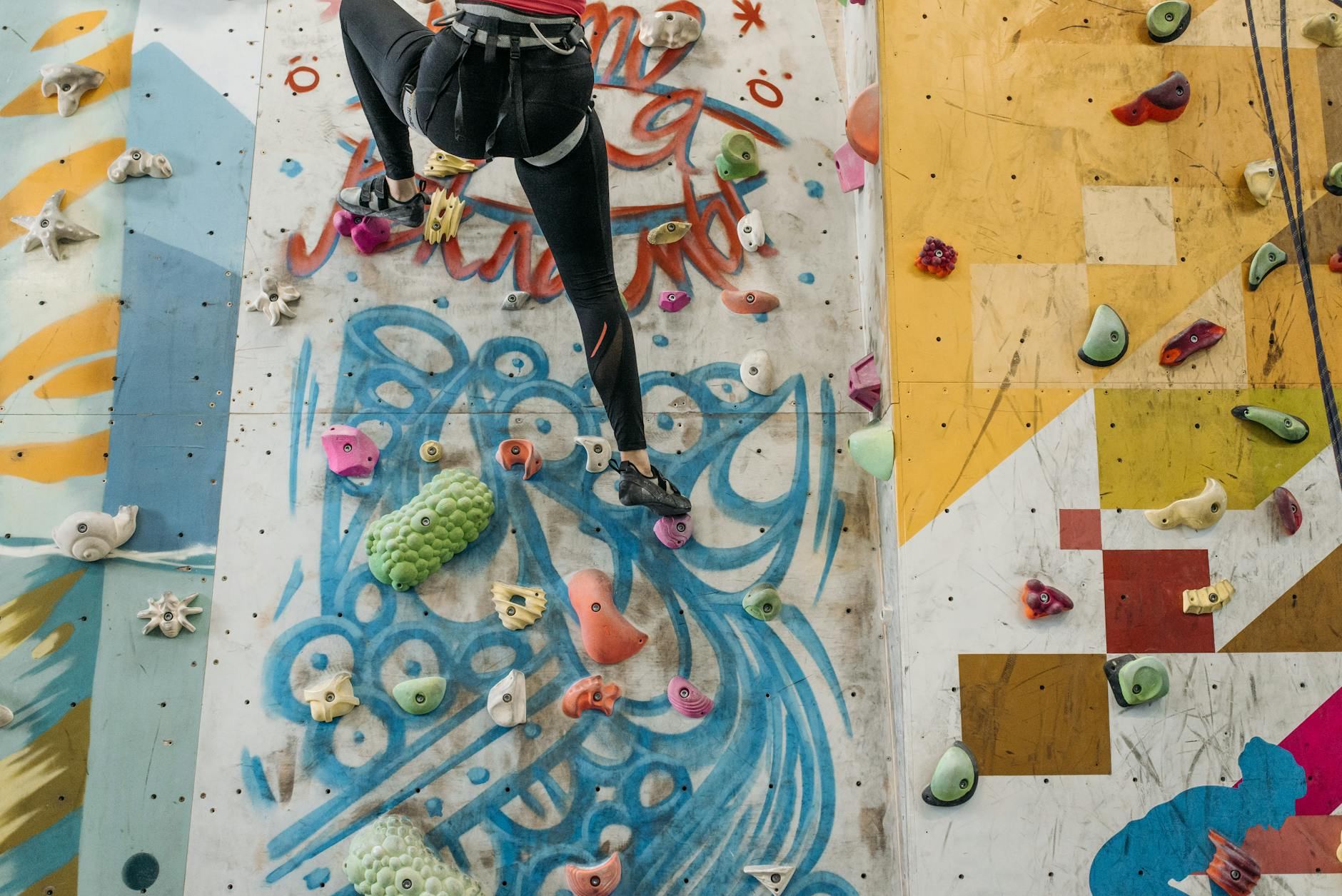
Many believe climbing is perilous for novices, but with proper safety training in beginner classes, it’s one of the safest sports around.
Getting started with sport climbing as a beginner can feel like a thrilling challenge, where your mental strategy often outpaces your physical endurance. You're solving a physical puzzle mid-air, deciding where to place your foot while your forearms burn.
The sport runs on ropes, harnesses, and walls — indoor gyms or outdoor rock faces. But the real draw isn't the gear. Every route is a new problem, and failing it teaches you something the next attempt doesn't.
That loop — attempt, fall, adjust, send — is what keeps climbers coming back. It's not about being strong. The people who progress fastest are the ones who treat each fall as data, not failure.
In sport climbing, you physically engage by tying into a harness, selecting a climbing route, and navigating upwards using various holds while managing your body position and balance. You'll actively belay a partner, communicate about safety and progress, and mentally strategize your moves, all while responding to immediate physical challenges.
Sport climbing fosters flow states through clear goals and immediate feedback, as you focus intensely on reaching holds and navigating routes. It provides incremental skill feedback with each attempt, enhancing your sense of accomplishment and mastery, while also creating social bonds through shared experiences and mutual trust with climbing partners.
You assume climbing is one bad grip away from a hospital visit. That fear makes sense — the images you've seen are of people dangling off cliff faces, not standing in a gym on a Tuesday night.
Beginner classes front-load safety instruction before you leave the ground. Harnesses, belay devices, and ropes are engineered with redundant failure points, meaning a single mistake rarely becomes a dangerous one.
Indoor climbing gyms close that gap further. Routes are graded, falls land on padded floors, and staff can spot a bad belay setup before it matters. Outdoor climbing removes those guardrails — gyms exist specifically to isolate the skill-building from the genuine hazard.
Controlled environment. Trained eyes watching you. Gear checked before every climb. By the time a new climber at a place like Brooklyn Boulders finishes their first intro session, they've had their harness inspected, practiced a simulated belay, and taken at least one supervised fall — all before the real climbing starts.
The real question isn't whether climbing is safe for beginners. It's which gear and environment actually set you up to learn without shortcuts.
Your first time on the wall feels nothing like you imagined. The holds are smaller than they looked from the ground. Your forearms pump up fast — that tight, swollen ache that makes your grip feel unreliable. You'll hug the wall instead of standing away from it, and your feet will skate off holds your eyes swore were solid. The hardest thing to accept early on is that your body doesn't yet know how to trust the rock.
Here's what catches most beginners off guard: the mental exhaustion hits harder than the physical. You'll be three moves up a beginner route, arms barely taxed, and your brain will freeze. You can see the next hold. You know roughly what to do. But committing your weight to an unfamiliar position feels wrong in a way no amount of coaching fully fixes in the first session. That hesitation is normal, and it fades — but slowly.
The other surprise is how quickly a single session drains you. Most new climbers expect to last two hours. Most last forty-five minutes before their hands stop cooperating. You won't top every route you attempt. Some routes will feel completely impossible, then suddenly click on your fourth try. That click — the moment a sequence your body couldn't figure out suddenly flows — is the thing that brings people back. It's small and specific and genuinely satisfying.
Progress over the first few months is real but uneven. Some days you'll feel stronger. Others, a route you sent last week will stump you. That inconsistency isn't a sign something's wrong — it's just how the learning curve works here. The climbers who stick with it are the ones who stop measuring sessions by whether they finished a route and start measuring by whether they figured something out. Knowing what trips beginners up most — and why — is exactly what the next section covers.
When to start: 8:00 AM
Duration: 1 hour
Cost to try: $0
Success criteria: If you reach the top of 3 beginner routes and can name the handhold, foothold, and body position that made each work, do session 2.
New climbers treat a completed route like a box to check. They top out, move on, and wonder why they're not improving. The problem is that real skill builds on the moves you almost couldn't do — not the ones you cruised through.
Go back to the route that beat you. Do it five times in a session. Each attempt reveals a different reason you're failing — your hip position, your footwork, where you're burning grip strength unnecessarily. Repetition on hard routes is how climbers jump grades. Novelty is just entertainment.
This one shows up in every beginner. Your arms feel like the obvious tool — the holds are right there, so you pull. But arm strength drains fast, and your legs can push far more weight than your forearms can ever pull.
The fix is simple to say and hard to ingrain: stand up on your feet before you reach for the next hold. If your heels are dropping off footholds, you're already defaulting to your arms. Focus on precise foot placement first — the hand reach follows naturally from a stable base.
Small footholds look unreliable, so beginners smear vaguely in the direction of the wall and hope friction does something. It doesn't. Climbing shoes grip best when you commit weight to a specific point on the sole — usually the rand just behind the big toe.
A useful drill: climb a route you can already do, but move in slow motion. Place each foot deliberately before weighting it. You'll notice how often you were guessing. Climbers who trust their feet earlier move more quietly, tire slower, and read routes faster.
There's a visible grade on every route. That number becomes a target, and targets have a way of warping focus. Beginners push toward harder grades before lower ones are actually solid — meaning they're building bad habits on a foundation that isn't there yet.
Spend more time at grades that feel slightly too easy and focus on how you're moving, not whether you finished. Clean technique on a 5.9 transfers to every harder route above it. Muscling through a 5.11 teaches you nothing repeatable.
When it's not your turn on the wall, it's easy to zone out. But watching a more experienced partner climb — even casually — is one of the fastest ways to pick up movement patterns you wouldn't find on your own.
Look for specific things while you belay: where they rest on the wall, which foot they use to initiate a move, how they position their hips before a reach. The gym is a library of technique if you're watching with a question in mind. Most beginners only read their own pages.
Your local climbing gym is the single fastest way into the community. Chains like Earth Treks, Movement, and Brooklyn Boulders run structured intro nights and open climb sessions where you'll naturally pair up with partners. The front desk staff almost always know who's looking for a belay buddy.
Online, r/climbharder and r/climbing on Reddit are active and genuinely useful. The Meetup app lists climbing-specific groups in most mid-size cities — search "climbing" plus your city and you'll find organized outdoor crags trips and gym socials.
The American Alpine Club (AAC) maintains a directory of local climbing coalitions organized by region. Most regions also have a dedicated Access Fund chapter — these groups organize guided crag days specifically for newer climbers. Search the Access Fund's website for your state to find the nearest coalition and their scheduled outdoor days.
Mountain Project doubles as a social layer — each crag page has a comment section where locals post conditions, beta, and sometimes carpooling offers. It's not a forum, but it functions like one for outdoor climbing.
Bouldering strips sport climbing down to its purest form — short, powerful routes with no ropes, no harness, and no partner required. The walls are lower, and thick foam pads cover the floor beneath you.
It's the fastest entry point into the sport. If you want to show up solo, climb for an hour, and leave, bouldering is your version of this hobby.
Top-rope climbing uses a rope anchored at the top of the wall, so falls are short and controlled. The route stays accessible long enough to actually think through the moves.
This is the format where most beginners build real technique — not because it's easier, but because the safety margin lets you experiment without fear shutting down your thinking.
Lead climbing is sport climbing in its classic form. You clip the rope into protection as you ascend, which means falling takes you past your last clip before the rope catches. The stakes feel real because they are.
Climbers who want the mental pressure — not just the physical puzzle — eventually end up here. It requires a lead belay certification and genuine comfort with falling.
Outdoor sport climbing uses the same rope-and-harness system, but the routes are bolted into natural rock faces. The holds aren't engineered. The grades aren't color-coded. Wind and temperature factor in.
This version rewards climbers who've already built solid gym fundamentals and want the environment to stop being predictable. Most people use gyms to train and crags to climb.
Competition-style training focuses on structured sessions — specific grading targets, hangboard work, and deliberate weakness training. It fits climbers who want measurable progress, not just enjoyable movement.
If you're the type who tracks progress and gets more motivated by data than atmosphere, this structured approach will keep you engaged far longer than casual sessions.
If you want a related angle, Ice Climbing is the natural next stop.
Top Rope Climbing lives in the same world — different mechanics, similar appeal.
Another variant that pulls from the same roots is Free Solo Climbing.
The thing that separates climbers who improve from climbers who plateau is reading a route before they touch it. Not grip strength. Not flexibility. The climbers who get better fastest are the ones who stand at the bottom and solve the puzzle before their feet leave the ground.
Most beginners treat a route like a ladder — they just grab the next hold and figure it out from there. That works on easy grades. It falls apart the moment routes start demanding specific body positions, weight shifts, or a move sequence that only works in one order. By then, you're already pumped, already guessing, and already falling off moves that were never actually hard.
Route reading is the habit of tracing a sequence from the ground — identifying the crux, planning your rest positions, deciding where your feet go before your hands do. It feels slow at first. It isn't. Ten seconds of stillness at the bottom saves you three wasted attempts at the top.
This is also what makes climbing genuinely hard to get bored with. Every new route is a new problem to read. The feedback is immediate — if your sequence was wrong, the wall tells you exactly where. The next section covers how to pick routes that actually build this skill, instead of just burning your arms for an hour.
Give sport climbing four sessions over two to three weeks — enough to get past raw awkwardness and actually feel the loop of attempt, fall, and adjust. That's the minimum data you need to make an honest call.
You finish a session with shredded fingertips and immediately start eyeing the route you couldn't crack. The frustration of falling feels less like failure and more like unfinished business. If that's where you land, book a belay certification class and start climbing with a consistent partner — the progress from here compounds fast.
Indifference after four sessions usually means you haven't hit a route that genuinely stumped you yet. Ask a gym staff member to point you toward a problem just outside your current grade — one that takes multiple attempts to crack. That specific friction is what separates people who tolerate climbing from people who get absorbed by it. If you solve it and still feel flat, the sport probably isn't your fit.
If you're watching the clock every session and the belay dependency feels like a burden rather than a bond, that's real information. Climbing is fundamentally a two-person contract — if shared reliance drains you rather than motivates you, solo movement sports like bouldering, trail running, or cycling will serve you better. The fitness drive is the same; the social structure is completely different.
You're lying in bed replaying a move sequence you couldn't stick — visualizing your foot placement on a hold you've never actually touched. When the problem follows you home uninvited, you're already a climber.
No, climbing improves fitness over time; it's suitable for various fitness levels.
Bouldering involves short climbs without ropes, while sport climbing uses ropes and harnesses.
Join climbing groups at your gym or search for local climbing clubs online.
Yes, with proper training and safety equipment, climbing is a safe sport.
Wear comfortable, flexible clothing that allows full range of motion.