BoredomBusted — Find Your Next Favorite Thing To Do
Discover hobbies, activities, places, and ideas that spark joy. Whether you're looking for something creative, active, social, or relaxing, BoredomBusted helps you find your next favorite thing to do.
Browse our hobby guides, things-to-do collections, and place ideas to never be bored again.
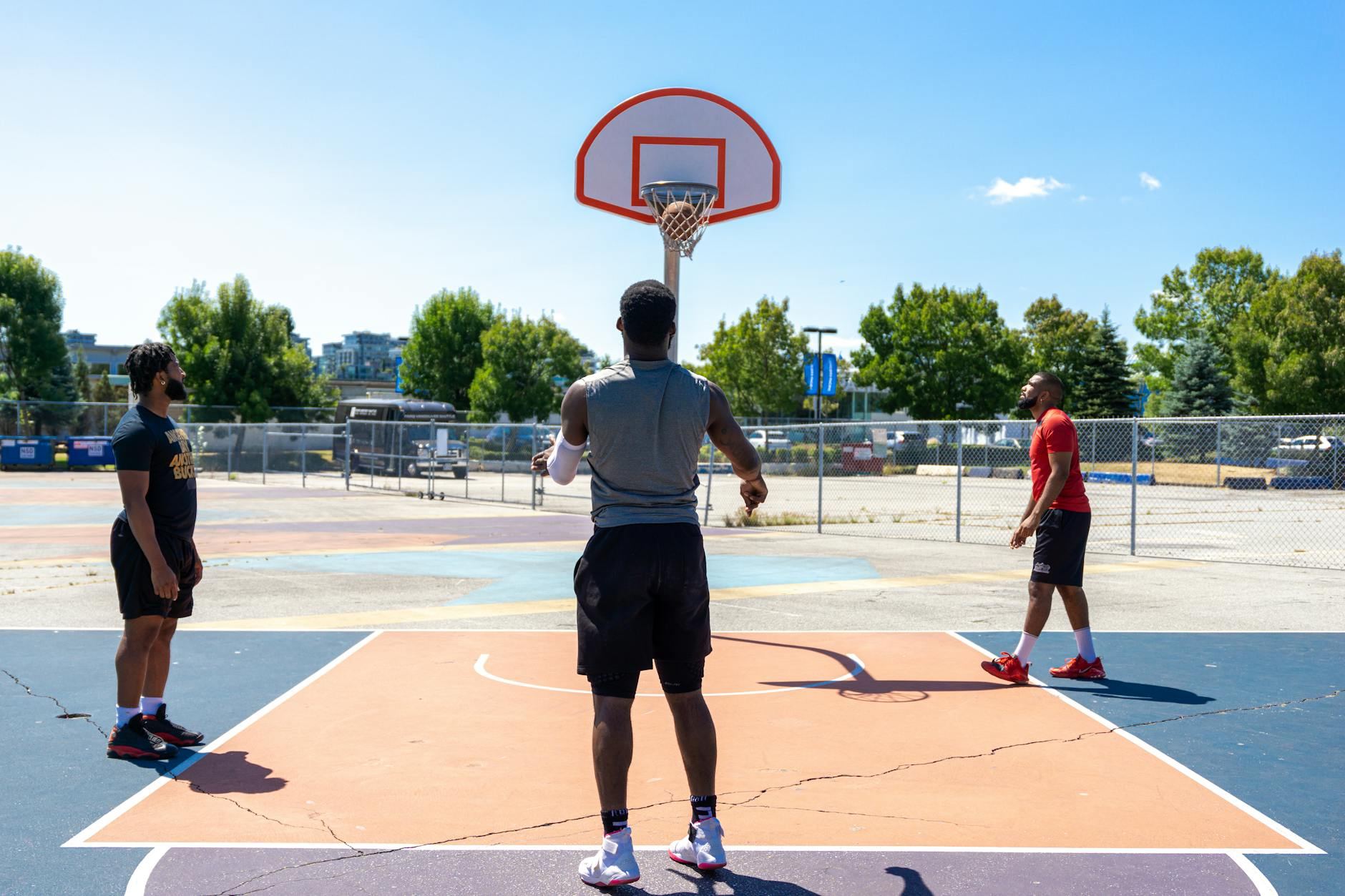
Street basketball isn’t just chaos; it sharpens every critical skill in real-time, teaching you to read defenses and improvise without a coach's script.
Getting started with street basketball as a beginner is all about enjoying casual games outdoors with friends and strangers alike. Street basketball is pickup ball played outdoors – usually on public courts, with whoever shows up, no refs, no uniforms, no fixed teams.
Games are self-organized and self-policed, which is what separates it from recreational league basketball:
Street basketball involves informal pickup games on outdoor courts, where players engage in dynamic drills such as dribbling, pivoting, and executing deceptive moves while competing against varying opponents. Participants perform sequences like lateral shuffles, explosive core rotations, and live-ball moves, transitioning quickly between exercises to mimic the fast pace of real games, all while e…
Street basketball fosters a flow state through its unpredictable gameplay, where players must adapt quickly to changing dynamics, leading to deep engagement and enjoyment. The immediate feedback from skill improvements, social camaraderie, and the opportunity for creative expression all contribute to a sense of accomplishment, effectively combating feelings of boredom and isolation.
You think street basketball is the disorganized little brother of the real thing. No refs, no plays, no structure – just guys chucking threes and trash-talking until someone's mom calls them in.
That assumption is exactly why most people never try it – and why the ones who do can't stop.
Watch someone who grew up on the blacktop step into an organized league. Their footwork isn't flashy – it's precise, built from years of solving problems no coach scripted for them.
The next question isn't whether it's worth your time. It's whether you're ready to actually show up – and what you need before you do.
Watching street basketball and playing it are two completely different sports – one happens in your eyes, the other happens in your lungs.
The crossovers look effortless on YouTube. On asphalt, your handle breaks down the second anyone gets close. You're winded after two possessions, the court feels enormous, and everyone reads you instantly.
Week one, you're spending most of your mental energy just not losing the ball. Week two, you start recognizing when you're about to make a bad pass – right after you've already made it. By week three, one or two possessions go exactly how you planned, and those are the ones you'll remember the whole drive home. Week four, you're still the weakest player in most runs – but you're no longer the most obvious target on defense.
Street ball runs have a foul-call culture, and getting it wrong makes you radioactive faster than anything else on the court. Call too much and you get labeled soft. Never call anything and you just get fouled harder.
Watch one full run before you play. See how often the regulars call fouls, and match that register exactly.
Quit.
Come back anyway.
Come back again. The game only starts making sense around session seven or eight – and almost nobody who quits at session three ever finds that out.
When to start: Early morning
Duration: 1 hour
Cost to try: $0
Success criteria: If you can dribble 10 times, play one 3-on-3 game, and score a basket or assist once on a local court, do session 2.
Slapping the ball with a flat hand seems secure, but control evaporates under pressure. You need a different approach to maintain control.
Keep your hand slightly cupped and use your fingertips. Think of drumming a table impatiently. This gives you better touch and control over the ball.
Catching and stopping means defenders have time to react. Want to stay unpredictable?
Decide your next move before the ball arrives. Read the court while the ball is still in the air. This keeps you a step ahead.
Step-back threes look cool, but adopting Steph Curry's range without the skills? Not smart. You need to earn your distance.
Find your true range by starting close and moving back gradually. Only step back when you hit 7 out of 10 consistently from current spots.
Guards take over the playground, tempting big players to emulate them. But ignoring post moves means missing easy points.
Practice a drop-step finish on both sides before each game. It becomes a reliable tool in your live play.
Hot streaks can trick you into poor decisions. Forcing shots or changing what worked breaks your momentum.
Stick to what got you those points in the first place. Keep taking the same shots instead of chasing tougher ones.
Street basketball thrives at public outdoor courts, rec center gyms, and urban parks. These places buzz with games all day long, minus the referee whistles.
The fastest way to join in? Walk up and say you're trying to get runs in. Those five words lead to a spot in the next game faster than any app or website.
No teammates, no hiding – just you and the other player. Reads, counters, and pressure are everything here. Best for anyone looking to sharpen individual skills quickly.
Three-on-three is the worldwide pickup staple. Learn spacing and ball movement like never before. Perfect for players moving up from solo drills to team dynamics.
Play for yourself in 21 (or Hustle). Make baskets, shoot free throws, and reach 21 points first. Chaotic but great for clutch shooting and uneven groups.
Knockout, or Around the World, is a no-defense, no-dribble game. Stand in line and hit the same shots as everyone else. Ideal for beginners craving competitive pressure without live defense.
Half-court 5-on-5 features full teams in half the space. Possessions are fast, and post play is less crucial. Perfect for larger groups wanting a real-game feel on one hoop.
A close neighbor worth considering: 3x3 Basketball.
Readers who enjoy this often gravitate toward Dragon Boat Racing next.
Beach Soccer is a sibling pursuit and often surfaces the same kind of curiosity.
Most beginners obsess over shooting form, spending hours on jumpers nobody's guarding. The real plateau is simpler: they don't know how to read the defense before the ball arrives.
The key is deciding your move before you receive the pass. Scan the defender's hips and feet ahead of time, so your action is set the moment you catch the ball. It's about being proactive instead of reactive.
Street ball is a rapid, unpredictable game. There's no structured play; hesitation means losing possession. When you read the defense early, your first step is instant, making defenders think twice about challenging you. Without that preparation, a pause gives the opponent the advantage.
Eight sessions in 30 days — roughly two per week, spaced enough to get past the awkward phase without burning out before your body adjusts to the concrete.
Street ball has a learning curve that's more social than technical. You need enough reps to figure out whether you like the environment, not just the sport.
If you keep showing up early and staying late, that's not enthusiasm about exercise — that's street basketball pulling you in specifically. Start learning your local courts, find a consistent crew, and lock in one skill per week.
If you went, it was fine, and you didn't think about it afterward — that's usually not indifference. That's a mismatch between what you imagined and what the actual experience delivered. One more week won't change it.
If you dreaded going, counted minutes, or left feeling worse than when you arrived, don't talk yourself out of that feeling. Street basketball rewards people who genuinely want to be in that space — it won't grow on you if the environment itself feels wrong.
You find yourself watching pickup game footage — not NBA highlights, but grainy court videos. That specific pull toward the street version of the game — the crossovers, the trash talk, the whole unpolished thing — is the clearest signal this hobby has something real for you.
Chronic knee, ankle, or hip issues are a real structural problem here. Concrete is unforgiving in a way that gym floors aren't — this isn't something to push through.
If the nearest active court requires a 40-minute commute, the friction will kill your consistency before the habit forms. Access isn't just about courts existing — it's about courts with regular pickup culture.
If you need predictable, structured competition to stay motivated, street ball's informal chaos will frustrate you more than excite you. That's not a flaw — it's a different need, and organized leagues exist for exactly that reason.
Sometimes you just need something for the next ten minutes — that's what things to do when bored is for.
Street basketball is typically played 3-on-3 with fewer players and a faster, more improvisational style focused on individual skill and creativity rather than structured team plays. Games are usually half-court, making them quicker and more intense, with an emphasis on dribbling, crossovers, and one-on-one moves.
A standard street basketball game usually lasts 15–30 minutes depending on the rules and skill level of players. Most pickup games play to 11 or 15 points, making them shorter and more accessible than full-court basketball.
You'll need a basketball, comfortable court shoes with good ankle support, and access to a court—most parks have public courts available for free. Lightweight, breathable clothing is ideal for the fast-paced nature of the game.
Street basketball is beginner-friendly because 3-on-3 play gives you more touches and faster learning opportunities than traditional 5-on-5 games. Start by working on basic dribbling, passing, and court awareness; the community is usually welcoming to newcomers willing to learn.
Most public parks have outdoor courts where players gather for pickup games, especially on weekends and evenings. You can also join local basketball leagues, check social media groups for game schedules, or ask at nearby recreation centers.
Ball-handling, quick decision-making, and one-on-one scoring ability are critical since 3-on-3 play emphasizes individual creativity and improvisation. Court awareness and defensive agility also help you stay competitive against skilled players.