BoredomBusted — Find Your Next Favorite Thing To Do
Discover hobbies, activities, places, and ideas that spark joy. Whether you're looking for something creative, active, social, or relaxing, BoredomBusted helps you find your next favorite thing to do.
Browse our hobby guides, things-to-do collections, and place ideas to never be bored again.
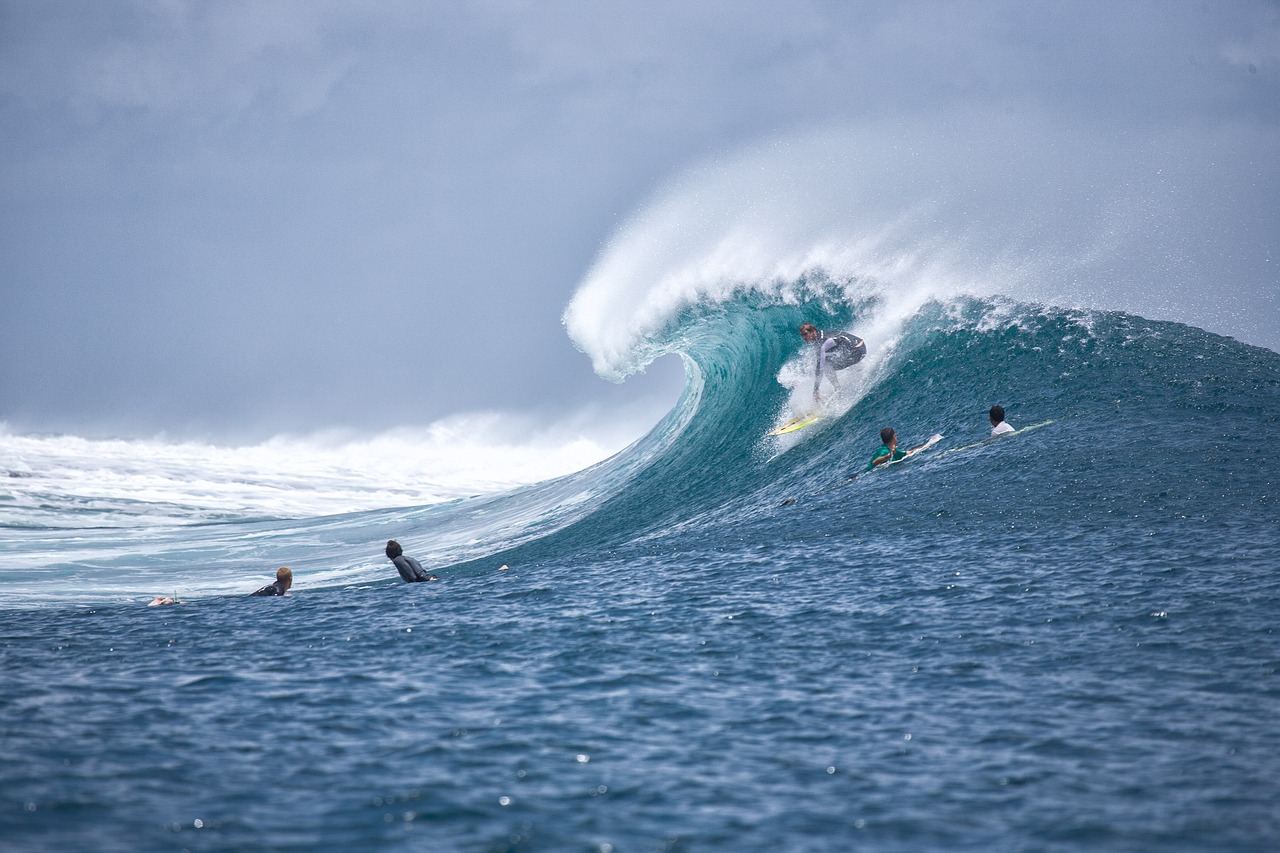
Surfers don’t just ride waves — they’re mastering complex calculations of swell and tides while developing paddling endurance that gym workouts can’t touch.
Getting started with surfing as a beginner involves understanding how to ride ocean waves on a board — you paddle out past the break, catch a wave's energy as it rises, and use your body weight to steer down the face.
Unlike skateboarding or snowboarding, the terrain is alive and never repeats.
Every wave is a different problem.
Surfing involves paddling out on a surfboard, positioning to catch waves, executing a pop-up to stand, and dynamically balancing while maneuvering down the wave face through turns and cuts, often culminating in kicking out or wiping out.
Surfing induces a flow state by matching physical skills to the unpredictable ocean, offering immediate feedback from each ride, a sense of accomplishment through overcoming challenges, and creative expression in maneuvering, all within a socially engaging environment.
You think surfing is a vibe. A lifestyle. A thing for beach kids without real jobs.
But it's not just about living carefree by the ocean. It's about skills and challenges that go beyond the beach.
Experienced surfers aren't relying on intuition alone. They're engaging in complex calculations involving swell, wind, and tides before even touching their boards.
Each session offers unique conditions, so surfing becomes a problem-solving adventure rather than just a physical workout.
Paddling, not just riding waves, dominates your time in the water. It develops endurance that workouts in the gym simply can't match.
A friend who started surfing at 34 felt like he was learning to stand up. But really, he was learning to pay attention.
Wave timing and body positioning rewired his mindset. It wasn't just about the ocean anymore.
Physical skills are crucial, but something more keeps surfers hooked for life. The next section will dig into that deeper connection.
Watching surfing might seem like a dance of balance and flow.
Actually doing it? It's more like being pounded by waves while hoping your board doesn't collide with your face.
Your body simply doesn't know what stable means on moving water.
It looks effortless, like one smooth pop-up. In reality, it feels like swallowing water and getting tangled in your board leash. Your pop-up turns into a fall, and your shoulders ache from paddling.
Expect wipeouts. Nothing works at first, and you start plotting your retreat to the parking lot.
This is when most people quit. But it's also the moment many surfers remember as their toughest turning point.
Learning takes determination. Next, let's explore the mistakes that prolong this frustrating phase.
When to start: Early morning
Duration: 1.5 hours
Cost to try: $50
Success criteria: if you finished without standing up on the board, do session 2.
Shortboards look like what surfers ride in videos, so that's what beginners buy – but a shortboard has almost no float, which means you'll spend every session sinking instead of surfing.
Rent a foam longboard (8–9 feet) for your first three months; the extra volume does the paddling work while you figure out everything else.
The wave hasn't fully picked you up yet, and you're already standing – so you're essentially jumping to your feet on flat water, then sliding out the back.
Wait until you feel the board accelerating on its own before you move; that surge is the wave doing the work for you.
It feels more aerodynamic. It also means you can't see the wave coming, where you're positioned, or the other surfers you're about to collide with.
Keep your chin up and eyes forward while paddling – your body will trim itself naturally once you stop staring at the deck.
Beginners sit or lie toward the tail because it feels stable – but it tips the nose up, kills your paddle speed, and means waves pass right under you.
Find the board's centerline sticker or sweet spot by lying flat; your body should be centered so the nose sits just 2–3 inches above the waterline.
The intermediate-looking wave is only a 10-minute walk from the beginner beach, and the ego does the math.
Bigger, faster, hollower waves punish bad technique every single time – stay on slow, crumbling beach breaks until your pop-up is automatic, not something you're still thinking about mid-wave.
Surfing happens in one place: the ocean. The break type matters — beach breaks are forgiving, reef breaks will punish a beginner fast, and point breaks fall somewhere in between.
Tell whoever's running the session that you've never surfed — or that you're still in the whitewash stage. That one sentence gets you a foam board, puts you in the right group, and keeps you out of a lineup where you'd be a hazard.
You're not behind. You're just skipping two hours of frustration on the wrong equipment.
Longboards run 9 feet and up – they're thick, stable, and catch waves that shortboards completely ignore. This is the clearest on-ramp for beginners, and plenty of experienced surfers never leave it. Expect to pay $400–$800 for a decent used log.
This is what you picture when you picture surfing – tight turns, steep drops, aerial tricks. It's high performance and high consequence. It rewards athletes who've already spent real time on a longboard, not people starting from scratch.
You ride prone – chest-down on a foam board – instead of standing. Easier to start, cheaper to gear up, and still genuinely fun in small surf. Best for people who want ocean time without the multi-month learning curve.
A hydrofoil lifts the board off the water entirely, letting you ride the energy beneath a wave rather than its face. It looks effortless. It is not. Gear costs run $1,500–$3,000+, and you need solid surf fundamentals before touching one.
This one starts on the sand – you drop the board into shallow wash and ride back toward the shore break. It builds wave-reading instincts and costs almost nothing to try. Not a replacement for surfing, but a useful and underrated companion habit.
Another variant that pulls from the same roots is Free Solo Climbing.
For something adjacent, see Whitewater Rafting.
If the texture of this appeals to you, Target Shooting is built on similar bones.
Most beginners spend months chasing bigger waves and longer boards, thinking progression is about conditions.
The real ceiling is their pop-up – specifically, the timing of it.
The skill is reading the wave's push before you stand.
Not standing when the wave arrives – standing in the half-second window when the water beneath you accelerates forward and actually carries your weight.
That acceleration is the signal.
Most beginners stand too early (when paddling hard) or too late (when the lip is already pitching).
Hit that window and the wave does the work.
Miss it and you're fighting physics every single time.
Once you can sense that push and time your pop-up to it, you stop muscling rides and start actually surfing.
Your lines get cleaner, your balance stabilizes, and steeper waves stop terrifying you.
Without it, a better board or more paddle fitness just means falling faster on bigger waves.
Commit to 8 sessions over 30 days. That's roughly twice a week – enough to get past the "everything is chaos" phase and into something resembling pattern recognition.
Fewer than that and you're not testing surfing. You're just testing whether you like being cold and confused.
You're watching surf clips at 11pm – not the highlight reels, but the instructional ones about foot position and wave reading. That low-level obsession with the mechanics is the actual green light. Surfing rewards people who think about it when they're not doing it.
If surfing still makes sense after being honest with yourself here, the resources section has what you actually need to start – without wasting money on gear that won't survive month two.
Still looking for something to do? Browse things to do when bored for more ideas.
Most beginners can catch waves and stand up within 2–4 lessons, though developing solid technique and confidence takes 3–6 months of regular practice. Progress depends on water conditions, natural athleticism, and how frequently you get in the water.
You'll need a surfboard, wetsuit (depending on water temperature), and access to waves. Most beginners rent equipment from local shops rather than buying, which costs $15–30 per session. A lesson from a certified instructor is highly recommended to learn proper technique safely.
Yes, you should be a comfortable swimmer since surfing requires basic water confidence and the ability to handle currents and paddling. If you're not confident in the water, take swimming lessons first before attempting surfing.
Lessons typically run $50–100 per hour with an instructor. Renting a beginner board and wetsuit costs $15–30 per day, or you can buy a used beginner board for $200–400. If you commit long-term, monthly board rental packages offer better value.
Surfing builds full-body strength, balance, and core stability while improving focus and ocean awareness. It also cultivates mental resilience and mindfulness as you learn to read waves and adapt to constantly changing conditions.
Surfing carries some risk of injury (sprains, cuts, wipeouts), but these are mostly minor for beginners in calm conditions with proper instruction. Wearing a leash, starting in beginner-friendly waves, and using protective gear significantly reduce injury risk.