BoredomBusted — Find Your Next Favorite Thing To Do
Discover hobbies, activities, places, and ideas that spark joy. Whether you're looking for something creative, active, social, or relaxing, BoredomBusted helps you find your next favorite thing to do.
Browse our hobby guides, things-to-do collections, and place ideas to never be bored again.
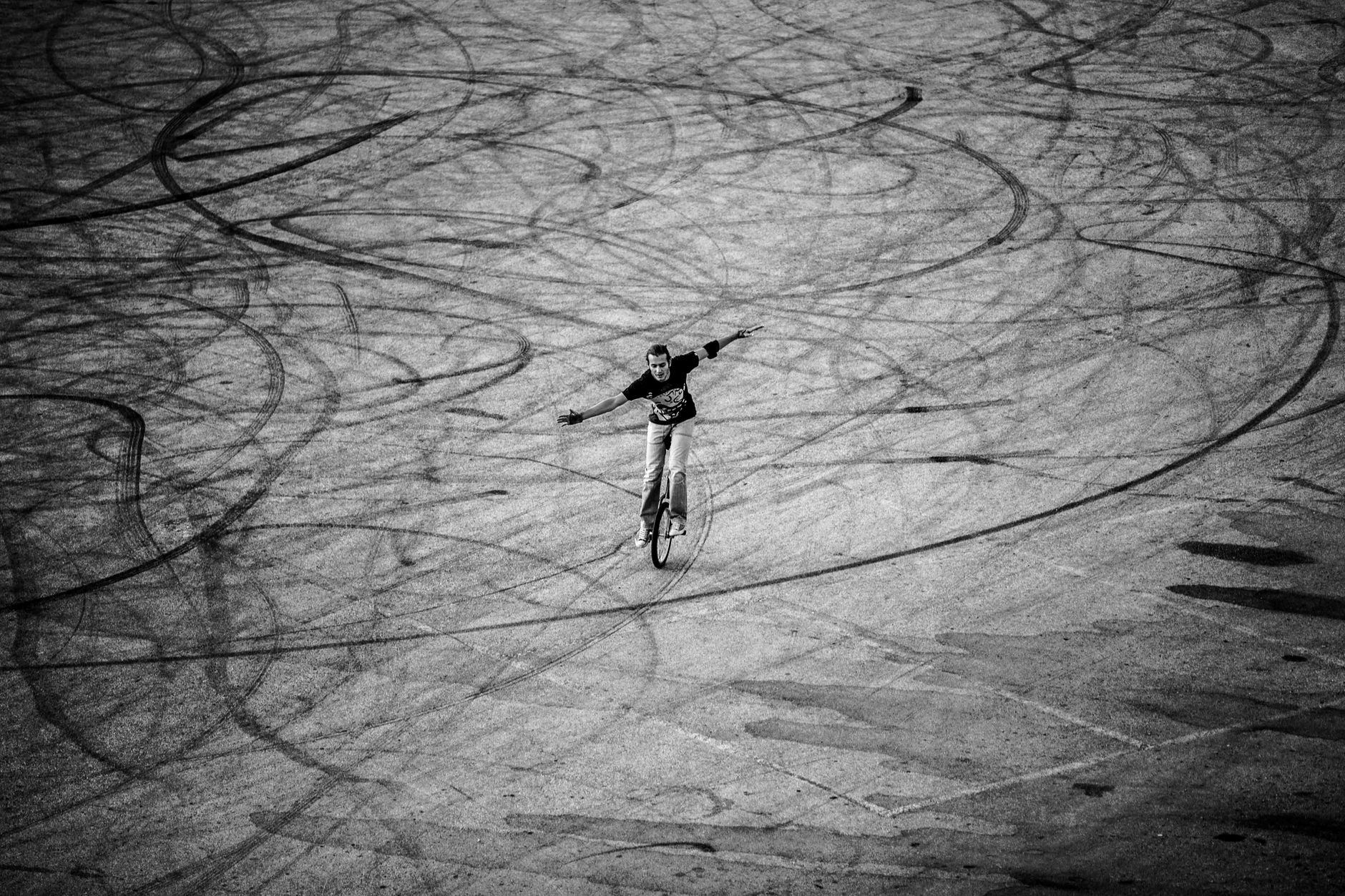
Unicycling feels impossible for the first several hours of practice, then your body gets it and rarely forgets. The hard part is the plateau, not the balance.
A unicycle is one wheel, a seat, and a pedal on each side. There is no freewheel, so the pedals turn whenever the wheel does. Staying upright means constantly moving the wheel back under your hips, which is the whole sport in one sentence.
A real session is simpler than it sounds. You find a smooth, flat spot with something to hold, like a fence, a hallway, or a tennis court wall. You spend 20 to 40 minutes mounting, wobbling, stepping off forward onto your feet, and trying again, adding a few pedal strokes each time.
Once you can ride, the hobby splits into branches. Some people stay on 20-inch wheels for tricks and games, others take 24- to 29-inch wheels onto trails, and a few cruise across town on 36-inch wheels. Every one of them started in a parking lot, staring at their feet, so that is where we start too.
Unicycling is riding a one-wheeled cycle with a seat and cranks attached directly to the wheel. Because the pedals always turn with the wheel, you balance by speeding up and slowing down. You learn on flat ground with a wall for support, then branch out.
Unicycling demands your whole attention, so a restless or numb mind has no room to wander. Progress shows up in feet, then yards, then miles, which gives you honest small wins. The learning curve is hard enough to feel earned and short enough to see results.
Most people file unicycling under circus acts and parade novelties. The clown on the tiny wheel is real. He is also the shallow end of a deep pool.
The sport has its own national and international bodies. The Unicycling Society of America supports clubs and national competition, and the international Unicon convention gathers riders for freestyle, racing, trials, hockey, and downhill events. This is a full sport with rulebooks and a competitive scene, not a gimmick.
Muni, short for mountain unicycling, is the part that surprises people. Riders take fat-tired 24- to 29-inch wheels down singletrack, over roots, and across rock gardens. A unicycle has no gears, no coasting, and no second wheel to catch you, so skill shows fast.
It also isn't a talent thing. The first hurdle is steep, and then the slope eases. Riders on the unicyclist.com forums commonly report going from can't ride to can ride in roughly 10 to 20 hours of practice, though some adults take much longer, spread across a few weeks.
Session one is mostly falling off. Not dramatic falls, just the unicycle shooting out behind you while you step down onto your feet. That is the correct way to bail, and learning it early makes everything less scary.
Expect the first 20 minutes to be mounting against a wall, pedaling two or three strokes, and grabbing for the fence. Your thighs will be tired, your hands will cramp from gripping, and your backside will complain. Spoiler: the soreness is normal and fades within a couple of weeks.
Your brain has stopped being surprised and started being annoyed. You'll get five to ten pedals, then lose them. This plateau is where most people quit, usually right before it breaks.
Many learners get a first unsupported ride of 10 to 30 feet somewhere in here. It feels like a fluke, and for a while it is. The wheel starts feeling like part of you around the 5 to 10 hour mark.
Wear a helmet and wrist guards from minute one. Learn on smooth pavement or a gym floor, away from traffic, stairs, and gravel. Flat-soled shoes and a helper to spot you for the first session are worth the minor embarrassment.
When to start: A dry afternoon or evening when you have 30 spare minutes and no audience
Duration: 30 min
Cost to try: Free if you borrow a unicycle; a beginner model is about $160–$190
Success criteria: If you can mount against the wall, pedal five times in a row, and still want to try again, do session 2.
Looking down feels natural, because the thing you're scared of is down there. It pitches your whole body forward and turns every ride into a fall.
Pick a spot 15 feet ahead, like a tree or a door handle, and ride toward it. Your eyes steer your body, and your body steers the wheel.
A low seat makes your knees bend and your legs tire in minutes. Your leg should be almost straight, with a slight bend, when the pedal is at its lowest point.
Raise it until that's true, then adjust a quarter inch at a time. Most beginners find the right height feels slightly too high.
Hanging on the fence with your full weight teaches you to lean on something that won't be there later. Use the fence as a light touchpoint, and let your fingertips do the work.
Wean yourself off it by letting go for one pedal, then two, then five. Learners who let go early get riding sooner.
Wrist guards and a helmet look like overkill for a slow-speed hobby. Then your first fall lands on an outstretched hand. Wrist fractures are the classic unicycling injury, and they're the most avoidable.
Add knee pads if you plan to ride trails, plus shin guards once you move to pinned pedals, because the pins bite. Gear costs less than one urgent care visit.
Rough ground changes how the wheel rolls, and a slope changes how it wants to roll. Learning on a smooth, flat, empty surface cuts your practice time.
Tennis courts, empty parking lots, school gyms, and basketball courts all work. Ask permission before you borrow one.
Unicyclists are a small scene, so everyone who shows up gets noticed. That works in your favor. Riders love teaching a beginner, and one tip from someone who learned last year is worth ten videos.
The Unicycling Society of America is the national membership group, and the International Unicycling Federation organizes Unicon, the big world gathering. Both are good places to find rules, event info, and local club leads. Search either name plus your state or city.
Start with r/unicycling on Reddit, where people post club meetups and answer beginner questions daily. Then search Meetup and Facebook for unicycle, juggling, and circus arts groups in your area. The three overlap heavily, and juggling clubs often include a few unicyclists.
Check university clubs, community college recreation departments, and circus schools next. Many circus schools run unicycle classes for adults. Parks departments sometimes host open gyms or youth unicycle clubs.
Ask at local mountain bike shops and trail associations. Many regions have a few muni riders who ride regularly, and they tend to be friendly to newcomers. Never ride a trail you don't know alone at first.
Once you can ride, the branches open up. Pick the one that matches why you started.
Freestyle uses a 20-inch wheel. You'll learn idling, backward riding, hopping, and routines. It's the closest thing to a performance art with a skill tree.
Muni uses 24-, 27.5-, or 29-inch wheels with wide tires and a strong frame. You ride singletrack, roots, and rocks. It's the most intense branch, and also the one with the most injuries, so start on mellow trails.
Larger wheels, usually 29 or 36 inches, cover ground faster. Cranks and pedals are tuned for longer rides. Check local laws before riding on roads.
Trials is hopping a unicycle over obstacles, like logs, boulders, and pallets. It uses strong frames and small wheels. It's balance and precision with a weirdly addictive puzzle feel.
Unicycle hockey and basketball use 20- or 24-inch wheels and are played in gyms with real teams. They're a fast way to meet people and get better at tight turns.
Beginners think the problem is balance. The real problem is that they pedal at the wrong moments. Your pedals are how you steer the wheel back under you, and speed is a form of balance.
When you start tipping forward, pedal forward to catch up. When you lean back, resist the pedals to slow the wheel. A slow, stiff ride falls over, while a steady, slightly brisk one stays up.
Mount against a wall, then ride toward a cone or water bottle about 10 feet away. Pick a spot on the far wall, not the cone, and keep your eyes there. Count strokes out loud, and stop only when you've reached 10 or you fall off.
Side-to-side wobble is normal, and most of it comes from your hands. Hold your arms out like wings, keep your hips level, and let the unicycle swing under you. Your upper body should stay quiet while your legs do the talking.
Do three or four blocks of 10 minutes with real rests in between. Tired legs teach bad habits. Several short sessions a week beat one marathon.
Commit to 12 sessions in 30 days. That's three a week, each 20 to 30 minutes, which is enough repetition to see whether the wheel starts to feel like yours. Skipping weeks doesn't count.
You can ride 50 feet or more and you want to ride farther. The hobby fits. Buy your pads if you haven't, find a club, and decide which branch looks fun.
You can ride a few strokes, and you're getting better each week. That's slow but normal, so extend the test by two weeks. Plenty of riders take 10 to 20 hours to ride confidently.
You're not improving, and each session feels like a chore. That's useful information too. Juggling or skateboarding can give you the same balance-and-learning rush with less frustration.
Do you keep thinking about it between sessions? Replaying the mount, watching muni videos at midnight, wondering if a 24-inch wheel would help. That is what this hobby feels like when it fits, and it's the best predictor we know.
Most adults need somewhere between 5 and 20 hours of practice, usually spread across two to four weeks. Kids often learn faster. Short sessions several times a week work better than one long one, because tired legs teach bad habits and fatigue slows everyone down.
Yes, harder than a bike, because there's no coasting, no handlebars, and no second wheel to catch you. But the learning curve is short and predictable. Most people who keep practicing for a few weeks can ride, and the skill rarely fades once it clicks.
A 20-inch wheel is the standard first unicycle for most teens and adults. Kids under about 10 often start on 16-inch wheels. Larger 24-inch and 29-inch wheels make more sense after you can already ride, because they suit trails and distance but feel less forgiving to learn on.
It's lower-speed than cycling, but falls happen often, and wrists, knees, and ankles take the hits. A helmet and wrist guards cut most of the risk while you learn. Trail riding adds more, so add shin guards, ride with other people, and start on easy terrain.
Yes, plenty of people do it with a wall and some videos. A friend to spot you or a local club speeds things up and prevents bad habits. Practicing next to a wall or rail is the single biggest help, because it lets you focus on pedaling instead of panic.
Muni is mountain unicycling, riding trails on a unicycle with a wide tire and a stronger frame, usually 24 to 29 inches. It uses the same core skill but demands more strength, nerve, and protective gear. Most riders wait until they ride confidently on pavement.