BoredomBusted — Find Your Next Favorite Thing To Do
Discover hobbies, activities, places, and ideas that spark joy. Whether you're looking for something creative, active, social, or relaxing, BoredomBusted helps you find your next favorite thing to do.
Browse our hobby guides, things-to-do collections, and place ideas to never be bored again.
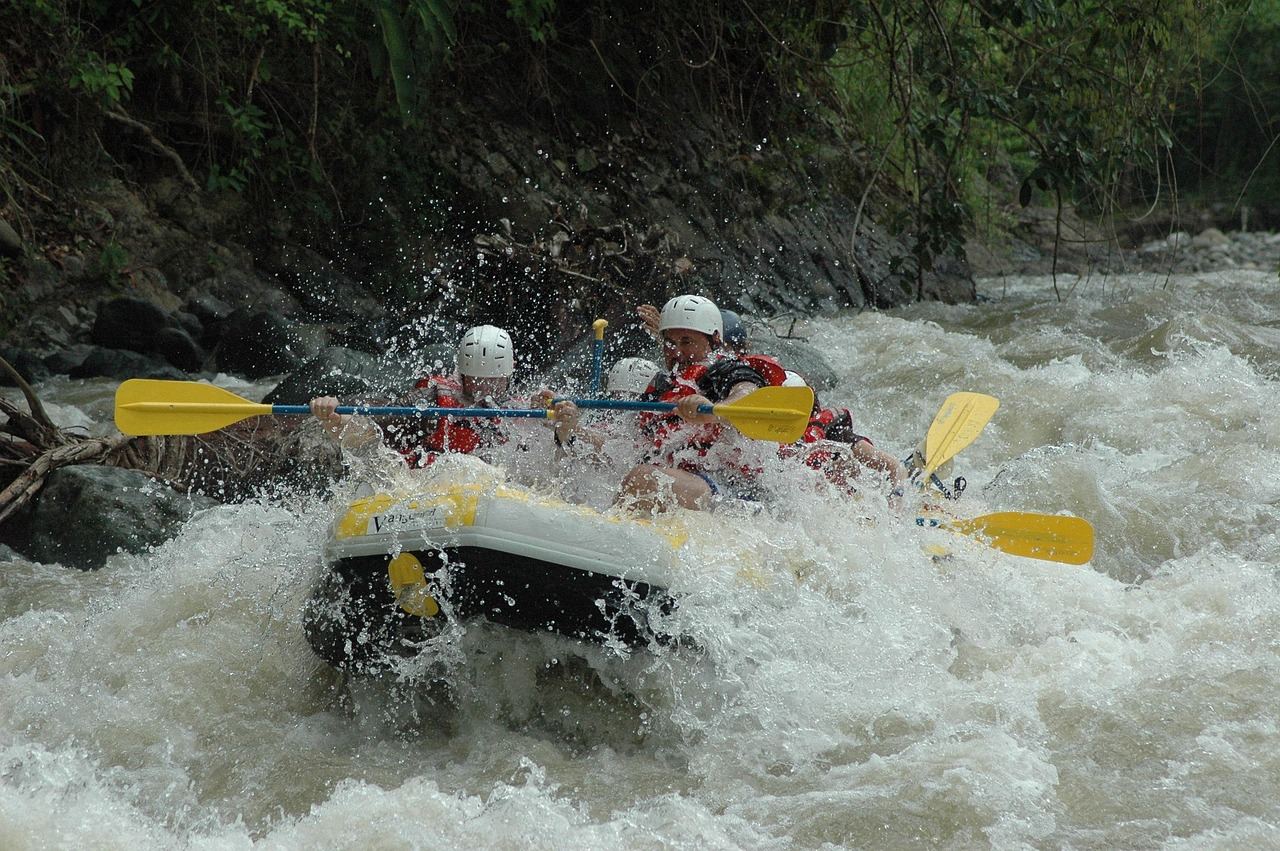
Whitewater rafting isn't about chaos but a team of beginners laughing as they learn to read water and paddle in sync on Class II-III rivers.
Getting started with whitewater rafting as a beginner involves learning to navigate inflatable rafts down river rapids while mastering paddles and body positioning to control speed and direction through moving water.
Unlike kayaking, you're working as a crew – the raft lives or dies by whether everyone paddles together.
In whitewater rafting, you actively navigate turbulent river rapids using paddling and rowing skills, rigging your raft for stability and maneuverability, while assessing the water conditions and collaborating with your team to steer through challenging currents.
This hobby fosters a flow state through its combination of physical challenge and teamwork, where participants experience heightened engagement as they respond to the immediate demands of the river, achieving a sense of accomplishment with each successfully navigated rapid.
Whitewater rafting is often misperceived as an adrenaline sport for people who own carabiners and say "stoked" unironically. You picture Class V rapids, helmets, chaos. That's the marketing – not the reality most people actually experience.
Reading water is a skill, and beginners learn the basics faster than they expect – because the river gives you immediate, honest feedback every single time.
Most guided trips run Class II–III rapids – enough to feel alive, not enough to feel stupid – and the learning curve is more like kayaking than skydiving.
The teamwork dynamic is real and kind of embarrassing how quickly it works – six strangers paddling in sync after 20 minutes because the river makes you cooperate or swim.
A first-timer on the Nantahala in North Carolina will spend more time laughing at themselves for missing a stroke than they will being scared. By the third bend, they're calling out paddle timing without being asked.
The physical and mental sides of this hobby are more tangled than they look from the shore – and that tangle is where it gets genuinely interesting.
Watching whitewater rafting footage, you see clean lines, synchronized paddles, and people laughing through giant waves. In person, the river doesn't wait for you to figure anything out. The first time you hit a real rapid, your body does something your brain didn't authorize.
Heart rate spiking before launch. Paddle grip too tight. No idea where to look. Instructions already forgotten. Then: soaked, surprised you're still in the boat, and wanting to do it again immediately. That gap between terror and addiction closes in about thirty seconds — and it's the reason people book their second trip before they've dried off from the first.
Week one, you're paddling hard and doing almost nothing useful. The guide is running the boat — you're just surviving. By week two, you start reading the guide's cues a half-second earlier, and that half-second is the entire difference between helping and flailing.
Week three, your body stops bracing for impact on every ripple. You conserve enough energy to actually pay attention. Then week four hands you one moment — one — where you hit the right stroke at the right time and the boat does exactly what it's supposed to. Cold water. Tired arms. You fell behind on the timing and the raft went sideways — and you finally understood why that happens.
It feels like everyone else knows something you don't. What they actually have is three more rivers under them — a gap you can close faster than it looks. Before your next session, fix one thing: look downstream, not at the water in front of your paddle. Where your eyes go, your body follows — and everyone who's fought a river instead of reading it learned this the slow way. The next section covers the mistakes that keep people stuck in that slow lane.
When to start: Early morning
Duration: 2 hours
Cost to try: $0
Success criteria: if you finished without committing to a rafting trip, do session 2.
Paddling Instead of Reading the Water First-timers fixate on their paddle stroke because it feels like the only thing they can control. Learn to look two rapids ahead, not at the water directly in front of the raft – your guide or instructor can tell you what features to watch for before you launch.
Sitting on the Tube Edge Instead of Perching on It It feels safer to sit low and lean inward, but that posture kills your power and makes you easier to throw on a big hit. Perch on the inflated tube with your inside foot hooked under the thigh strap – that foot is your anchor, not your death grip on the rope.
Tensing Up Through Technical Sections The instinct to brace and freeze makes total sense – everything is loud and moving fast. Drop your shoulders consciously before entering a rapid and keep paddling on command, because a loose paddler absorbs impact where a stiff one gets bounced out.
Ignoring the Low Brace Before You Need It Most beginners skip bracing drills because calm water makes them feel pointless. Ask your guide to walk you through a low brace in flatwater at the start – the paddle-flat-on-surface recovery move that keeps you in the raft when you're already halfway out of it.
Pulling the Paddle Straight Back Like a Rowboat It's the only paddle motion most people have ever done, usually from a lake canoe or a pool toy. Drive the blade fully into the water beside your feet and pull it back only to your hip – stopping there keeps the stroke powerful and stops you torquing the raft off line.
Whitewater rafting happens on moving rivers – everything from mellow Class I floats to technical Class IV–V rapids – usually run through outdoor recreation centers, river outfitters, and national parks and wilderness areas.
Most people start on guided commercial runs, not wilderness expeditions – and that's exactly the right call.
Tell the guide or club organizer you've never rafted before – that one sentence gets you moved to a Class I–II trip, a paddle briefing before launch, and a spot next to the guide instead of the exposed front of the raft.
Showing up pretending you know what you're doing gets you the front.
You're solo in a small inflatable kayak instead of a group raft – which means every decision is yours, and every mistake is too.
It's more maneuverable than a raft and far more forgiving than a hardshell kayak. This is the best starting point if you want personal control without committing to technical paddling gear.
A guide rows the whole boat with long oars while passengers hold on.
There's no group paddling coordination – you're essentially a passenger on a guided river tour. Best for families, nervous first-timers, or anyone who just wants to experience the river without the learning curve.
The standard version most people picture – a group paddles together, following a guide's calls.
Everyone contributes, which makes it social and slightly chaotic in the best way. Best for groups who want to feel involved without going solo.
Steep, narrow, low-volume waterways with technical drops and almost no room for error.
This is advanced territory – the rapids are shorter but the consequences aren't. Expect specialized creek boats and a skill set built over years, not weekends.
Same rafting, stretched across multiple days with camping along the river corridor.
The Grand Canyon is the obvious benchmark – permits are a years-long lottery. Gear costs spike significantly since you're carrying camping equipment, food, and dry storage for the whole trip.
Readers who enjoy this often gravitate toward Free Solo Climbing next.
Some of the same instincts show up in Ultimate Disc — worth a look if this clicked.
If you want a related angle, Ice Sailing is the natural next stop.
Most beginners obsess over paddle power – digging harder, stroking faster, trying to muscle through the current. The river doesn't care how strong you are.
The one skill is reading water before you're in it – specifically, learning to identify the tongue, the hydraulics, and the eddies in a rapid before your raft hits the first wave.
The tongue is the smooth V-shaped current pointing downstream – that's your entry line. Hydraulics are the recirculating foam piles that can trap you. Eddies are the calm pockets behind rocks where water flows upstream – your escape hatches, your rest stops, your reset buttons.
When you can decode a rapid from shore, you stop reacting and start positioning – and positioning is the entire game. Without it, every rapid feels like chaos, because you're always one stroke behind the river instead of one move ahead of it.
Your paddle technique doesn't matter much if you entered on the wrong line. Good water reading puts you in the right place before you need to be strong.
Most people either get obsessed or never go back. The goal here is figuring out which one you'll be – before you've spent a season finding out the hard way.
Do 3 guided raft trips over 30 days. That number matters because one trip tells you almost nothing – adrenaline and novelty do all the work. Three trips lets the novelty wear off enough that you're reacting to the experience, not just the rush of doing something new on moving water.
If you're already researching rivers, paddle techniques, or gear between trips, that's not just enthusiasm – that's the hobby already running in the background of your life. Start looking at multi-day river trips and intermediate Class III runs. The next step is finding out what moving up actually costs in skill, not just money.
If you had fun but haven't thought about it since, the social experience is probably doing more lifting than the activity itself. Try one more session with strangers or solo – not close friends – and see what's left when the group energy isn't carrying it. If the answer is still "yeah, that was fine," move on without guilt.
If you were relieved when it ended – not because it was hard, but because you genuinely didn't want to be there – that's a clean answer. Some people find whitewater stressful in a way that no amount of experience fixes. That's wiring, not a confidence issue.
You've never been rafting, but you slow down every time a river comes up on a map. You watch trip recap videos longer than you'd admit. That low-key pull toward moving water is a better predictor of long-term fit than whether your first trip felt smooth.
If the nearest Class II–III river requires a 3+ hour drive, the logistics will grind you down before the hobby takes hold. That's not willpower – it's math.
Shoulder or rotator cuff issues are worth taking seriously here. Paddling puts real repetitive load on the shoulder joint. Trying to push through a pre-existing injury on moving water tends to make it worse fast.
If your life needs a hobby you can pick up and put down in an hour after work, whitewater rafting doesn't compress – half-day minimums, shuttle logistics, and wet gear don't bend to tight schedules. That's a structural fact, not a character flaw.
If whitewater rafting feels like too much to commit to right now, browse what to do when you're bored for lower-stakes ideas.
Wear a swimsuit or moisture-wicking clothes, water shoes, and bring a towel and change of clothes for after. Most outfitters provide a helmet, life jacket, and paddle as part of the trip. Avoid cotton, which stays wet and cold—opt for synthetic or wool instead.
Beginner-friendly rafting on Class I and II rapids requires no prior experience and is suitable for most people in decent physical condition. Guides control most of the boat while giving clear instructions, so your main job is paddling on command and staying seated.
Most trips last 2–4 hours, with 1–2 hours on the water and the rest covering safety briefings, transportation, and gearing up. Full-day expeditions on longer or more challenging stretches can run 6–8 hours.
A half-day beginner trip typically costs $40–$100 per person, while full-day adventures range from $100–$250 depending on location and river difficulty. Group discounts and package deals are often available through outfitters.
Most outfitters accept children as young as 5–8 years old on mild rivers, though age limits vary by river class and operator. Minimum and maximum weight limits usually range from 60–350 pounds to ensure proper life jacket fit and safety.
Flipping is uncommon on beginner rapids but can happen on Class III+ waters—guides are trained to recover rafts and rescue swimmers. If you fall in, your life jacket keeps you afloat, guides and other paddlers pull you back into the boat, and trained safety kayakers are often stationed nearby.