BoredomBusted — Find Your Next Favorite Thing To Do
Discover hobbies, activities, places, and ideas that spark joy. Whether you're looking for something creative, active, social, or relaxing, BoredomBusted helps you find your next favorite thing to do.
Browse our hobby guides, things-to-do collections, and place ideas to never be bored again.
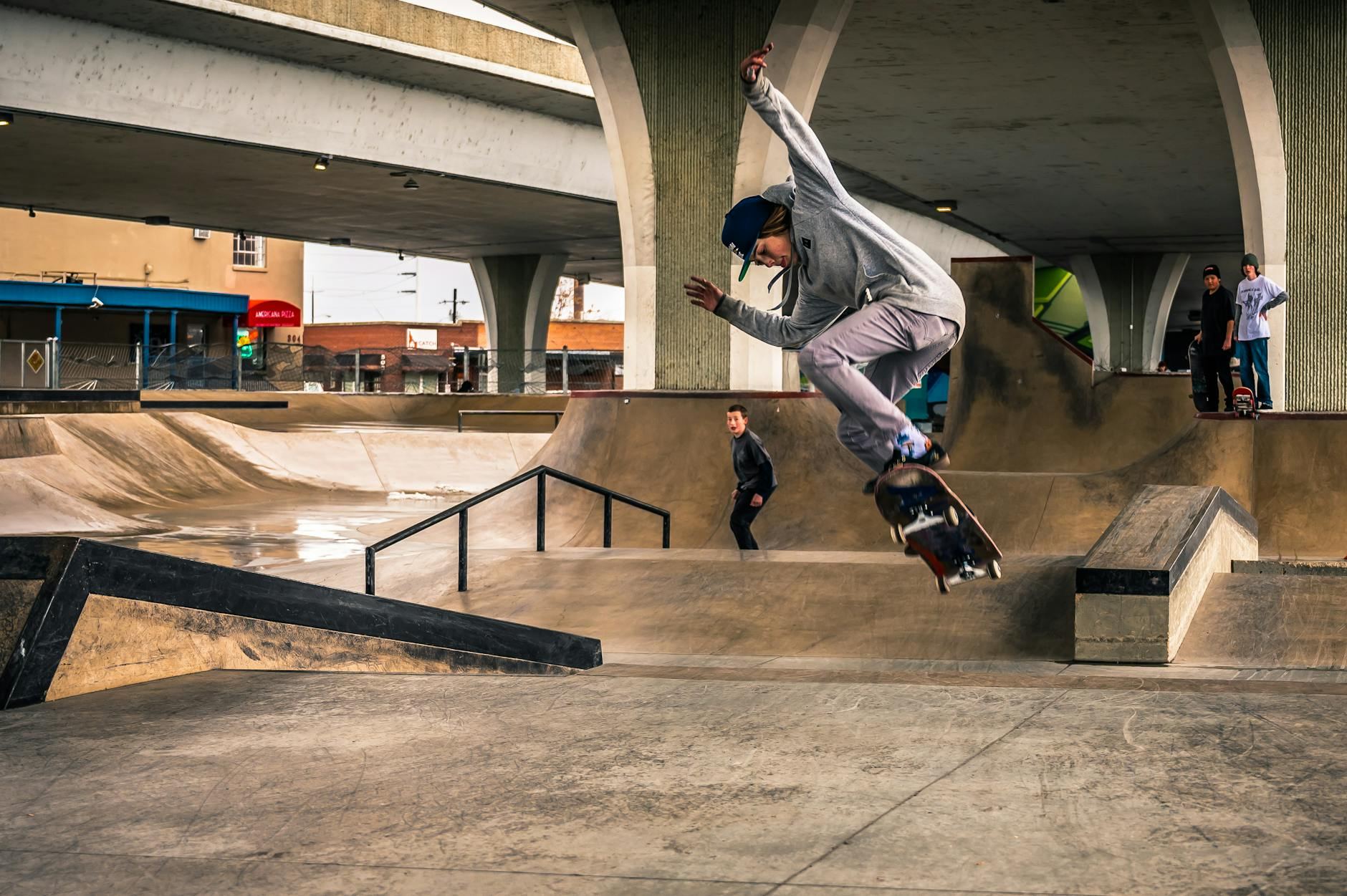
Street skating isn't just for kids — many find their groove well into middle age, landing kickturns after just six sessions of focused practice.
Getting started with street skateboarding as a beginner involves navigating urban landscapes while learning to perform tricks on your skateboard.
Unlike park or vert skating, you're not working within a designed space.
The street itself is the obstacle course, and finding the spot is half the skill.
In street skateboarding, you navigate urban environments, performing tricks like ollies, flips, grinds, and slides using your skateboard, while physically pushing at speeds of 10-20 mph, balancing on obstacles, and visualizing sequences of moves to refine your technique through practice and repetition.
Street skateboarding fosters a flow state through high physical demands and skill challenges, offering instant feedback with each successful trick, promoting a sense of accomplishment from personal benchmarks, and encouraging creative expression as you adapt tricks to new spots, all while building social connections in a community setting.
You think skateboarding is just for the young, a pastime for those who don't take things seriously. Maybe you see it as a phase. Maybe something you aged out of, or never aged into.
That assumption is costing you a genuinely interesting skill.
A 40-year-old picking up a board for the first time at a local skatepark isn't a punchline. He's the guy who lands his first clean kickturn after six sessions. He can't stop thinking about what's next.
That's not beginner luck. That's what happens when you engage with a skill that actually responds to attention.
It's time to explore what those first few sessions really feel like – more manageable than the videos suggest.
Watching street skating online, everything looks fluid. In person, your board shoots out from under you before you've even tried a trick. That gap between watching and doing is bigger than almost any other hobby you'll pick up — and it hits fast.
Week one, you're not learning tricks. You're learning that rolling in a straight line and stopping without panicking is its own skill. Ollies feel impossible by week two, and every attempt looks nothing like the tutorial you've rewatched fifteen times.
Week three, something clicks with your foot positioning and you land one thing — badly, partially — but you land it. By week four, you start reading spots differently: ledge heights, surface texture, the angle of a curb. That shift in how you see a street corner is the real sign that something is sticking.
Falling hurts. Progress is invisible for weeks. Then one afternoon something connects — and you realize the skaters you were watching weren't gifted, they just survived this exact stretch you're in right now.
One thing to sort before your first session: wear skate shoes, not sneakers with thick cushioned soles. A running shoe's heel absorbs the feedback that tells you where your weight actually is — you'll fight your own footwear every session.
The next section covers the mistakes that keep beginners stuck in the frustrating half of this stretch far longer than necessary.
When to start: Morning
Duration: 1 hour
Cost to try: $10
Success criteria: If you finished without serious injuries, do session 2.
Shop-assembled completes ship with trucks cranked down hard, which kills your ability to turn and makes everything feel wrong from day one.
Loosen the kingpin nut until the board leans when you shift your weight, then tighten back just until wheel bite disappears.
The ollie looks like the entry point, so everyone rushes it – but you haven't built the board feel that makes popping actually work.
Spend a week holding manuals down a slight slope until you can balance for three full seconds before touching a stationary ollie.
Worn-out shoes feel fine walking around, but a flat sole with no cushion transfers every slam directly into your heels and knees.
That pain is why most beginners quit in month one. Replace shoes when the heel cushioning compresses visibly, not when the upper falls apart.
You're practicing in the parking lot behind your house because it's convenient. Bad pavement punishes every small mistake and teaches you to compensate with bad form.
Find one smooth, flat surface within driving distance and commit to learning basics exclusively there until your ollies are consistent.
Beginners film from behind or too far away, then wonder why they can't spot what's going wrong.
Film from directly side-on, phone at knee height – that angle shows your foot position, your pop timing, and your weight shift all at once.
Street skateboarding happens wherever you find concrete and creativity colliding — from skate parks to parking lots, plazas to schoolyards.
The whole city becomes your skate spot.
Searching "skate crew [your city]" on Instagram is your fastest ticket in. Skaters post everything, so location tags reveal where to go.
When you find a spot, just ask someone: "I'm just starting out – mind if I join?"
Show up twice and you're already in. Skaters notice consistency.
Park skating uses purpose-built skateparks – smooth concrete, predictable transitions, no hunting for spots.
It's the same board, same tricks, but a controlled environment that removes the friction of street skating's biggest frustration: bad terrain.
Best for absolute beginners who want to learn without dodging pedestrians and cracked pavement.
Vert is halfpipes and ramps – big air, big commitment, and a completely different skill tree than street.
The tricks overlap in name only; the physics and muscle memory are their own thing.
Best for skaters who've plateaued on flatground and want something that feels genuinely scary again.
Expect higher ramp access costs – most good vert setups are at established skateparks or private ramps.
Freestyle stays flat and focuses on technical footwork, body tricks, and board manipulation – no jumping stairs, no grinding rails.
It's quiet, space-efficient, and deeply nerdy in the best way.
Best for skaters who care more about precision than spectacle.
Longer boards, softer wheels, zero interest in tricks – cruising is about getting somewhere enjoyably or just flowing through a neighborhood.
It shares a board shape with skateboarding in the same way a road bike shares a shape with a BMX.
Best for people who liked the idea of skating but don't actually want to learn kickflips.
Gear costs are similar, but a dedicated cruiser or longboard runs $80–$150 and replaces the standard setup entirely.
Transition (or "tranny") covers bowls, pools, and curved concrete – it's street skating's rawer, older cousin.
You're using the same street board but reading terrain in a completely different way.
Best for intermediate street skaters who want to add flow and speed to a trick vocabulary that's starting to feel stale.
Readers who enjoy this often gravitate toward Vert Skateboarding next.
3x3 Basketball lives in the same world — different mechanics, similar appeal.
Another variant that pulls from the same roots is Beach Volleyball.
The insight isn't just about trick execution. It's about
approach lines — those crucial details before you even reach your target.
Most skaters focus on the obstacle itself, missing the real setup 20 feet out. Knowing where your feet need to be, at what speed, and the right angle changes everything.
Owning your approach means the trick is practically done.
Without a solid approach, you're just adjusting at the last second.
That's why those curb ollies feel flustered, even when flat ground is easy.
Consistent landings are about preparing right — before the obstacle.
Commit to 8 sessions over 30 days — roughly twice a week. That's the minimum needed to feel what skating actually is, because the first three sessions are just your body arguing with the board.
You want to come back. Not because you're good — you're not yet — but because landing something small felt disproportionately satisfying. That response is the signal that you're wired for the feedback loop skating runs on. Start looking at beginner trick progressions and find a consistent spot.
You're indifferent. You showed up, it was fine, and you don't think about it between sessions. That's usually an access problem or a "skating alone in a parking lot" problem — not a skating problem. Try one session at a skatepark with other people before you walk away.
You actively didn't want to be there. The falls frustrated you more than motivated you, and the slow progress felt like failure rather than a puzzle. Skating rewards people who find the falling interesting. If the setbacks felt like punishment, this hobby will keep feeling like punishment.
You watch skate clips not for the big tricks — but to study how someone's feet are placed. That low-level obsession with mechanics, the pausing and rewinding, is the clearest early signal that you'll actually stick with this.
Plenty of people think skating looks cool. The ones who last are the ones who get weirdly interested in how it works.
Chronic ankle, knee, or wrist issues are a real structural barrier. Street skating puts repeated impact on all three, and every fall — which is frequent early on — is a negotiation with those joints.
No skatable terrain within reasonable distance is a harder constraint than most beginners account for. Rough pavement and zero public spots means you're fighting the environment before you're learning anything.
If your schedule only allows one short session per week, progress will stall before it gets rewarding — that's the math of skill acquisition, not a character flaw.
Still looking for something to do? Browse things to do when bored for more ideas.
You'll need a skateboard (deck, wheels, bearings, and trucks), safety gear including a helmet, wrist guards, and knee pads, and access to a smooth, flat surface like a parking lot or plaza to practice basics. Many skaters also wear comfortable sneakers with good grip and ankle support for better control and protection.
Most beginners can learn to push, turn, and ride comfortably within 2–4 weeks with consistent practice of 3–4 hours per week. Simple tricks like an ollie or kickflip typically take 1–3 months depending on natural balance, practice frequency, and willingness to fall and learn.
A decent beginner setup costs between $75–$150 for the board itself, with safety gear adding another $40–$100. Quality matters more than price at this stage—a mid-range complete board will serve you better than a budget option as you develop your skills.
Like any board sport, street skateboarding carries injury risk, but proper safety gear significantly reduces severity of falls. Starting in controlled areas, wearing a helmet, wrist, and knee pads, and progressing gradually from flat ground to obstacles minimizes risk while you build confidence and skills.
Street skateboarding focuses on tricks, manual obstacles, and urban features like ledges and stairs, whereas cruising emphasizes smooth riding for transportation, and vert skating uses ramps and bowls. Street skating demands technical trick progression and creativity in using city terrain as your playground.
No prior athleticism is required—skateboarding builds balance, leg strength, and coordination as you progress. Most people of various fitness levels can start and enjoy skating; improvement comes from consistent practice rather than natural athletic ability.