BoredomBusted — Find Your Next Favorite Thing To Do
Discover hobbies, activities, places, and ideas that spark joy. Whether you're looking for something creative, active, social, or relaxing, BoredomBusted helps you find your next favorite thing to do.
Browse our hobby guides, things-to-do collections, and place ideas to never be bored again.
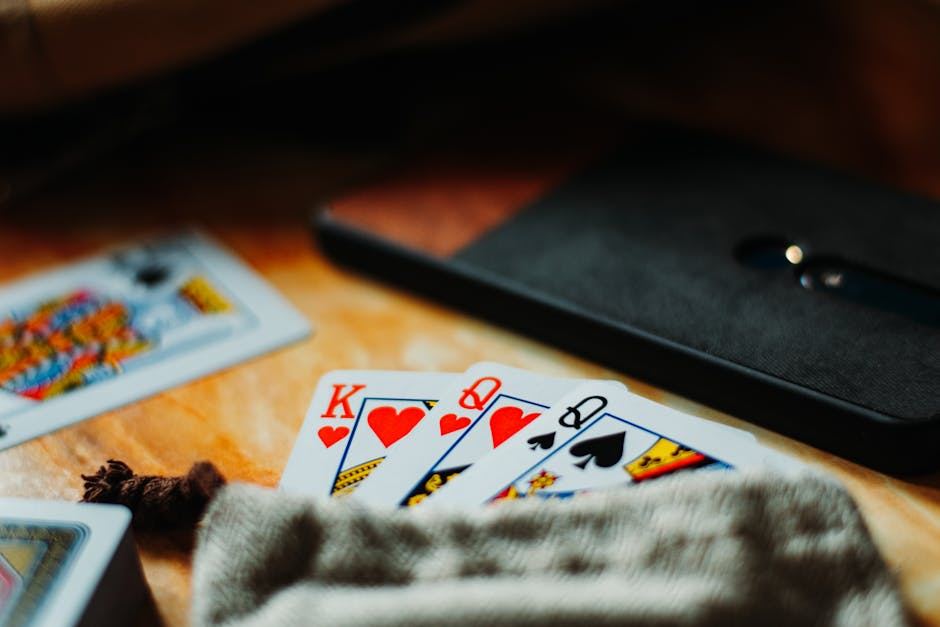
Discover the fun and strategic world of Kings in the Corner, a captivating card game blending elements of solitaire and poker. Easy to learn and perfect for all ages, this guide will help you master the game and enjoy memorable moments with friends and family.
Kings in the Corner looks like a game you can sleepwalk through. A deck of cards, a kitchen table, four foundation piles — how deep could it really go?
Deeper than you'd expect. The players who consistently empty their hands aren't luckier — they're reading the shared board, managing their kings, and quietly strangling everyone else's options while it looks like nothing is happening.
The game is built on three interlocking pressures that play off each other every single turn.
Hand size is the clock. Every card you can't play is a card you're still holding at the end of the round, and in scored variations, those leftovers cost you points. The goal isn't just to go out — it's to go out fast.
The shared board is everyone's problem. The four foundation piles belong to everybody. A move that helps you clear two cards might open a column that lets your opponent dump five. You're always playing the board, not just your hand.
Kings are the most powerful and most dangerous cards in your hand. They open corner piles — new real estate everyone can use — but a king you hold too long becomes dead weight with nowhere to go. Timing your king plays is the central skill of the game.
A typical first session with someone who knows the game runs about 20 minutes and covers a full round from deal to score. Here's what actually happens:
The deal and setup (2 minutes). Seven cards each. Four cards flipped face-up in a cross around the draw pile. Those four cards are the starting foundation piles. Everything else is waiting.
Your first turn (confusing, then clear). You can play as many cards as you want from your hand — onto foundation piles in descending order, alternating red and black. You can also move entire foundation piles onto other piles if the sequence connects. Then you draw one card to end your turn.
The king moment. When you play a king to a corner, the whole board opens up. Suddenly there are new piles to build onto and more options for everyone. First-timers usually play their first king immediately without thinking. Experienced players wait.
End of round scoring. The first player to empty their hand wins the round. Everyone else counts up their remaining cards — kings are worth 10 points each, all other cards worth 1 point each. Low score after an agreed number of rounds wins the game.
The learning curve is one session. The strategy takes longer to see, but it shows up fast once you've played two or three rounds back to back.
New players treat a king in hand like a hot coal — they play it the first chance they get just to get rid of it. That instinct is backwards.
Playing a king opens a corner pile that every player can use. If you drop a king when the board is already crowded, you're handing your opponents a pressure valve. They dump cards into your corner. You helped them, not yourself.
The real move is to hold your king until you have a sequence ready to immediately stack on it. Drop the king, then immediately load 3-4 cards from your hand onto that fresh corner pile in the same turn. You get the benefit of the open corner and you've already used it before anyone else can.
This one adjustment — treating your king as a trigger for a multi-card combo rather than a card to discard — will make you a noticeably better player by your third game.
This is one of the cheapest games you can play. The cost curve is almost flat.
Kings in the Corner uses a standard 52-card deck. If you have one, you're ready to play right now. Total cost: $0.
A quality deck of playing cards runs $5-$10. If you want to play regularly or with a group, a two-deck set gives you a backup and runs about $12-$15. That's the entire investment for years of play.
A card shuffler ($15-$20), a felt card mat ($10-$15), and a dedicated card box keep games smooth and organized when you're playing with older relatives or kids who manhandle the deck. Completely optional, but nice if you play several times a week.
The gear list for Kings in the Corner is short. Here's how to think about it.
One good deck of Bicycle or Bee playing cards. These shuffle cleanly, last years, and cost under $8. The cheap dollar-store decks warp after a few sessions and cards start sticking together mid-game.
A notepad and pen for scoring. That's it.
Card shufflers are a convenience, not a necessity. Card sleeves are overkill for a standard deck game. Skip the specialty "Kings in the Corner" boxed editions — they add nothing to the experience and are just a repackaged standard deck at triple the price.
Before your first game, ask one question: are you playing the point-penalty version or the first-to-empty-wins version?
In the point-penalty variant, leftover cards cost you points each round. Kings hurt the most at 10 points each. This version rewards caution with kings and punishes hoarding. It plays longer and feels more strategic across multiple rounds.
In the pure first-to-empty variant, the winner of each round simply gets a point. Kings are less scary because there's no cost to holding them — but emptying your hand still wins the round. This version plays faster and works better with kids or casual groups.
The king timing strategy described above matters most in the point-penalty version. If you don't agree on which rules you're using before you start, you'll argue about a king play before the first round is done. Pick one, stick to it, and revisit later.
Kings in the Corner is a social game, which means the people you play with matter as much as the cards. Here's what to look for.
They agree on rules before dealing. Kings in the Corner has regional rule variations. Any group worth playing with sets the variant before the first card is flipped.
They don't rush slow players. With a shared board and multiple options every turn, new players need a beat to think. A good game group lets them take it.
They keep score consistently. Informal tracking is fine, but groups that forget the score after every round or can't agree on the totals make the game pointless.
They play multiple rounds in a session. One round of Kings in the Corner is a warm-up. The real game emerges over three to five rounds when people start adapting to each other's king tendencies.
They're open to trying other card games. The best card game groups move between games. If you want to expand, check out the full list of card and hobby options to see what else your group might enjoy.
Kings in the Corner doesn't have a competitive circuit or a ranked online ladder. It's a kitchen table game, and that's exactly what makes the community around it different.
The real community is in board game cafés, family game nights, and senior centers where card games run most afternoons. Walk in with a deck and ask if anyone wants to play — that's a legitimate entry point.
Online, the r/cardgames subreddit and BoardGameGeek's card game forum cover rule disputes and variant discussions. If you want app-based play, Tabletop Simulator has community-made Kings in the Corner tables for remote games with friends.
The fastest way to build a regular game group is to become the person who hosts. One standing weekly game with three or four people is worth more than a dozen one-off sessions.
Give it 30 games before you decide. Here's what to look for along the way.
After 10 games: You're no longer confused about legal moves. You understand the alternating color rule without thinking about it, and you're starting to notice when moving a foundation pile opens something useful.
After 20 games: You're holding kings deliberately rather than playing them on reflex. You're watching opponents' hand sizes and adjusting when someone is clearly close to going out.
After 30 games: You're playing the whole table — deliberately making moves that tighten the board for opponents with big hands while keeping your own options open.
Stop if the social element isn't landing. Kings in the Corner is fundamentally a talking game — if you'd rather play in silence with focused concentration, something like Cribbage or Gin Rummy will suit you better.
Keep going if you find yourself mentally replaying a king play after the game ends — turning over whether you dropped it too early or held it one turn too long. That second-guessing means the game has its hooks in you.
2-Player Card Games List — If Kings in the Corner is your entry point into card games, this list is your next stop for head-to-head options.
Gin Rummy for Beginners — The natural next game if you want more hand-management depth and a tighter two-player format.
Cribbage Rules, Strategies & Tips — Once you've got Kings in the Corner down, Cribbage is where card game strategy gets genuinely deep.
Euchre: A Fun and Strategic Card Game — If your Kings group wants a team game with more structure, Euchre is the move.
What Is Bridge? — The endgame for card game players who want the most strategically complex game a standard deck can produce.
Kings in the Corner is a card game that combines elements of solitaire and poker, played with a standard deck of cards. Players take turns building sequences on the board by placing cards in descending order and same suit, while strategic placement of Kings in the four corners blocks opponents from playing there. The goal is to be the first to empty your hand while managing the cards on the table strategically.
Kings in the Corner works best with 2 to 4 players, though it can accommodate up to 6 players with modified rules. Two-player games tend to be faster and more strategic, while larger groups create more unpredictability and social fun. You can adjust the pace and difficulty based on the number of participants.
A typical game of Kings in the Corner takes 15 to 30 minutes, depending on the number of players and their experience level. Beginners may take slightly longer as they learn the rules, while experienced players can finish in under 15 minutes. Multiple rounds are quick, making it ideal for extended game nights.
Yes, Kings in the Corner is very easy to learn, especially if you're familiar with basic card games or solitaire. The core rules can be taught in just a few minutes, and most players grasp the mechanics within the first round. The simplicity makes it accessible for all ages, though mastering the strategy takes more time and practice.
All you need is a standard 52-card deck and 2 to 4 players—no special equipment or materials required. You'll also need a flat surface like a table to lay out the cards. It's perfect for casual gatherings, family nights, or even travel since it requires minimal setup.
The best strategy involves controlling the four corner positions with Kings to block opponents while carefully managing your hand to avoid high-penalty cards. Watch what cards others are playing to anticipate their strategy, and try to keep your options open by playing cards that don't limit future moves. Balancing offensive plays with defensive corner placement is key to consistent wins.