BoredomBusted — Find Your Next Favorite Thing To Do
Discover hobbies, activities, places, and ideas that spark joy. Whether you're looking for something creative, active, social, or relaxing, BoredomBusted helps you find your next favorite thing to do.
Browse our hobby guides, things-to-do collections, and place ideas to never be bored again.
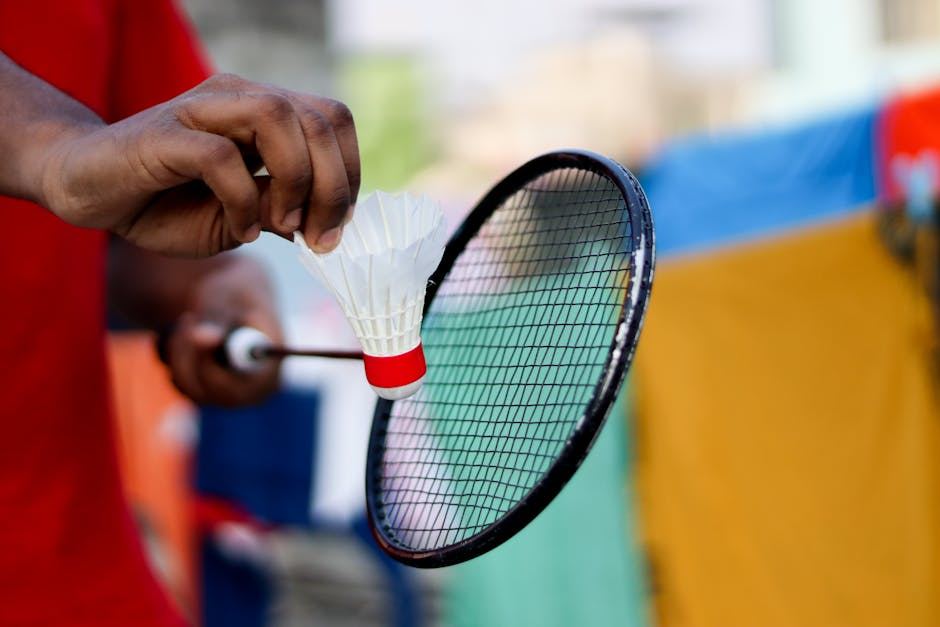
Discover the thrill of Speedminton, also known as crossminton, a dynamic sport blending badminton, squash, and tennis. Play anywhere without a net using heavier shuttlecocks for faster action. This ultimate guide explores its history, benefits, and how to start, making it perfect for fun and fitness!
Most people hear "it's like badminton without a net" and immediately picture a chaotic mess of people flailing at a shuttlecock in a park. That's not what this is. Crossminton is a structured, fast, genuinely technical racket sport — and the no-net format is a feature, not a compromise.
The sport was designed from scratch in the early 2000s specifically to be played anywhere — grass, concrete, sand, snow — with no court infrastructure required. Two marked squares, a gap between them, and a speeder that can hit speeds above 200 km/h. That's the whole setup.
The speeder is not a shuttlecock. It's heavier, more aerodynamic, and designed to fly flat and fast over much longer distances than a badminton birdie ever could. That changes everything about how you have to hit it.
The three core technical elements that actually matter: trajectory control (landing in a 5.5m square from 13+ meters away takes real precision), dead zone management (the 2-meter gap between the squares is a losing zone — balls landing there score for your opponent), and swing compactness (the racket is shorter than a badminton racket, which rewards a tighter, more controlled swing rather than a full badminton arm-sweep).
None of this is obvious until you've stood in the square trying to hit a speeder that's coming at you faster than you expected. The sport has a steep "first five minutes" curve and then it clicks fast.
Your first session will almost certainly be outdoors, probably in a park or sports field. You'll lay out the two squares using the included court markers (they come in most starter sets), step back to serving position, and immediately notice the distance feels further than expected.
The first thing beginners get wrong: hitting too hard. The speeder doesn't need power — it needs direction. Most first-timers send it sailing well past the opponent's square repeatedly, then assume they need more spin or angle. What they actually need is less force and more wrist control.
The thing that surprises most beginners: once you get a rally going, it's genuinely exhausting in a fun way. You're covering ground freely — there's no "stay in your half" rule during rallies — and the speeder moves fast enough that your reaction time is always under pressure.
By the end of a first session you'll have a working underhand serve, a rough sense of your range, and at least one moment where a shot landed exactly where you intended it to. That moment is what gets people back.
Here's what casual players never figure out: the dead zone is an offensive weapon, not just a rule. Good players deliberately vary their shot depth to force opponents into difficult positions — hitting short to the front edge of the square so the opponent has to rush forward, then following with a deep shot to the back edge.
The trap beginners fall into is fixating on "not hitting the dead zone" and playing every shot conservatively deep. That's predictable and easy to read. The dead zone threat only exists if you're willing to play close to it — short shots that land just inside the front of the square are almost unreturnable.
This depth variation requires a controlled wrist flick rather than arm power — which is why experienced crossminton players look almost relaxed while beginners are swinging hard. The effort is in the wrist, not the shoulder.
A basic two-racket set with speeders and court markers runs $30–$60. That covers everything you need to actually play. There's no court hire, no club fee, no wall to book time on — just find a flat surface.
Once you're playing weekly, speeders wear out. Budget $15–$25 every couple of months for replacement speeders. You might also pick up a second racket for doubles ($25–$50 for a mid-range single racket) and a proper carry bag ($20–$40).
Serious players invest in carbon-frame rackets ($80–$150 each), multiple speeder types (Fun, Match, and Pro variants for different conditions), and potentially club or tournament entry fees. All-in for a committed setup: $200–$350, mostly paid upfront on rackets.
A branded starter set (Crossminton or Speedminton brand) — includes two rackets, court markers, and multiple speeders. Don't buy off-brand knockoffs; the speeder quality matters and cheap ones fly inconsistently.
Fun Speeders for outdoor casual play — the "Fun" variant is designed for slower play and is more forgiving for beginners. Most starter sets include these.
Carbon-frame rackets — the difference is real but meaningless until your technique is consistent enough to notice it.
Night Speeders — fun gimmick, not a priority. Buy them once you've got a regular playing partner and want to extend sessions into the evening.
Match or Pro Speeders — faster and more responsive, designed for experienced players. Using them too early just makes the learning curve steeper.
Crossminton is marketed as "play anywhere" and that's true — but outdoor and indoor play are genuinely different games. Wind is a serious factor outdoors. The speeder is aerodynamic enough that even a light breeze changes its trajectory, and beginners often blame their technique when the real issue is a 10 km/h crosswind.
Start indoors if you can. A sports hall, gym, or even a large indoor space gives you consistent conditions to actually build your technique. Outdoor play is more social and accessible but teaches you bad compensatory habits early on.
The speeder variants also matter here: the "Fun" speeder is designed for outdoor use and is more wind-resistant. The "Match" speeder is the indoor competition standard. Using a Match speeder outdoors in wind is a frustrating experience — don't do it until you're playing in controlled conditions.
Crossminton clubs are less common than tennis or badminton clubs, but they exist in most mid-to-large cities. Here's what to look for:
They run beginner sessions, not just open play. Clubs that only run ranked or competitive sessions aren't beginner-friendly regardless of what their website says.
Equipment loan is available. Good clubs will let you try with their gear before you commit to buying anything.
They play indoors at least part of the year. Year-round outdoor-only clubs are common in warm climates, but indoor play is where technique actually develops.
There's a mix of singles and doubles play. Doubles crossminton is a different game and a much better social entry point.
They're affiliated with a national or international body. The International Crossminton Organisation (ICO) maintains a club directory — start there before checking general sports listings.
If you can't find a dedicated club, any racket sport club with court space is worth approaching — crossminton requires minimal setup and many clubs are open to hosting sessions. See the BB Racket Sports guide for related options in your area.
The crossminton community is small but genuinely engaged. The subreddit r/crossminton exists but is quiet — better to find Facebook groups specific to your country or region, which is where most active club communities organise.
The ICO website lists official tournaments and national federations — a good starting point if you want to find competitive play. Most national federation websites also have club finders and beginner event calendars.
In-person, the fastest route into the community is a local sports centre that hosts crossminton drop-in nights. These exist in more places than you'd expect — search "speedminton drop-in" alongside your city name, since the old brand name is still what many casual players search for.
The sport is small enough that showing up to a club session and playing well gets you noticed fast. It's not a scene where you can spend a year being anonymous — which is either appealing or terrifying depending on your personality.
Give it 30 sessions before you decide. Here's what the progression actually looks like:
Sessions 1–10: You're building a reliable serve and learning to keep rallies going. Getting five consecutive returns without a dead-zone fault is a genuine milestone here.
Sessions 11–20: Intentional shot placement starts to work. You're no longer just reacting — you're trying to put the speeder somewhere specific and occasionally managing it. This is when the tactical side of the game opens up.
Sessions 21–30: You're varying depth deliberately, reading your opponent's position before they hit, and winning points through construction rather than luck. If this is happening, you have a real game.
Stop if by session 15 you're still not enjoying the rallies themselves. The sport's reward is in the back-and-forth — if that part isn't satisfying, more sessions won't fix it.
Keep going if you find yourself scoping out flat surfaces — a car park, a quiet field, a sports hall — and mentally measuring out whether the squares would fit. The sport has its hooks in you when the environment starts looking like potential courts.
Badminton Beginner's Guide — the closest technical cousin to crossminton; useful for understanding racket mechanics and shot vocabulary.
Racket Sports List — if crossminton doesn't stick, this covers every racket sport worth considering.
Pickleball Beginner's Guide — another fast-growing racket sport with low equipment costs and a strong casual community; worth comparing.
Tennis Beginner's Guide — if you want more structure and a larger playing community, tennis shares crossminton's emphasis on placement over power.
Full Hobbies List — if you're still exploring, the full BB hobby directory covers hundreds of options across sport, creativity, and outdoor activity.
Speedminton, also called crossminton, uses heavier and faster-moving shuttlecocks and requires no net, allowing you to play on any flat surface like a court, beach, or park. The game combines elements of badminton, squash, and tennis with a smaller playing area and more intense rallies, making it faster-paced and more challenging than traditional badminton.
No, one of the key advantages of Speedminton is that it doesn't require a net. Players stand on opposite sides of a marked court area and hit the shuttlecock back and forth, similar to tennis or squash. This makes it easier to set up and play almost anywhere.
You only need two rackets, a Speedminton shuttlecock (heavier than regular badminton birdies), and ideally a court mat or marked playing area about 17 x 17 meters. The sport requires minimal equipment, making it affordable and accessible for beginners compared to other racket sports.
Speedminton is relatively easy to pick up if you have experience with racket sports, though it has a steeper learning curve than casual badminton due to faster gameplay. Beginners can enjoy basic rallies within the first session, and improvement comes quickly with regular practice.
A standard Speedminton match usually lasts 20–40 minutes, depending on player skill and match format. Games are scored to 16 points (best of three matches), making them shorter and more dynamic than traditional badminton matches.
Speedminton is an excellent full-body workout that builds agility, reflexes, cardiovascular endurance, and hand-eye coordination. The fast-paced nature and constant movement make it an effective calorie-burning activity that's also low-impact on joints compared to high-impact sports like running.