BoredomBusted — Find Your Next Favorite Thing To Do
Discover hobbies, activities, places, and ideas that spark joy. Whether you're looking for something creative, active, social, or relaxing, BoredomBusted helps you find your next favorite thing to do.
Browse our hobby guides, things-to-do collections, and place ideas to never be bored again.
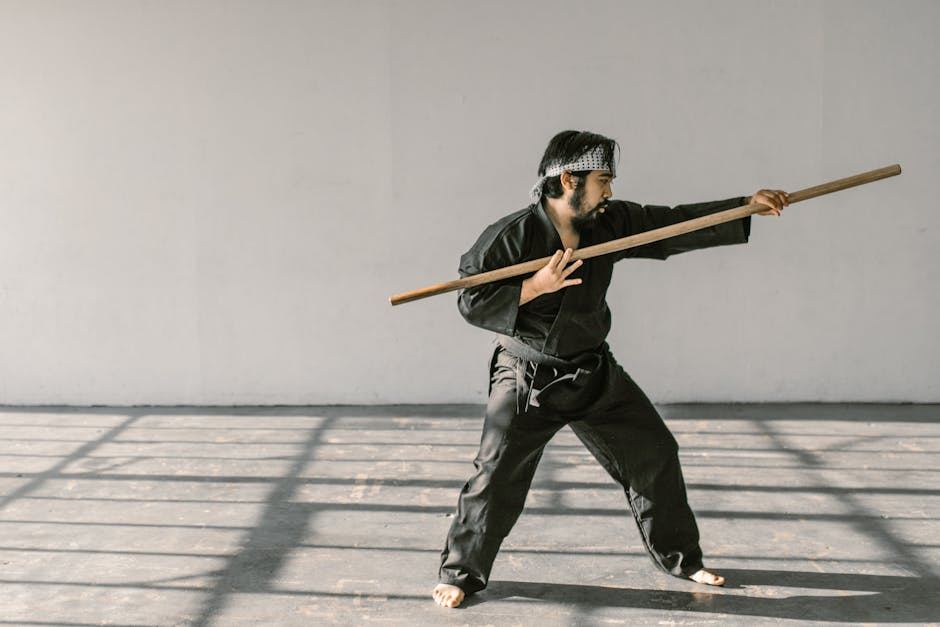
Explore the Marine Corps Martial Arts Program (MCMAP), a unique blend of self-defense, discipline, and physical fitness. This article covers its history, benefits, and how to start your journey in mastering MCMAP, making it an ideal challenge for your mind and body.
Most people hear "Marine Corps Martial Arts Program" and immediately assume it's off-limits — some classified military training with no civilian application. That's not what MCMAP is. It's a documented, structured combat system that civilians have been training for years, and it's one of the most honestly designed self-defense curricula you can find.
It's not a sport. It's not a traditional art with katas and bowing rituals. It was built by people whose job sometimes requires actual hand-to-hand violence, and that context shapes everything about how it works.
MCMAP launched in 2001, built by pulling the most field-tested techniques from boxing, wrestling, judo, and Brazilian jiu-jitsu. It wasn't assembled by committee — it was stress-tested against one question: what actually works when it matters?
The system runs on three pillars that work together, not in isolation:
Physical discipline — striking, grappling, weapons defense, and ground fighting across every range of combat. You're not specializing. You're learning all of it.
Mental discipline — stress inoculation is baked into the structure. Drills are designed to be performed when you're already gassed, uncomfortable, or under pressure. That's not an accident — it's the whole point.
Character — every belt level includes warrior studies: history, ethics, leadership. This is unusual for a combat system, and it's not filler. It's part of why the program has a coherent identity that other combatives curricula lack.
Civilian MCMAP classes vary by instructor, but the structure stays consistent. Expect to be physically tired and mentally engaged within the first twenty minutes.
Warm-up with purpose — not stretching for its own sake. Movement patterns that directly feed into the techniques you're about to drill: sprawls, shrimping, breakfalls.
Technique instruction — the instructor demonstrates, you replicate with a partner. Early sessions cover basic strikes and clinch entries. The feedback loop is tight and the reps are high.
Scenario drilling — MCMAP classes run situational drills regularly. Someone grabs you from behind. Someone closes distance fast. You practice responses in context, not techniques in a vacuum.
Conditioning finish — the last block of class is often brutal by design. Circuits, bodyweight work, partner carries. Performing techniques while exhausted is the goal, not a side effect.
First class reality: you'll be confused, you'll be tired, and you'll leave knowing exactly what you need to work on. That's the design.
Most martial arts train techniques under clean conditions and then try to add pressure later. MCMAP reverses that entirely. The system is built on the assumption that you will be fatigued, stressed, and operating in degraded conditions when you actually need it.
The real dividing line between serious practitioners and casual ones is understanding what stress inoculation actually means. It doesn't mean hard workouts. It means deliberately running your techniques at the exact moment your brain wants to stop — so those techniques stay accessible when you're running on fumes for real.
Practitioners who train the moves but skip the stress component end up with textbook techniques that evaporate under pressure. The ones who lean into being exhausted and disoriented during training build something that doesn't disappear when it counts. That's what almost no civilian martial art replicates at the same intensity — and it's why a tan belt earned here means something different than most colored belts do elsewhere.
MCMAP sits on the leaner end of martial arts in terms of gear requirements. The bigger variable is class access and whether your instructor is a certified MAIP or just running a general combatives class.
PT clothes, a mouthguard, and a groin protector. Many civilian classes run entirely in athletic gear. This is enough to walk in and start training on day one.
Add hand wraps, training gloves, and the standard MCMAP uniform — the tan-and-black gi used in official programs. Monthly class fees typically run $60–$120 depending on the school. This is where most committed beginners land after the first month.
Headgear, shin guards, a heavy bag for home work, a rubber training knife for weapons defense drills, and a grappling dummy if you're serious about solo reps. None of this is necessary early — and most of it collects dust if you buy it before you're three months in.
MCMAP gear is minimal by martial arts standards. The mistake most beginners make is buying equipment before they know what their specific school actually requires.
A boil-and-bite mouthguard ($15–$25) and a groin protector — non-negotiable for sparring and scenario drills. Add hand wraps ($10–$15) in week two once you know you're coming back.
Heavy bags, grappling dummies, headgear, and rubber training knives. Your school will have shared equipment. Buying your own before two or three months of consistent training is how people end up with a $200 bag they hang laundry on.
The MCMAP uniform matters once you're pursuing official belt progression. Before that, ask your instructor what they want — many civilian programs run class in BDUs, PT shorts, or a standard gi.
Belt progression within the Marine Corps runs through official Martial Arts Instructor Trainers (MAITs) and sanctioned programs. If you're a civilian, your belt rank from a civilian school carries no official Marine Corps recognition — and that's fine, but you should know it going in.
What matters far more is finding an instructor with legitimate credentials. The MCMAP curriculum is well-documented, but instruction quality in the civilian market varies wildly. An instructor who attended a weekend seminar is not the same as someone who trained and tested within the actual military program.
Ask directly: what is your MCMAP certification level and where did you earn it? A legitimate instructor won't be defensive about that question.
MCMAP schools are harder to find than traditional martial arts gyms, which makes vetting more important, not less. Five things to look for:
Verified instructor credentials. The instructor should be able to name their MCMAP certification level and where they earned it. Military service plus actual combatives training is a green flag.
Live drilling and scenario work in the curriculum. If classes are purely technique demonstration with no contact or situational drilling, you're watching MCMAP — not training it.
The option to observe before joining. Any school that won't let you watch a class first is hiding something about the quality of training.
Students who've been there a year or more. Retention is a proxy for quality. A room full of only beginners tells you something.
No long-term contracts on day one. Legitimate schools let you try before locking you into a year-long commitment.
Still comparing options? The full list of martial arts on BB covers what's available and what each system actually prioritizes.
MCMAP has a tighter community than most civilian martial arts because the pool of legitimate practitioners is smaller. That cuts both ways — harder to find, but more signal when you do.
Online, Reddit's r/martialarts and r/selfdefense have active MCMAP threads. Veterans' forums and Marine Corps community spaces often surface discussion from people who trained the program inside the military — that context is genuinely useful.
In person, your best connection point is your school. MCMAP attracts people who take self-defense seriously rather than competitively, which tends to produce a different atmosphere than sport-focused gyms. Seminars run by certified MAIPs are also worth tracking down — they're infrequent but dense with legitimate instruction.
Commit to 30 classes before deciding. The first ten will be disorienting. That's not a flaw — it's the curriculum working as designed.
By class 10, you should have your first scenario drill where something clicked under pressure — where your body did something your brain didn't consciously direct. That's what you're chasing.
By class 20, the conditioning finish shouldn't be breaking you the same way. Your body has adapted to operating while tired, and you'll notice it in daily life.
By class 30, you'll know whether the ethos of the system — the warrior studies, the stress-first philosophy, the integration of multiple ranges — resonates with how you think about training. Some people find it deeply coherent. Others want more specialization or sport application, which is a fair reason to look elsewhere.
Stop if: you're only comfortable in the clean technique reps and actively avoid the scenario drilling. MCMAP is built around that discomfort — resisting it means you're training the wrong system.
Keep going if: you find yourself mentally rehearsing scenarios during your commute — running through what you'd do, how you'd move, which technique fits the situation. When the system starts thinking for you outside the gym, it's already in you.
Full list of martial arts — compare MCMAP to every other system covered on BB before committing.
What Is BJJ? — MCMAP's ground game draws heavily from BJJ. Worth understanding the source material.
What Is Boxing? — MCMAP's striking fundamentals are rooted in boxing. If you want to go deeper on the hands, start here.
What Is Judo? — the throwing and takedown elements in MCMAP have strong judo DNA. A useful parallel to train alongside.
What Is Muay Thai? — if MCMAP's stand-up range is what you connect with most, Muay Thai offers the deepest civilian striking curriculum available.
MCMAP is a comprehensive martial arts system developed by the U.S. Marine Corps that combines techniques from boxing, wrestling, judo, and karate with a strong emphasis on discipline and warrior ethos. Unlike traditional martial arts focused purely on sport or form, MCMAP integrates practical combat applications, physical conditioning, and mental resilience, making it unique in its approach to self-defense and personal development.
No, MCMAP is available to civilians through authorized instructors and training programs, though it originated within the Marine Corps. Some community centers, martial arts facilities, and private instructors offer MCMAP training to the general public, though availability varies by location.
MCMAP uses a belt system similar to other martial arts, progressing from tan (beginner) through brown and black belts. Advancement typically takes 6–12 months between ranks for dedicated trainees, though the timeline depends on training frequency, instructor standards, and individual progress in techniques and philosophy.
MCMAP develops functional strength, cardiovascular fitness, flexibility, and combat awareness while building confidence and mental toughness. Practitioners also gain practical self-defense skills and learn discipline, focus, and situational awareness that extend beyond the training mat into daily life.
Yes, MCMAP is designed for all fitness levels and experience backgrounds, with training scaled to individual capabilities. Beginners start with fundamental techniques and gradually build skills, making it accessible even if you have never trained in martial arts before.
MCMAP training costs vary widely depending on location and instructor, ranging from $50–150+ per month for civilian classes or $10–30 per session at community centers. Some military installations offer free or subsidized training to service members, while private instruction may cost more.