BoredomBusted — Find Your Next Favorite Thing To Do
Discover hobbies, activities, places, and ideas that spark joy. Whether you're looking for something creative, active, social, or relaxing, BoredomBusted helps you find your next favorite thing to do.
Browse our hobby guides, things-to-do collections, and place ideas to never be bored again.
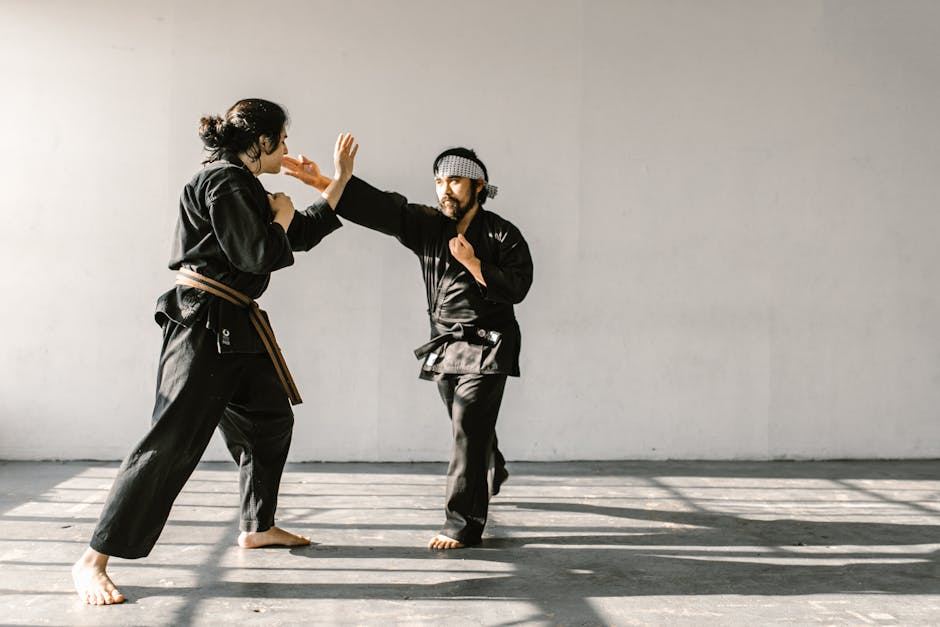
Unlock a new passion with Systema, the dynamic Russian martial art that blends self-defense, personal growth, and fluid movement. This beginner's guide covers everything from essential techniques to getting started, making it the perfect entry point for anyone seeking a fresh and engaging hobby.
Most people assume Systema is either a secret special forces killing art or a YouTube gimmick where guys fall down without being touched. Neither is accurate. Systema is a Russian martial art built around breath, structure, and pressure — and it's one of the more quietly demanding things you can walk into on a Tuesday night.
If you've been curious but couldn't figure out what it actually is or whether it's legitimate, this is where that changes.
Systema has no fixed curriculum, no belt ranks, and no standard set of techniques you work through in order. Everything — how you move, how you fight, how you handle stress — flows from three interconnected principles.
Breathing isn't a warm-up ritual here — it's the central technical skill. Breath control is how you manage fear, recover under pressure, and generate or absorb force. It's trained constantly, and it's what makes Systema feel genuinely different from other arts within the first few sessions.
Relaxation under tension means eliminating unnecessary muscle tension — not to be passive, but because tension telegraphs your movement and burns energy. Staying soft while absorbing strikes or controlling a partner is a skill that takes months to develop.
Structural sensitivity is how Systema approaches offense and defense. Rather than memorizing counters, you train to read a person's balance, tension points, and posture — then disrupt them. It's closer to how good judoka think than how most striking arts train.
A Systema class doesn't follow the same structure as a karate or BJJ class. There's no formal bow-in, no drilling the same technique fifty times in a row. It's more fluid — which is either refreshing or disorienting depending on your background.
Here's roughly what to expect:
Breathing warm-up. Not stretching — breath work. Expect 10–15 minutes of slow inhale/exhale cycles, possibly timed to push-ups or squats. This will feel strange at first and genuinely difficult.
Movement exploration. The instructor guides the group through walking, falling, rolling, and moving around partners. The goal is natural, unforced movement — not technique repetition.
Partner work. You'll explore concepts like receiving a push, controlling tension in a grip, or moving around a slow strike. Contact is real, but the pace is measured.
Pressure drills. More advanced classes introduce stress inoculation — knife threats, multiple attackers, ground situations. As a beginner you'll watch more than participate in these initially.
Cool-down and debrief. Good Systema instructors talk through what was explored. This isn't fluff — the conceptual side of the art matters and the best schools make time for it.
You won't feel like you learned a self-defense technique after class one. You'll feel like something slightly unfamiliar happened to your nervous system. That's the point.
In most martial arts, a strike is a technique you execute. In Systema, a strike is information. When you hit someone, you're reading how their body responds — where the tension is, how they brace, what opens up — and the next movement comes from that feedback, not from a pre-planned sequence.
This is why Systema drilling looks so different. You don't drill combinations. You drill sensitivity — the ability to feel what's happening in a partner's structure and respond to it in real time. A practitioner who has this can work around resistance instead of fighting it directly. One who doesn't just looks like they're doing soft punches slowly.
This sensitivity takes years to develop and can't be faked or rushed. It's also why Systema is difficult to evaluate from the outside — and why finding a qualified instructor matters more here than in almost any other art.
Systema schools are smaller and less commercialized than most martial arts gyms. That keeps costs reasonable — but it also means availability is limited depending on where you live.
Many Systema schools offer free or low-cost intro classes. You need nothing except comfortable workout clothes — no uniform required at this stage. Online content from established instructors like Mikhail Ryabko and Vladimir Vasiliev is widely available if you want to understand the concepts before stepping on a mat.
Monthly dues at a dedicated Systema school typically run $80–$160 depending on location and class frequency. Add $40–$80 for a basic training uniform if the school requires one — many don't. Training knives and rubber firearms for scenario drills are often provided by the school.
Seminars with high-level instructors are where serious practitioners spend money. A weekend seminar with a recognized Systema master runs $200–$400 and is considered essential development by most long-term practitioners. Factor in travel if visiting instructors are rare in your area.
Systema has one of the lowest gear barriers of any martial art. Don't over-invest before you've committed to regular training.
Comfortable workout clothes you can move and roll in — that's it for the first several weeks. If the school has a dress code, a plain dark-colored outfit works fine. Bare feet or soft-soled shoes depending on the school's preference.
Training knives, rubber guns, and impact tools. Your school will likely have these for shared use. Systema DVDs and instructional downloads are also worth deferring — see what your instructor recommends specifically rather than buying a random library.
Systema has no governing body, no belt system, and no standardized certification. The gap between a legitimate practitioner and someone who watched videos and opened a school is enormous — and not obvious to a beginner.
The two most recognized lineages in the West trace back to Mikhail Ryabko and Vladimir Vasiliev (Systema HQ in Toronto) and Konstantin Komarov. If your prospective instructor trained under or was certified by recognized figures in these lineages, that's a reasonable baseline. If they can't tell you who they trained with, that's a red flag.
Also watch for schools that promise Systema as a complete military combat system or lead with claims that no other martial art compares. Good Systema instructors tend to be humble about what the art is and direct about what you'll actually be working on.
Systema schools are sparse outside major cities, so you may have limited options. These five checkpoints help you evaluate what's available.
The instructor can name exactly who they trained with and for how long. Vague answers about self-study or "multiple systems" are a skip.
Classes include real contact and genuine pressure. If everything looks cooperative and nothing ever gets tested, the school is teaching theater.
The instructor can explain what you'll work on in plain language. Mystical explanations that can't be pinned down are a warning sign.
Students across experience levels train together. Systema's principles are meant to scale — if beginners are permanently siloed, the school may be hiding something.
The instructor brings in outside teachers or attends seminars themselves. Anyone who thinks their own training is complete stopped growing a long time ago.
If Systema schools near you are thin on the ground, browse the full list of martial arts on BoredomBusted to find something in a related vein — Sambo, Aikido, and Hapkido all share conceptual overlap with Systema.
Systema's community is small, international, and unusually close-knit. Because schools are sparse, practitioners travel further and form stronger ties with their training group than you see in larger arts.
Online, the Systema HQ YouTube channel and associated forums are the main hub. Reddit's r/systema is small but active and reasonably skeptical — a good sign. Facebook groups organized by lineage are where a lot of seminar announcements and instructor recommendations circulate.
In person, seminars are the real community events. If your local school is small, attending a seminar with a visiting master is where you'll meet other serious practitioners and get a clearer sense of the art's range and depth.
Give it 30 classes before you decide. Systema's learning curve is front-loaded with strangeness — the principles only start to click once your nervous system has had time to adjust.
At 10 classes: the breathing work should start feeling less bizarre and more like a tool. You'll notice when you forget to use it.
At 20 classes: partner work stops feeling purely conceptual. You'll catch moments where you actually feel the tension shift in someone's structure and respond to it without thinking.
At 30 classes: you either understand what you're training toward or you don't. Both are useful information.
Stop if every class still feels like watching a magic trick you can't explain, your instructor deflects direct questions, or the contact in training never feels real.
Keep going if you've started paying attention to your own breathing in stressful moments outside of class — in traffic, in an argument, before a hard conversation — and noticing that it actually does something.
What Is Sambo? — Another Russian combat system with real competitive infrastructure and significant overlap in grappling concepts.
What Is Aikido? — Shares Systema's emphasis on redirecting force and reading structure, with a more formalized curriculum.
What Is Hapkido? — Joint locks, redirection, and pressure-point work in a structured Korean system worth comparing to Systema's approach.
What Is Jeet Kune Do? — Another principle-based system without a fixed curriculum that attracts practitioners who want to think about martial arts, not just drill them.
What Is Tai Chi? — If Systema's emphasis on relaxation and breath resonates but you want something more widely available, Tai Chi covers similar internal territory with a deeper historical tradition.
Systema is a Russian martial art focused on fluid, adaptive movement rather than rigid forms or belt rankings. It emphasizes breathing, relaxation, and practical self-defense applications, making it unique because practitioners learn to move efficiently with minimal force, regardless of opponent size or strength.
No, Systema is designed for complete beginners and people of all fitness levels. The fundamental principle is that anyone can learn to move efficiently and defend themselves, regardless of prior experience or athletic background.
Most beginners see noticeable improvements in movement and basic self-defense capability within 2–3 months of consistent training. However, developing deeper skill and understanding is an ongoing journey that typically takes 1–2 years of regular practice.
Your first session will focus on foundational breathing exercises, relaxation drills, and basic footwork patterns to help you understand how Systema differs from other martial arts. You'll move at your own pace with no competition or pressure, just exploration and learning.
Costs vary by location and instructor, but most Systema classes range from $80–$150 per month for group classes. Many gyms and martial arts studios offer introductory trials or drop-in classes for $15–$25, allowing you to experience it before committing.
Yes, Systema is a practical self-defense system that teaches you to neutralize threats by reading an opponent's movement and responding efficiently. Rather than relying on strength, it emphasizes body awareness and positioning, making it effective for people of all sizes.