BoredomBusted — Find Your Next Favorite Thing To Do
Discover hobbies, activities, places, and ideas that spark joy. Whether you're looking for something creative, active, social, or relaxing, BoredomBusted helps you find your next favorite thing to do.
Browse our hobby guides, things-to-do collections, and place ideas to never be bored again.
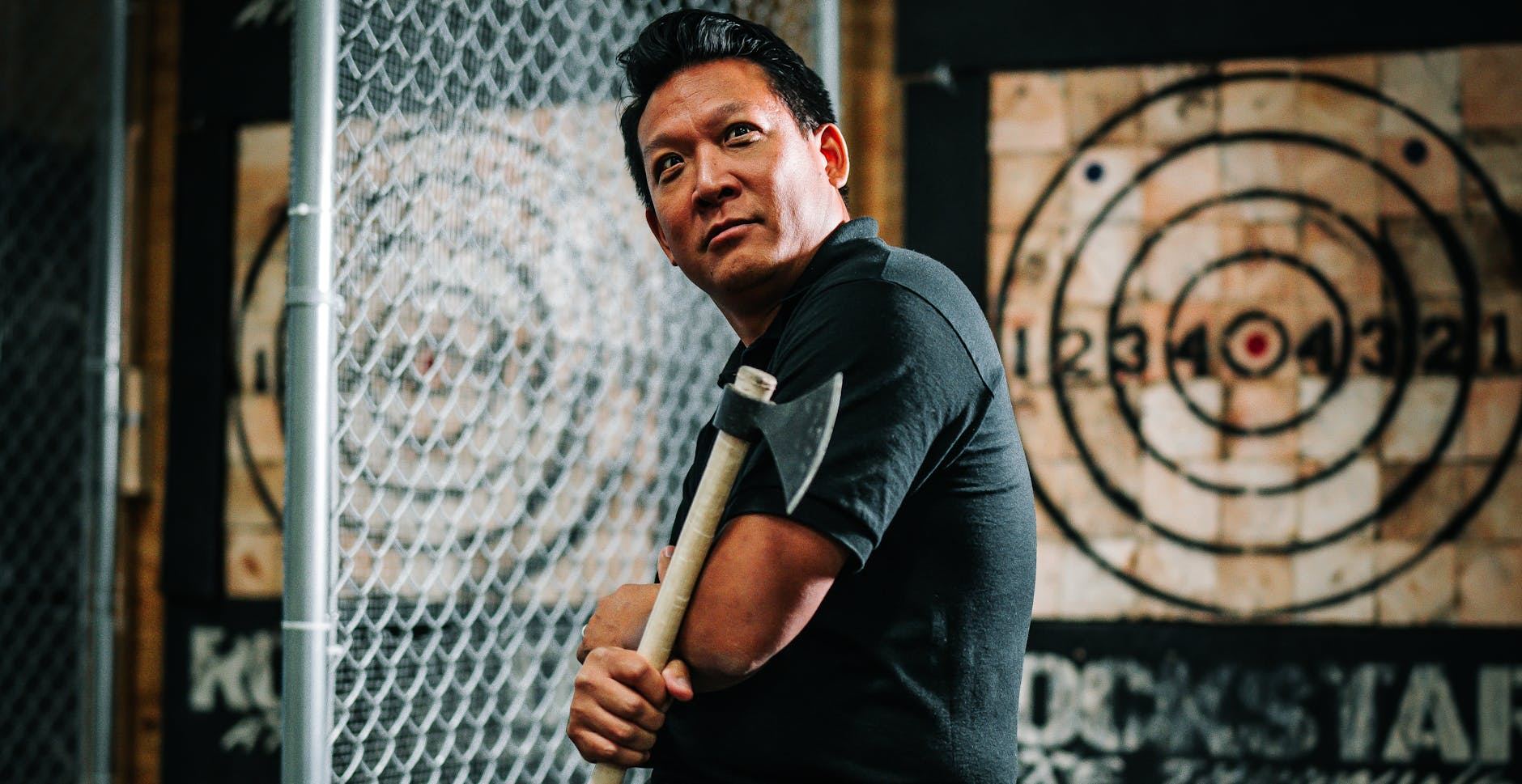
Axe throwing isn't just a one-off novelty; its depth comes from mastering three techniques and chasing the obsession between luck and skill progression.
Getting started with axe throwing as a beginner is an exciting way to develop your focus and precision while aiming for the bullseye.
One throw, one rotation, one clean thud – the feedback is instant and physical in a way darts or archery never quite replicate.
The whole skill lives in your release point, not strength, which makes it beginner-friendly but endlessly technical to master.
Hobbyists practice axe throwing by executing precise throws at a wooden target, aiming for specific scoring zones like the bullseye. They engage in drills that focus on body mechanics, weight shifting, and follow-through techniques, while tracking their progress through metrics like consecutive hits and personal records. Sessions may involve warming up and refining grip or stance to enhance accur…
Axe throwing combats boredom through immediate skill feedback loops, where each throw yields instant results, fostering a sense of accomplishment as hobbyists track their progress. The immersive nature of the sport promotes a flow state by merging concentration with physical engagement, while the novelty of experimenting with throwing techniques keeps the experience fresh and engaging. Additional…
You picture axe throwing as just another fun activity. A bachelorette party highlight. A fling for a Saturday night, not a commitment.
A competitive axe thrower named Marcus thought the same, trying it during a walk-in league night as a spontaneous choice. Six months later, he was fine-tuning his grip angle by millimeters and flying out to sanctioned tournaments. Marcus didn't transform overnight — he just kept pulling on a thread that turned out to be much longer than he expected.
A flick of the wrist.
Two whole revolutions.
Dead center.
The details locked him in, and the tweaks to technique turned novelty into fascination.
Sticking the target is the first ten minutes. Understanding why the axe lands exactly where it does — rotation count, release point, stance width — is what keeps serious throwers obsessing over the same five-foot target for years.
Burying an axe into the bullseye looks effortless until you try. Your first throw feels personal, like the wood rejected you outright.
The gap between watching and doing is bigger than it looks on YouTube.
Week one is humbling. Most throws bounce or veer off course. Even when you stick the axe, you won't know why.
Progress means missing consistently from a distance that feels right. That's a win in week two.
By week three, grip and release blur into one motion. It stops being deliberate.
Week four: hitting a bullseye intentionally opens a new chapter. Not always, but enough to recognize skill over luck.
Quitters miss this turning point. It's not about the difficulty; it's about realizing how close "impossible" is to "I've got it."
Axe throwing relies on rotation count, not arm muscle. To ace it, hit that full rotation from 12 feet out. Power means little without precision.
When to start: Morning
Duration: 1.5 hours
Cost to try: $30
Success criteria: If you finished without serious injury, do session 2.
Beginners often clutch the axe anxiously, which kills the release before the throw even finishes.
The fix is simpler than it feels: hold the axe like a firm handshake and let it roll off your fingers naturally at the end of the throw. A tight grip snaps the axe off course. An open, relaxed finish lets it fly straight.
Throwers often pick a starting position based on what feels comfortable rather than what actually works. Comfort and accuracy are not the same thing at the throwing line.
Watch your axe's rotations in practice and shift your stance in 6-inch increments until it hits flush every time. Guessing costs you consistency. Measuring fixes it.
This one trips up a lot of new throwers. The axe dives low, hits handle-first, and nothing makes sense — because the release point felt right.
It probably wasn't. Release when your hands reach eye level, not waist level. A high release gives the axe a straighter path and a cleaner impact on the target face.
Beginners often watch their hands through the motion — and the axe goes wherever their eyes wander. Your body follows your focus.
Lock your eyes on the bullseye before you move and keep them there through the entire throw. Your hands will sort themselves out. Your gaze is the actual aiming system.
Two hands feels more controlled, so a lot of beginners start there. It isn't more controlled — it just hides the problems in your single-handed technique.
Build consistency with single-handed throws first. Once your rotation and release are reliable, adding the second hand for control actually makes sense. Before that, it just adds noise.
Axe throwing happens most often in dedicated warehouse-style entertainment bars. Some outdoor recreation centers also run it for a camp-style experience.
The WATL directory at watl.gg lists venues by location and is the fastest way to find a place that runs actual leagues. The National Axe Throwing Federation (NATF) runs a parallel network worth checking if nothing shows up nearby.
Once you have a venue, ask directly whether they run a competitive league — most WATL-certified venues include a certified coach in your first session, so you get real technique feedback, not just a safety briefing.
For informal groups outside of venues, search "axe throwing" on Meetup.com in your city. On Yelp or Google Maps, filtering reviews by the word "league" quickly separates serious throwing spots from one-off party bookings.
Big axe means a full-sized, two-handed axe thrown from further back. The rotation math changes completely at that size and weight.
Best for people with consistent hatchet technique who want a new problem — but don't expect your hatchet muscle memory to carry over.
No-spin throwing uses force and blade angle to stick without any full rotation. It takes longer to learn than a standard throw.
Best for competitive throwers — the payoff is that distance stops mattering as much, which is a real advantage in league formats.
Same concept on the surface — blade sticks in a target. But knives rotate faster and a few centimeters of distance change will pull your throw completely. The margin is narrower than axe throwing in almost every way.
Best for axe throwers who want a second discipline. Go in knowing it's a fresh skill set, not a shortcut.
Tomahawk throwing uses a lighter, longer-handled axe with a thinner profile — closer to historical and tactical traditions than bar-league formats. The reduced weight means tiny differences in grip pressure and release timing show up immediately in your results.
Best for people drawn to the traditional or tactical side of the hobby rather than competitive league play.
WATL and IATF aren't different throws — they're structured formats with scoring zones, clutch rings, and league standings. Most commercial venues already run on one of these, so there's a good chance you've already been competing without realizing it.
Best for anyone who stays more engaged when there's a scoreboard involved.
For something adjacent, see Sporting Clays.
If you want a related angle, Show Jumping is the natural next stop.
Another variant that pulls from the same roots is Target Shooting.
The release point is what separates throwers who plateau from throwers who improve. Not the axe. Not the stance. Not the distance. It's the single moment your fingers let go — and whether you felt it, or just hoped for the best.
Once you own your release point, every other variable gets easier to diagnose.
Too early. Too late. Just right. When you can name exactly what happened the moment the axe left your hand, each throw stops being a guess and starts being data you can actually use.
Three drills build this instinct fast. Throw with your eyes closed for one beat after release. Mentally count to "one" before looking at the target. Call out "early", "late", or "right" before the axe lands.
You're teaching your hands to report back before your eyes do. The next section covers how to plug this awareness into the rest of your throw.
Four sessions over 30 days. This gives the hobby a fair shake.
Session one is just warmup – it's all about learning the grip. By session two, you've experienced both a good throw and a frustrating one. By session four, clear patterns emerge: either you're getting into the rhythm or you're not. Four sessions are a low-cost experiment without feeling like money wasted.
If you can't wait to book another throw before you've even finished the current session, that's the spark of genuine interest. You're drawn to the improvement, not just the novelty. Your next step is to book a fifth session and look into leagues or memberships.
If you attend the sessions but forget about them once you leave, the chemistry might be off. It's not about needing more time – the match just isn't clicking. Consider moving on without any regret.
If by session two you're checking the clock, this hobby isn't for you. It's not a failing on your part. Axe throwing thrives on a love for mastering physical challenges.
The moment you can't ignore is when you find yourself browsing axe throwing videos and techniques online late at night, even before committing to a session. That quiet curiosity means the hobby has already grabbed your interest.
Sometimes you just need something for the next ten minutes — that's what things to do when bored is for.
Most beginners can learn basic throwing technique and hit a target within 30 minutes to an hour of instruction. However, developing consistent accuracy and control typically takes 4–6 weeks of regular practice. Professional-level competitive skill requires months of dedicated training.
Axe throwing is safe when you follow proper instruction and facility rules, which all reputable venues enforce. Key safety measures include proper stance, controlled release, designated throwing lanes, and certified instructors supervising at all times. Injuries are rare among beginners who receive proper training.
Most axe throwing venues charge $25–$50 per person for a one-hour introductory session, while group outings or memberships may offer discounts. Private lessons and tournament entries typically cost more, ranging from $60–$150+. Many facilities provide all equipment, so no additional purchases are needed to get started.
Wear closed-toe shoes with good grip and comfortable, unrestricted clothing that allows full arm movement. Most venues prohibit loose jewelry, long sleeves that could catch on the axe, and sandals or flip-flops for safety reasons. Check with your specific facility for their dress code, as policies vary slightly.
Yes, axe throwing is increasingly popular for group events like bachelor/bachelorette parties, team building, and birthday celebrations. Most venues offer group packages with dedicated lanes, instructors, and social atmospheres designed for friends to throw together. Booking in advance is recommended, especially for larger groups of 8 or more people.
Traditional axe throwing focuses on recreational fun and casual accuracy with heavier axes, while sport axe throwing (like IATF competitions) uses lighter, standardized axes and has strict competitive scoring rules. Sport axe throwing emphasizes precision and consistency, whereas traditional throwing is more forgiving and social. Most beginner venues teach traditional style, though competitive leagues are growing.