BoredomBusted — Find Your Next Favorite Thing To Do
Discover hobbies, activities, places, and ideas that spark joy. Whether you're looking for something creative, active, social, or relaxing, BoredomBusted helps you find your next favorite thing to do.
Browse our hobby guides, things-to-do collections, and place ideas to never be bored again.
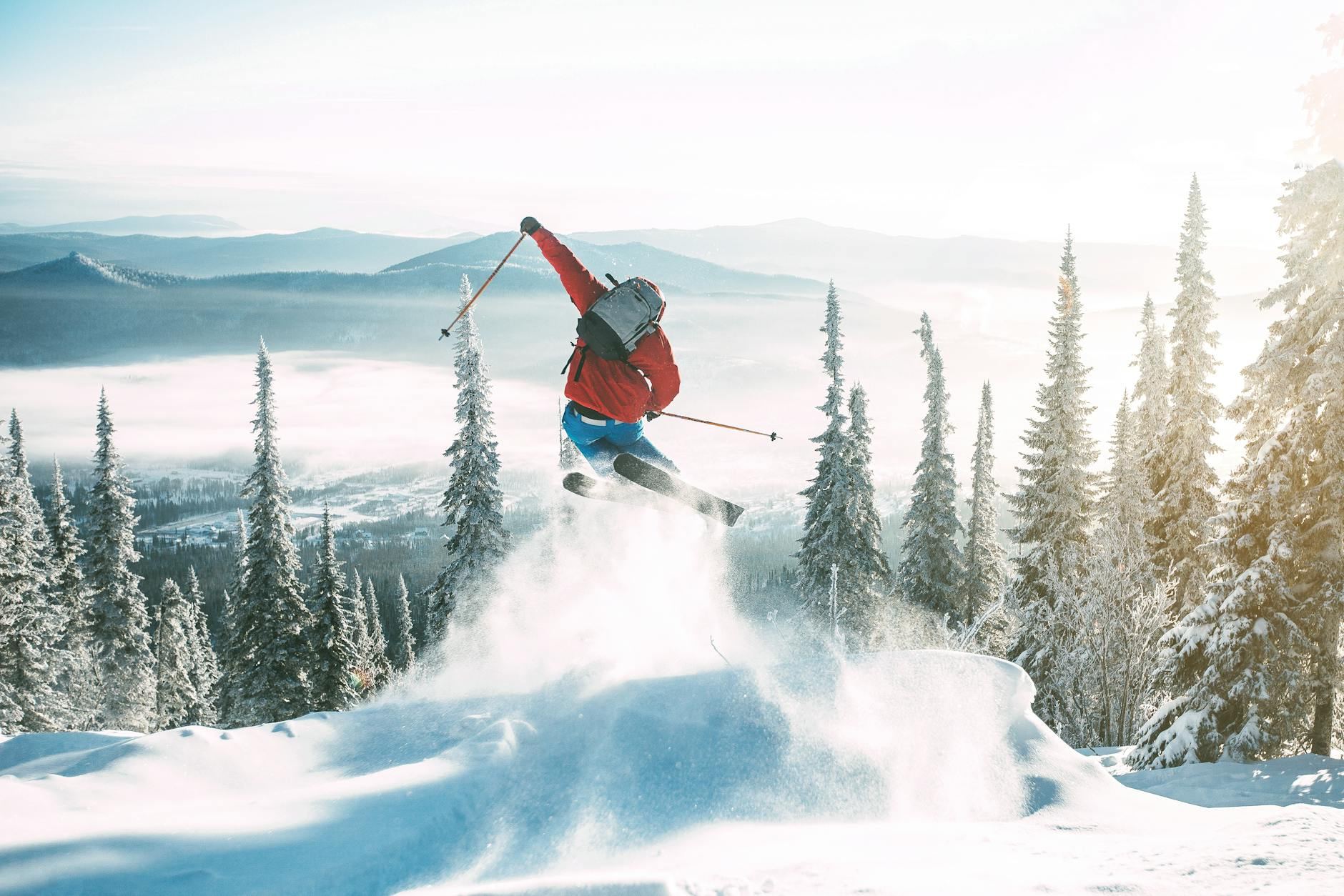
Freestyle skiing isn't just about tricks; it's a complex sport that enhances body awareness and mental fortitude, surprising many adults who try it.
Getting started with freestyle skiing as a beginner involves learning essential techniques before attempting more complex acrobatic tricks.
Riders use terrain parks, halfpipes, or natural features to perform jumps, spins, and flips.
Unlike traditional downhill skiing, the mountain is a canvas, not just a route.
What you build technically is on full display, judged or not.
Freestyle skiing involves executing dynamic aerial maneuvers and spins while skiing on snow, utilizing jumps, rails, and terrain park features. Practitioners approach features at moderate speeds, engage their core for takeoff, perform mid-air rotations or grabs, and land smoothly by managing weight transfer and absorbing impact with bent knees. This requires mental visualization, real-time adjust…
Freestyle skiing induces flow states through the precise timing and high-focus demands of aerial maneuvers, creating an optimal challenge-skill balance. The immediate feedback from successfully landing tricks or diagnosing crashes fosters addictive progression, while the continuous novelty of changing park features and personalizing tricks satisfies creative expression. This blend of skill master…
You think freestyle skiing is just tricks. Jumps, flips, kids in baggy pants doing things that look like broken bones waiting to happen. That assumption is costing you one of the most technically layered outdoor sports available to an adult beginner.
Freestyle skiing is more than just tricks. It's built on body awareness that boosts every other sport you try. Edge control, spatial orientation, and real-time terrain reading all come into play.
The tricks are just the tip of the iceberg. Beneath them lies a discipline with structured progressions and distinct specialties. You don't need to be 14 to climb this learning curve.
Most adults find that their mental game is the real barrier, not their physical ability. Committing to a line, managing fear, and trusting your body become the true challenges.
Take the story of a 38-year-old skier who picked up freestyle through mogul skiing. She thought she was a decent skier until she learned to absorb bumps properly. That's when she realized she had been fighting the mountain all along.
Freestyle didn't add a skill. It corrected the one she thought she already had.
Naturally, the next question is about day one. It's less dramatic than you'd expect — but far more useful.
Freestyle skiing looks effortless on TV, but feels alien in real life. You'll feel heavy, slow, and weirdly unsure of legs you've trusted your whole life.
Confident on groomed runs.
Curious about the park.
Assuming jumps scale down neatly.
Sure your body will just figure it out.
Humbled by a one-foot roller.
Landing in the backseat every time.
Watching a twelve-year-old lap you.
Genuinely unsure what your hands are supposed to do.
The first week is repetition. You'll find yourself in the beginner park, putting all your energy into the same tiny jump again and again.
Week two is about fixing what's silently going off course. You're landing more often, sure, but some gestures are turning into bad habits.
In week three, one part finally clicks in place. Could be a pop or a perfect landing. It's a flicker of understanding—the spark that makes it worthwhile.
Week four isn't a steady ascent; you might still feel lost sometimes. Don't be discouraged when some sessions resemble the struggles of week one.
Speed matters more than technique at first. Most beginners creep in too slow and stall on the lip, while others rush in and lose control.
Check how other skiers approach the feature you want to hit. Note their speed, and match it. This small tweak could save you a week of trial and error.
When to start: Early morning
Duration: 2 hours
Cost to try: $30
Success criteria: If you finished without injury, do session 2.
Beginners often rush to jumps because they scream freestyle skiing.
Spend five sessions just ollieing and pressing on groomed runs. If you can't control pop and weight shift on flat terrain, a kicker will expose every gap brutally.
Sitting back may feel safer, but it lifts your tips and stalls your body.
Lock your shins against your boot tongues at the lip. If you don't feel that pressure before leaving the snow, you're already behind.
A 360 may seem like the intuitive first spin, but it bypasses fundamental mechanics.
Under-speeding can be more dangerous than hitting with full confidence. Stalling at the lip increases the risk of knee injuries.
Watch a few skiers hit the jump and note their speed setup.
Copying experienced skiers can lead you straight into their risks without their skills.
Find someone just one step ahead. Shadow their session for a more manageable learning curve.
Freestyle skiing thrives at ski resorts with terrain parks, halfpipes, or mogul runs. If you don't have a mountain nearby, indoor ski slopes offer year-round access.
Some resorts have freestyle programs separate from their general ski school. At these resorts, you won't always find the beginner area next to the main park.
Tell the coach or program coordinator you're new to freestyle and have zero park experience. This admission steers you into a coached progression rather than risky drop-in sessions. You'll learn how to jump with supervision, not after crashing on your own.
Picture bumpy terrain, fast rhythm, and impact-absorbing knee work. This is moguls, where turns, air tricks, and speed meet formal competition scoring. New to freestyle? Gain core body mechanics in moguls with no extra cost beyond standard ski gear.
Ski a U-shaped channel and launch off walls for aerial tricks. Perfect for those with solid carving skills who want a skateboarding-like progression. Halfpipe's learning curve is steep, so it's not a starting point. Park ski packages (twin-tip skis) cost $400–$700.
Combine rails, jumps, and boxes on an open course, linking them as you choose. Gradual entry with the most creative freedom. Twin-tip skis help but aren't essential for beginners exploring rails.
Four skiers race down courses with jumps and banked turns. Pure speed and quick terrain reading, no tricks needed. Ideal for those who want action without jumping delays. Standard all-mountain gear is enough.
Skiers perform flips and twists off steep ramps. The most daring and high-risk choice, requiring formal coaching and summer training on a water ramp. Best tackled after mastering moguls or pipe.
Another variant that pulls from the same roots is Cross-Country Skiing.
Another variant that pulls from the same roots is Backcountry Skiing.
Most beginners spend months chasing bigger tricks – more height, more rotation, more speed. The real ceiling isn't the trick. It's where they're looking.
Visual anchoring matters most. Fix your eyes on a specific spot in the landing zone before leaving the lip, not while in the air.
Your body follows your eyes in freestyle skiing. If you're looking for the ground mid-rotation, you're already late and off-axis. Experienced skiers have trained their eyes to commit to a point before the jump. The body automatically organizes itself around that locked position.
In every rotation sport – moguls, pipe, big air – consistency improves the moment your eyes take the lead. Without locking your gaze, you'll constantly adjust mid-air, leading to unstable landings.
Dive into the mental side next: explore how mental focus changes your game.
Plan for six sessions over 30 days, roughly hitting the mountain once or twice a week.
Freestyle skiing has a rough start. Once you get over that initial hurdle, your body starts to adjust to the movements.
Returning becomes an obsession if you find yourself thinking about the next trick or feature before leaving the slopes. This isn't just restlessness. It's a sure sign the hobby has gripped you. Next, join a progression clinic and start filming your runs for real feedback.
If you're indifferent, enjoying the runs without a pull to return, you might like skiing more than freestyle specifically. A few days on groomed runs without trick pressure may reveal if skiing itself is the true lure.
If every session felt like an ordeal with cold, costs, and fear, trust your instinct. Some people just aren't built for winter mountain sports, and that's okay.
Watching ski edits at 11pm and studying technique over scenery and crashes reveals genuine interest. If you can't help but analyze landings and spins, your brain is on the path to mastery.
Freestyle Skiing is a deeper commitment than most boredom cures — for lighter options, check things to do when bored.
You'll need freestyle-specific skis (shorter and more flexible than all-mountain skis), ski boots, a helmet, goggles, and appropriate winter clothing. Many beginners rent equipment first to avoid a large upfront investment before confirming the sport is right for them.
Most people can learn fundamental tricks like small jumps and rail tricks within 2–4 weeks of regular practice, assuming you already have solid all-mountain skiing skills. Progressing to more advanced aerials and complex maneuvers typically takes several months to years of dedicated training.
Freestyle skiing carries higher injury risk than recreational skiing due to tricks and jumps, but injuries are largely preventable with proper training, progression, and safety gear. Taking lessons from qualified instructors and practicing in designated terrain parks significantly reduces your risk.
Freestyle skiing focuses on creative tricks, style, and tricks in terrain parks and on natural features, while ski racing is competitive downhill or slalom racing against time. Freestyle prioritizes expression and athleticism, whereas racing emphasizes speed and precision.
Initial costs range from $400–$800 for basic used equipment or $1,200–$2,000+ for new gear, plus lift passes and lessons. Many resorts offer beginner packages that bundle rental, lessons, and lift access for $150–$250 per day.
You should have solid intermediate skiing skills before attempting freestyle tricks, as you need confidence and control on the slopes. Consider taking 1–2 seasons of regular skiing lessons first to build the foundation freestyle skiing requires.